
The National Parks Traveler writes book reviews. Some of these reviews are about cookbooks. This is not a weekly event nor a monthly event, because it takes a while to read those books and digest (no pun intended) their content and meaning.
For my latest birthday, my youngest nephew gifted me with The National Parks Cookbook, by Linda Ly (pronounced Lee), about which the Traveler wrote a 2023 review in addition to interviewing the book’s author for Podcast Episode 218. The Traveler had not – yet – tried any of the recipes, so it was more a review of the book’s layout as well as a sample list of some recipes and their connection to specific national parks.
I enjoy cooking and prepare most of the meals in my household, so this was the perfect gift for me. Going through the cookbook, I picked out several recipes to try. The photos in the book look great - thanks to photographer Will Taylor - and the directions are for the most part, straight forward.
Some of the ingredients are a bit esoteric (to me, anyway) and took a little searching to find at the store, which is strange since I live in the Pacific Northwest, where fresh fruits, vegetables, seafood, and ethnic ingredients are relatively easy to get – well, in Seattle. However, I live in a smaller town east of the Cascades, so that means obtaining certain ingredients required a little more effort. As the author said in the podcast regarding the part of Oregon in which she lives, “…We don’t have the selection of a metropolitan city.” Ditto.
I followed the recipes as written, but some required tweaking or substitution of one ingredient for another. For instance, I thought I had a can of black beans but it was a can of black refried beans, so I substituted a can of black-eye peas instead. That’s what cooking is all about, right? Regardless of substitutions or tweaks the end product will still be tasty.
Food Photography

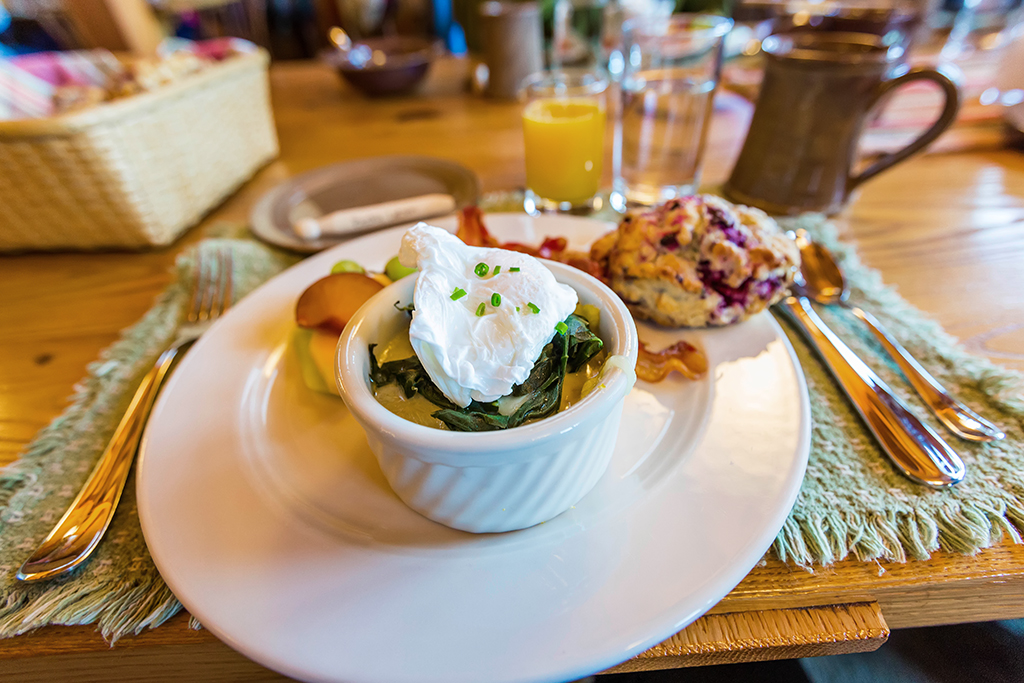
Before delving into the recipes and my opinion of this book, let’s talk about food photography, first. Everybody takes photos of food they are enjoying in a national park. You see it on Instagram, Facebook, Threads, and other social media sites as well as on blog posts. Unlike fancy magazine-type shots with all the requisite lighting equipment, however, those food shots are more than likely captured with just a smartphone and the restaurant’s ambient light.
While you may not have the fancy bells and whistles utilized by food photographers for a magazine spread, there are still things you can do with your smartphone or SLR to pull off a delicious composition enticing your viewers to go into that national park restaurant and try that same dish for themselves.

You will probably be dining in a low-light situation - no bright sunshine illuminating your meal unless you sit next to large picture windows during the daylight hours, or are eating al fresco. The light will probably reflect shades of gold, orange, and red from the lodge’s rustic “parkitecture” of log walls or wood siding. While smartphones are good at recognizing when a scene needs to be brightened up or the color should be fine-tuned, SLR settings generally require a little adjusting.
Unless you are using a tripod at your table (I wouldn’t recommend it since it gets in the way of waitstaff and customers), you’ll be handholding your camera. The ISO will be higher (anywhere from 400 – 1000), the aperture wider (small f-stop numbers between f1.4 – f4), and your shutter speed will be slower (1/40 – 1/60). It’s also a good idea to apply the “burst method” of holding your finger down on that shutter button for several clicks. Out of all those multiple images, you’ll return with at least one sharp, clear shot. The burst method takes up memory space, so always have extra cards in your pocket. If you need to correct for color, it’s easier to do it while editing your image later rather than fiddling with camera settings at the table.
Low light and slower camera settings are a guarantee of grain (aka noise) in your imagery. By grain, I mean tiny green, blue, yellow, and bright pink pixels producing a “gritty” look to the composition. Noise reduction settings in your editing program or a standalone software application will mitigate or completely remove that grainy look.
In terms of framing your composition:
- Fill the frame with your food. Just go right on in for a close-up shot. This is handy if the area/items surrounding your plate or bowl are unflattering to your beautifully-presented menu item.
- Include some background elements, like a fork, or glass of wine or lit candle. Depending upon the type of lens and camera settings, your depth of field for the background will either be very sharp and clear, or it will be nicely bokeh’d (blurred) to suggest the presence of these items while not taking full attention away from the food photographed.
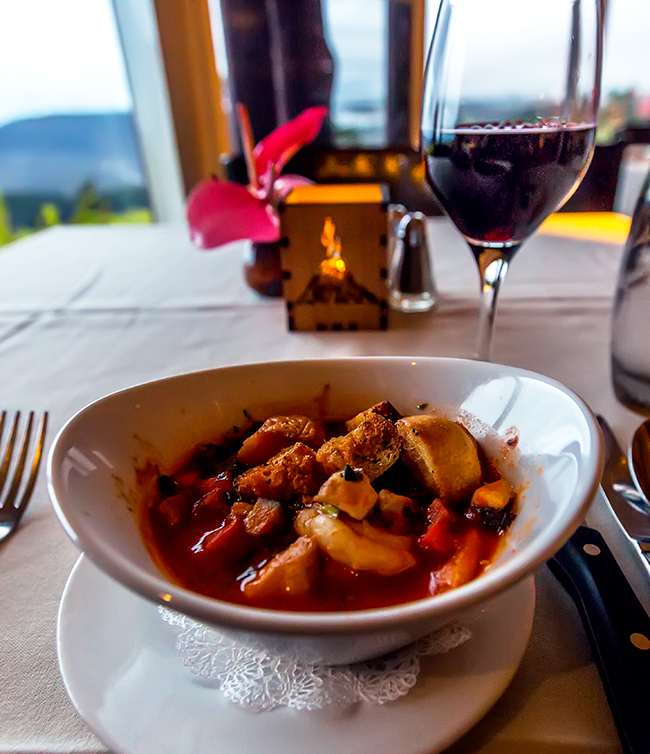
- Get a wider shot of the background and surroundings. If you are sitting at a table next to a window, get a shot of the food, table settings, people, even a portion of the window showing where the light for the shot originates.
My home is not replete with ambient parkitecture and rustic log interiors. That said, I do have a wider choice of how to present photos of the finished food item since I am not stuck sitting at a table. I still used the burst method of capturing the shots, but relied upon some props such as a step stool for standing above and over the food for different compositional perspectives. I also had the freedom to move plate, bowl, or glass from one area to another to capture different backgrounds.
Cookbook Review
This cookbook includes not only appetizers, main dishes, and desserts, but drinks (alcoholic and non-alcoholic) as well. Some of these recipes were given to the author by the chefs, while others are “invented” recipes to honor the spirit of a certain national park. The book also includes a bit of history or cool facts for some of the recipes.
A year or so ago, I’d downloaded this book onto my iPad specifically to try the huckleberry margarita. Mom, Dad, my sisters, and I used to pick huckleberries at Glacier National Park when we lived in Montana. I still pick a few if they are in season at Mount Rainier National Park. The drink recipe in this cookbook was nice but did not convey the full huckleberry flavor experience. Huckleberries possess a bright, sweet-tart taste, and any drink featuring that flavor-packed little berry should reflect that bit of tang. So, instead of recreating the drink for this article, I moved on to three other drinks: the El Capitini and the Butterscotch Martini - both of which use vodka instead of gin - and the Grand Canyon Mule.
El Capitini (Yosemite National Park, California)
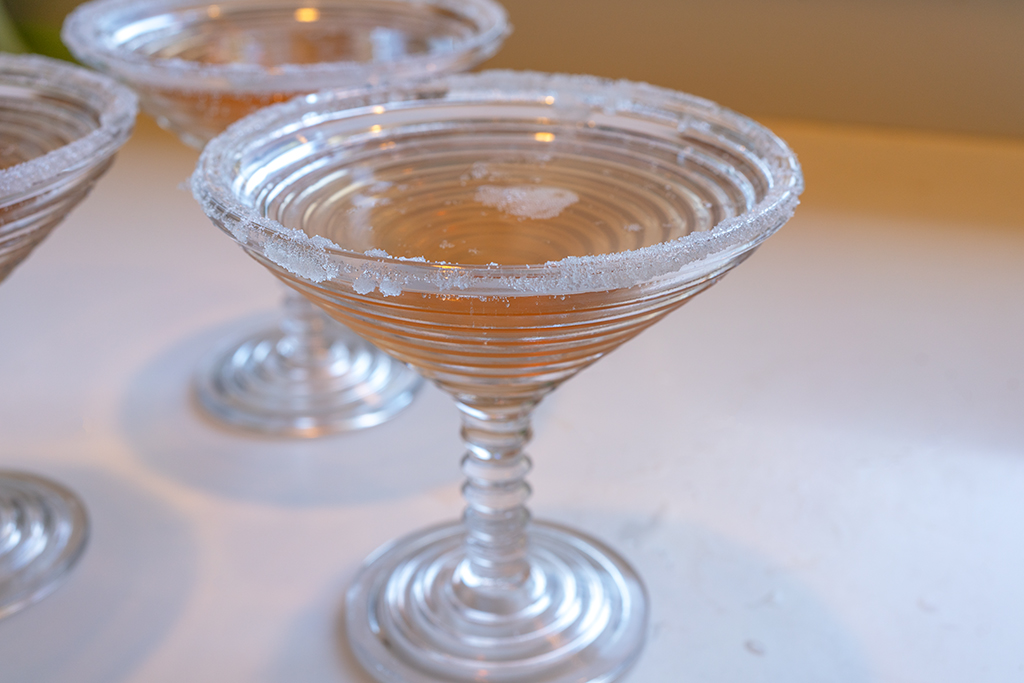
Yosemite’ signature drink is offered at the Ahwahnee Hotel to honor that iconic cliff face El Capitan. It uses an ingredient I’d never heard of before: PAMA. This is a pomegranate liqueur which by itself is fantastic. For the cocktail, it’s mixed with other alcohols and poured into martini glasses rimmed with sugar. It’s a keeper of a cocktail, although I personally recommend adding more PAMA to this drink than what is listed in the book.
Butterscotch Martini with Boozy Whipped Cream (Bryce Canyon National Park, Utah)

In the Traveler’s podcast interview with Linda Ly, the author disclosed the butterscotch martini was an invented recipe paying homage to “the smell of Bryce Canyon.” Think of ponderosa pines on a warm, sunny day. If you put your nose up close to the bark and take a long sniff, it’s distinctly possible you will catch a whiff of butterscotch, vanilla, or even sugar cookies (I smelled cookies).
The butterscotch martini is what one might consider a dessert drink. No need to order that slice of pie or brownie square when you can enjoy the boozy butterscotch distillation of a warm summer day in Bryce Canyon National Park. While it was quite tasty, I couldn’t taste the butterscotch in it. All I could taste was the Baileys Irish cream liqueur. Baileys (to me) is a strong liqueur and tends to overpower other flavors. In this case, it overpowered everything. I think the amount called for was a bit too much. So, if I ever make the drink again, I will not add as much of that one ingredient.
Grand Canyon Mule (Grand Canyon National Park, Arizona)
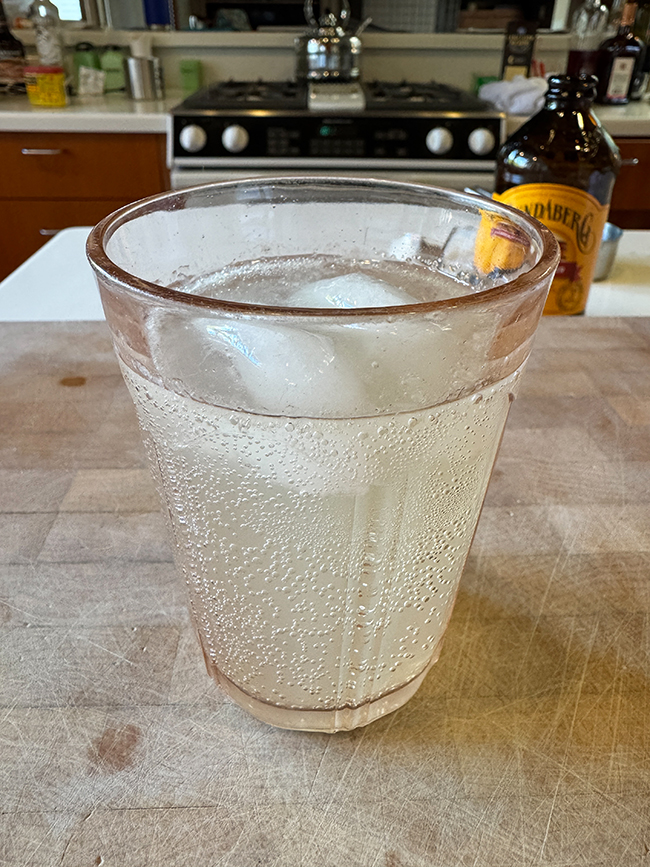
This drink is light, refreshing, and easy to put together. It uses lime in the mix, but the amount of juice from the ½ lime called for in the recipe didn’t differentiate between a large or small lime. Trust me, the amount makes a difference and you should use a large lime.
Date Shake (Death Valley National Park, California)
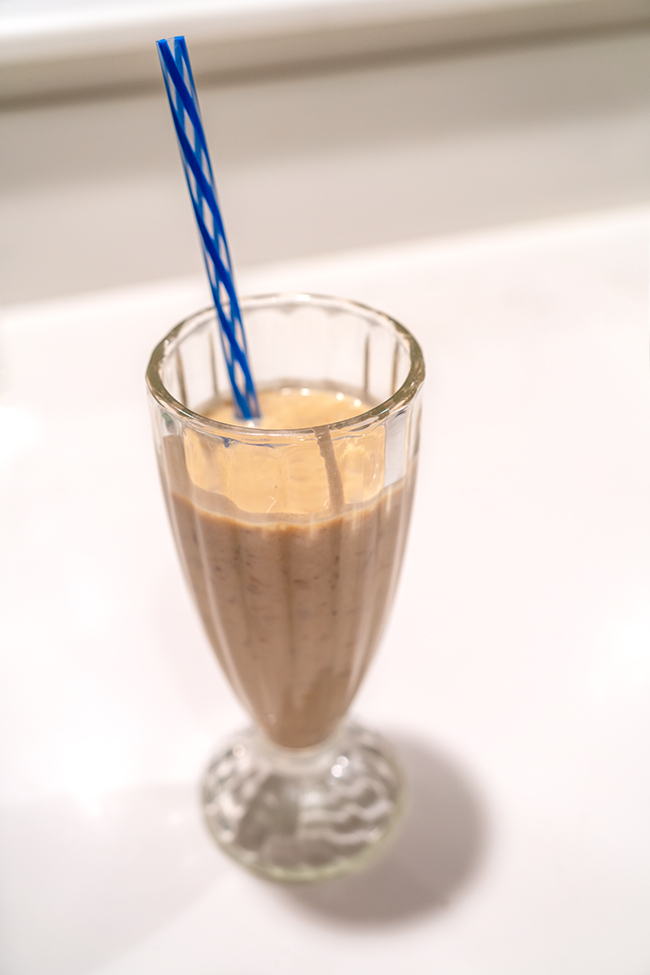
Here’s a fun fact learned from the cookbook:
The site of the present Oasis at Death Valley resort was once a farming operation in the 1920s that the U.S. Department of Agriculture used to test the area for date farming. It worked well, with the farm producing a couple hundred tons of dates. Needless to say, date recipes, including date shakes, appeared on the restaurant’s menus. The book’s recipe for a date shake is the author’s “take on the popular treat.”
Medjool dates are recommended for this recipe. Most grocery stores stock these dates, or you can order them online from someplace that grows them. I ordered a small box from Rancho Meladuco Date Farm, just because.
Lamb Ragout (Yellowstone National Park, Wyoming/Montana/Idaho)
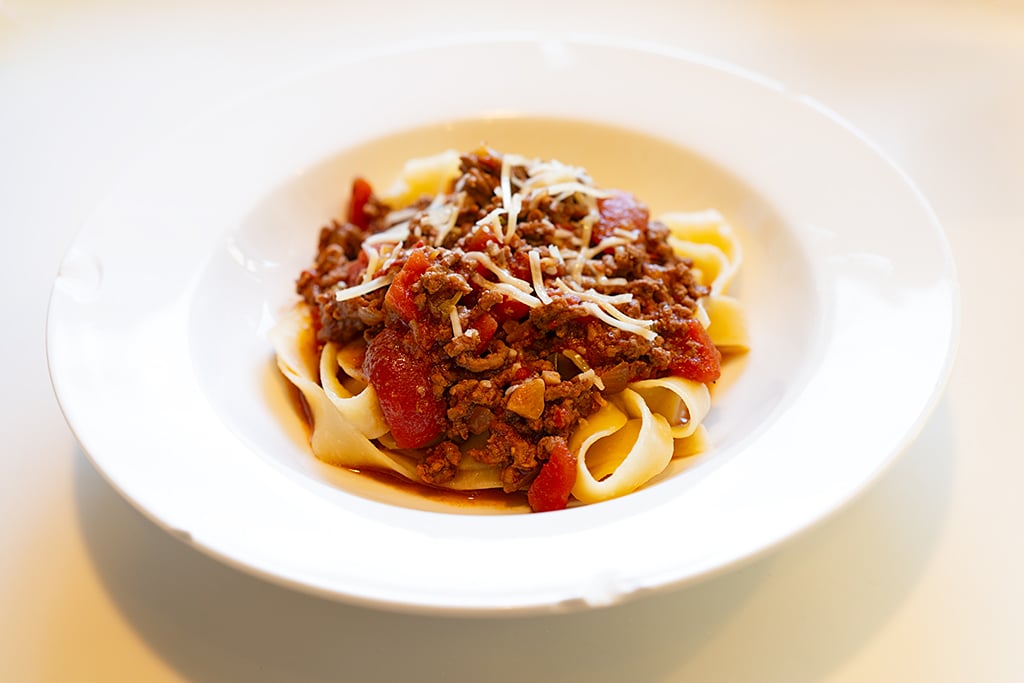
According to the cookbook, this ragout has appeared in lodge menus all around the park using Montana-sourced lamb. I substituted lean ground beef for the lamb and omitted the mint on the ingredient list. While the recipe doesn’t call for a specific pasta noodle, the author recommends pappardelle noodles as the perfect substantial pasta to hold up to this thick, rich meat sauce. I wholeheartedly agree.
Superior White Fish Tacos (Isle Royale National Park, Michigan)

The first time I’d moved to the Pacific Northwest, some decades ago, I’d never heard of a fish taco, and I wrinkled my nose at the mere thought of one. After tasting a fish taco, I discovered they are wonderful! I now fix fish tacos quite often for my family. With this recipe comes a caveat. I love spicy food, my family does not, and this recipe produces some very slight heat that may still be a bit much for those of you with tender mouths. If that is the case, just add more Mexican crema to the mix to lower that temp. And don’t let that one issue sway you from trying this dish. It has now become a family favorite.
Three Sisters Chili (Grand Canyon National Park, Arizona)

Indigenous staples of beans, squash, and corn create a combination not only delicious, but very photogenic, reminding me of the colorful rock layers within the Grand Canyon. This meatless recipe uses butternut squash, which you can purchase frozen at the grocery store.
Dungeness Crab Mac and Beecher’s Cheese (Olympic National Park, Washington State)
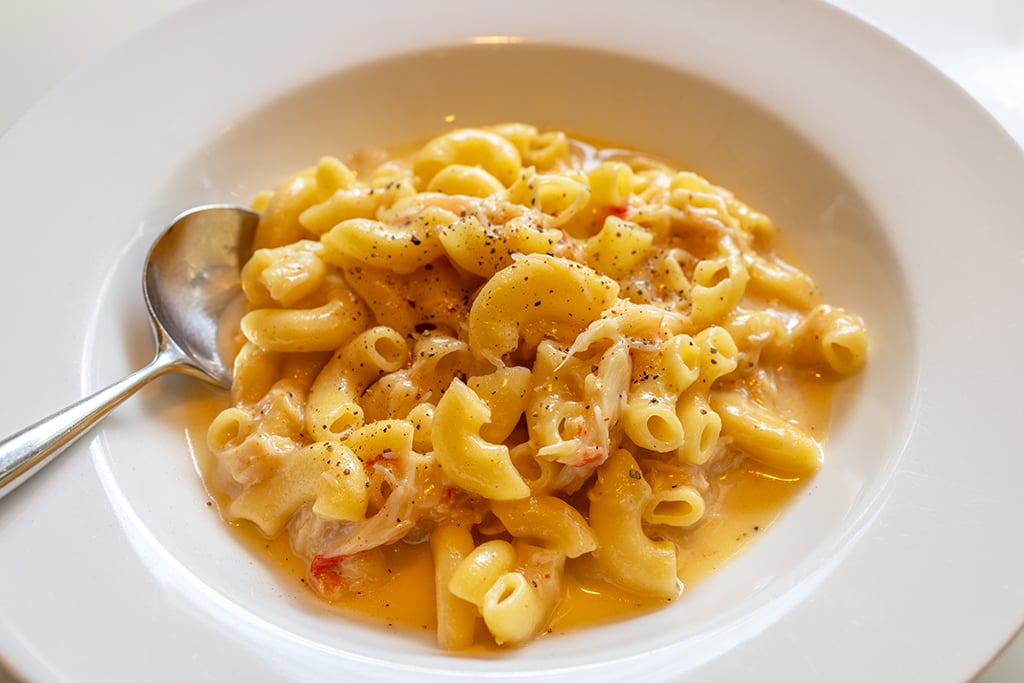
Out of all the recipes I’ve tried so far from this 208-page cookbook, I can tell you this is the most expensive one in terms of ingredients, and it is the recipe that disappointed me the most, even though my family really liked it (so maybe it’s just me).
Sure, you can substitute cheese brands and even seafood, but since the name of the recipe is the same as the recommended brand of cheese, that’s what I used. Luckily, Beecher’s cheese is a “local” cheese made in Seattle (it’s also made in Wisconsin, btw). It’s not cheap and the recipe calls for quite a bit of this item. Also, unless you live someplace where crab is easily accessible, you may need to either go with whatever you find (in my case, frozen snow crab legs from the local Fred Meyer), order online from a seafood site like Pike Place Fish Market, or substitute for another seafood. After spending an hour shelling the crab and making a huge mess, my advice is for you to go to Costco if there is one in your area and purchase the small tub of already-shelled crab.
When I first looked at the ingredient list for this recipe, I thought the liquid called for was too much. I still feel that way after making the dish. I had to siphon off about a cup of the liquid because it was too “liquidy.”
Again, the finished product was ok to me (the rest of my family loved it), but nowhere near the caliber of the other dishes I cooked (IMO).
Sugar Cream Pie (Indiana Dunes National Park, Indiana)
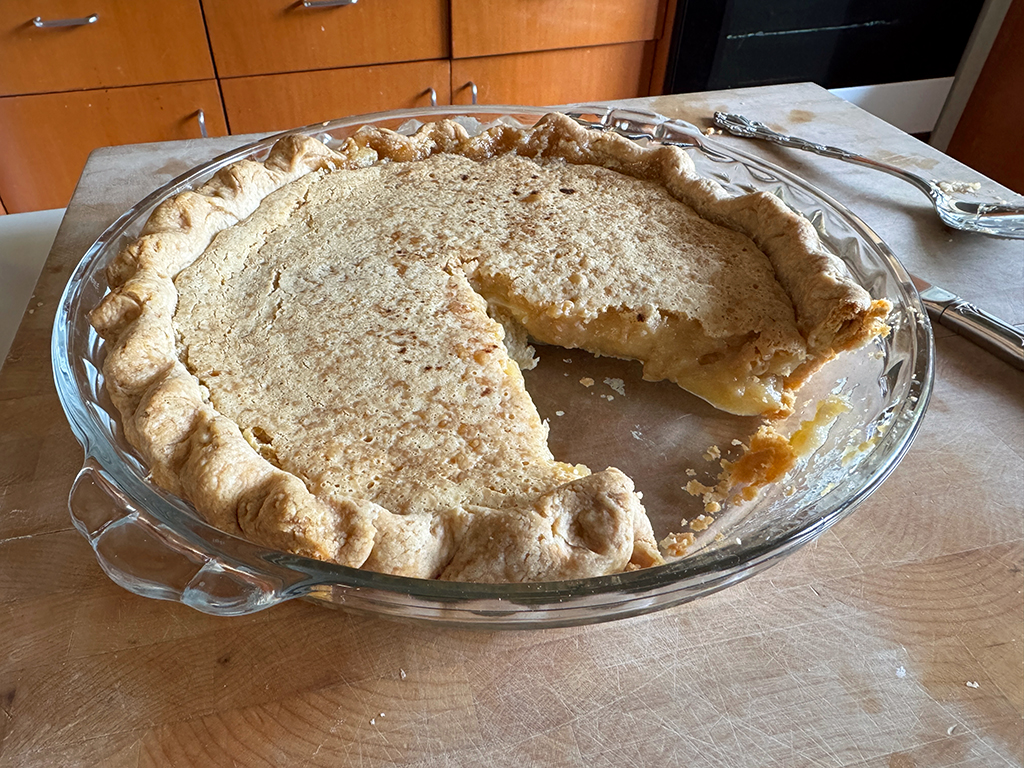
I did not know this until reading the cookbook, but sugar cream pies are a specialty in Indiana. Cafes, restaurants, and regions each have their own versions of this undeniably yummy, creamy pie.
From a simple ingredient list, I created a finished product so rich and scrumptious that my family and I scarfed this pie up in two days and I made another forthwith, followed by others during the weeks after.
Note: The amount of time this pie bakes can really change the filling consistency. The first pie I cooked according to the book's directions and it turned out rather runny. I did, indeed, need to allow the pie to fully cool and even placed it in the fridge for awhile to get it to stand up. So, I thought I'd remedy that by baking another pie much longer. If you bake this pie too long, the filling becomes leather. I finally found a happy medium, plus, the homemade crust made it even tastier (IMO) than the pies I'd made with a frozen storebought crust (although they turned out tasty too, so don't forego the pre-made crust if you don't have the time to make one yourself).
Verdict
If I can get at least one great recipe out of any cookbook, I consider that book a keeper and worth whatever I spent on it. I definitely found more than one recipe in this cookbook that I will use again for future meals. True, several ingredients took some hunting down, and some of them were quite expensive. A couple of recipes did not impress me greatly, but were still tasty. I think they just need some tweaking.
So, my verdict is that The National Parks Cookbook is an absolute keeper with so many more tasty-looking recipes waiting for me to try.

You take photos of amazing landscapes and wildlife in a national park, so why not photograph a lodge meal you enjoy. As Traveler editor Kurt Repanshek remarked in his podcast interview with Ly, “The food you consume in the national park is part of that national park experience.”
I encourage you to take your camera when dining in a lodge restaurant to capture that part of your park experience. I also encourage you to take a look at this cookbook for yourself or as a gift. Even if you are unable to visit a national park anytime soon, you can still taste the essence of those parks from recipes in this book.
Bon appétit!
Stories about:
Story Categories:
A copy of National Parks Traveler's financial statements may be obtained by sending a stamped, self-addressed envelope to: National Parks Traveler, P.O. Box 980452, Park City, Utah 84098. National Parks Traveler was formed in the state of Utah for the purpose of informing and educating about national parks and protected areas.
Residents of the following states may obtain a copy of our financial and additional information as stated below:
- Florida: A COPY OF THE OFFICIAL REGISTRATION AND FINANCIAL INFORMATION FOR NATIONAL PARKS TRAVELER, (REGISTRATION NO. CH 51659), MAY BE OBTAINED FROM THE DIVISION OF CONSUMER SERVICES BY CALLING 800-435-7352 OR VISITING THEIR WEBSITE. REGISTRATION DOES NOT IMPLY ENDORSEMENT, APPROVAL, OR RECOMMENDATION BY THE STATE.
- Georgia: A full and fair description of the programs and financial statement summary of National Parks Traveler is available upon request at the office and phone number indicated above.
- Maryland: Documents and information submitted under the Maryland Solicitations Act are also available, for the cost of postage and copies, from the Secretary of State, State House, Annapolis, MD 21401 (410-974-5534).
- North Carolina: Financial information about this organization and a copy of its license are available from the State Solicitation Licensing Branch at 888-830-4989 or 919-807-2214. The license is not an endorsement by the State.
- Pennsylvania: The official registration and financial information of National Parks Traveler may be obtained from the Pennsylvania Department of State by calling 800-732-0999. Registration does not imply endorsement.
- Virginia: Financial statements are available from the Virginia Department of Agriculture and Consumer Services, 102 Governor Street, Richmond, Virginia 23219.
- Washington: National Parks Traveler is registered with Washington State’s Charities Program as required by law and additional information is available by calling 800-332-4483 or visiting www.sos.wa.gov/charities, or on file at Charities Division, Office of the Secretary of State, State of Washington, Olympia, WA 98504.
INN Member

The easiest way to explore RV-friendly National Park campgrounds.

Here’s the definitive guide to National Park System campgrounds where RVers can park their rigs.
Our app is packed with RVing- specific details on more than 250 campgrounds in more than 70 national parks.
You’ll also find stories about RVing in the parks, tips helpful if you’ve just recently become an RVer, and useful planning suggestions.

