
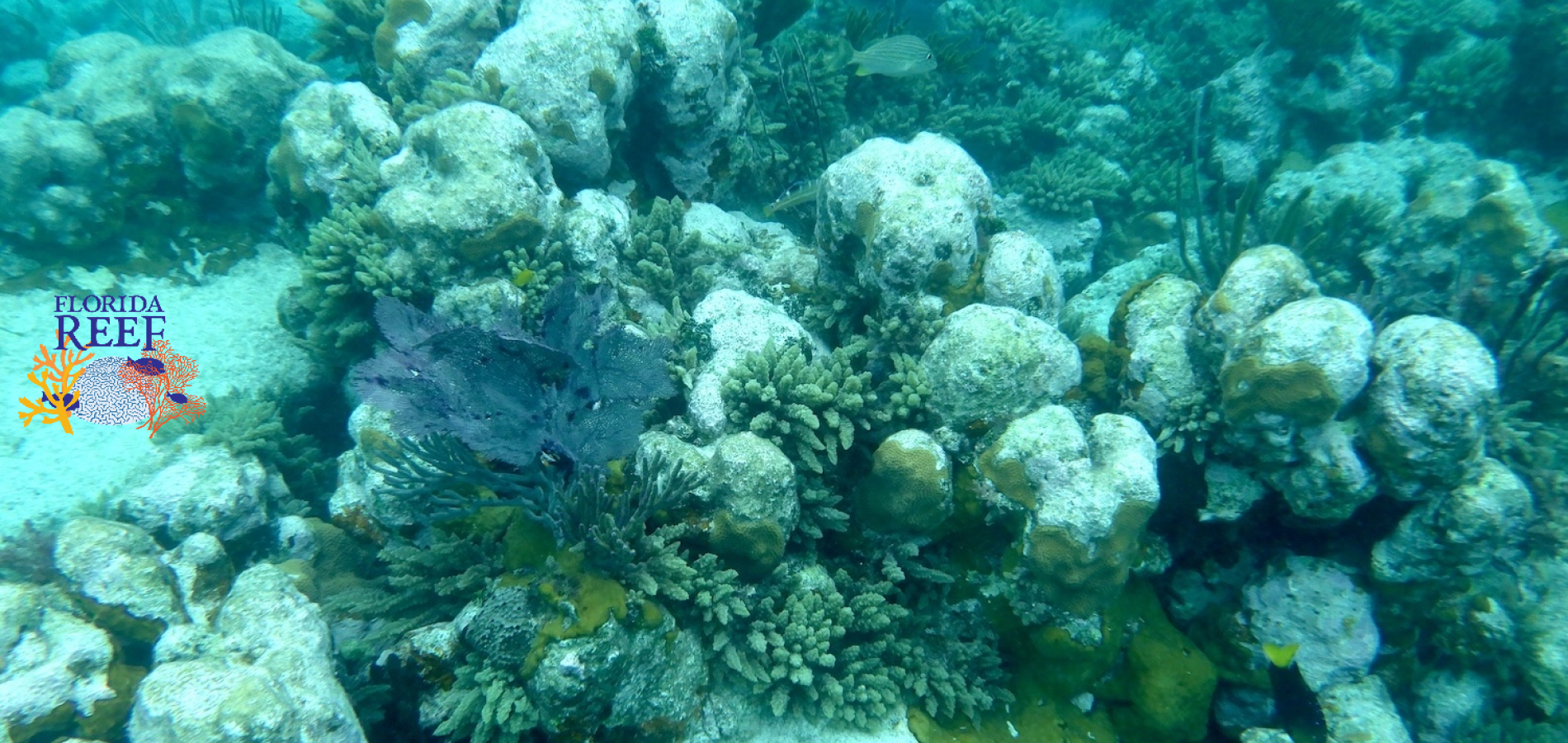
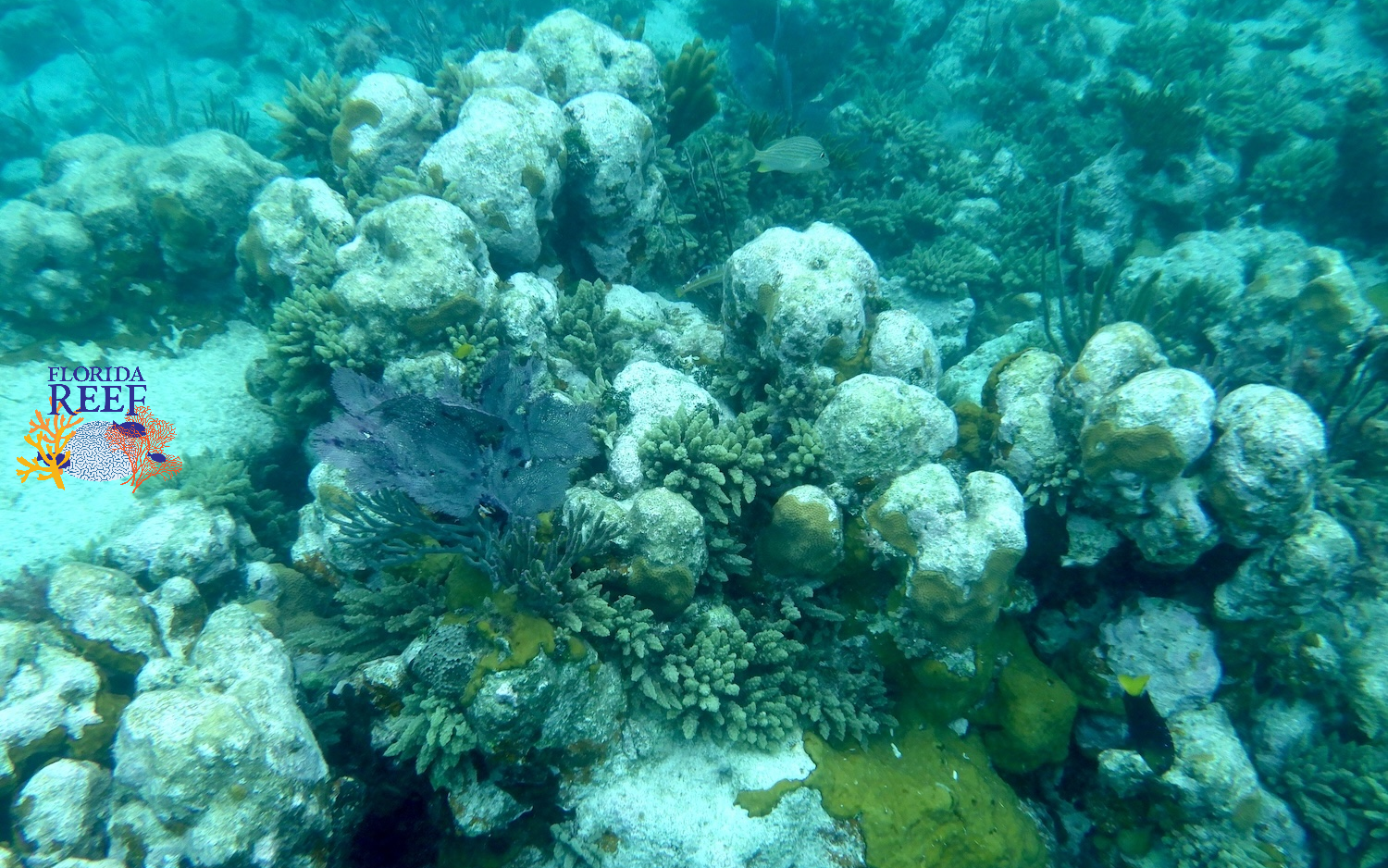
BISCAYNE NATIONAL PARK, Florida — No shimmering schools of brilliantly colored fish. No forests of elkhorn and staghorn corals or colonies of undulating sea fans. No pillar corals or vibrant sponges.
Eight miles off the Florida coast, the seabed 20 feet down is essentially monochrome, save for a handful of brain corals and scattered fans.
It’s been nearly 70 years since Martin Arostegui arrived from Cuba, but he still can’t get over how the Florida Reef has deteriorated.
“It has been a drastic change for the worse. When I started diving here as a child, 15, 16 years old, the reef was full of fish,” Arostegui recalled on the lawn of Biscayne National Park’s Dante Fascell Visitor Center after spending a late-April morning snorkeling parts of the reef. “The corals were vibrant. We had staghorns. We had elkhorns. We had all kinds of other corals. All of the patch reefs as the ones that we saw today had small groupers and snappers and all kinds of other fish.”
But that was all missing as Arostegui guided a National Parks Traveler reporter and National Parks Conservation Association (NPCA) representative on a watery journey across the outer edge of the national park as part of a morning snorkeling trek with the Biscayne National Park Institute into the Atlantic Ocean beyond Elliott Key.
Arostegui, slight in stature with a head of wavy white hair and beard and mustache to match, has spent a lifetime tied to the world’s ocean and fisheries. A critical care physician by profession, the sport angler by avocation holds more International Game Fish Association records than any other angler.
According to that association, “he is the first angler to achieve the coveted IGFA Billfish Royal Grand Slam on fly tackle and he has led his family to hundreds of IGFA and International Women's Fishing Association (IWFA) records.”
Arostegui’s travels, fishing, and diving through the decades left a deep impression on him regarding the fate of the oceans.
“I’ve witnessed firsthand the dramatic changes in our marine environment. I’ve seen reefs that were once vibrant with life become barren,” he wrote in his recently published autobiography. “I’ve watched fish populations decline and entire ecosystems struggle. These experiences transformed me from simply an angler into a conservationist - someone who understands that we have a responsibility to protect what we love.”
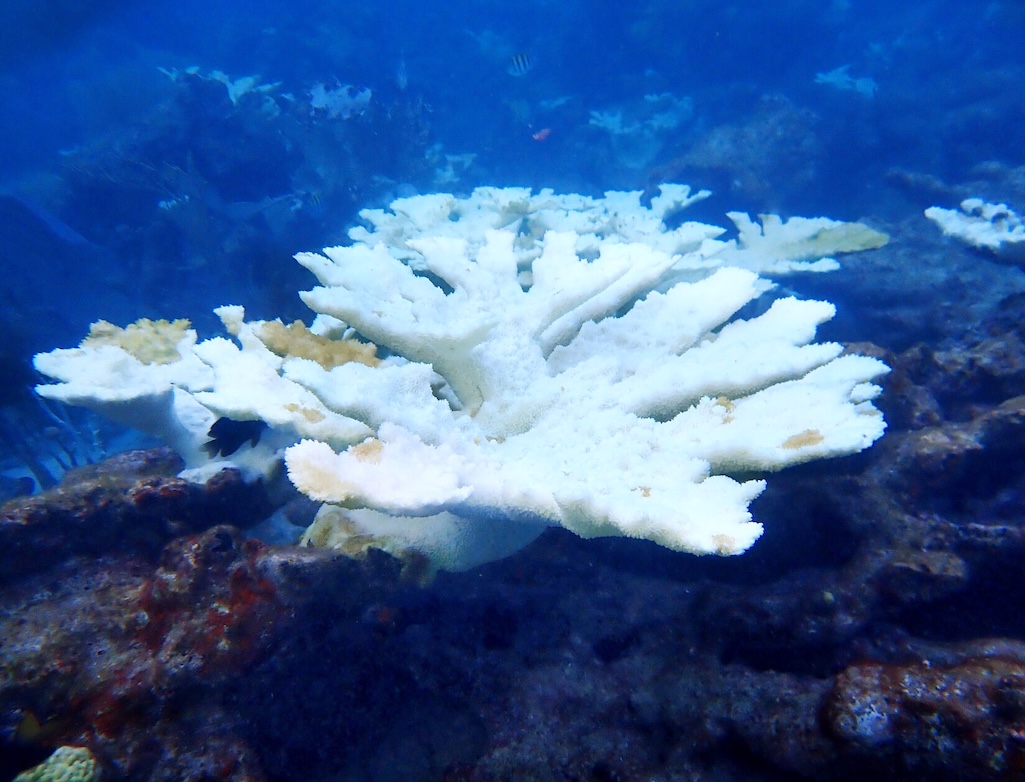
The marine heat wave that spread through the Florida Keys in 2023 left many corals bleached white/NOAA
Clinging To Life
The Florida Reef literally could be described as on life-support. Though it stretches about 350 miles down the Florida coast from Biscayne National Park to Dry Tortugas National Park 70 miles below the Florida Keys, just 2 percent or less of that great marine expanse still has living corals, according to scientists.
Missing is the great vibrancy normally associated with coral reefs, which today's documentaries often selectively portray as teeming with marine life from eels and sea turtles to crabs and sharks and kaleidoscopic flights of fish.
The reef faces an assortment of death-inflicting pressures: Mainland pollution and fertilizers washed into the ocean by storms; dredging, boat anchors and props, and; climate change that is literally poaching corals with water temperatures way above their comfort zones.
“As we see climate getting hotter, not colder, I think we're going to see more damage to the reef,” said Arostegui, whose determination to see the reef restored conjure a 21st century version of Ernest Hemingway’s protagonist in the “Old Man and the Sea,” a heroic figure who persevered agains all odds.
In a six-degrees-of-separation linkage, Arostegui’s father met Hemingway and learned “first-hand about the famous writer’s fishing adventures.”
Preaching Conservation
“My initial involvement in marine reserves had to do mostly with fisheries, because I saw a major decline in the fish stocks of snappers and groupers, hogfish, grunts, any fish that was extracted for fishing by somebody,” Arostegui said. “I became very concerned, so I worked with a couple of friends of mine to create a PowerPoint and bring awareness to a number of different clubs and fishing organizations and civic organizations about marine reserves.”
Arostegui also has authored articles — in English and Spanish — for fishing journals on conservation techniques anglers can apply to their hobby.
Inextricably Linked Ecosystems
Working to attract concern about the reef's plight from the public and policymakers is NPCA and other nonprofit groups like the Florida Oceanographic Society and Reef Relief, and many academic institutions.
“The Florida Reef Tract is the only barrier reef in the continental U.S. It's the third-largest in the world, said Marisa Carrozzo, the senior coastal and wildlife program manager with NPCA's Sun Coast Region. “We have an amazing amount of coral reef habitat within national park units in South Florida.
“The decline of coral reefs, and of course, the fisheries that depend on them has been really, really drastic,” said Carrozzo. “And one of the ways that we have been raising awareness is by advocating for marine protected areas or marine reserve zones. These are areas where you can protect a small portion of the reef tract and those would be a no-fishing area. You could still go snorkel, you could go swim, you can still enjoy the area recreationally. It would just protect it from anchor damage and marine debris and the pressures of overfishing.”
While Florida’s natural environments — the coastal areas, marine areas, and even the river of grass — are identifiably separate, their health is intertwined.
“From Dry Tortugas all the way up the east coast of Florida, we even have connectivity with Everglades restoration and Everglades National Park,” said Carrozzo. “The health of the Florida Reef Tract and the health of the Everglades ecosystem are inextricably linked.”

Arostegui noted, for example, that Lake Okeechoobee at the head of the Everglades risks upsetting the entire river of grass ecosystem due to the huge phosphate load it holds. If a major rain event caused the lake to overflow or breach its earthen dam, it could flood the downstream region like an overflowing toilet soaking your living room carpet, he said.
“We need to look at the whole area of South Florida: Everglades restoration, Biscayne Bay restoration, and coral reef restoration as a unified process,” Arostegui said.
Reversing the damage and protecting these areas costs money.
“We need to see additional funding for coral reef restoration because it is a very, very critical aspect of South Florida's economy, quality life and the environment,” said Carrozzo. “The money should be spent in the most beneficial ways for ensuring the long-standing survival of the reef.”
Along with addressing pollution in recent years officials have been replacing septic systems with connections to sewer systems, funds need to go towards coral nurseries and identifying areas of the reef that would best respond to coral plantings from those nurseries, she said.
Healthy reef proponents need to be as ambitious as possible with their drive, said Carrozzo, “to ensure that we are able to protect what we have left and restore the rest."
Kurt Repanshek founded National Parks Traveler in August 2005. Since then, as its editor-in-chief, he has grown the site’s audience to more than 4.5 million a year, as well as its reputation and relevance. A veteran journalist whose 40+-year career started with The Associated Press, Repanshek has interviewed presidential candidates, members of Congress, and reported on such natural disasters as the 1988 wildfires that swept across Yellowstone National Park.
This project was made possible in part by the Curtis & Edith Munson Foundation.
A copy of National Parks Traveler's financial statements may be obtained by sending a stamped, self-addressed envelope to: National Parks Traveler, P.O. Box 980452, Park City, Utah 84098. National Parks Traveler was formed in the state of Utah for the purpose of informing and educating about national parks and protected areas.
Residents of the following states may obtain a copy of our financial and additional information as stated below:
- Florida: A COPY OF THE OFFICIAL REGISTRATION AND FINANCIAL INFORMATION FOR NATIONAL PARKS TRAVELER, (REGISTRATION NO. CH 51659), MAY BE OBTAINED FROM THE DIVISION OF CONSUMER SERVICES BY CALLING 800-435-7352 OR VISITING THEIR WEBSITE. REGISTRATION DOES NOT IMPLY ENDORSEMENT, APPROVAL, OR RECOMMENDATION BY THE STATE.
- Georgia: A full and fair description of the programs and financial statement summary of National Parks Traveler is available upon request at the office and phone number indicated above.
- Maryland: Documents and information submitted under the Maryland Solicitations Act are also available, for the cost of postage and copies, from the Secretary of State, State House, Annapolis, MD 21401 (410-974-5534).
- North Carolina: Financial information about this organization and a copy of its license are available from the State Solicitation Licensing Branch at 888-830-4989 or 919-807-2214. The license is not an endorsement by the State.
- Pennsylvania: The official registration and financial information of National Parks Traveler may be obtained from the Pennsylvania Department of State by calling 800-732-0999. Registration does not imply endorsement.
- Virginia: Financial statements are available from the Virginia Department of Agriculture and Consumer Services, 102 Governor Street, Richmond, Virginia 23219.
- Washington: National Parks Traveler is registered with Washington State’s Charities Program as required by law and additional information is available by calling 800-332-4483 or visiting www.sos.wa.gov/charities, or on file at Charities Division, Office of the Secretary of State, State of Washington, Olympia, WA 98504.
