

Sunrise over "The Mountain" and Tipsoo Lake, Mount Rainier National Park / Rebecca Latson
Featured Photographer
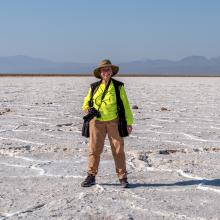
Contributing photographer and writer for the National Parks Traveler since 2012, Rebecca Latson has ventured out to units of the U.S. National Park System, as well as national parks within Canada, on behalf of the Traveler. With her writing and photography, Rebecca authors the Traveler's monthly Photography In The National Parks column as well as various other national park-related articles (hiking, itineraries, photography guides, quizzes) for the Traveler.
On a clear sunny day in the Seattle/Tacoma area of Washington State, the locals often remark “The Mountain is out.” Gaze eastward and you, too, will see The Mountain, a 14,410-foot-tall (4,392 m) volcano towering over the landscape in all its glacier-flanked glory. It’s a sight to behold. It’s also the centerpiece of Mount Rainier National Park.
Archaeology traces human use and habitation of the area back 9,000 years. Before European explorers ever set eyes upon this icon of the Pacific Northwest, the Cowlitz, Muckleshoot, Nisqually, Puyallup, Squaxin Island, Yakama, and Coast Salish peoples revered the mountain, calling it by various names: Tahoma, Takhoma, Tacoma, Ta-co-bet, Taqo ma, Tkobed, Taqo bid, Tkomen, Nutselip, and Pshwawanoapami-tahoma.
Established as a national park in 1899, over 1.6 million visitors traveled to Mount Rainier National Park in 2023, a testament to this park’s popularity, and with good reason. Camping, hiking, backpacking, photography, bicycling, birdwatching, wildlife viewing, fishing, paddling, climbing, and winter sledding, snowshoeing, and cross-country skiing are all enjoyed within Mount Rainier’s boundaries.
Speaking of climbing, thousands of people climb Mount Rainier each year using any of 20 different climbing routes. Thetravel.com lists Mount Rainier as the fifth most-climbed mountain in the United States.
Born of fire and sculpted by ice, this “episodically active” volcano boasts the most glaciers on a mountain within the contiguous United States. Twenty-five major glaciers have a combined area of 35 square miles (90 square kilometers), covering almost 10 percent of the park.
Mount Rainier’s three life zones (forest, subalpine, alpine) offer habitats for 964 plant species, 182 bird species, 65 mammal species, 15 reptile and amphibian species, and 12 fish species. Not only does this national park explode with wildflower color during the spring and summer, but it offers birders and wildlife viewers the chance to enjoy a wide variety of plant and animal life. So, remember to bring your binoculars and cameras when you visit. Mount Rainier is a photographer’s dream. Sunrises, sunsets, starry nights, wildflowers, birds, and other wildlife provide a multitude of photo ops any season of the year.
There’s plenty to do and see at Mount Rainier National Park. Whether this is your first or fourth visit, the pages below will not only help you plan your trip, but perhaps teach you something new you didn’t know about The Mountain and its surrounding terrain.
Traveler’s Choice For: hiking, photography, climbing, birdwatching, geology, winter activities
- By Rebecca Latson - February 17th, 2025 6:40am



