
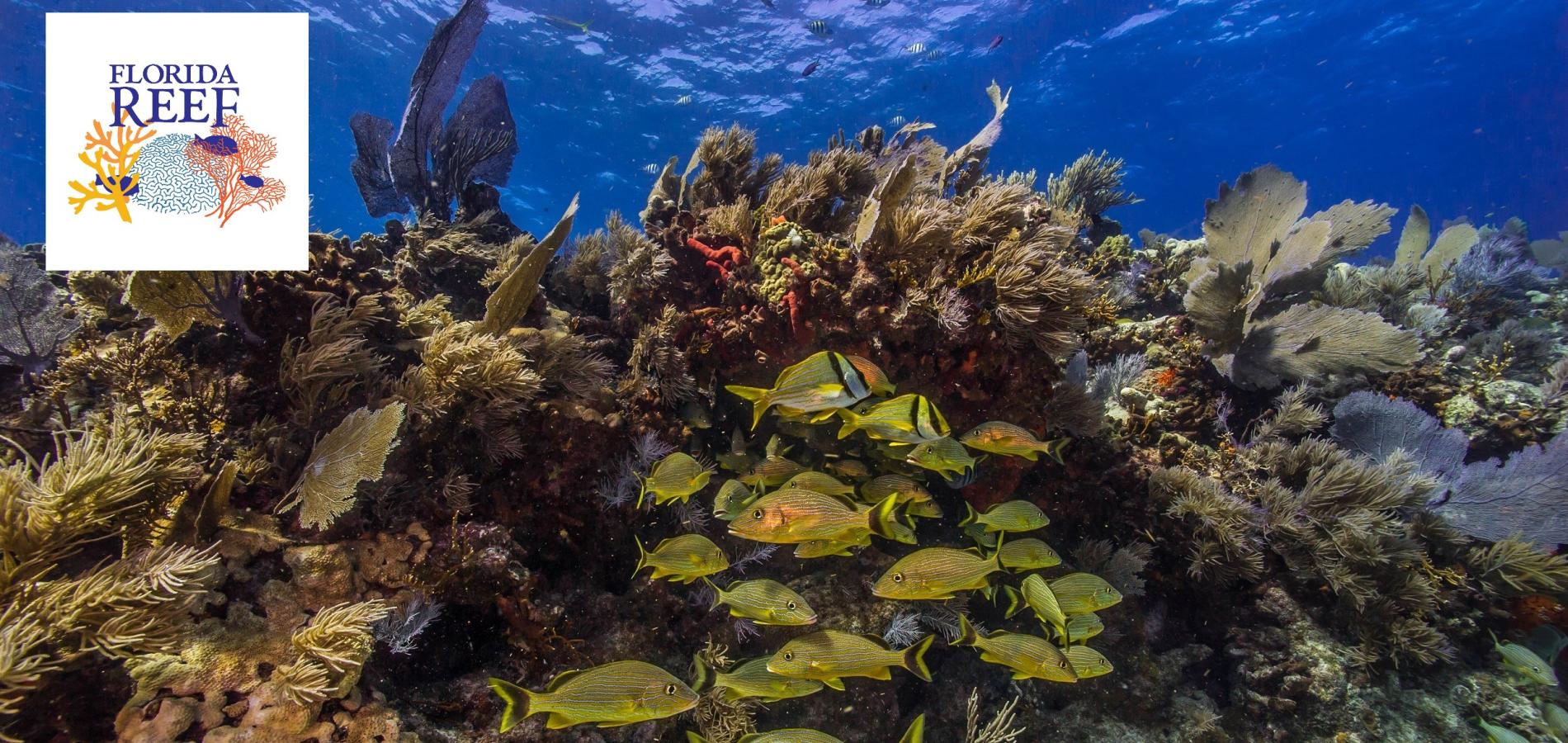

Stretching nearly 350 miles and forming a major part of both Biscayne and Dry Tortugas national parks, the Florida Reef is the only coral barrier bank reef in the continental United States and the third-largest in the world.
This dynamic underwater ecosystem, with biodiversity rivaling that of tropical rainforests, supports more than 1,400 species of plants and animals. Among them are a third of Florida’s threatened and endangered species, including elkhorn and staghorn corals, green sea turtles, Nassau grouper, and humphead wrasse.
The reef is approximately 10,000 years old, having developed when sea levels rose following the last ice age. But its building blocks date back some 200,000 years to when sandbars in what are now the lower Florida Keys were shaped by tidal currents flowing between Florida Bay and the Atlantic Ocean. Coral reefs that dated to the same time period died when water levels dropped around 100,000 years ago. After sea levels stabilized following the ice age, corals began to grow on the former reefs.
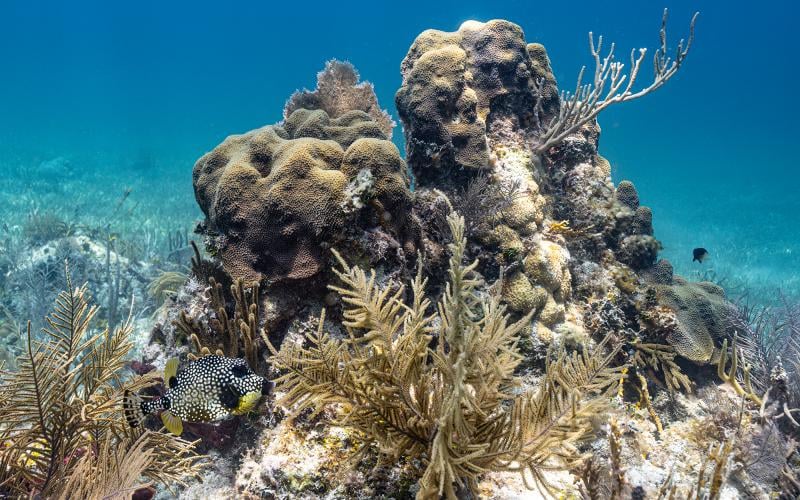
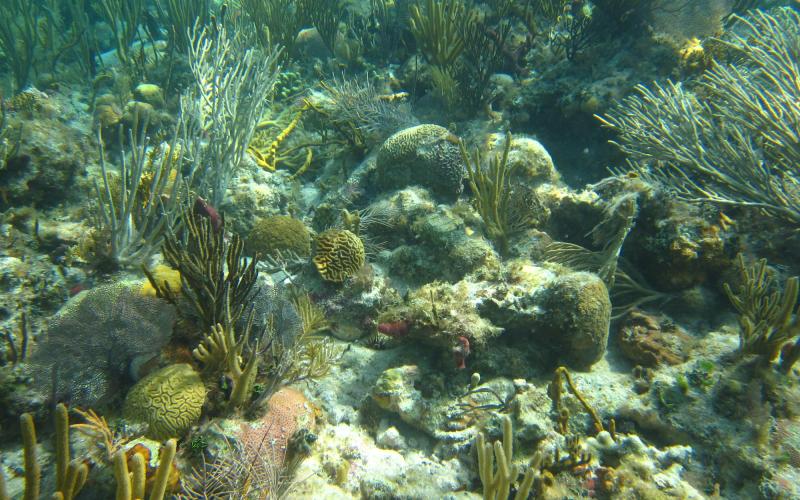
Today the Florida Reef hosts more than 45 species of stony corals and 35 species of octocorals, along with marine species ranging from sea turtles and sponges to anemones, rays, lobsters and seabirds.
How do corals eat?
Corals feed on tiny particles in the water column by extending their tentacles, which are armed with stinging cells called nematocysts, into the surrounding water to catch prey, and they obtain nutrients from microscopic algae that live inside their tissues.
What causes coral bleaching?
Coral bleaching can be caused by a wide range of environmental stressors such as pollution, oil spills, increased sedimentation, extreme increases or decreases in ocean temperatures, fluctuations in salinity, low oxygen, disease and predation.
How do corals reproduce?
Corals can reproduce asexually through budding or fragmentation and sexually via broadcast spawning or brooding.
Reef Under Stress
But coral reefs are highly fragile ecosystems, vulnerable to shifts like water temperature changes and nutrient influx, and the Florida Reef has suffered dramatic degradation in recent years. Twelve reef species have been overfished to unsustainability, studies have shown. Only 2 percent coral cover remains at some monitored sites, according to the federal Office of National Marine Sanctuaries. The historic norm for healthy reefs in the Florida Keys was live coral cover of around 30 percent.
The reef-building corals — brain, star, and elkhorn corals — all now are in decline as warmer ocean temperatures lead to more frequent coral bleaching events, Among other stressors weighing in, stony coral tissue loss disease and other maladies degrade the reef. Pollution from sources including Florida’s drainage canal system taints the water. Marine debris and commercial and recreational fishing have diminished marine life.
In 2006, elkhorn and staghorn coral were listed as threatened species under the Endangered Species Act, and in 2014 the boulder star coral, mountainous star coral, lobed star coral, rough cactus coral and pillar coral were added..
The reef, which according to a 2016–2017 study funded by NOAA's Coral Reef Conservation Program generates $1.1 billion a year for the local economy and supports 71,000 South Florida jobs, is slow-growing, with coral colonies adding only one-half inch to seven inches a year. The living tissue known as coral polyps grows on the outer surface while its skeletons erode, producing the white sand that's prized on tourist beaches.
But coral growth can only occur on a solid structure for attachment, in water temperatures between 75°F and 85°F and clear waters low in phosphate and nitrogen nutrients, and with moderate wave action to disperse waste and bring oxygen and plankton to the reef.
Florida Reef Parks
The reef is a dominant feature of Biscayne and Dry Tortugas national parks, which together draw around 600,000 visitors a year. It is closer to shore and lacks the shallow inshore lagoons found on most barrier reefs. Scientists therefore refer to the Florida Reef as a barrier bank reef. Particularly in nearshore reef areas like those in Biscayne National Park, changes in freshwater can affect salinity nutrient levels, and sediment, all factors in coral reef health.
Coral reef coverage at Biscayne is estimated at about 50 percent of the park. About 99 percent of Dry Tortugas is underwater, and approximately 37 percent of that area is covered by coral reef habitat.
Because the reefs are so central to the parks, both National Park Service staff at Biscayne and Dry Tortugas are working to protect and restore their corals. Initiatives aim to enhance knowledge of park reefs; improve or maintain the reefs’ ecological condition; and protect them from stressors and threats.
As part of their reef protection efforts, the parks conduct out-plantings of nursery-reared corals to increase abundance and diversity. They restore storm damaged corals and remove derelict fishing gear and other marine debris. They also conduct programs to manage invasive species such as the Indo-Pacific lionfish.

"The reef at Dry Tortugas not only provides vital habitat for an extraordinary diversity of marine life, but its position at the crossroads/nexus of three ocean currents makes it a key hub for coral dispersal throughout the Gulf of Mexico and the Florida Keys.”
Andrew Morin, natural resource program manager at Dry Tortugas
Everglades National Park, which borders but does not overlap with the reef, has developed a Comprehensive Everglades Restoration Plan (CERP) that benefits the reef. The plan is a collection of long-term projects to store, clean, and deliver freshwater more naturally across South Florida with the goal of restoring the natural flow of freshwater from the Kissimmee River south through the Greater Everglades ecosystem. Freshwater flows from the Everglades eventually enter Florida Bay and Biscayne Bay, which influence coastal ocean waters, including the Florida Reef Tract.
In order to increase reef protections, Looe Key and Key Largo National Marine sanctuaries were created and then expanded in 1990 to form the sprawling Florida Keys National Marine Sanctuary. It encompasses approximately 3,427 square nautical miles of coastal, ocean, and Gulf of Mexico waters around the Florida Keys. The sanctuary is adjacent to Biscayne National Park and includes a zoned management system to reduce user conflicts. To protect the reef ecosystem, some reefs are off-limits with fishing restricted.
The Reef's Contributions
Coral reefs protect coastal areas from erosion and flooding by reducing wave energy by up to 97 percent, according to research meta-analyses. A USGS study estimated that this flood protection benefits more than 5,600 people in Florida and avoids $675 million in damages to property and economic activity.
Scientists also are looking at reef components for medical application that may benefit humans. Researchers are using fluorescent proteins found in coral, including green fluorescent protein, to study biological processes associated with AIDS, Alzheimer's disease, and cancer.

Other coral compounds are being studied in relation to medicines that might combat cancer. Soft corals are known to make eleutherobin, a chemical with anti-cancer properties. It disrupts the cytoskeleton, and soft corals use it as a defense against predators. Laboratory studies have shown that the compound is also a potent inhibitor of cancer cell growth.
More recently, corals have been used for bone grafting, as the structure of the commonly used coral, Porites, is similar to that of cancellous bone.
Corals are also credited with removing, fixing, and recycling atmospheric carbon dioxide a key contributor to global warming. However, the “source-sink” debate is ongoing, given that coral calcification is accompanied by the release of CO2 to the atmosphere.
In upcoming features on the Florida Reef, National Parks Traveler will introduce you to key species in the reef and explore its economic and political impact.
Jennifer Roberts is a freelance writer and editor with nearly a decade of experience working for literary publications, start-ups, educational organizations, and news outlets. She grew up just across the river from Gateway Arch National Park and now lives in southern Chile with her husband, border collie, and two ducks.
Story Categories:
A copy of National Parks Traveler's financial statements may be obtained by sending a stamped, self-addressed envelope to: National Parks Traveler, P.O. Box 980452, Park City, Utah 84098. National Parks Traveler was formed in the state of Utah for the purpose of informing and educating about national parks and protected areas.
Residents of the following states may obtain a copy of our financial and additional information as stated below:
- Florida: A COPY OF THE OFFICIAL REGISTRATION AND FINANCIAL INFORMATION FOR NATIONAL PARKS TRAVELER, (REGISTRATION NO. CH 51659), MAY BE OBTAINED FROM THE DIVISION OF CONSUMER SERVICES BY CALLING 800-435-7352 OR VISITING THEIR WEBSITE. REGISTRATION DOES NOT IMPLY ENDORSEMENT, APPROVAL, OR RECOMMENDATION BY THE STATE.
- Georgia: A full and fair description of the programs and financial statement summary of National Parks Traveler is available upon request at the office and phone number indicated above.
- Maryland: Documents and information submitted under the Maryland Solicitations Act are also available, for the cost of postage and copies, from the Secretary of State, State House, Annapolis, MD 21401 (410-974-5534).
- North Carolina: Financial information about this organization and a copy of its license are available from the State Solicitation Licensing Branch at 888-830-4989 or 919-807-2214. The license is not an endorsement by the State.
- Pennsylvania: The official registration and financial information of National Parks Traveler may be obtained from the Pennsylvania Department of State by calling 800-732-0999. Registration does not imply endorsement.
- Virginia: Financial statements are available from the Virginia Department of Agriculture and Consumer Services, 102 Governor Street, Richmond, Virginia 23219.
- Washington: National Parks Traveler is registered with Washington State’s Charities Program as required by law and additional information is available by calling 800-332-4483 or visiting www.sos.wa.gov/charities, or on file at Charities Division, Office of the Secretary of State, State of Washington, Olympia, WA 98504.
