
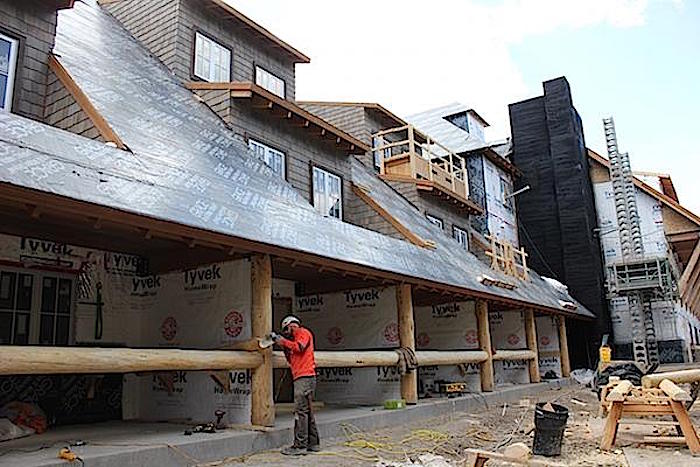
How can concessions agreements with the National Park Service be improved? What sort of innovations should the Park Service consider for the next 100 years? Those topics will be dissected by two House of Representatives subcommittees this week.
The subjects are not new by any stretch. Concessions operations in the National Park System have been scrutinized, kicked around, and questioned for some time. Back in 1998 Congress thought it had fixed the approach to managing long-term contracts in the parks, but problems that have surfaced in the past year have led some members of Congress to voice concern that the contracting system is ineffective.
"The system laid out in the National Park Omnibus Management Act (of 1998) has worked, with varying degrees of success. In recent years, however, it has become increasingly clear that competition in the bidding process and the ability of the Park Service to attract new bidders have both significantly diminished," Sens. Lisa Murkowski and Michael F. Bennett wrote to Interior Secretary Sally Jewell in mid-December.
"We understand that the concessions bidding system is not working effectively and the Park Service is doing what it can under the constraints of the law to attract bidders," they continued. "Yet we also believe the practice of 'borrowing' funds from park maintenance accounts is not an adequate solution. We believe this practice should not continue, and we urge you to intervene and stop this practice."
The poster child, if you will, of the concessions program's ills is the South Rim of Grand Canyon National Park, where the park's handling of the massive package of lodging, dining, and activities concessions has generated lawsuits and hard feelings. At issue was the decision by the Park Service to split the South Rim's concessions package in two; Delaware North Cos. received one half, while the winner of the larger, second half remains up in the air.
The sheer magnitude of that half, which includes the El Tovar Hotel, the Bright Angel Lodge, and Phantom Ranch, has created a nightmare of sorts. Driving the problem was that Xanterra Parks & Resorts, which has held the contract for decades, had amassed nearly $200 million in improvements to the lodgings and restaurants; if Xanterra didn't have the contract renewed, it would be entitled to that sum from its successor.
The Park Service borrowed about $100 million from across the park system to, in effect, buy down that number to a somewhat more reasonable $100 million with hopes the contract would generate competition among companies that could manage to both assume that debt and operate such a large operation.
Grand Canyon officials said Tuesday that at least two bids for the contract had been received, and the Park Service's concessions office in Washington, D.C., was reviewing them.
Still, as Traveler reported in March, across the National Park System there is an estimated half-a-billion-dollars of obligations the National Park Service owes concessionaires who run lodges, restaurants, and even some activities.
At Grand Teton National Park in Wyoming, the outstanding amount is more than $57 million. At Glacier National Park in Montana, it's $22 million. At Grand Canyon National Park in Arizona, it's nearly $100 million. At Yellowstone National Park, the sum is $21.5 million.
Those figures are built into the existing concessions contracts, and not owed immediately, but could come due at the end of the current pacts.
While Park Service officials declined to comment on whether the current concessions model hampers competition, the letter from the senators to Secretary Jewell showed some in Congress are uncomfortable with the current program. And on Thursday the House Oversight and Government Reform Subcommittee on Interior will hold a hearing titled, “Modernizing the National Park Service Concession Program.”
An hour after that hearing commences, a second, “New and Innovative Ideas for the Next Century of Our National Parks," will get under way in the House Natural Resources Subcommittee on Federal Lands. A memo outlining the goal of the hearing notes that that Park Service has increasingly become "unable to fund necessary maintenance projects. NPS currently estimates that its deferred maintenance backlog stands at $11.5 billion (of which $5.9 billion represents non-transportation assets)."
The memo also notes that "per capita visitation at National Parks has steadily declined in recent decades." (It should be noted, though, that in 2014 visitation to the parks reached a record of nearly 293 million, and that parks are reporting double-digit increases in visitation this year, some as high as 20 percent.)
Expected to testify at that hearing are John Nau, III, a member of the National Park Foundation and president of the largest distributor of Anheuser-Busch products; Jim Fram, president and CEO of the Greater Hot Springs Chamber of Commerce; Derrick Crandal, counselor to the National Park Hospitality Association; and Craig Obey, senior vice president for government affairs for the National Parks Conservation Association.
Not expected to be a topic for consideration is an increase in congressional appropriations to the Park Service:
This hearing will focus on new and innovative ideas for generating funding for the National Park System, outside of congressional appropriations, including increasing park visitation, enhancing guest services, and promoting recreational activities within parks.
The memo also seems to indicate the committee's Republican leadership favors forging new sponsorship agreements with businesses that until just recently the Park Service had decided not to do business with, and to encourage more volunteerism and outside friends groups to help run the parks.
...NPS has recently taken some positive steps forward. One positive change has been in the area of corporate sponsorship. In January of this year, NPS Director Jonathan Jarvis waived NPS policies against partnering with alcoholic beverage companies so the congressionally chartered National Park Foundation could sign a $2.5 million agreement with Anheuser-Busch InBev. The deal is designed to raise revenue and promote the NPS’ centennial “Find Your Park” campaign.
Another positive change has been an increased focus on volunteerism and utilization of so-called “Friends Groups.” The National Park Foundation has worked to increase the growth and effectiveness Friends Groups. Friends Groups have helped fund projects involving campground and trail restorations, wildlife research, and facility construction.
A preview, perhaps, of the innovative ideas to be proposed at the hearing came in March when Mr. Crandall told a House appropriations subcommittee that concessionaires want Congress to authorize better marketing of the parks, longer "high" seasons in the parks they believe would generate more revenues for infrastructure improvements, and expanded concessionaire opportunities in the parks.
"Mr. Chairman and Members, I know you would agree that we need to get Americans back in touch with nature, engaged in physical activities and outdoor recreation, and connected to the magnificent culture, heritage and landscapes that are celebrated by our National Park System," Mr. Crandall said in remarks prepared for his appearance before the subcommittee on March 19.
"We need to reach out to youth to encourage them to share in the wonder and enjoyment of our National Parks and discourage the increasingly sedentary lifestyles that are contributing to our health care crisis. We need to expand park visitation to encourage minorities, disadvantaged communities, new Americans and urban residents to see their national parks for themselves and to build a broader constituency for America’s great outdoors. And, we need to find new and innovative ways to reinvest in the maintenance, restoration, and expansion of critical park infrastructure – much of which was built either by private investment when the national parks were first created, or in conjunction with the work of the Civilian Conservation Corps more than half a century ago."
Among the ideas Mr. Crandall proposed to the committee were:
* Creation of a "National Park Outreach and Promotion Fund," funded by a transfer of 10 percent of the concessionaire franchise fees to "support NPS outreach and marketing efforts in partnership with states, gateway communities and concessioners;"
* Expanding the seasons at national parks, a move that would lead to increase visitor spending and franchise fees for the Park Service. These revenues, coupled with "investment requirements under new concessions contracts and appropriate use of existing Leasehold Surrender Interest" should be used to improve infrastructure in the park system.
* More national park campgrounds should be managed by concessionaires "to improve visitor services and reduce operating costs";
* Concessionaires should be allowed to qualify for "historic tax credits from investments in structures" in the parks, and;
* Programs such as Youth Conservation Corps utilized in Yellowstone and Shenandoah national parks should be expanded across the system to "undertake construction, reconstruction and maintenance projects," possibly at a savings for the Park Service.
During an interview with the Traveler prior to that hearing, Mr. Crandall said the concessionaires don't expect the Park Service to "dramatically" expand road systems in national parks, but would like to see facility improvements and additions and believe it can be done without posing a great competitive threat to lodging and dining options in gateway communities.
Stories about:
Story Categories:
A copy of National Parks Traveler's financial statements may be obtained by sending a stamped, self-addressed envelope to: National Parks Traveler, P.O. Box 980452, Park City, Utah 84098. National Parks Traveler was formed in the state of Utah for the purpose of informing and educating about national parks and protected areas.
Residents of the following states may obtain a copy of our financial and additional information as stated below:
- Florida: A COPY OF THE OFFICIAL REGISTRATION AND FINANCIAL INFORMATION FOR NATIONAL PARKS TRAVELER, (REGISTRATION NO. CH 51659), MAY BE OBTAINED FROM THE DIVISION OF CONSUMER SERVICES BY CALLING 800-435-7352 OR VISITING THEIR WEBSITE. REGISTRATION DOES NOT IMPLY ENDORSEMENT, APPROVAL, OR RECOMMENDATION BY THE STATE.
- Georgia: A full and fair description of the programs and financial statement summary of National Parks Traveler is available upon request at the office and phone number indicated above.
- Maryland: Documents and information submitted under the Maryland Solicitations Act are also available, for the cost of postage and copies, from the Secretary of State, State House, Annapolis, MD 21401 (410-974-5534).
- North Carolina: Financial information about this organization and a copy of its license are available from the State Solicitation Licensing Branch at 888-830-4989 or 919-807-2214. The license is not an endorsement by the State.
- Pennsylvania: The official registration and financial information of National Parks Traveler may be obtained from the Pennsylvania Department of State by calling 800-732-0999. Registration does not imply endorsement.
- Virginia: Financial statements are available from the Virginia Department of Agriculture and Consumer Services, 102 Governor Street, Richmond, Virginia 23219.
- Washington: National Parks Traveler is registered with Washington State’s Charities Program as required by law and additional information is available by calling 800-332-4483 or visiting www.sos.wa.gov/charities, or on file at Charities Division, Office of the Secretary of State, State of Washington, Olympia, WA 98504.
INN Member

The easiest way to explore RV-friendly National Park campgrounds.

Here’s the definitive guide to National Park System campgrounds where RVers can park their rigs.
Our app is packed with RVing- specific details on more than 250 campgrounds in more than 70 national parks.
You’ll also find stories about RVing in the parks, tips helpful if you’ve just recently become an RVer, and useful planning suggestions.


Comments
The NPS may be reporting higher visitation but the oversight committee should be looking into that. With the notorious numbers fudging so rampant in Jarvis cabal, it is time that the visitation numbers be audited by an outside agency. Jarvis has been caught padding numbers here in the Smokies with visitation so other numbers elsewhere should be treated with great suspicion. After all, high reported numbers often equate to congressional appropriations. At least Jarvis is smart enough to learn that little bureaucratic trick.
Isn't using the words "Congressional committee " and "solutions" in the same sentence a perfect example of an oxymoron?
Give it up, backpacker. Your rant is getting tiresome.
I object to Crandall's first proposal: to redirect 10% of the concession franchise fees away from parks facilities and programs, to advertising to support visitation & concession. If the hospitality association members need to advertise their lodging and services, I think that should come out of their own budgets.
SB: the visitation numbers tend to be more rigorous in parks with entrance fees. Still, getting the numbers exact isn't worth spending a lot of money on, so in most cases there is a formula based on average visitors per vehicle, times vehicles counted by something in the road minus employee & business trips. At CABR the official numbers are now an undercount by perhaps 100K per year. To get better numbers we'd have to calibrate visitors per vehicle on weekdays v weekends v holidays, summer v. winter, and winter low tides on weekends & holidays. Aside from the hassle for the VUAs in the entrance station asking about how many visitors are in the vehicle while trying to avoid backing up traffic, that's a few hours of my time, plus a lot of time to get the new formula approved for official use.
Traveler, please excuse, I want to reinforce my concern regarding the cursory review of a new book, "YOUR YOSEMITE", by Robert O, Binnewies. I have read it twice now, it answers so many questions raised on this listserve that I think all participants would find the book very educational and rewarding. As regards Mr. Crandall's points, one comment in" YOUR YOSEMITE" really brought the issue home of more development in parks. "An indirect warning for all of us who cherish public parks used to hang on the wall of architect Edward Larabee Barne's office in New York City, a graphic of Central Park .On this graphic, penciled to scale, were most of the buildings ever proposed for construction within Central Park limits; art centers, educational facilities, theaters and amphitheaters, restaurants, athletic amenities, shops, places of worship, zoos, museums, children's playgrounds, libraries, more parking. Had all these structures been built Central Park would have been reduced to pleasant green strips between buildings.
Traveler, I think upon review of "YOUR YOSEMiTE", you will find Mr. Binnewies hits the nail on the head. The theme of the entire book, all of us, past and present, employee or citizen, made this system of the public ecological, cultural, and historic legacy possible. The debate continues to develop, privatize and otherwise not leave the system unimpaired for us and future generations, Those proposing this approach need to educate themselves at what is at stake here.
They've tabled the one thing that really needs to happen. Greater appropriations from Congress. So nothing worthwhile is going to come of this.
Rick Smith.
Spoken like a true NPS bureaucrat. When you public servants start serving the public instead of yourselves, then the public will have little need to look into the bureau. Rank and file NPS employees widely resent you cognoscenti and your erudite "We know better than you peons" attitudes. All scrutiny on you guys is well deserved.
Sorry Backpacker. If you were capable of composing a post without the hate filled vitriol you could have much better reception for your issues. Anyone who disagrees with you is automatically a mustache wearing high level executive co-conspirator of that most evil and devious Jarvis person.
If you can't control youself, please at least accept that your way of speaking hurts your cause more than helps it.
backpacker--Yep, I'm just another high-level manager who is hated by the people who work with me and disliked by park visitors. What planet are you from?
Has anyone thought of selling these to private enterprises and taking it out of the governments hands. This alone could take care of our national debt. And get rid of all of the leaches on the government payroll. Kill two birds with one stone. Our government has proven they cannot run any kind of business. If this was run like it should be it would be profitable for everyone.
Anon--Of course, concessioners are private businesses. The "government leeches" don't operate them; capitalists do. And most of them make money, and in some cases, lots of money, although not enough, I'm afraid, to take care of the national debt.
Megaera and tomp2 have funneled down to the core points. The childish name calling of the other comments is pitiable.
Why is there NPS maintenance backlog? or any other NPS backlog, for that matter? - Lack of sufficient funding from Congress. Years ago, entrances fees were proposed to help Parks obtain additional funding from those who actually visited the parks to help meet operational needs, but Congress immediately reduced the budget to offset the increase in funding from entrance fees ...... no net gain, no backlog reduction, and the shell games continue.
If visitation is down, it's not because the parks aren't loved - it's because the economy is so tight people can't afford to travel. Raising entrance fees will certainly NOT fix that problem. We can't price the public out of opportunity to visit their parks. If prices are set based on comparisons with other recreational activities, such as theme resorts, then people will choose the resorts to get more bang for their buck. Parks must have minimal entrance fees no matter what the private sector does. They are publicly owned, for crying out loud - let the owners visit! Concessions prices must also remain reasonable. It should be affordable for John Doe to spend a few nights at the Old Faithful Inn. If everyman can't afford to visit and enjoy the iconic wonders of the U.S., then the NPS needs to become a private entity, preserving its resources for the wealthy, who can afford to maintain them well (but would no doubt exploit them out of existence).
Why does the NPS pay concessioners for upkeep of the buildings they lease from the NPS? Many standard leases require tenants to maintain the building at their own expense. Congress/NPS has made it easy pickins for the largest concessionaires to dominate and squeeze out any competition.
Just as in private sector, we've given over business to the corporate. Mom and Pop have been euthanized. The govt. (NPS) has no obligation to concessioners to help them make a fortune off of Park visitors. The obligation is to the visitors to ensure they are getting a good service at a reasonable price. Incurring billions of dollars of debt to corporate concessioners is the most ludicrous formula for failure anyone could have invented. Oh, that's right, it came from Congress... who stands to personally benefit from big business corporate sponsors.
The concessioners are proposing that the little funding NPS receives from concessions franchise fees be diverted to advertising? Wow! Let me think... who stands to gain from that? Give me a break! Buy your own advertising.
Most agencies have the skills, knowledge and abilities to manage themselves well....but have inadequate funding and ridiculous Congressional interference that prevent their success.
No more studies, nor more programs, no more foundations - stop wasting time and money, and simply fund the operational needs of the NPS and get a fair return to the public from Concessioners rather than giving away the farm.
Anonymous, an excellent postin , you have it right on my own view of the issue.
We grew up fishing in Yellowstone in the 1940's through the 1960's with our dad and his friends. Because we caught so many fish, you may say it was us, and people like us that ruined the fishing. It may be true in some areas of the country, but it was not what caused Yellowstone fishing going to pot. Around late 1890’s US Fish Commission then changed name to U.S Bureau of Fisheries, had built the first hatchery on Yellowstone Lake. It was replaced in the early 1930’s, at Lake Boat Docks. The new hatchery was thought to be among the most modern in the West. Over time, the fish agencies, along with the CCI people install elaborate spanning beds in 11 tributaries around the lake. The hatchery collected eggs from tributaries. All tributary were closed to fishing. This hatchery not only produced stocks for the park, but also took advantage of the great spawning stock of Yellowstone cutthroat trout to supply eggs to hatcheries around the U.S. The last fish stocked for the benefit of anglers was in 1955. Some 310 million fish had been released in park waters since 1889. Between 1901 and 1953 818 million trout eggs were exported from the park to hatcheries throughout the U.S. The hatchery was a profit center for Fish Commission.
At some point, rift began between the Bureau of Fisheries, and National Park Service. In 1953 NPS had stopped egg collection from tributaries. Four years later, fish hatchery ceased operation and US Fish Commission transferred ownership of all the buildings to NPS. The NPS official stopped stocking in 1959. The Lake hatchery was closed in 1957. NPS began moving away from policies that allowed manipulation of Yellowstone’s natural resources. This policy of course continues today. Basically the NPS did not want anglers catching and removing fish in the park. Likewise if you follow the same line of reasoning, hiking through the park, traveling in a car through the park, visiting the park in any fashion is un-natural and all cause unintended consequences to the park. If it was not natural, is should not be in a National Park. The Park is to look at through other pictures, but do not touch.
In 1956, I would walk up Pelican Creek to see the thousands of fish. Pelican Creek is about two miles east of fishing bridge. It had the most pristine spanning beds you have ever seen. Today vegetation and stream flow have largely reclaimed the spanning beds. Some of the outlines can still be detected. The most serious results of impede of fish planting maybe irreversible. That could be saving of the Native Yellowstone Cutthroat Trout is also irreversible. It has been reported that cutthroat population is about 10% of the historic average lake population. Now for the last 15 to 20 years they are fighting Lake Trout. It is unknown how they were introduced into the Lake. In the fifties and early sixties you would see hundreds of boats on the lake. People in surrounding states would harbor boats at the Lake. The boat docks at Thumb, Lake, and Fishing Bridge were full all year. Many people would come to fish a number of times a year. This had been going on for forty years. By the end of the sixties fishing was all over. You may see thirty boats on the lake at time. The catching of fish had all but stopped. I worked in Yellowstone for over five years. In 1956 when I work at Fishing Bridge you could stand and watch thousands of fish below the bridge. People every day standing, shoulder to shoulder fishing, young and old. I do not think on any given day more than five fish where ever lifted the forty plus feet, and landed. But everyone had a good time. All had good fish stories to tell, when they were home. The bridge had supported fishing for over fifty years. After NPS destroyed the fishing, they closed the bridge to fishing. Today, if you see two fish from the bridge you would be lucky. From the thirties thru the end of the fifties, thousands of people were catching thousands of fish a year from the Lake. It took NPS a little over ten years to destroy one of the prime fisheries in the US. When they shut down the fish hatchery, just what did they think would happen? The only ones to blame are NPS. They should probably go back and change the names of such places.
Another example of the NPS mentality of allowing nature to take its course is the great Yellowstone fire. The BIG fire was started naturally, a lightning strike. Fire fighters from throughout the west went to Yellowstone to stop the fire. They were restricted from traveling on existing roads or cutting new roads to get to the fire. The fire burned over 1/3 of the trees in the park. Today if you question any NPS employee they will say how the forest is now healthier because the weaker trees were more likely to burn.
Back to the topic, letting nature take is coarse may be something that people say including all of the NPS. But this is NOT something most of those same peope actually BELIEVE. What they do believe is "Nature should be allowed to take its coarse AS LONG AS IT DOES NO EFFECT ME AND MY INTERESTS". This suppostion can be validated by asking someone to consider the following: “If one of your loved ones, a spouse, a child, a parent contracted cancer are you willing to tell them “Sorry – this is a natural event – and we must let nature persue its course. If you overcome it yourself the human race will be stronger, if you succumb to the disease the race will also be stronger because nature has weeded you out”.
It is easy for us to let nature take its coarse when it does not effect us. People are continuously "willing" the change of natural conditions. That is what mankind is, dividing us from other file on the earth - a willing creature. Many of us have a will to make things better. We pick up trash left by others, we stop fires created by others - including nature. We kill bugs in our gardens farms that destroy our plants. We create fish hatcheries to preserve fish, we at times restrict access to places we control to stop traffic. Because we do have a will mankind has a duty to protect nature. To say that stepping back and completely letting nature take its coarse has proven itself over the past eons is just avoiding responsibility. We have ALREADY imposed our will on nature and that is irreversable. Now we need to look at what is best for all of us including those that we are going to leave our legacy. With there even be a Yellowstone Park filled with wonders or will we have a dead forest with lifeless lakes for many generations?