
I cook 98 percent of the meals for my family, so I’m always on the lookout for interesting cookbooks – especially if they have anything to do with the National Park System. I was under the impression that the National Parks Cookbook by Linda Ly, about which I wrote a review for the Traveler in 2025, was probably the only cookbook covering all or most of the national parks.
Au contraire.
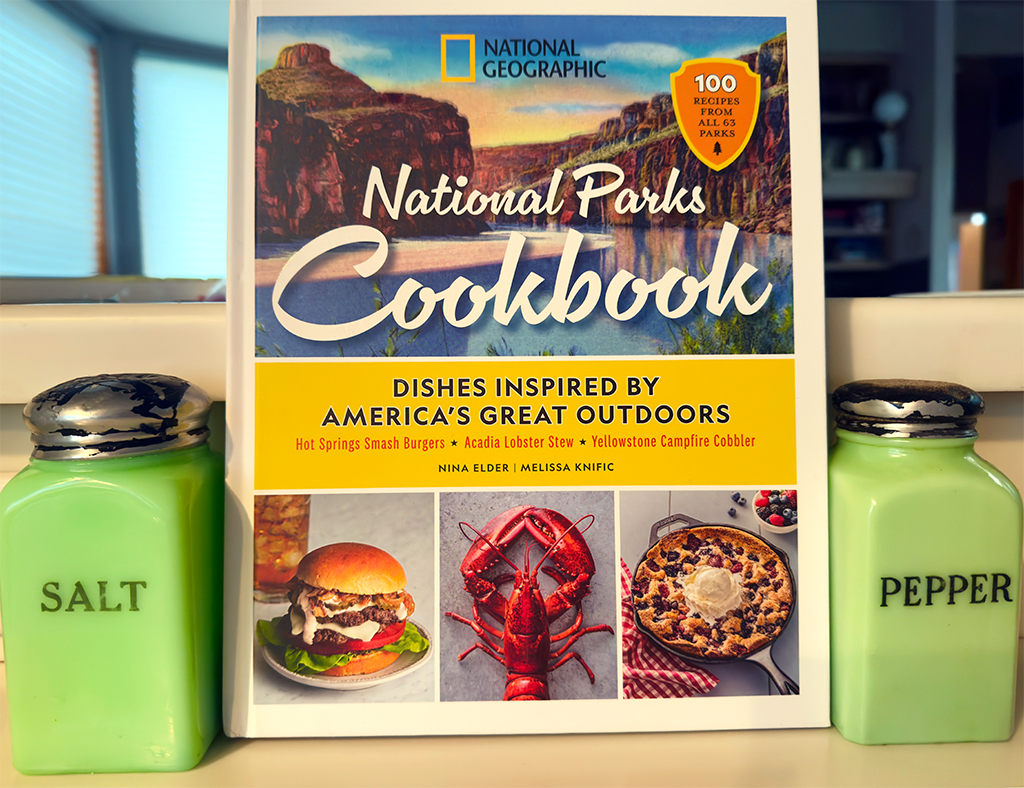
While idly scrolling through cookbooks online recently, I chanced upon yet another national parks cookbook: National Geographic’s National Parks Cookbook: Dishes Inspired By America’s Great Outdoors by Nina Elder and Melissa Knific. The sample photos in the book description looked beautiful, but for practical use, would the recipes measure up? I bought the book to find out.
The book itself is bright and colorful; the pages are glossy and heavyweight. Not only does a lovely photo accompany each recipe, but the authors also describe what inspired them to create this recipe for a particular national park. Snippets of park information are also sprinkled throughout the cookbook.
The recipes in this book are “inspired” by national parks, so they are not recipes directly from national park lodges. Nina Elder is an editor, writer, and cook for a variety of magazine publications. Melissa Knific is an editor and recipe developer who has contributed to or worked with food and cooking magazines. Most recipes in this book were devised by these two writers and tested by themselves and others. A couple of recipes are reprinted with permission from other publications.
According to the authors:
Our goal was to create a collection of recipes that highlights the diversity of these unique places that cover glaciers and deserts, ocean reefs and rocky mountains. Some of the dishes have a very direct tie to their associated park … others speak to the place more broadly …
Finding inspiration from ingredients located within and near the parks (ex. huckleberries and wild mushrooms), Elder and Knific researched not only park lodge menus but also dishes offered in area restaurants.
Be aware, this is not a five ingredient-dump-and-cook kind of book. It’s what I and my sister call a “labor-intensive” cookbook. That doesn’t mean the recipes are difficult by any means. All the recipes I tried are easy. Preparation, however, required more than a few steps, with more than a few ingredients, some of which were not readily available in my local grocery stores and required online ordering.
Of course I photographed the results of my labor. All the images were captured with a mirrorless SLR and 50mm lens, which is considered a standard lens rendering a sharp subject and pleasantly blurred background. Note, a 50mm lens tends to have a shallow depth of field, meaning it’s sometimes difficult getting a completely sharp image close-up.
Related Content: The Best Recipes From America's National Parks
National Parks Traveler Podcast Episode 218 | The National Parks Cookbook
Review | The Civilian Conservation Corps Cookbook
The Recipes And Results
Of the 100 recipes in this book, I tested seven of them – a mere pittance, but enough to give me an idea of the prep and cooking time I might expect from any of these dishes. Below are those seven recipes along with their national park inspiration.
Frito Pie (Carlsbad Caverns National Park, New Mexico)
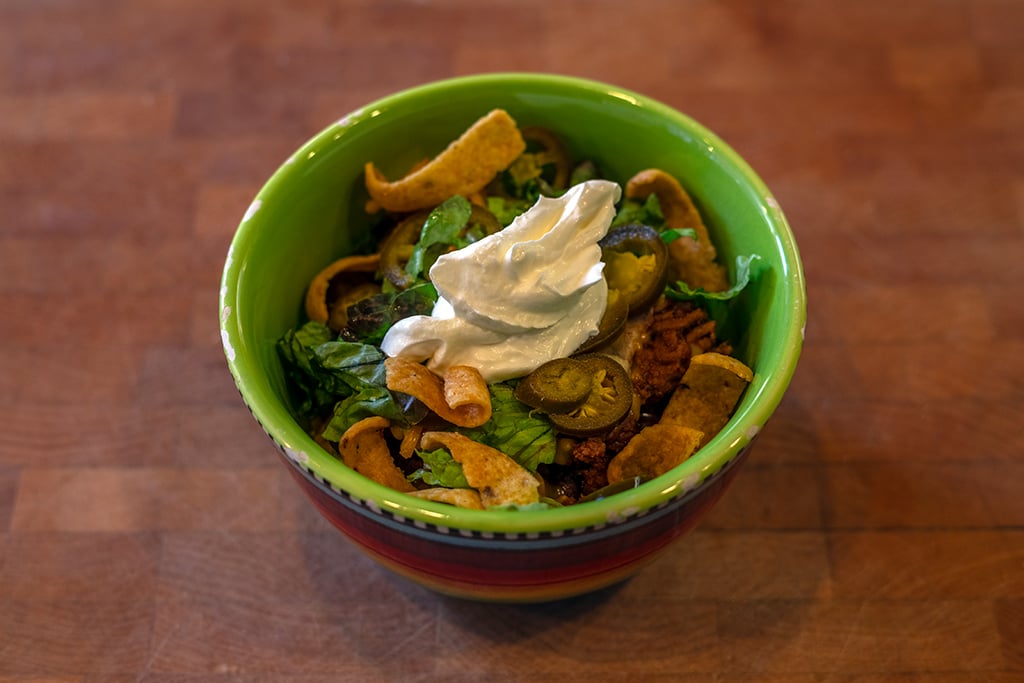
There are plenty of recipes out there for Frito pie, which isn’t really a pie like a cherry or cream pie, but it’s called a “pie” nonetheless. Others might simply call this a chili or even Frito nachos.
According to Google:
Frito pie originated in the United States during the 1940s or early 1950s, with strong roots in Texas and New Mexico cuisine. While often attributed to Daisy Doolin (mother of Fritos creator Charles Doolin) in the early 1940s or Teresa Hernández at a New Mexico Woolworth's in the 1960s, the Frito-Lay company popularized the official recipe in the 1950s, likely creating it to promote their product.
This recipe consists of seasoned cooked lean ground beef mixed with tomato sauce and several different canned bean varieties, simmered for about 30 minutes, then spooned atop regular Frito-brand chips and garnished with a variety of condiments such as lettuce, cheese, sour cream, jalapenos, salsa verde, avocado.
The entire recipe is, as they say, “easy as pie” to bring together and robust enough to stand on its own without needing an accompanying side dish.
South Carolina Pulled Pork with Mustard Barbecue Sauce (Congaree National Park, South Carolina)

The previous recipe required very few steps to put together. This one, however, involved more preparation. I had to rub a spice mix on the pork loin (recipe calls for pork roast) and brown it before setting it in the slow cooker. To that, I added the deglazed pan drippings. The fact that it cooked all day in a slow cooker without any further interference balanced out the initial prep work for the pork loin.
The mustard barbecue sauce, on the other hand, took more time, with the addition of quite a few ingredients combined and simmered for 10 minutes (I only simmered it for 5-7 minutes), stirring frequently.
While tasting the sauce, I felt the mustard flavor was far too “mustard-y,” overpowering the flavors of the other sauce ingredients. I toned down that overwhelming yellow mustard flavor by adding a little bit more of the sweeter ingredients. My sister later told me she felt the sauce still tasted a bit too much of mustard, although she thought the recipe was very good. Taste, like photography, is subjective.
According to the recipe, hamburger buns are optional for this dish since it’s all about the pulled pork. I used potato buns which I’d buttered and broiled for a buttery, toasty-soft base upon which I piled high the sauced-up shredded pork.

Here’s another recipe in which condiments may be used such as sliced onions and/or the recipe’s suggestion of bread and butter pickles (aka sweet pickles). I served French fries on the side and put jalapenos in my own sandwich. For the rest of my family, I served up just the bun and meat, with sliced dill pickles on the side.
Wild Mushroom Pasta (Redwood National and State Parks, California)
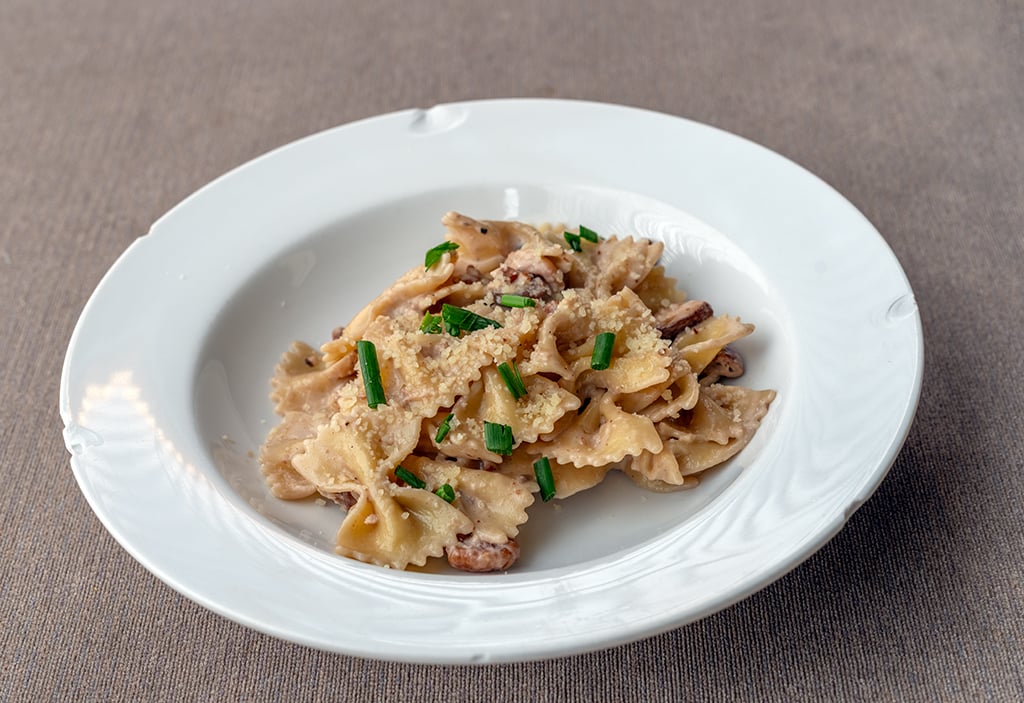
In addition to the meat recipes I tested, I also wanted to try one or two vegetable-centric dishes. We all love mushrooms and the Pacific Northwest offers a variety of edible fungi including chanterelles and morels in addition to the ubiquitous white button, cremini, and shitake mushrooms. I guess it’s not yet the season for chanterelles and morels because my stores – which usually stock these – did not have any. I had to satisfy myself with the white, cremini, and shitake mushrooms mentioned earlier. If I make this dish again (and I probably will since it turned out quite yummy), I’ll order dried mushrooms from a specialty site like Northwest Wild Foods or North Spore, and soak them in a little water to reconstitute prior to cooking.
Spinach Salad With Prickly Pear Vinaigrette (Death Valley National Park, California)

This recipe needed tweaking.
Among the ingredients incorporated into the vinaigrette is a raw, minced shallot. Size is not indicated in the recipe, and I used a relatively large shallot, which made the vinaigrette much too “onion-y.” According to the internet, cooked or raw, shallots possess a mellow flavor and are less strong than regular onions. I did not find that to be the case for this salad and ultimately ended up straining out most of the minced shallot.
I felt the vinaigrette was also much too sweet, so I added a teaspoon of fresh lemon juice for a little brightness and zing.
Because of the onion flavor in the vinaigrette, I omitted the called-for sliced purple onion that gets mixed with the other salad ingredients. I’m not a fan of purple onion anyway since its flavor tends to overpower a dish, IMO. Had the shallot not onioned up the vinaigrette, I would have used thinly sliced sweet onion in lieu of the purple onion. Instead, I substituted chopped Roma tomatoes.
If you are worried about whether your remaining prickly pear syrup will go to waste, I can assure you it won’t. You can use the syrup in other recipes (prickly pear margaritas come to mind), or you can drizzle it over pancakes or ice cream. Or you can make more vinaigrette.
Marionberry Grilled Cheese (Crater Lake National Park, Oregon)

I’m not the best grilled cheese sandwich maker. I have problems with getting the cheese to melt before the bread is completely burnt to a crisp. But I thought I’d give it a go anyway because I like a good grilled cheese sandwich and the book photo for this recipe looked luscious. The recipe’s use of sourdough bread also intrigued me. Sourdough is a firm bread with lots of holes and a bit of a tang to it and I was curious as to how that tang would combine with the savory cheeses and the sweet marionberry jam.
None of the stores near me carry marionberry jam, so I ordered a jar from one of my favorite jam sites Small Batch Jam Co.
Fontina and cheddar cheeses are incorporated into the sandwich. The cheeses are grated to ensure quicker melting. I used a mild cheddar which is softer than a sharper, aged cheddar.
Dijon mustard is an optional ingredient, and I added it to our sandwiches.
While these sandwiches did not look exactly like the recipe photo, they were still beautiful: crispy, deep golden on the outside and the cheese mix nice and malty. The trick is to leave the plated sandwiches alone for a moment after removing them from the pan to allow their remaining heat to continue melting the cheese before cutting them in half and serving.
This would make a nice luncheon dish. My only suggestion – and my family agrees – would be to add more marionberry jam than what is noted in the recipe. That tart-sweet berry flavor melds well with the savory Dijon and cheeses.
Chocolate Chip-Hazelnut Bread Pudding (Crater Lake National Park, Oregon)

As I was bookmarking recipes to try, I realized I had not yet chosen any desserts. Given my love for bread and chocolate, I thought this bread pudding fit the bill.
Brioche bread is the base for this pudding, which, like Frito pie, is not exactly a pudding as we Americans might think (hello Jello pudding mix). The brioche bread must be broken or cut into pieces and roasted under low heat prior to soaking in a milk/cream/egg mixture for 30 minutes. You can purchase brioche loaves sliced or unsliced.
The recipe calls for chocolate chips but does not indicate semi-sweet or bittersweet. I used semi-sweet chocolate chips because that is what I had on hand. The next time I make this dish, I might try bittersweet chocolate chips. What’s the difference? Bittersweet chocolate has a higher percentage of cacao and less sugar, so it’s a richer, darker chocolate flavor.
Hazelnuts are a product of Oregon, right next door to my home in Washington State. That said, I could only find one store in my Central Washington town stocking hazelnuts, and they were not husked.
Why must the hazelnuts be husked? The chef whose YouTube video I watched on how to remove those thin brown skins stressed the brown husks impart a slightly bitter taste to the nut and whatever they might be incorporated into.
I can now tell you from practical experience that husking a hazelnut is a time-consuming chore and it doesn’t always work the first time. If you are not on any self-imposed deadline for fixing this dessert and don’t mind waiting however long it takes for shipping, I highly encourage you to order these nuts already husked and chopped (or sliced) from someplace like Holmquist Hazelnut Orchards.
Why not use a pecan or walnut instead? They are certainly easier to acquire for cooking/baking. Hazelnuts have a different flavor from either of the other two nuts, and after husking these things, I was darned well going to use them in the recipe.
How do you husk a hazelnut? These fat rounded little kernels are roasted in a 375-degree oven for 10-15 minutes then enfolded in a clean dish towel and rubbed to remove as much of their thin brown coverings as possible. It doesn’t always work the first time, and you might have to do it again.

I’m accustomed to bread pudding recipes with an accompanying sauce – usually some boozy whiskey or rum sauce, which I abhor. For this recipe, there is no sauce included but I made one anyway since I find many bread puddings are a bit on the dry side. Even the recipe photo – beautiful as it is – made the pudding look a little dry. I looked online and found a very easy, very rich recipe for vanilla sauce.

The bread pudding was delicious! It was moist, even without the vanilla sauce (which did add a nice touch, however).
Lemon Tres Leche Cake (Mesa Verde National Park, Colorado)

My birthday occurred over the course of testing these recipes, so I thought it was only fitting I bake a cake. A tres leche (three milk) cake combines a mix of evaporated milk, sweetened condensed milk, and either whole milk or heavy cream, all of which soak into the cake. The addition of lemon made the recipe sound like there might be a frisson of pleasurable tartness.
There were quite a few steps involved with this recipe, from making and baking the cake, to mixing and incorporating the milks into the baked cake, to chilling the cake for at least nine hours (preferably overnight), to mixing up the whipped cream for topping the cake. No alterations were made to this recipe except for the addition of a little more lemon juice (half a lemon). I wanted that cake to have a citrus zing to it, by golly (and it did)!
Fresh lemons are used for this cake, as required by the recipe. If you get this book and decide to try this cake, don’t get lazy and attempt a shortcut. A store-bought bottle of lemon juice won’t measure up. Use an electric juicer if you have one, because these little gadgets extract every last bit of juicy goodness from that lemon.
After chilling, the 9-inch x 13-inch cake is then slathered with whipped cream, and if you make this cake, do not use store-bought whipped cream or whipped topping. Whip the cream up yourself (how to do that is one of the steps in the recipe).
This recipe was the most labor-intensive regarding prep steps. Was it worth the time?
Hands down, this is the best cake my sister and I have ever tasted. I figured it would be a good cake, but I had no idea it would be a great cake. It’s a dense, moist, extremely rich cake with a lovely tart-sweet lemon flavor.
My Verdict
If I can find at least one worthwhile recipe in a cookbook that I and the entire family like, I consider it a keeper of a cookbook. As stressed earlier, this is not a five-ingredient cookbook. Each dish takes planning and a fair amount of prep work. If you are willing to put in the time and effort, though, the results are substantial and tasty.
This book is a keeper worthy of a spot in your cooking collection.
Stories about:
Story Categories:
A copy of National Parks Traveler's financial statements may be obtained by sending a stamped, self-addressed envelope to: National Parks Traveler, P.O. Box 980452, Park City, Utah 84098. National Parks Traveler was formed in the state of Utah for the purpose of informing and educating about national parks and protected areas.
Residents of the following states may obtain a copy of our financial and additional information as stated below:
- Florida: A COPY OF THE OFFICIAL REGISTRATION AND FINANCIAL INFORMATION FOR NATIONAL PARKS TRAVELER, (REGISTRATION NO. CH 51659), MAY BE OBTAINED FROM THE DIVISION OF CONSUMER SERVICES BY CALLING 800-435-7352 OR VISITING THEIR WEBSITE. REGISTRATION DOES NOT IMPLY ENDORSEMENT, APPROVAL, OR RECOMMENDATION BY THE STATE.
- Georgia: A full and fair description of the programs and financial statement summary of National Parks Traveler is available upon request at the office and phone number indicated above.
- Maryland: Documents and information submitted under the Maryland Solicitations Act are also available, for the cost of postage and copies, from the Secretary of State, State House, Annapolis, MD 21401 (410-974-5534).
- North Carolina: Financial information about this organization and a copy of its license are available from the State Solicitation Licensing Branch at 888-830-4989 or 919-807-2214. The license is not an endorsement by the State.
- Pennsylvania: The official registration and financial information of National Parks Traveler may be obtained from the Pennsylvania Department of State by calling 800-732-0999. Registration does not imply endorsement.
- Virginia: Financial statements are available from the Virginia Department of Agriculture and Consumer Services, 102 Governor Street, Richmond, Virginia 23219.
- Washington: National Parks Traveler is registered with Washington State’s Charities Program as required by law and additional information is available by calling 800-332-4483 or visiting www.sos.wa.gov/charities, or on file at Charities Division, Office of the Secretary of State, State of Washington, Olympia, WA 98504.
INN Member

The easiest way to explore RV-friendly National Park campgrounds.

Here’s the definitive guide to National Park System campgrounds where RVers can park their rigs.
Our app is packed with RVing- specific details on more than 250 campgrounds in more than 70 national parks.
You’ll also find stories about RVing in the parks, tips helpful if you’ve just recently become an RVer, and useful planning suggestions.

