
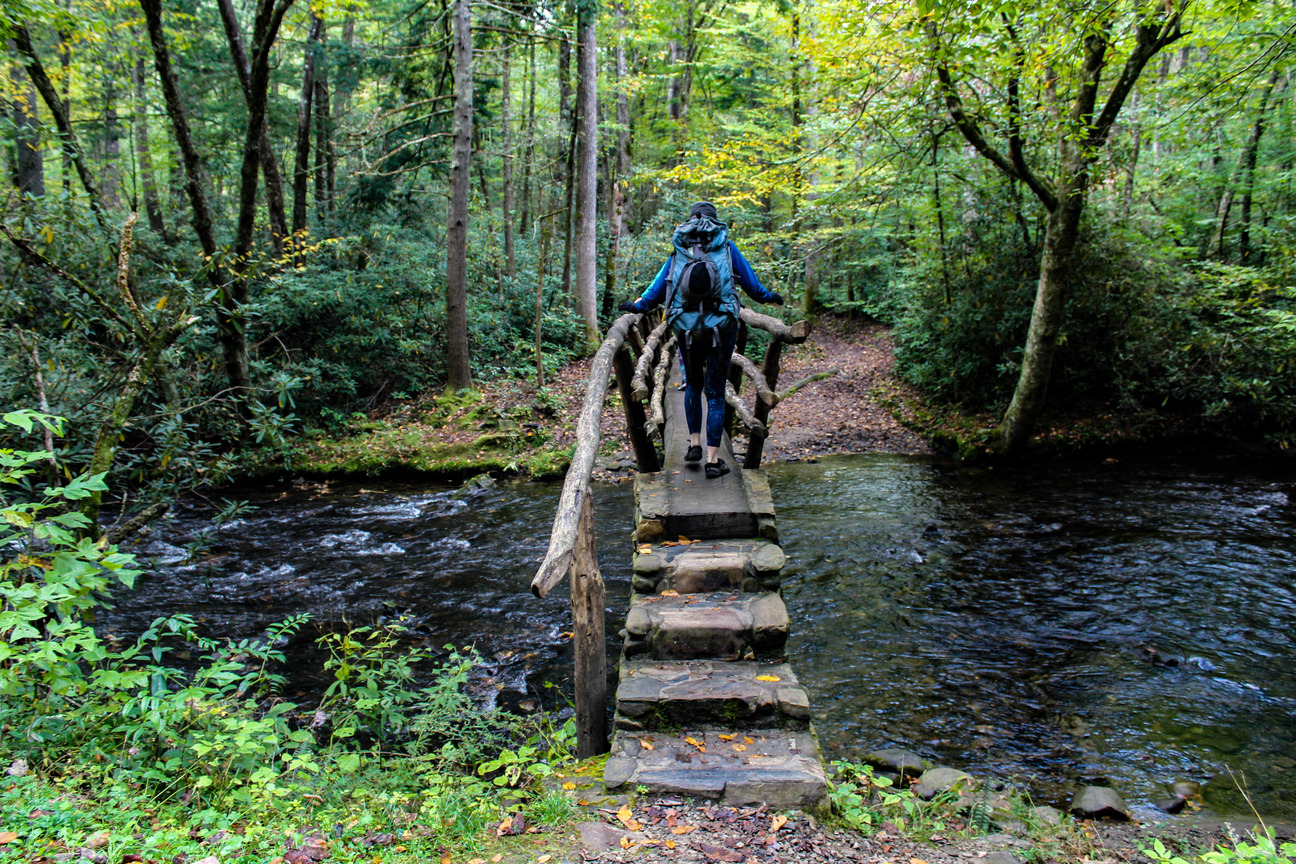
Park rangers at Great Smoky Mountains National Park responded to an unusually high number of emergencies in March. Rangers are encouraging visitors to take precautions and know their limits when hiking, as rescue is not a certainty.
Great Smoky Mountains is the most popular park in the U.S. and received more than 11.5 million visitors in 2025.
The emergencies that park rangers responded to in March included:
- 18 backcountry search and rescue incidents, including two Tennessee Army National Guard hoist extractions and four technical rope rescues.
- 15 front‑country EMS calls, with four patients transported by UT Medical Center Life Flight.
- Five backcountry 911 calls resolved through phone contact, preventing the need for full rescue responses.
The National Park Service notes that emergencies can happen to even experienced hikers, but many are preventable with the right awareness and preparation. Reducing avoidable risks helps keep park rangers available for the most critical emergencies. Just recently, rangers have provided life‑saving care multiple times, including on April 1, when rangers successfully resuscitated a patient on Kuwohi, the highest mountain in the park.
Hiking in the Smokies carries inherent risks, and trail conditions can change quickly due to natural forces. Swollen streams, washed‑out bridges, downed trees and erosion can all cause dangerous hiking conditions.
The park underscores that visitors are responsible for researching their route and destination, carrying the right gear, having a backup plan, and knowing their limits. It’s always a good idea to share details about plans within the park, as emergencies can happen to anyone.
The park did not immediately respond to questions from the Traveler about what factors may be causing the uptick in emergencies.
Stories about:
Story Categories:
A copy of National Parks Traveler's financial statements may be obtained by sending a stamped, self-addressed envelope to: National Parks Traveler, P.O. Box 980452, Park City, Utah 84098. National Parks Traveler was formed in the state of Utah for the purpose of informing and educating about national parks and protected areas.
Residents of the following states may obtain a copy of our financial and additional information as stated below:
- Florida: A COPY OF THE OFFICIAL REGISTRATION AND FINANCIAL INFORMATION FOR NATIONAL PARKS TRAVELER, (REGISTRATION NO. CH 51659), MAY BE OBTAINED FROM THE DIVISION OF CONSUMER SERVICES BY CALLING 800-435-7352 OR VISITING THEIR WEBSITE. REGISTRATION DOES NOT IMPLY ENDORSEMENT, APPROVAL, OR RECOMMENDATION BY THE STATE.
- Georgia: A full and fair description of the programs and financial statement summary of National Parks Traveler is available upon request at the office and phone number indicated above.
- Maryland: Documents and information submitted under the Maryland Solicitations Act are also available, for the cost of postage and copies, from the Secretary of State, State House, Annapolis, MD 21401 (410-974-5534).
- North Carolina: Financial information about this organization and a copy of its license are available from the State Solicitation Licensing Branch at 888-830-4989 or 919-807-2214. The license is not an endorsement by the State.
- Pennsylvania: The official registration and financial information of National Parks Traveler may be obtained from the Pennsylvania Department of State by calling 800-732-0999. Registration does not imply endorsement.
- Virginia: Financial statements are available from the Virginia Department of Agriculture and Consumer Services, 102 Governor Street, Richmond, Virginia 23219.
- Washington: National Parks Traveler is registered with Washington State’s Charities Program as required by law and additional information is available by calling 800-332-4483 or visiting www.sos.wa.gov/charities, or on file at Charities Division, Office of the Secretary of State, State of Washington, Olympia, WA 98504.
INN Member

The easiest way to explore RV-friendly National Park campgrounds.

Here’s the definitive guide to National Park System campgrounds where RVers can park their rigs.
Our app is packed with RVing- specific details on more than 250 campgrounds in more than 70 national parks.
You’ll also find stories about RVing in the parks, tips helpful if you’ve just recently become an RVer, and useful planning suggestions.

