
- By Tim Erickson - December 4th, 2025 4:53am
Eastern Massasauga (=rattlesnake)
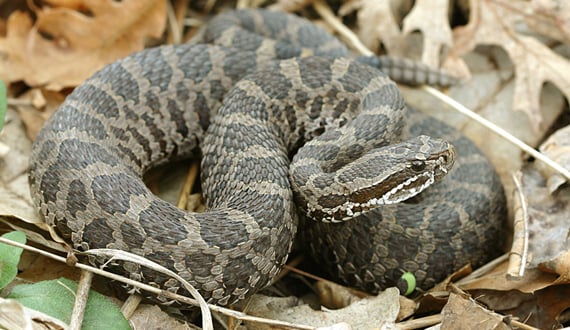
Sistrurus catenatus
Status:
Threatened
Type:
General Information
Massasaugas are small snakes with thick bodies, heart-shaped heads and vertical pupils. The average length of an adult is about 2 feet. Adult massasaugas are gray or light brown with large, light-edged chocolate brown blotches on the back and smaller blotches on the sides. The snake's belly is marbled dark gray or black and there is a narrow, white stripe on its head. Its tail has several dark brown rings and is tipped by gray-yellow horny rattles. Young snakes have the same markings, but are more vividly colored. The head is a triangular shape and the pupils are vertical. Massasaugas live in wet areas including wet prairies, marshes, fens, sedge meadows, peatlands, and low areas along rivers and lakes. Massasaugas also use adjacent uplands (shrubland, open woodlands, prairie) during part of the year. They often hibernate in crayfish burrows but may also be found under logs and tree roots or in small mammal burrows. Unlike other rattlesnakes, massasaugas hibernate alone.
The species historical range included Illinois, Indiana, Iowa, Michigan, Minnesota, Missouri, New York, Ohio, Pennsylvania, Wisconsin. See below for information about where the species is known or believed to occur.
Habitat Requirements
Massasaugas live in wet areas including wet prairies, marshes and low areas along rivers and lakes. In many areas massasaugas also use adjacent uplands during part of the year. They often hibernate in crayfish burrows but may also be found under logs and tree roots or in small mammal burrows. Unlike other rattlesnakes, massasaugas hibernate alone. Lack of management and improper timing of management are threats to massasaugas. The snake's habitat requires vegetation control such as prescribed fire and mowing to prevent invasion of shrubs, trees and non-native plants. Woody plant invasion is reducing the amount of available habitat in some areas. Where land is managed to prevent woody invasion, snakes may be killed by prescribed fire and mowing when it happens after snakes emerge from hibernation.
Food Habits
Massasaugas eat small rodents such as mice and voles but they sometimes eat frogs and other snakes. They hunt by sitting and waiting. Heat sensitive pits near the snake's eyes alert the snake to the presence of prey. They can find their prey by sight, by feeling vibrations, by sensing heat given off by their prey, and by detecting chemicals given off by the animal (like odors).
Movement / Home Range
Reproductive Strategy
Like all rattlesnakes, massasaugas bear live young. Depending on their health, adult females may bear young every year or every other year. When food is especially scarce they may only have young every three years. Most massasaugas mate in late summer, and give birth about a year later. Litter size varies from 5 to 20 young.
Other
Related Parks:
For more information:


National parks and their natural resources belong to you. The National Parks Traveler works to ensure you know how these essential places are being cared for.
Sign Up For Our Weekly Newsletter
Unsubscribe at any time.

INN Member

The easiest way to explore RV-friendly National Park campgrounds.

Here’s the definitive guide to National Park System campgrounds where RVers can park their rigs.
Our app is packed with RVing- specific details on more than 250 campgrounds in more than 70 national parks.
You’ll also find stories about RVing in the parks, tips helpful if you’ve just recently become an RVer, and useful planning suggestions.

