
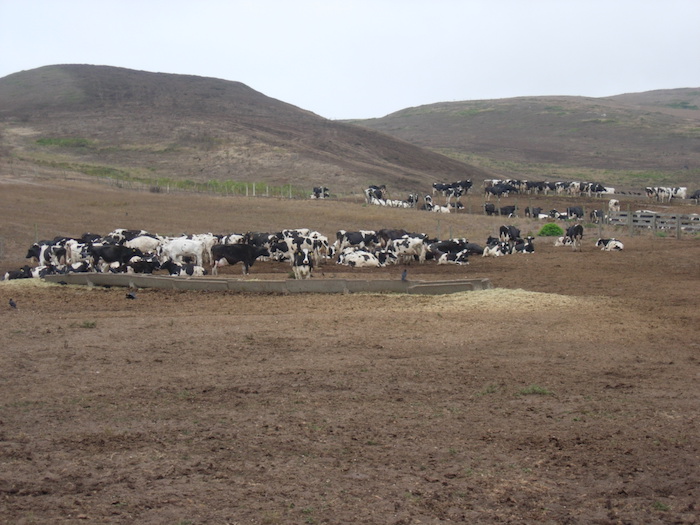
What would you think if you bought a house and after paying for the property, the current owners refused to vacate the property? Worse, yet, the previous owners continued to run their business utilizing your property for their private profit, while degrading the property’s value? Would you not be outraged?
That is exactly what occurs at Point Reyes National Seashore. The ranchers using Point Reyes were paid millions of dollars 40 years ago by taxpayers to acquire their properties and generously given occupancy to continue running their ranches for the rest of their lives or 25-years, whichever came first to provide a “soft” landing.
The 25-year grace period was passed long ago, yet the ranchers continue to use the land for their own business interests—at the expense of the public’s parklands. Indeed, some of these ranchers live in homes owned by all Americans. Imagine getting to reside in a national park —talk about a sweetheart deal. Not to mention that the private use of these lands precludes the public use of OUR property. Visitors to Point Reyes are not permitted to hike, camp, or otherwise enjoy THEIR property.
However, the worse part of this arrangement are the impacts to our national park. Heavy grazing and mowing have converted many of the native bunchgrass prairies to fields of exotic weeds.
In fact, to feed the livestock, hundreds of acres of our park is annually plowed up to create fields of exotic invasive silage crops that spread to other parklands. This destroys the native prairies but also harms nesting birds and small mammals when these crops are cut and harvested.
Due to the heavy livestock use, Point Reyes National Seashore has been one of the 10 most feces-contaminated locations monitored in California since 2012. Kehoe Creek has one the state’s highest reported E. coli bacteria levels. And this is permitted to occur in a national park?
Other negative impacts on the public’s property include the spread of exotic weeds, destruction of native grasslands, and the well-publicized death of Tule elk.
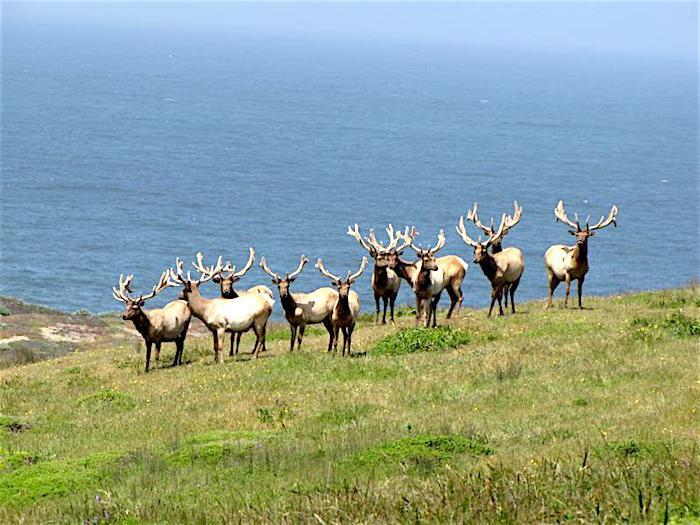
The effect on Tule elk is particularly disturbing. The endangered Tule elk, historically very numerous throughout much of California, are now limited to a few select areas in the state, including Point Reyes. However, the elk are trapped inside a small 2,600-acre enclosure by an 8-foot-high fence designed to keep these native animals off of parklands so as to facilitate domestic livestock production.
The on-going saga about ranchers using OUR lands in a national park unit for their private profit got a new face recently when the local Ag interests hired disgraced former Congressman John Doolittle to lobby on their behalf. Doolittle resigned from Congress in disgrace after it was disclosed he had close ties and business connections to former lobbyist Jack Abramoff. Abramoff, you may recall, was sentenced to six years in federal prison for mail fraud, conspiracy to bribe public officials, and tax evasion.
Now the ranchers who are using our national park as an open-air feedlot to further their business interests have hired Doolittle to help them maintain their grip on the public’s property. Doolittle is attempting to intimidate the Park Service who are obligated to manage these lands for the greater American public, not the financial interests of private business.
The issue of Point Reyes is about public values. There are few large public holdings like Point Reyes near large urban areas and along the California coast where people can enjoy natural landscapes. On the other hand, there are plenty of private lands in California available to produce meat and milk.
Some of California’s politicians like Senator Diane Feinstein and Representative Jared Huffman appear ready to support legislation that would legalize the continued use of our national parklands for private Ag interests. This is what the Bundys unsuccessfully tried to do when they took over the Malheur Wildlife Refuges. Do these representatives really want to be doing the bidding of private interests who covet our public lands?
Point Reyes should not be run as a private feedlot. It’s time to permanently remove the livestock operations at Point Reyes and restore native prairies, wildlife, and public access to our property.
George Wuerthner is an ecologist and former hunting guide with a degree in wildlife biology.
Stories about:
Story Categories:
A copy of National Parks Traveler's financial statements may be obtained by sending a stamped, self-addressed envelope to: National Parks Traveler, P.O. Box 980452, Park City, Utah 84098. National Parks Traveler was formed in the state of Utah for the purpose of informing and educating about national parks and protected areas.
Residents of the following states may obtain a copy of our financial and additional information as stated below:
- Florida: A COPY OF THE OFFICIAL REGISTRATION AND FINANCIAL INFORMATION FOR NATIONAL PARKS TRAVELER, (REGISTRATION NO. CH 51659), MAY BE OBTAINED FROM THE DIVISION OF CONSUMER SERVICES BY CALLING 800-435-7352 OR VISITING THEIR WEBSITE. REGISTRATION DOES NOT IMPLY ENDORSEMENT, APPROVAL, OR RECOMMENDATION BY THE STATE.
- Georgia: A full and fair description of the programs and financial statement summary of National Parks Traveler is available upon request at the office and phone number indicated above.
- Maryland: Documents and information submitted under the Maryland Solicitations Act are also available, for the cost of postage and copies, from the Secretary of State, State House, Annapolis, MD 21401 (410-974-5534).
- North Carolina: Financial information about this organization and a copy of its license are available from the State Solicitation Licensing Branch at 888-830-4989 or 919-807-2214. The license is not an endorsement by the State.
- Pennsylvania: The official registration and financial information of National Parks Traveler may be obtained from the Pennsylvania Department of State by calling 800-732-0999. Registration does not imply endorsement.
- Virginia: Financial statements are available from the Virginia Department of Agriculture and Consumer Services, 102 Governor Street, Richmond, Virginia 23219.
- Washington: National Parks Traveler is registered with Washington State’s Charities Program as required by law and additional information is available by calling 800-332-4483 or visiting www.sos.wa.gov/charities, or on file at Charities Division, Office of the Secretary of State, State of Washington, Olympia, WA 98504.


National parks and their natural resources belong to you. The National Parks Traveler works to ensure you know how these essential places are being cared for.
Sign Up For Our Weekly Newsletter
Unsubscribe at any time.
INN Member

The easiest way to explore RV-friendly National Park campgrounds.

Here’s the definitive guide to National Park System campgrounds where RVers can park their rigs.
Our app is packed with RVing- specific details on more than 250 campgrounds in more than 70 national parks.
You’ll also find stories about RVing in the parks, tips helpful if you’ve just recently become an RVer, and useful planning suggestions.


Comments
Round up the cattle. Sell them off for lost value.
Well, Rick B, don't think I better post what my first reaction to your comment was. What a consciience you lost when you discovered your own variety. Sorry, Kurt. It really pains me when people that work on the lands of the West get a raw deal and they've received quite a few. Those living far removed from where their food comes from completely losing the connection then disparaging those that are connected. Someone here could be the original person that coined the phrase,"I'm from the government and I'm here to help." Disgusting...
I worked at Point Reyes from 1969-1972 and was basically pro-rancher at the time. But when the 25 year leases ran out, the ranchers should have been required to sell their cattle and dismantle their operations. I recall another negative impact due to run-off. It is called Leptospirosis, which is spread through the urine of infected animals. It apparently found its way into the sea lion populations. I am not sure why this was not mentioned in the article unless there are stricter methods in effect now that are keeping poisonous wastes from reaching nearby waters.
Hello, I am doing a documentary on leptospirosis and its prevalence in the California sea lion population. If you have anything to share about the topic, please let me know. You can contact me at (415)-887-8877
I would point out that the genesis of PRNS including saving the area from housing developments as well as maintaining the cattle ranches. The cattle ranchers weren't solely owners of the land. Many were tenant farmers who were concerned that the landowners might sell and put them out of business. I've read that the largest landowner in the area was RCA, which operated a ship to shore radio station in the area. Renting to cattle ranchers was just an income source in addition to their use of their radio facilities. The West Marin community was behind this because they believed that it would maintain the status quo. They needed enough dairy farms to maintain a critical mass to justify local dairy processing facilities.
https://www.nps.gov/pore/learn/historyculture/people_ranching.htm
Trail, here I have to disagree with you. A deal is a deal. If the facts are accurate as presented here, they should have vacated after 25 years. What is hard to fathom is that no one enforced the agreement for 15 years after.
"If the facts are accurate." Always in todays climate what some can decide what the facts are. I don't know but there is a generation that are completely unaware of what real facts are. Look at DC as it's constituted now. Perhaps I am looking Macro. Maybe the folks at Point Reyes can claim the County is a sanctuary county for Holstein Cows. Has as much validity as much that is going on.
There was never an agreement to vacate. All of the original reservations of use had terms in them that NPS and the ranchers could agree to renewable special use permits. I remember when he didn't issue a special use permit for Drakes Bay Oyster Farm, Ken Salazar's memo had a parting shot recommending increasing the terms of the special use permits for the cattle ranches to 20 years. Here's the listing of the current special use permits:
https://www.nps.gov/pore/getinvolved/planning_ranch_cmp_leases_permits.htm
TA, I live in the Skagit agricultural area. My organic grass-fed beef comes from Alex and his family, 8 miles away. My greens come from my own garden. The rest of my produce come from a neighbor's CSA a couple of miles away. Our eggs come from our own hens. You're closer to where your food is produced? Stop making wrong WAG's just because they back up your rhetoric. My conscience [that's how it is spelled] is just fine, thank you.
If even ecbuck disagrees with you, you are in a minority of one. Your quibbling in your second post is too disorganized to be coherent.
Minority of one? There are times that I defer from joining the mobs of PC and whatever seems to be popular. So much data mining going on out there to lure many to their feel good positions while many out there are doing the heavy lifting. BTW, Im familiar with your part of WA. I trapped Black Brant on Padilla Bay and later Willapa putting radio collars on birds for USF&W so they could be tracked on their wintering grounds on down to Mexico and their return in February. Screw you, Rick if you want to correct my grammar. What a putz.
TA, there are no alternative facts
I just found this Op-Ed in the Point Reyes Light:
https://www.ptreyeslight.com/article/visitors-perspective-point-reyes-na...
What is notable is at the end is a correction from the suthor of: “The Paradox of Preservation: Wilderness and Working Landscapes at Point Reyes National Seashore”, who sets the record straight.
I enjoyed reading both
Yeah - that article fumbles around with some of the facts, especially the claim that NPS had to come to agreements in 1972 to facilitate the sale of the land. That was well in the works and part of the reason why there was an agreement to establish PRNS.
However, if you look at the law, the portion of the law that dealt with eminent domain was repealed in 1970. That was the one that used the phrase "pastoral zone". I believe that only meant that eminent domain was off the table, and that NPS could only acquire the land via negotiation. Still - a lot of the land wasn't owned by the ranchers and they had an incentive to keep on ranching when their landlords were looking to sell. If you take a look at some of the special use permits, they refer to some ranches as "former RCA" lands. I don't believe that it changed that there wouldn't be farmland, but that the federal government no longer had eminent domain on the table. The reservations of use were for 25 years or a lifetime estate. It does have a catchall (added in 1974 I believe) that would allow NPS to lease any current/former ranchlands at the discretion of the Secretary of the Interior
https://www.nps.gov/pore/learn/management/upload/lawsandpolicies_usc16se...
and now the Park Service wants to get rid of the Tule Elk to protect the dairy industry. WTF?
This author compared the ranchers at Point Reyes to the Bundys and their failure to pay grazing fees in Bunkerville and sponsorship of the criminal occupation of a NWR in Oregon. That is hyperbole. The Bundys aided criminals and failed to pay their own fees to the Feds. They were rogue grazers. I don't live far from their ranch near Bunkerville. I haven't seen any assertions the ranchers at Point Reyes are breaking the law.