
Sustainable Parks
An interesting story arrived from Hawai'i during the holiday break. Tourism officials there are rethinking how to manage tourism in a more sustainable fashion. According to Bloomburg News, "With the input of locals, who range from farmers to hotel owners, each of Hawaii’s four counties has created a strategic plan that stretches into 2025 and focuses on sustainable destination management rather than marketing."
How might that affect your visit to the state? The story cited four possible changes: 1) the need for reservations to visit popular destinations; 2) educating visitors on how to be on best behavior, such as using sunscreens that don't harm coral reefs, keeping proper distance from wildlife, and being informed on the dangers of rip currents; 3) you might have to pay a "conservation" fee to help support plans to manage and protect the environment, and; 4) a focus on more traditional cultural foods, activities, and interpretive programs.
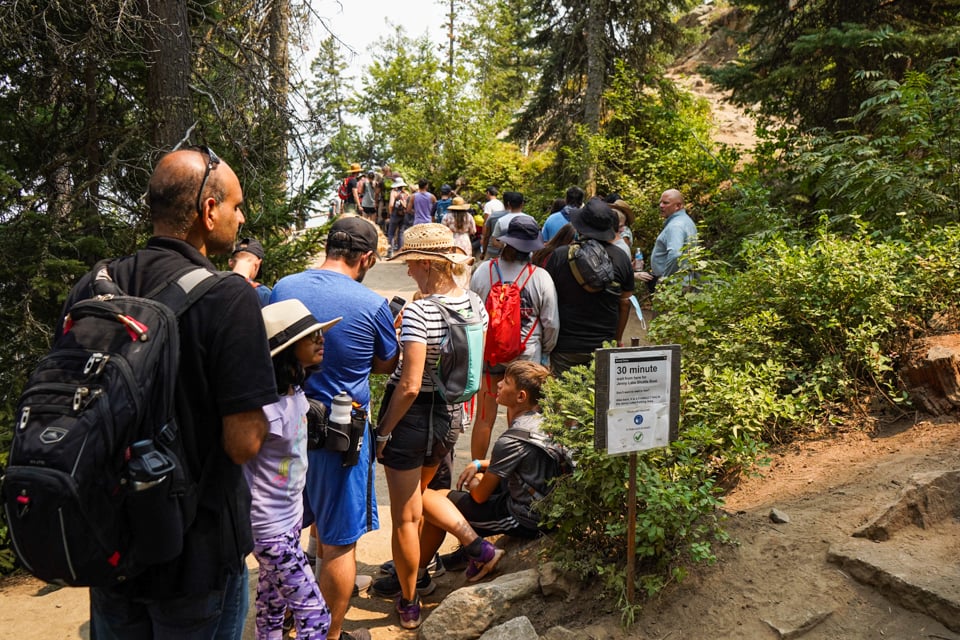
These are ideas that might benefit national parks and the visitor experience. Reservations would help address overcrowding that impacts resources and visitor experiences, education perhaps would reduce the number of bison gorings at Yellowstone or drownings at Cape Hatteras, a conservation fee could help protect vital wildlife habitat, and replacing park memorabilia made overseas and chinchy knockoffs with locally produced items and authentic pieces would provide a more memorable keepsake while benefiting local artisans and companies.
About Those Fee-Free Days
Just before 2021 closed for business, the National Park Service announced the entrance-fee-free days for 2022. Oddly missing was August 25, also known as Founders Day for the National Park Service.
No disrepect to the five days on the list -- Martin Luther King, Jr. Day, the first day of National Park Week, the anniversary of the Great American Outdoors Act, National Public Lands Day, and Veterans Day -- but surely the day back in 1916 that the National Park Service was created with President Woodrow Wilson's signature should still be honored and recognized by the Park Service and the general public.
That day is more significant than the day the GAOA was signed into law, or National Public Lands Day, no?
Not only is August 25 missing from the 2022 free days -- it's been on and off the list over the years -- but the federal government remains stingy with these fee-free days. Back in 2016 there were 16 such days, in celebration of the centennial. When the Park Service trimmed the number of fee-free days to 10 for 2017, it said that most years there were nine such days.
Last year there were six entrance-fee-days, including Founders Day.
There are more than 400 National Park System sites nationwide, with at least one in every state. Only about one-quarter charge an entrance fee, with costs ranging from $5 to $35. With so few parks charging entrance fees, would it really cost the Park Service much to return August 25 and the entire National Park Week to those days when you can enter any park unit for free?
A return through greater public appreciation for these places should outweigh the lost revenues.
Paralysis By Analysis At Valles Caldera?
Shortly before the end of 2021, the staff at Valles Caldera National Preserve in New Mexico announced they were studying ways to improve the visitor experience at the park's Valle Grande District, and how best to resume an entrance fee collection program there.
Fair enough, but several things stuck out about this announcement:
- Most of the proposed improvements are considered to be interim measures.
- The release said a resumption of entrance fees was needed to address undefined "critical deferred maintenance needs."
- It is estimated that some of these interim improvements could be in place for 5-10 years while the park works on its general management plan.
The Traveler reached out to both the park and the Park Service's regional office in Denver to better understand why it takes 5-10 years to craft a general management plan (and why that planning process didn't start in 2014, when the unit was added to the National Park System), and what "critical" maintenance needs exist at Valles Caldera, but have yet to hear back.
At the end of Fiscal 2018 (latest available NPS data), the park listed $6 million in deferred maintenance, including $3.6 million for replacing the Cabin District's water system.
Considering that fewer than 31,000 people made their way to the preserve in 2020 -- 2021 figures are not available on the Park Service's visitor use page -- would a significant amount of money be raised by an entrance fee to chew into the existing backlog? Could GAOA dollars be used to help address whatever critical maintenance needs exist at Valles Caldera?
But beyond that, ten years seems like an awfully long time to figure out how best to manage Valles Caldera, no?
Stories about:
Story Categories:
A copy of National Parks Traveler's financial statements may be obtained by sending a stamped, self-addressed envelope to: National Parks Traveler, P.O. Box 980452, Park City, Utah 84098. National Parks Traveler was formed in the state of Utah for the purpose of informing and educating about national parks and protected areas.
Residents of the following states may obtain a copy of our financial and additional information as stated below:
- Florida: A COPY OF THE OFFICIAL REGISTRATION AND FINANCIAL INFORMATION FOR NATIONAL PARKS TRAVELER, (REGISTRATION NO. CH 51659), MAY BE OBTAINED FROM THE DIVISION OF CONSUMER SERVICES BY CALLING 800-435-7352 OR VISITING THEIR WEBSITE. REGISTRATION DOES NOT IMPLY ENDORSEMENT, APPROVAL, OR RECOMMENDATION BY THE STATE.
- Georgia: A full and fair description of the programs and financial statement summary of National Parks Traveler is available upon request at the office and phone number indicated above.
- Maryland: Documents and information submitted under the Maryland Solicitations Act are also available, for the cost of postage and copies, from the Secretary of State, State House, Annapolis, MD 21401 (410-974-5534).
- North Carolina: Financial information about this organization and a copy of its license are available from the State Solicitation Licensing Branch at 888-830-4989 or 919-807-2214. The license is not an endorsement by the State.
- Pennsylvania: The official registration and financial information of National Parks Traveler may be obtained from the Pennsylvania Department of State by calling 800-732-0999. Registration does not imply endorsement.
- Virginia: Financial statements are available from the Virginia Department of Agriculture and Consumer Services, 102 Governor Street, Richmond, Virginia 23219.
- Washington: National Parks Traveler is registered with Washington State’s Charities Program as required by law and additional information is available by calling 800-332-4483 or visiting www.sos.wa.gov/charities, or on file at Charities Division, Office of the Secretary of State, State of Washington, Olympia, WA 98504.


National parks and their natural resources belong to you. The National Parks Traveler works to ensure you know how these essential places are being cared for.
Sign Up For Our Weekly Newsletter
Unsubscribe at any time.
INN Member

The easiest way to explore RV-friendly National Park campgrounds.

Here’s the definitive guide to National Park System campgrounds where RVers can park their rigs.
Our app is packed with RVing- specific details on more than 250 campgrounds in more than 70 national parks.
You’ll also find stories about RVing in the parks, tips helpful if you’ve just recently become an RVer, and useful planning suggestions.


Comments
Founder's Day doesn't need to be a fee free day in my opinion and I think 5 fee free days in 2022 is plently. 2016 was over the top with that many fee free days. I also wouldn't call it stingy - I just think it is a call made every year and it fluctuates.
I think Valles is just trying to initiate some civic engagement about improvements. The NPS completed a Foundation Document in 2018. Valles Caldera National Preserve Foundation Document (nps.gov) For a park created in 2014 that is solid work so I don't think this is a matter of bureaucracy at all. The days of overpriced and lengthy GMPs with over-ambitious development goals have long passed. I think the park should be commended for their efforts.
I remember hearing about Valles Caldera and how it became public land in 2000. Then in 2014 after the failed Valles Caldera Trust experiment it became part of the NPS. There was hope for this new public land to have real support from Congress. Now it's 2022 and this public land is far from public.
This "public land" is almost 100,000 acres of beautiful volcanic domes and valleys. The treeless valley floors are ideal for spotting large herds of elk, an occasional black bear, birds, and roaming coyotes. Cold creeks full of trout draw anglers from around the world. To experience this, you must adhere to banker's hours. Yes, it's open seven days per week, except winter, but 9-5 for a national park unit that is all outdoors?
It gets worse. Valles Caldera became a certified International Dark Sky Park in 2020. Great! So that means you can go there at night, right? No. You are limited to standing on the highway looking into the preserve. Miles and miles of barbed wire fences, signs, and heavy-duty metal gates give you a clear message, "Keep Out". Almost 100,000 acres of open public land are held as a prisoner to bureaucracy. Unless you're a hunter or a researcher.
Hunters and researchers have exclusive access. The preserve grants them Special Use Permits which allows them entry into preserve whenever they want within certain dates. This can be weeks or months at a time. They receive the codes to the plethora of gates that dot the preserve. Yes, there are enormous metal gates at each entrance, but also within the maze of backcountry roads there are numerous "cable gates" with locks. These cable gates block actual public users who are lucky enough to be allowed to go to the "backcountry".
The "backcountry" at Valles Caldera starts after you make it just ONE mile into the preserve on its main road. These improvements listed here in the article are actually in the backcountry despite it being the only place first time visitors go. The Cabin District.
So how do you get to the "backcountry"? First, you must show up during business hours. Next you get out of your vehicle and walk into the entrance station where you speak to the ranger. The ranger will ask you various questions, one is if you have a dog. If you have a dog, even in your car and you promise not to take the dog out of the car, you are still prohibited from accessing the "backcountry". So, everything beyond the first mile is off limits. Also, there are only 35 vehicles permitted each day. During most of the year, this 35-limit pool is easily gobbled up by anglers waiting each morning for the rangers to arrive and unlock the gates. Sorry Griswolds, I know you drove across the state to get here, but we're full up.
To drive on the main road from the entrance station to the furthest valle, Valle San Antonio, it's a one-hour trip each way where various hikes begin. Considering most of the hikes are 6-10 miles long, you must have great time management skills. The drive, the hike, and then the idea of the beastly metal gate locking you in until morning if you miss the 5 pm mark.
The thought of spending the night in the preserve is actually what many dream of. Again, only hunters and researchers can do it. Hunters with their Special Use Permit and a short rules talk by the rangers can pretty much camp wherever. If you are just a hiker or backpacker and want to camp, no luck. Even though you are causing a much less significant impact, you are prohibited from being present on these 100,000 acres of "public land".
After 21 years of Valles Caldera becoming public land, they're now saying it'll be 5-10 more years before they know how to manage it. What then? In 10 years will there be a plan to develop it responsibly? In 10 years will we know when we're allowed to camp or stargaze? In 10 years can I take my dog for a drive? In 10 years, will they say it's going to be 10 more years for us to put in flush toilets or an improved road?
At which point do we declare this not public land?
A lesson learned for all who pine for the arrowhead. Be careful what you wish for I guess.
I can tell you that the problem here has nothing to do with NPS. It's the local management that was inherited. None of the are NPS, including many other staff. In fact it's divided. New staff are NPS legacy, but old staff are from the failed Valles Caldera Trust. This management can't move anything forward and has numerous harrassment and mismanagement suits against them.
What the public needs, is an "Under New Management" sign.
Some of these "improvements" are tearing down old historic ranching corrals and an old cabin which is very much a part of New Mexicos filming history within the Preserve.
The Preserve is an International Dark Sky Park that doesnt allow night access to experience the Dark Sky! They were designated as such at the beginning of 2021 and still don't allow access or do night sky programs in the Preserve, both of which are a requirement to keep your eligibility and designation as a IDSP (darksky.org).
Why can the hunters come and go as they wish but the public are kept out by barbed wire and metal gates? Amazing views and a beautiful place but we are limited to short hours. No sunrise/sunset or night photography. Don't get the chance to experience the wildlife coming out of the trees because they move in the early morning and late evening when we are not allowed to be there unless we are a hunter there to kill the wildlife.