

In the days after Hurricane Helene devastated the southern Appalachians in late September 2024, Blue Ridge Parkway Superintendent Tracy Swartout went up in a helicopter to survey the damage. What she saw was deeply troubling.
"When Helene happened, we ended up with 58 landslides spread across 200 linear miles of the parkway," Swartout says. From the air, she adds, “I thought to myself, I can't envision when this is going to go back together, because you could just see slide after slide. It just seemed impossible."
That image is in stark contrast to today, the superintendent says, when most of the parkway’s iconic 469-mile length is open to the public. The historic scenic parkway winds along the crest of the Appalachian Mountains, connecting Shenandoah and Great Smoky Mountains national parks.
Hurricane Helene initially forced the closure of the entire parkway, and although the Virginia side reopened within a couple weeks, most of the North Carolina side remained closed much longer, affecting travel for both tourists and workers in western North Carolina. Area businesses along the route were deeply affected.
Today, Swartout says, six of the park’s eight campgrounds are open, as are all the park’s primary visitor centers. Iconic stops along the route, including the Pisgah Inn, the Peaks of Otter Lodge, the Blue Ridge Music Center, the Folk Art Center, and the Mabry Mill area, are also open.
On a recent spring morning, for example, Humpback Rocks, a popular spot near the northern end of the parkway, had attracted several visitors who milled about the site’s historic log home and outbuildings and hiked to the stunning outcropping that gives the area its name.
More than $50 million has been allocated so far for repairs, and significant work remains. Businesses along the affected areas are endeavoring to hang on until the parkway is fully reopened, but it hasn't been easy. As of this writing, about 50 miles of the route, concentrated between Mount Mitchell and Linville Falls, remain closed to the public, representing about 48 areas that were washed out in the massive flooding precipitated by the storm, a Category 4 hurricane at its peak.
The National Park Service hopes to finish restoration by year's end. Just one of the many projects on the docket is the Linville Falls Visitor Center, a total loss after Helene. But even there are signs of recovery, too.

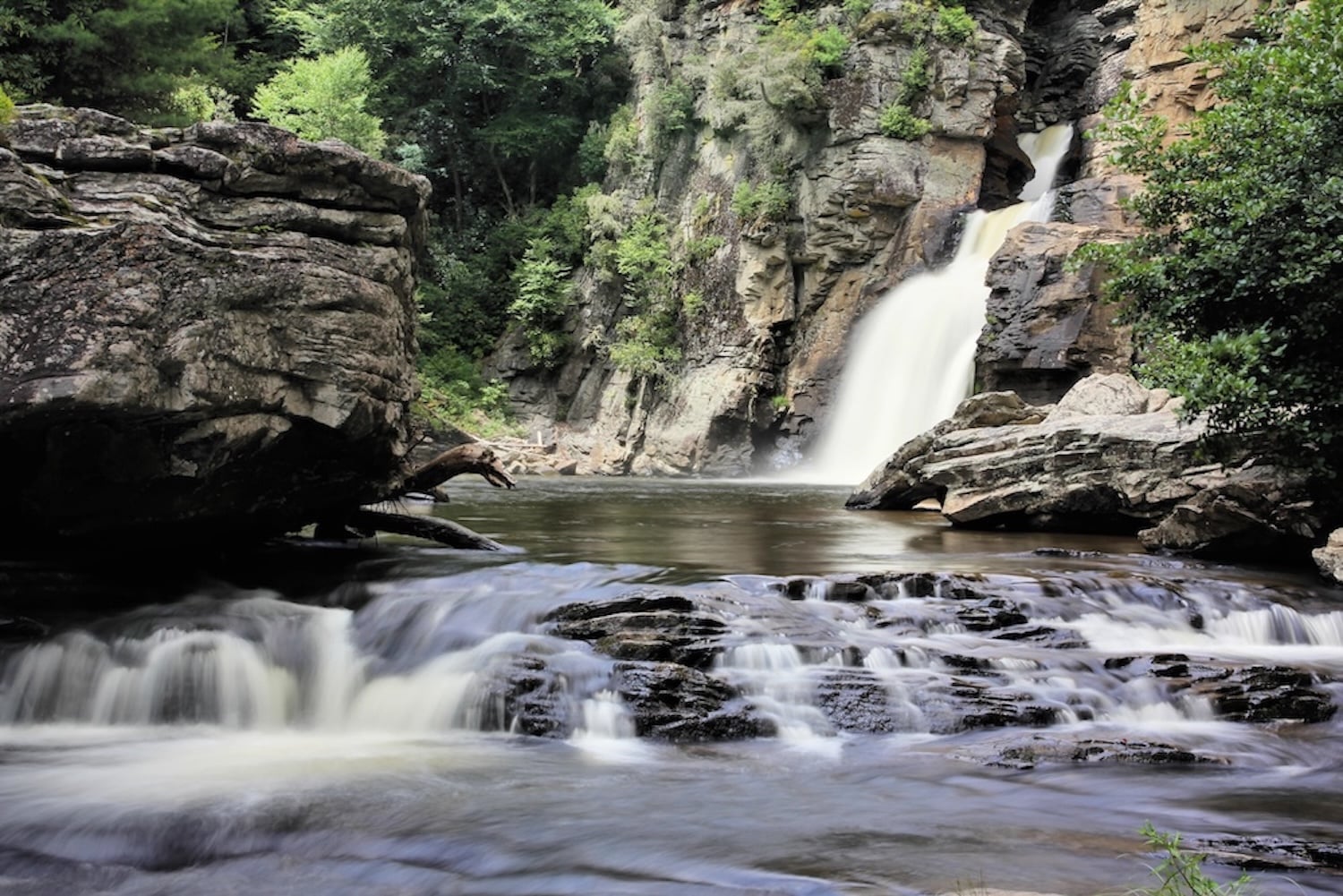
The Linville Falls Visitor Center was completely destroyed in the storm, but recently the park reopened partial access to the area. / NPS
Reinforcements and Resilience
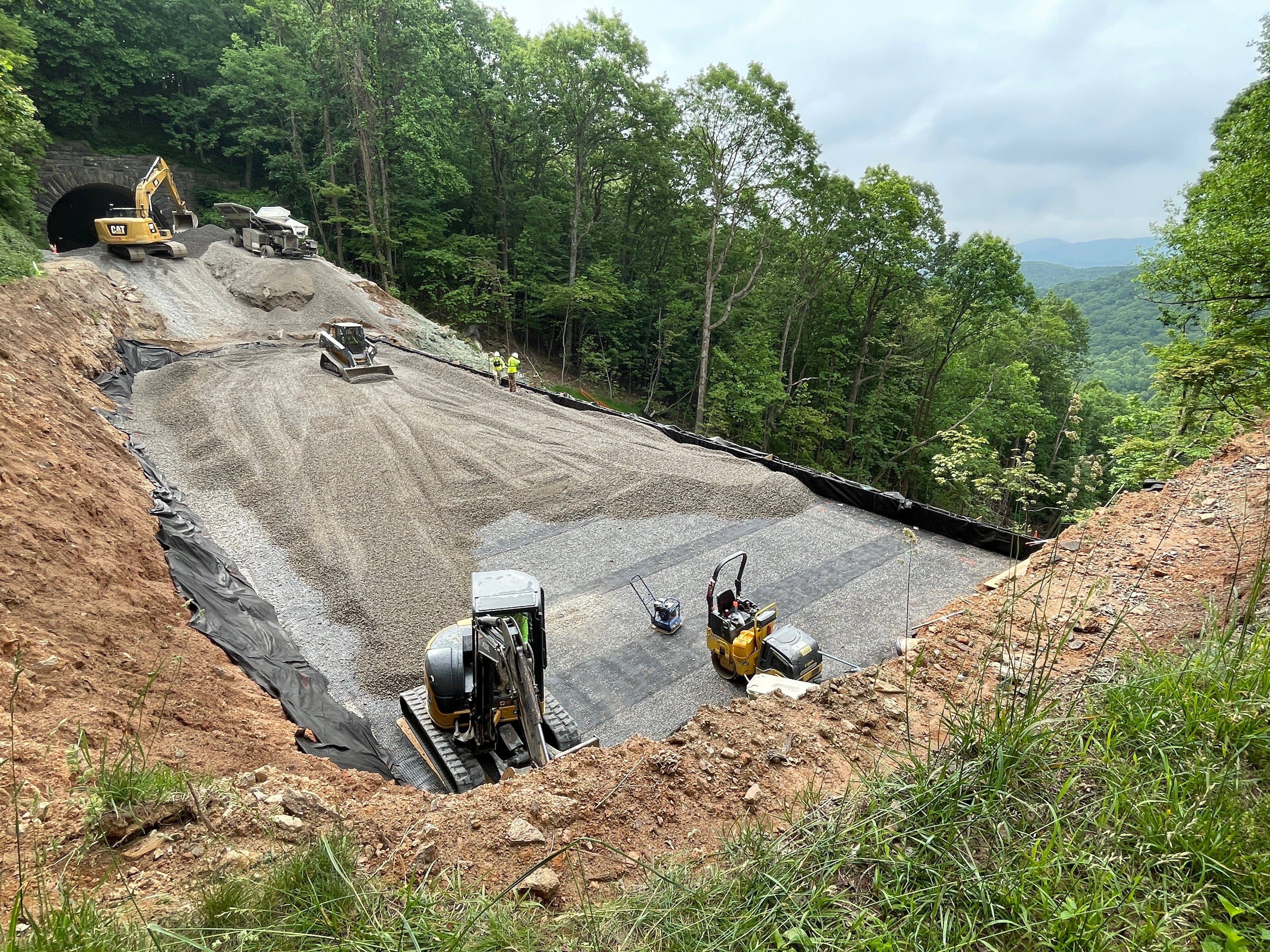
The key to restoring the roadway is a construction technique called reinforced soil slope, or RSS, which anchors roadbeds down to bedrock rather than simply regrading the surface. It's more expensive and time-consuming, but it also lasts much longer. “We've gone in after other landslides and put in that kind of design,” Swartout says, “and basically everywhere that we had done that, prior to Helene, survived Helene. We're always asking ourselves, how do we make this more resilient for the future?”
Swartout notes that the construction workers feel particularly committed to rebuilding the parkway. "The workers and subcontractors—they are so proud to be able to work on this repair to the parkway," the superintendent says. "They're looking at a road surface in the profile that was put there when the parkway was first built, and here they are putting it back together, hopefully for the last time."
In the Linville Falls area, which includes a campground, picnic area, and trails bordering both U.S. Forest Service land and the Linville Falls Wilderness, the immediate priority has been clearing dangerous debris. But in May, the parkway reopened what Swartout calls the "front door" to the trail system: the parking lot adjacent to the destroyed visitor center. "It was full,” she says, “as of 11 o'clock in the morning on the first day."
As for the visitor center itself, Swartout adds that the parkway is in early stages of developing alternatives, which will eventually go out for public comment. "More to come on that," she says. "As we start to develop alternatives, we will eventually release all those alternatives out to the public, and the public will have an opportunity to see all that when the time comes. We just have to make sure we’re making a good investment so that we don't have to repair it in another flood in the future.”
Among other developments, the parkway also recently announced a 10-year contract with an operator to re-establish food and retail at Mabry Mill, the beloved historic grist mill near Floyd, Virginia. The previous concessioner had opted not to renew, and then Helene intervened before a replacement could be found. Now, with a new operator selected, renovations are planned for late fall and into the winter, with a target reopening of spring or summer 2027. "Talk about a place people love," Swartout says.


Adjacent to the Humpback Rocks Visitor Center, an outdoor farm museum features an authentic log cabin and other outbuildings representing 19th-century Appalachian life. / Declan McCleaf
Detours and Determination
In 2025, Mountain Bizworks, an Asheville, N.C.-based nonprofit, reported on its survey of more than 700 businesses in western North Carolina assessing how they were faring post-Helene. The survey found that a staggering 96 percent reported negative impacts from the storm, with just over half sustaining physical damage to their facilities, and 83 percent being forced to close at least temporarily, with a median closure length of 42 days.
The businesses reported $188 million in combined physical and economic damages. Although 9 out of 10 businesses had reopened by the time of the survey last year, the vast majority of those were still earning at or below pre-Helene levels, the group reported, with about half of them down by at least 20 percent. Consistently, respondents noted that the restoration of parks, trails, and outdoor infrastructure along the Blue Ridge Parkway and elsewhere was essential to economic recovery.
Dayna Staton, manager of the Linville Falls General Store as well as the nearby Famous Rock House Restaurant, says that she still encounters visitors who are unaware of ongoing parkway closures in the area.
“There are people who are frustrated that the parkway is closed [near Linville Falls],” she says. “We are definitely seeing impacts, and other businesses in the area are impacted too. It’s also a little bit that gas prices are going up. Things start booming normally this time of year.”
Staton says she is feeling more hopeful since the Park Service announced its commitment to finish restoration projects this year. “We heard they were going to get the parkway open from here to Spruce Pine [about 12 miles to the south] by the fall. If they get it done before fall leaf season, that would be tremendous for us. It’s such a big time of year. We haven’t full recovered from Helene, but we’re getting closer.”
The essential message for summer visitors is that the parkway is open, but travelers still need to plan ahead for certain areas. (The park website includes regular project updates.)
Swartout has high praise for the work neighboring communities have done to help people navigate around closures in the nearly two years since the storm.
"Many of our surrounding communities have developed their own detour guides,” she says. “Even before Helene, this was part of the joy of traveling the parkway—drive a while, stop a while, get on the parkway, get off the parkway. The experience people are going to have is really the same. They're going to find surprising things."
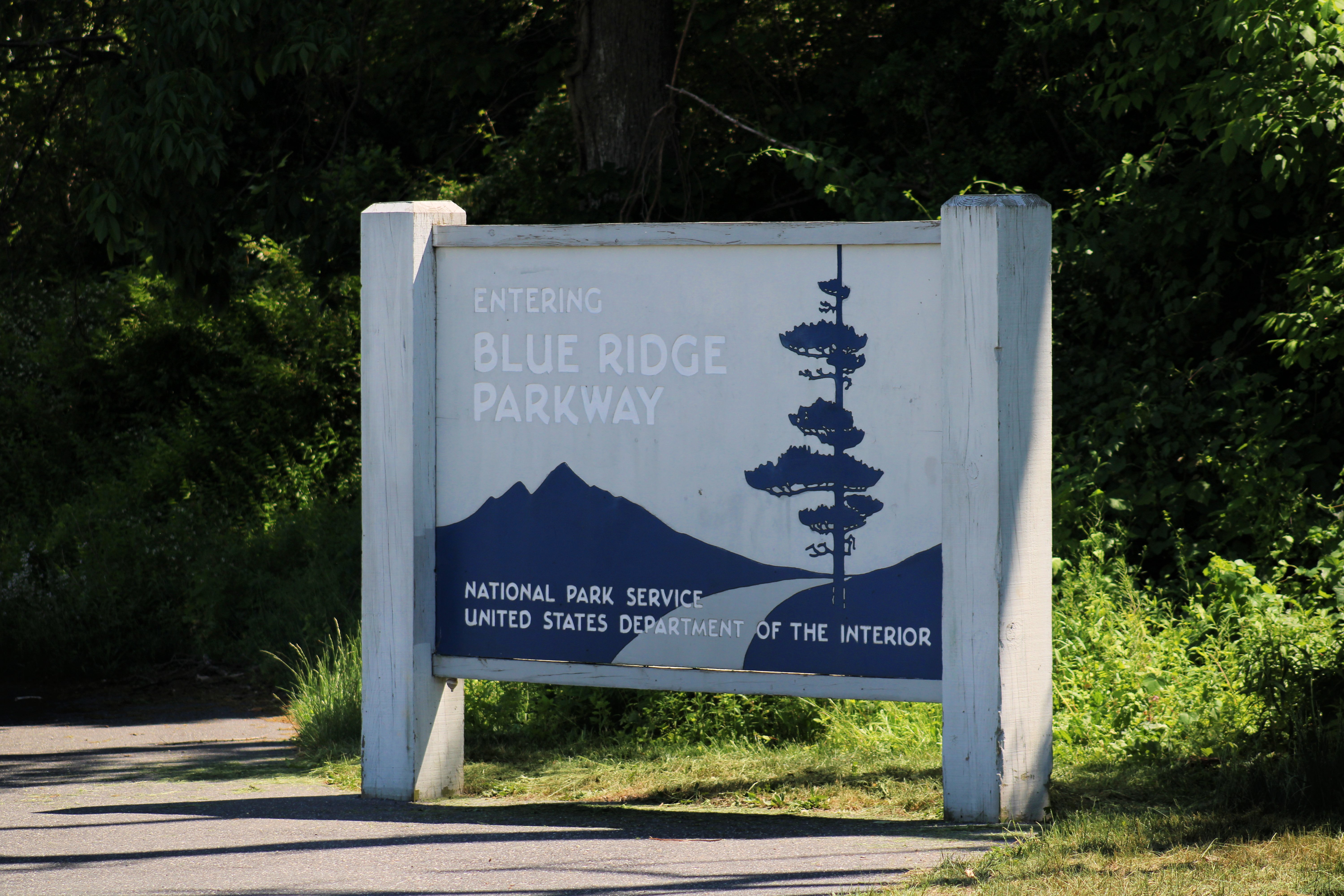
A sign welcoming visitors to the Blue Ridge Parkway. / Declan McCleaf
Some Of National Parks Traveler's Past Coverage Of Hurricane Helene's Impact On The Blue Ridge Parkway

While sections of the Blue Ridge Parkway in North Carolina are being reopened, the economic damage to towns along the parkway won't be as easily overcome.

Images taken by National Park Service crews assessing damage from Tropical Storm Helene along the Blue Ridge Parkway illustrate just how devastating the storm was.

Through the years, Mike Litterest has been assigned storm recovery duties in a dozen or so national parks, but he's never seen devastation like that visited on the Blue Ridge Parkway from the remnants of Hurricane Helene.
Stories about:
Story Categories:
A copy of National Parks Traveler's financial statements may be obtained by sending a stamped, self-addressed envelope to: National Parks Traveler, P.O. Box 980452, Park City, Utah 84098. National Parks Traveler was formed in the state of Utah for the purpose of informing and educating about national parks and protected areas.
Residents of the following states may obtain a copy of our financial and additional information as stated below:
- Florida: A COPY OF THE OFFICIAL REGISTRATION AND FINANCIAL INFORMATION FOR NATIONAL PARKS TRAVELER, (REGISTRATION NO. CH 51659), MAY BE OBTAINED FROM THE DIVISION OF CONSUMER SERVICES BY CALLING 800-435-7352 OR VISITING THEIR WEBSITE. REGISTRATION DOES NOT IMPLY ENDORSEMENT, APPROVAL, OR RECOMMENDATION BY THE STATE.
- Georgia: A full and fair description of the programs and financial statement summary of National Parks Traveler is available upon request at the office and phone number indicated above.
- Maryland: Documents and information submitted under the Maryland Solicitations Act are also available, for the cost of postage and copies, from the Secretary of State, State House, Annapolis, MD 21401 (410-974-5534).
- North Carolina: Financial information about this organization and a copy of its license are available from the State Solicitation Licensing Branch at 888-830-4989 or 919-807-2214. The license is not an endorsement by the State.
- Pennsylvania: The official registration and financial information of National Parks Traveler may be obtained from the Pennsylvania Department of State by calling 800-732-0999. Registration does not imply endorsement.
- Virginia: Financial statements are available from the Virginia Department of Agriculture and Consumer Services, 102 Governor Street, Richmond, Virginia 23219.
- Washington: National Parks Traveler is registered with Washington State’s Charities Program as required by law and additional information is available by calling 800-332-4483 or visiting www.sos.wa.gov/charities, or on file at Charities Division, Office of the Secretary of State, State of Washington, Olympia, WA 98504.
