

If you have visited a national park more than once, during different seasons, you will have noticed distinct moods and colors to the landscape – particularly if you are visiting a park unit east of the Mississippi with plenty of deciduous forest cover and vegetation.
- During the spring, the terrain is lush with so many variegated greens thanks to the rainfall filling the springs, creeks, and rivers and soaking the soil.
- During the summer – especially at its height – everything looks sort of dusty and the greens are tinted a little gray-brown.
- During the fall, you’ll be blown away by the many brilliant shades of red, orange, and yellow. That crisp snap to the air also means the views are clearer and less hazy.
- During the winter, the landscape is bare and devoid of color. If it snows, your photographic compositions appear almost monochrome. You’ll definitely see more of the area beyond what would normally be hidden by all those trees.
- - - - - - - - - - -
Looking back at all the trips I and my cameras have taken to various units of the National Park System, most of these travels occurred during the fall or summer, with a few in winter. I’ve visited several (but not many) park units during the spring (March-May), and those places were all within the West, Northwest, and Southwest. I haven’t been to any eastern parks except for Acadia National Park in Maine 13 years ago.
So, in early May, 2026, I packed a suitcase, one camera bag, and a laptop bag, flew into Dulles International Airport, rented a vehicle, and set out to photograph the scenery along and beyond Skyline Drive at Shenandoah National Park in Virginia. This trip lasted a week and during that time I stayed at the park’s three lodging options (Skyland Resort, Big Meadows Lodge, Lewis Mountain Cabins).

After just a week there, I can give you three adjectives to describe Shenandoah National Park in the spring:
- Lush – so much vegetation
- Green – many different shades of green
- Dramatic – particularly during those rainy days when the clouds and mist took on a life of their own
Apart from photography, I can also tell you what you will hear along Skyline Drive during the spring:
- A chorus of birds every single day, from morning into evening
- The wind in the trees
- Vehicles – well, this depends on how early you are up in the morning, how late you stay out in the evening, and how far away your hike takes you.
Let’s look now at the park as a whole. What did I see and experience and what do I recommend regarding photography?
The Overlooks

From the get-go, Skyline Drive was very much a planned and landscaped road through the park. In truth, most of what you see along either side of the road was not a part of the original vegetation, but instead graded, landscaped and planted with trees, flowers, and shrubbery, thanks to the young men of the Civilian Conservation Corps (CCC) back in the 1930s and 1940s.
There are 75 overlooks along Skyline Drive. Most of them are named and you’ll see signs for the overlooks with arrows pointing to which side of the road they are located. Some overlooks, however, have no names attributed to them, not even on the park’s official map.

My original lofty goal was to photograph every single overlook. But even within a week, 75 overlooks were out of my range, not to mention remembering which vista went with which overlook name. You see, the signs indicating an overlook ahead were often set some distance from the actual overlook. I guess that was to give travelers enough "heads up" time.There are no shoulders on either side of Skyline Drive and after awhile, I just didn’t feel like hoofing it all the way up or down the road to get a photo of the overlook name. Especially since most overlooks are located between blind curves on either end of the roadway. The speed limit is 35 miles per hour, but that didn’t always mean people followed the posted limit.
I ultimately chose to simply capture the beauty featured at each of the overlooks at which I stopped. As such, only a few of my photos have overlook names. I really did try to attribute names to all the photos I captured. I even tried to match what I photographed with what I could see on Google Maps. Unfortunately, Google appears to have not not updated their photos of this landscape in a few years. Much of what you see along either side of Skyline Drive in Google shows leafless trees and barren landscape. Anyway, so much for my lofty goal.

The Weather
Spring weather in Virginia - especially in the upper elevations of this national park – is variable, chilly, and windy. Rain was forecasted during the majority of my stay and it usually occurred in the late afternoon into the night and even into the early hours of the morning. Having regularly checked these forecasts prior to my trip, I had the presence of mind to pack a fleece pullover and some warm socks. I also packed raingear for myself and my cameras. If you visit Shenandoah in the springtime, rain protection for your camera is a prudent purchase. Go to Adorama.com or bhphotovideo.com and type in the keywords camera rain protection. Prices range from $7 up into the hundreds of dollars.
I noticed two things during my Shenandoah spring stay:
A rainy, chilly day creates mist in the mountains - a photographic plus. Not only did mist rise among the forested mountains but I found myself driving through it - sometimes so thick I could barely see ahead. To me, this mist was a living entity and added a nice bit of character to my compositions. As a matter of fact, these misty Blue Ridge Mountains created great time-lapse images.
The timelapse above was captured at Pinnacles Overlook, about seven miles (11.3 kilometers) north of Skyland Resort (mile marker 41.7). I used my SLR. Most digital SLRs and all smartphones will have a menu option for capturing time-lapse shots. I programed the camera to take a photo every five seconds for an infinite period. I usually halted the process after around 300 – 320 shots. Those photos were then “stitched” together in Photoshop to create a short 12-to-15-second video. You don’t need to use Photoshop, though. Most photo and video editing software programs will have options for stitching together your images.
Regardless whether you use a smartphone of digital SLR for a timelapse, you'll need both on a tripod. All sorts of sites sell smartphone tripod mounts, usually ranging from $12 - $30.
The second thing noticed was the blue light cast upon my compositions. Rain and overcast weather create this blue because the cloud cover is hiding the sun. Mark that down to Shenandoah spring weather.

The differing shades and brightness of green trees and vegetation, along with dramatic clouds and mist on a rainy day provide an opportunity to capture black-and-white compositions. Some digital cameras have a menu setting for photographing in monochrome, but my advice is to go ahead and take a photo in color, then later when you are editing the image, create a duplicate copy and convert it to black-and-white. Most photo editing software has a conversion tool, and plugins like DXO Nik Collection Silver Efex offer different monochrome presets.

The Haze
Visit this national park and as you photograph the Blue Ridge Mountain landscape, you will notice the distant Shenandoah Valley and mountains are hazy. That’s to be expected during both spring and summer. Much like the Smoky Mountains, the heavy blanketing of trees on the hills and mountains release of natural gases called volatile organic compounds (VOCs). The dense vegetation also releases water molecules into the air.
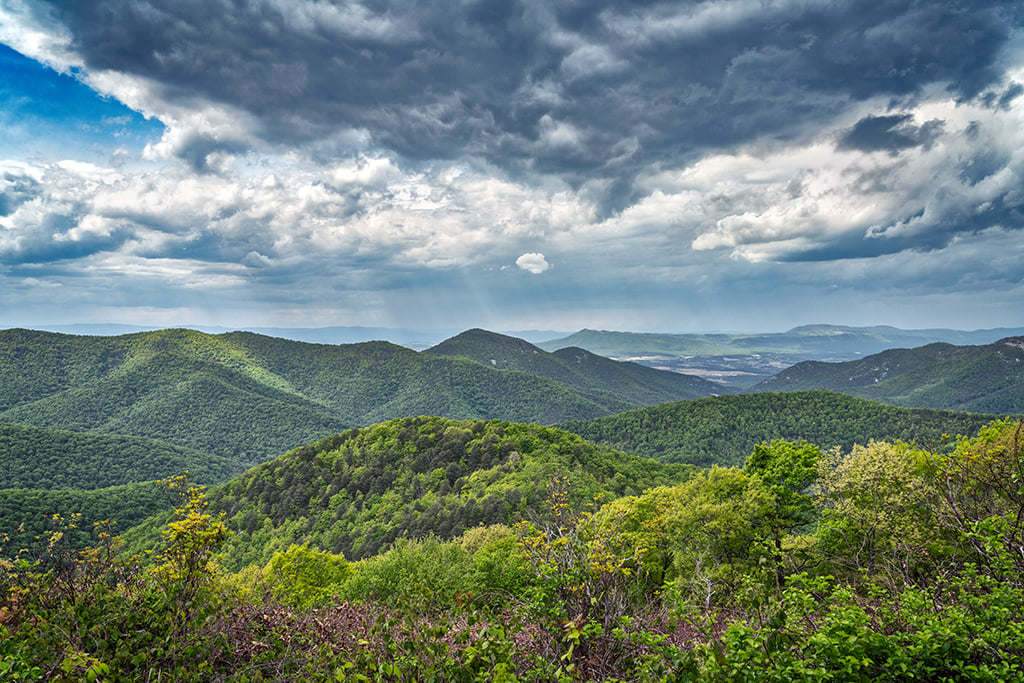
You can remedy this to a certain extent by using your photo editor’s dehaze function (in Lightroom, it’s a slider and I use a plug-in for Photoshop that has a dehaze option), or you can play around with other editing tools such as contrast to darken the distant landscape a bit.
What Can You Photograph?
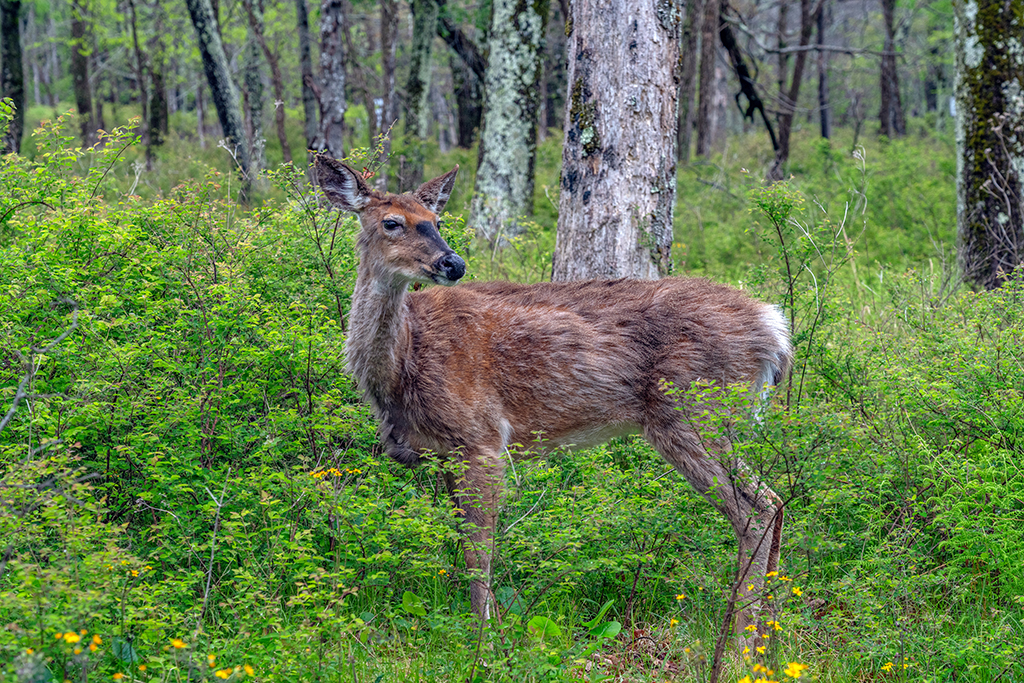
It's a given you can photograph the amazing landscapes you view at each overlook. In addition to those expansive vistas along Skyline Drive, however, don’t forget to capture some of the smaller things. Shenandoah is home to countless insects and invertebrates like this American giant millipede and this flat-backed millipede.

Photograph the wildflowers and blooming trees you see in the park. Use your telephoto lens or telephoto setting for nice close-ups of any small thing you spy, from millipedes to flowers.


Everything is some bright shade of green, but the leaf shapes are different. Capture those differences in shape and shade.

Sunrises and sunsets are sublimely saturated at Shenandoah, but you might not experience too many clear mornings during the spring. Out of the seven days I spent in the park, only one morning was perfect enough for a sunrise.

Nonetheless, keep checking the forecast and you might find a day during your stay for either a sunrise or sunset composition. I prefer sunrises because they occur on the side of Skyline Drive exhibiting less evidence of human presence (houses, cultivated fields, roads, etc.)
Photograph the waterfalls. According to Google, there are two dozen named waterfalls and numerous smaller cascades in Shenandoah National Park. Take a hike to one of those waterfalls with your tripod.

I hiked to Dark Hollow Falls - a very popular trail, albeit steep and rocky – to capture some silky water shots. You’ll need your tripod for this technique because of the slow shutter speeds used, and the tripod also served double duty as a hiking pole.
While hiking or driving, photograph the leading lines of trail and road. That line will lead your viewer's eyes from one point to another within your composition.


I was fascinated with the contrasting landscape of Big Meadows versus the forests and rolling mountains. There I was, traveling along a park road bordered on either side by lush vegetation and trees, when suddenly, I broke out of all that and into a 136-acre area of meadow bordered by the forest, with narrow footpaths wending across the grassland.

Look for patterns, color, and texture in a scene. During my hike along the Story of The Forest Nature Trail (the trailhead is located across from the Byrd Visitor Center parking area), the forest floor was carpeted with soft, bright green grass and feathery ferns in contrast to the dark brown tree trunks.

Not too far south of the Dickey Ridge Visitor Center is a forest with dark tree trunks standing like parallel matchsticks, surrounded by green vegetation. My guess is due to the regular spacing, these trees were planted - probably by the CCC.

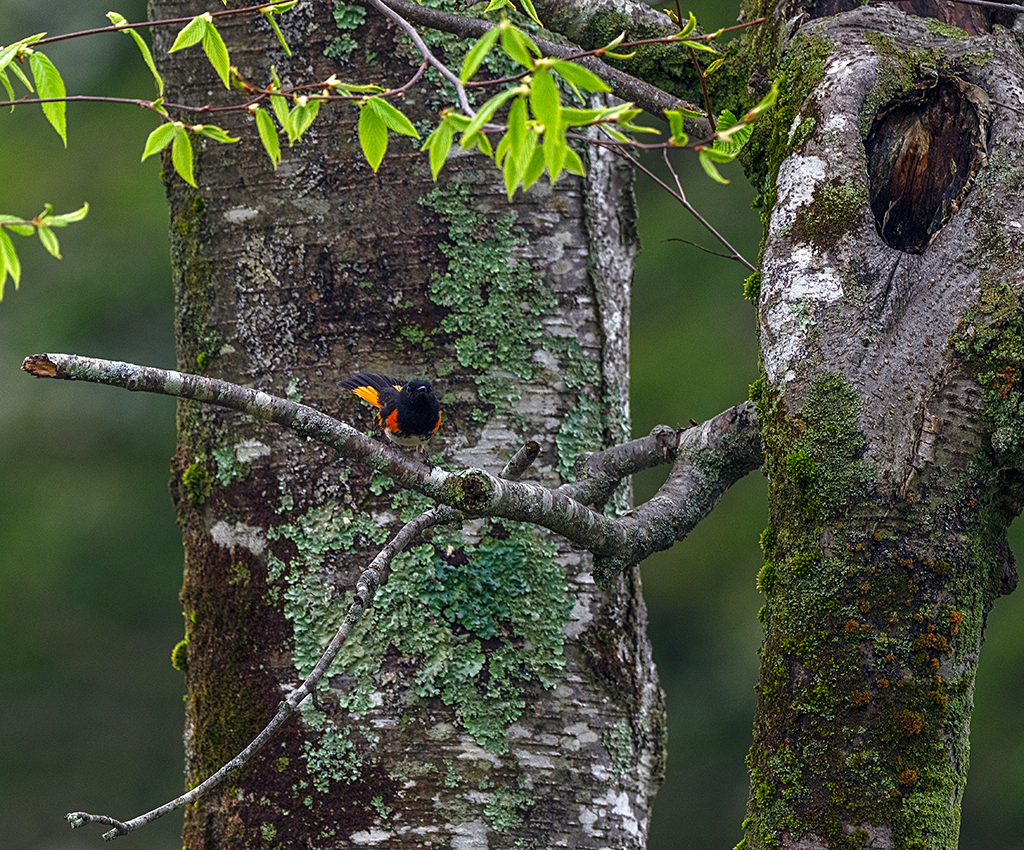
Pull out your telephoto lens or use that telephoto setting on your smartphone to capture whatever birds you spot during your visit. There are more than 190 resident and transient species in the park. I felt lucky to photograph an American goldfinch and American redstart during my trip – two birds I have never seen in my part of Washington State. Of course, I saw many more birds than just those two, but naturally did not have the necessary lens with me and the birdies didn’t feel like posing.

Photograph the human element of this national park: the mileposts, the Appalachian Trail markers (101 miles of the AT wind through Shenandoah), the visitor centers, and any remnant of past human activity you might find along your hikes (maybe the ruins of a stone fireplace).

If you can, visit the same area more than once – either during different times of day or on different days. These two photos of Marys Rock Tunnel were captured on the same day two hours apart. Note how different they look even within that short span of time.
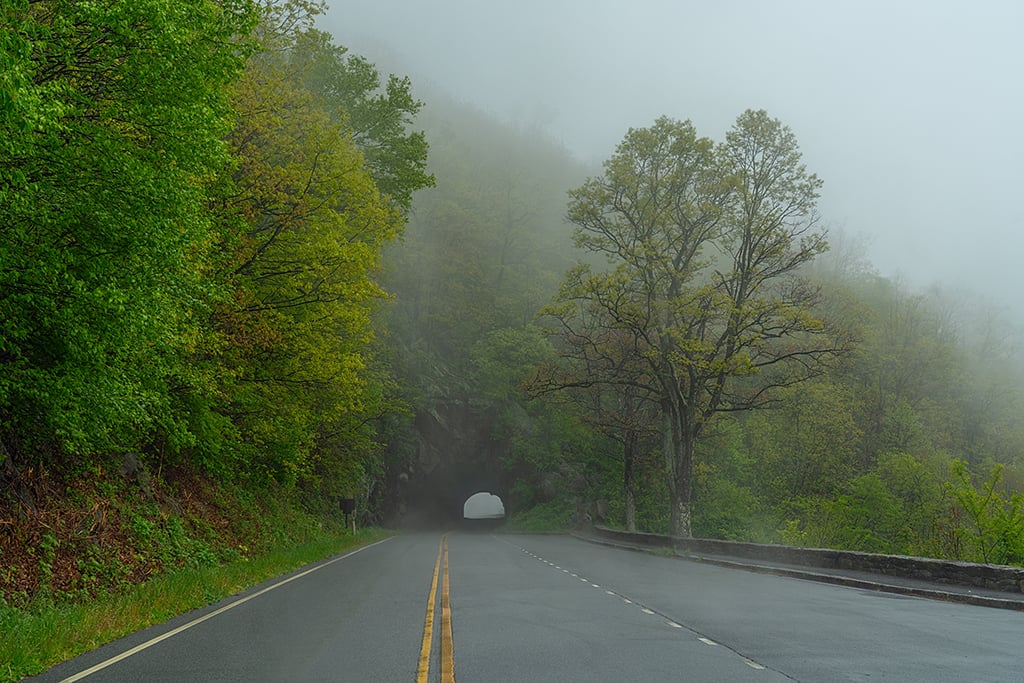

Speaking of time, if you have a few days to spend in the area, why not drive a little of the Blue Ridge Parkway, too. To the south, at the Rockfish Gap Entrance, Skyline Drive transitions into the Blue Ridge Parkway for more phenomenal views and history of these ancient, gentle mountains rounded by time and the elements and blanketed with many trees great and small.

I have one last little bit of advice for you in this longer-than-usual column: sometimes you may think you have a ho-hum image until you see it on your computer.
Huh? Well, in the photo below, you might think it is just another pretty shot from an overlook with some interesting cloud cover, but there's more going on here than first realized.

As I edited the image, I noticed that little clump of light purple flowers in the lower center of the shot, almost hidden by the leafy green vegetation surrounding it. I also noticed the faint, interesting sun rays emanating down from the clouds onto the hazy landscape in the distance that I'm not sure I saw when I clicked the shutter button. And how about that one leaf at the tip top of the bare-branched bush near the image's center right. I thought at first it might be a lone birdy, but after zooming in on that area I realized it was a brown-red leaf fluttering in the breeze. It's little things like this - oftentimes hidden until you see them on a larger screen - that flesh out the story of your composition.
I’ve always been a mountain and red rock gal, preferring to visit those park units in the West and Southwest. After visiting Shenandoah National Park – created because of the paucity of national parks east of the Mississippi – I believe I have done myself a disservice in not visiting more eastern parks during my tenure with the Traveler.
Shenandoah is a wonderful national park to photograph, and if it's on your bucket list, check out the Traveler’s Essential Guide to help you with your travel plans.
Stories about:
Story Categories:
A copy of National Parks Traveler's financial statements may be obtained by sending a stamped, self-addressed envelope to: National Parks Traveler, P.O. Box 980452, Park City, Utah 84098. National Parks Traveler was formed in the state of Utah for the purpose of informing and educating about national parks and protected areas.
Residents of the following states may obtain a copy of our financial and additional information as stated below:
- Florida: A COPY OF THE OFFICIAL REGISTRATION AND FINANCIAL INFORMATION FOR NATIONAL PARKS TRAVELER, (REGISTRATION NO. CH 51659), MAY BE OBTAINED FROM THE DIVISION OF CONSUMER SERVICES BY CALLING 800-435-7352 OR VISITING THEIR WEBSITE. REGISTRATION DOES NOT IMPLY ENDORSEMENT, APPROVAL, OR RECOMMENDATION BY THE STATE.
- Georgia: A full and fair description of the programs and financial statement summary of National Parks Traveler is available upon request at the office and phone number indicated above.
- Maryland: Documents and information submitted under the Maryland Solicitations Act are also available, for the cost of postage and copies, from the Secretary of State, State House, Annapolis, MD 21401 (410-974-5534).
- North Carolina: Financial information about this organization and a copy of its license are available from the State Solicitation Licensing Branch at 888-830-4989 or 919-807-2214. The license is not an endorsement by the State.
- Pennsylvania: The official registration and financial information of National Parks Traveler may be obtained from the Pennsylvania Department of State by calling 800-732-0999. Registration does not imply endorsement.
- Virginia: Financial statements are available from the Virginia Department of Agriculture and Consumer Services, 102 Governor Street, Richmond, Virginia 23219.
- Washington: National Parks Traveler is registered with Washington State’s Charities Program as required by law and additional information is available by calling 800-332-4483 or visiting www.sos.wa.gov/charities, or on file at Charities Division, Office of the Secretary of State, State of Washington, Olympia, WA 98504.
INN Member

The easiest way to explore RV-friendly National Park campgrounds.

Here’s the definitive guide to National Park System campgrounds where RVers can park their rigs.
Our app is packed with RVing- specific details on more than 250 campgrounds in more than 70 national parks.
You’ll also find stories about RVing in the parks, tips helpful if you’ve just recently become an RVer, and useful planning suggestions.

