
Sierra Club has obtained Trump administration documents as part of a FOIA and subsequent lawsuit that reveal the U.S. Fish and Wildlife Service took steps to censor materials on climate change, Indigenous peoples, wetland destruction, and other issues. The move is a response to Donald Trump’s executive order “Restoring Truth and Sanity to American History.”
FWS staff flagged materials at more than 30 wildlife refuges, fish hatcheries, and agency offices for content that may be inconsistent with the executive order. Sierra Club says that for the first time, these documents offer a glimpse into the feedback provided by the Interior Department on whether to change or keep materials and that the recommendations include contradictory guidance about when to make changes. At one location, for example, Interior recommended removing a line from a video about the “violent disruption" of Indigenous peoples, while at another, Interior determined signage about Europeans forcing Indigenous peoples off their lands was “factual” and recommended no change.
The effort follows similar moves at sites across the National Park System, including the removal of materials related to slavery, LGBTQ+ history, climate change, Indigenous history, and more.
“These documents expose the Interior Department’s chaotic and contradictory approach to implementing Donald Trump’s attempts to rewrite history,” said Gerry James, deputy director for the Sierra Club’s Outdoors For All campaign. “This effort continues to put career public servants in the difficult position of evaluating whether telling the full story of our public lands violates an executive order rooted in climate denial and hostility toward marginalized communities.”
The official documents include nearly 300 public comments from more than 100 wildlife refuges and fish hatcheries in response to the QR codes seeking public feedback, with many comments revealing public opposition to the executive order.
The documents detail the following sites and materials flagged by FWS staff, alongside recommended changes by Interior, according to Sierra Club:
- National Wildlife Refuge System Headquarters (Virginia): Interior recommended the removal of the following language in a video: “From the earliest days of colonization the delicate balance nurtured by indigenous peoples, the first stewards of these lands, was violently disrupted.”
- Wichita Mountains Wildlife Refuge (Oklahoma): Interior recommended the removal of a display title called the “Hall of Shame” for an exhibit that talked about the conditions that brought on the near extinction of American bison.
- Fort Niobrara National Wildlife Refuge (Nebraska) and Genoa National Fish Hatchery (Wisconsin): Interior is “researching the specifics to come up with a plan of action” related to signage flagged at both of these locations. No additional information was provided detailing the contents.
The documents also detail the following sites where materials were flagged by FWS staff, but Interior recommended no further action, stating the materials were “factual statements about what occurred”:
- Occoquan Bay National Wildlife Refuge (Virginia) and Elizabeth Hartwell Mason Neck National Wildlife Refuge (Virginia): Multiple signs addressing how Indigenous peoples were forced off their lands by Europeans.
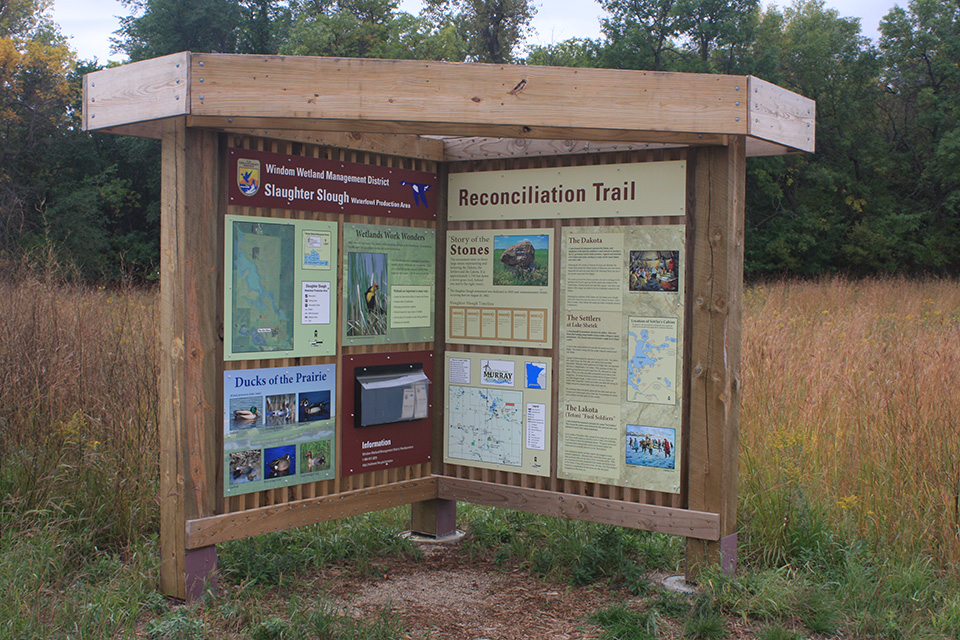
- Windom Wetland Management District (Minnesota): Signage about the Slaughter Slough Waterfowl Protection Area, which includes an interpretive display about a deadly interaction between white settlers and Indigenous peoples.
- Audubon National Wildlife Refuge (North Dakota): Signage about climate change.
- Bear River Migratory Bird Refuge (Utah): Multiple signs about wetland destruction.
Story Categories:
A copy of National Parks Traveler's financial statements may be obtained by sending a stamped, self-addressed envelope to: National Parks Traveler, P.O. Box 980452, Park City, Utah 84098. National Parks Traveler was formed in the state of Utah for the purpose of informing and educating about national parks and protected areas.
Residents of the following states may obtain a copy of our financial and additional information as stated below:
- Florida: A COPY OF THE OFFICIAL REGISTRATION AND FINANCIAL INFORMATION FOR NATIONAL PARKS TRAVELER, (REGISTRATION NO. CH 51659), MAY BE OBTAINED FROM THE DIVISION OF CONSUMER SERVICES BY CALLING 800-435-7352 OR VISITING THEIR WEBSITE. REGISTRATION DOES NOT IMPLY ENDORSEMENT, APPROVAL, OR RECOMMENDATION BY THE STATE.
- Georgia: A full and fair description of the programs and financial statement summary of National Parks Traveler is available upon request at the office and phone number indicated above.
- Maryland: Documents and information submitted under the Maryland Solicitations Act are also available, for the cost of postage and copies, from the Secretary of State, State House, Annapolis, MD 21401 (410-974-5534).
- North Carolina: Financial information about this organization and a copy of its license are available from the State Solicitation Licensing Branch at 888-830-4989 or 919-807-2214. The license is not an endorsement by the State.
- Pennsylvania: The official registration and financial information of National Parks Traveler may be obtained from the Pennsylvania Department of State by calling 800-732-0999. Registration does not imply endorsement.
- Virginia: Financial statements are available from the Virginia Department of Agriculture and Consumer Services, 102 Governor Street, Richmond, Virginia 23219.
- Washington: National Parks Traveler is registered with Washington State’s Charities Program as required by law and additional information is available by calling 800-332-4483 or visiting www.sos.wa.gov/charities, or on file at Charities Division, Office of the Secretary of State, State of Washington, Olympia, WA 98504.
INN Member

The easiest way to explore RV-friendly National Park campgrounds.

Here’s the definitive guide to National Park System campgrounds where RVers can park their rigs.
Our app is packed with RVing- specific details on more than 250 campgrounds in more than 70 national parks.
You’ll also find stories about RVing in the parks, tips helpful if you’ve just recently become an RVer, and useful planning suggestions.

