
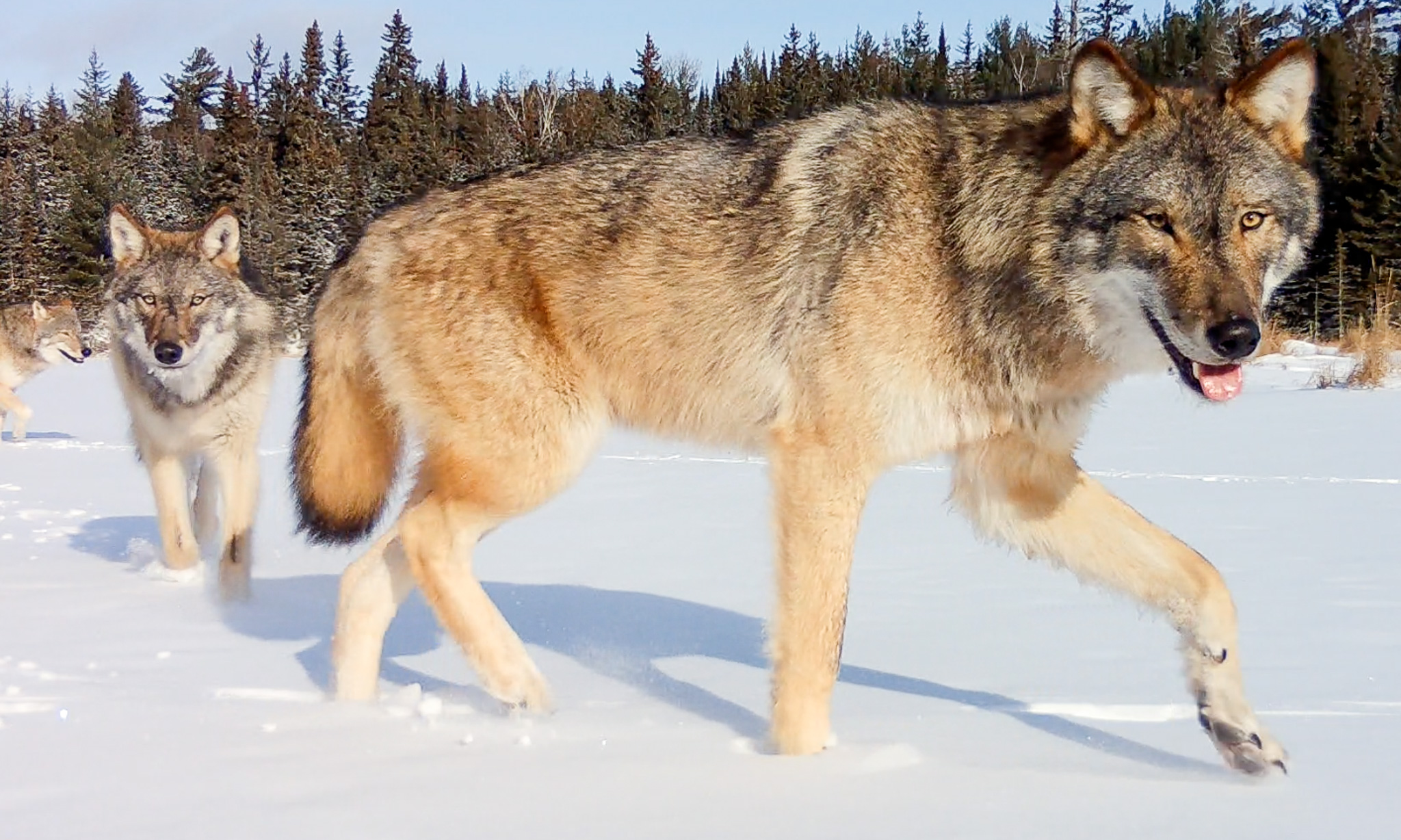
A decrease in prey seems to be the cause of an overall decrease in wolf density within the Greater Voyageurs Ecosystem (GVE), according to the 2024-2025 Greater Voyageurs Ecosystem Wolf Population Report.
The good news is that despite the recent decrease, “all evidence indicates that the wolf population in the Greater Voyageurs Ecosystem is a fairly stable, high-density wolf population,” according to the report.
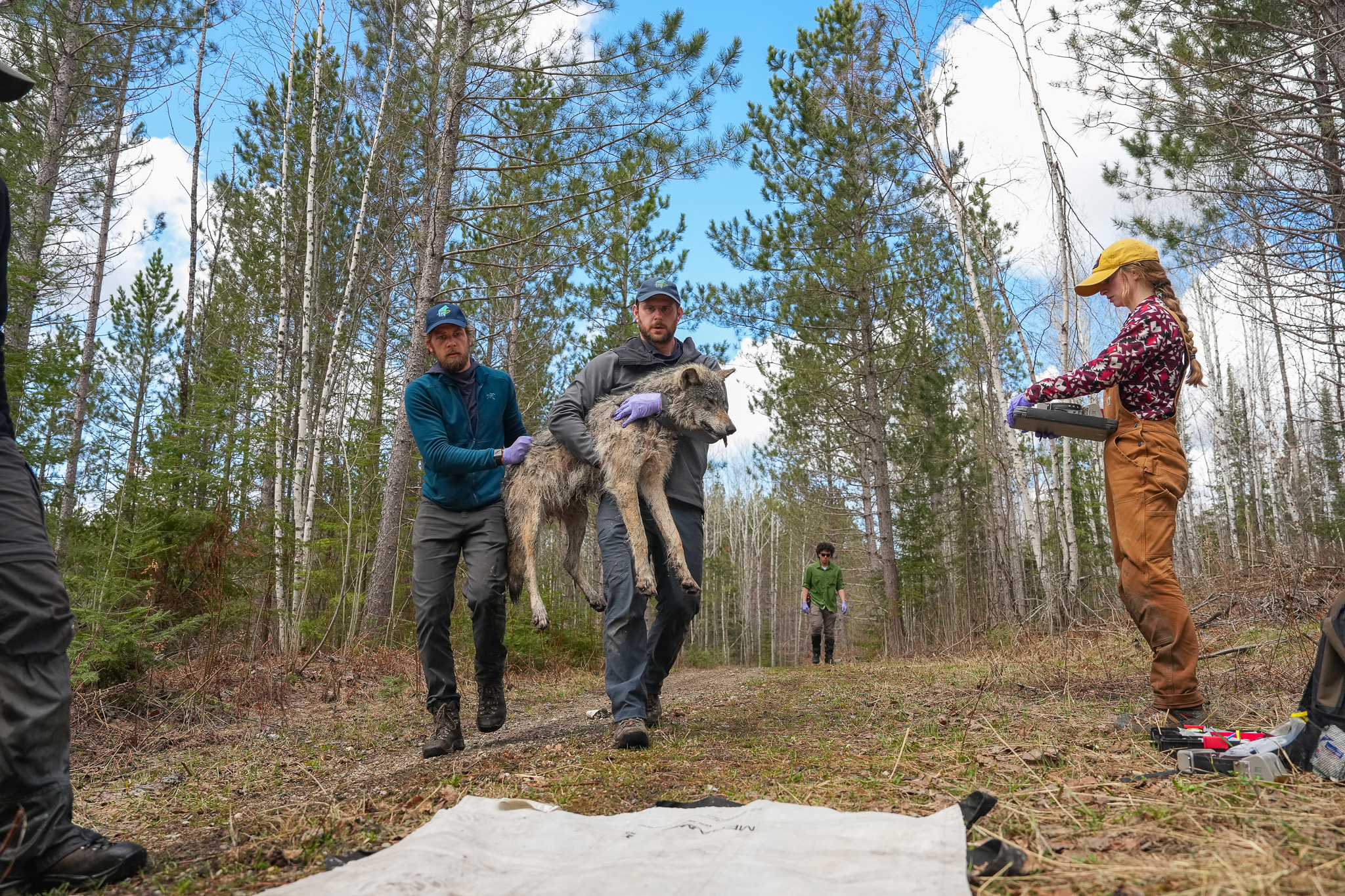
“Our ability to document this change is largely due to our large-scale, intensive efforts to study the wolf population by fitting wolves in many packs with GPS-collars and deploying over 350 trail cameras across the Greater Voyageurs Ecosystem—the area in and around Voyageurs National Park,” explained Tom Gable, a wildlife biologist and project leader of the Voyageurs Wolf Project that since 2015 has monitored the park's wolves. “Without these tools, we would not be able to document and understand the changes that are occurring.”
According to the report, the 2024–2025 survey effort was the most intensive survey effort to date in the GVE. Remote cameras monitored 22 wolf pack territories, allowing the researchers to record 1,214 observations of wolf packs.
The report estimates a 19% decrease in wolf population density from last year and a 31% decrease from two years ago. However, the researchers noted that much of the decrease can be attributed to an increase in territory size, which reduces population density.
The researchers also believe that the decrease in wolf density is related to a decrease in the deer population, a main food source for the wolves, caused by severe winters of 2021–2022 and 2022–2023. To compensate for the decrease in prey, wolf populations tend to increase their territory size to access an increased number of prey.
“A few years ago, when deer populations were hammered by two back-to-back severe winters, we anticipated that the wolf population would also experience a substantial decline soon,” explained Gable. “As anticipated, this is precisely what has occurred, with the population declining by 31% over the past two years. However, it has been fascinating to document in detail how the wolf population is responding to the recent decrease in the deer population—in particular, the fairly quick increase in territory size of wolf packs.”
The lack of prey also seems to have affected the rate of survival for wolf pups. According to the report, the researchers estimate that only one of every five pups born in Spring 2024 survived until winter. Of the 17 packs that produced pups in the spring, only eight raised any pups to adulthood, and more than half lost all of their pups before winter.
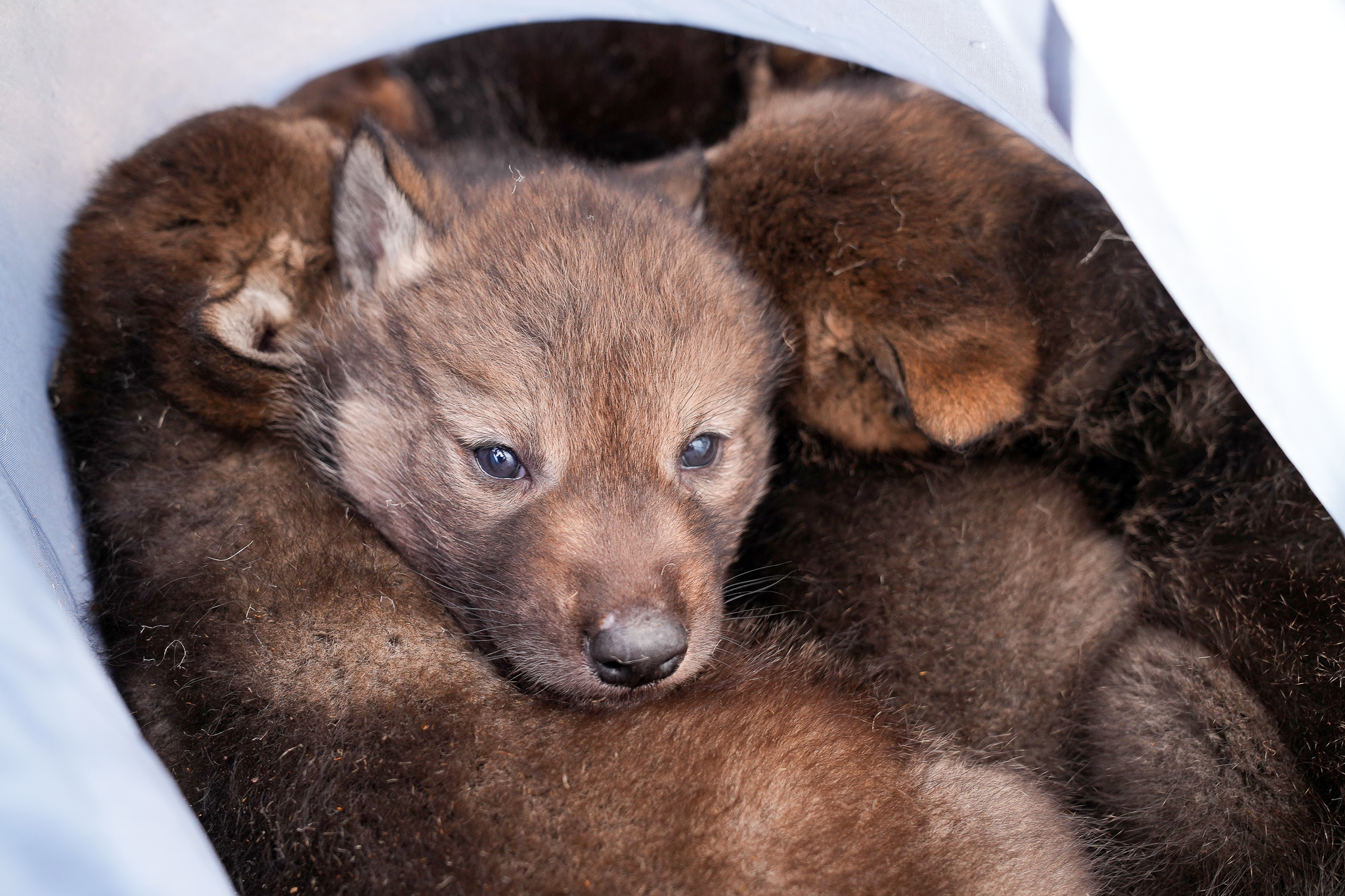
The researchers note that as prey become less abundant, wolves have a harder time finding and killing vulnerable prey, which reduces their ability to obtain enough food for their pups throughout the summer.
Only one of the years included in the study saw a lower wolf density than 2024-2025. Fortunately, the researchers write that they “do not think this decrease is due to long-term population decline in the wolf population. Rather, we think this recent decrease is simply the natural ebb and flow of wolf populations as they adjust to changes in prey populations.”
“On the whole, we are very pleased with the continued success of the project, and with the data we have been able to collect,” said Gable. “Our goal is to understand wolves of the Greater Voyageurs Ecosystem as best as we can, and fortunately our efforts have continued to pay off. Each year of data we collect yields more insight than the year before because each year contributes to a long-term dataset. This, in our opinion, is why long-term ecological research in and around national parks is invaluable.”
Stories about:
Story Categories:
A copy of National Parks Traveler's financial statements may be obtained by sending a stamped, self-addressed envelope to: National Parks Traveler, P.O. Box 980452, Park City, Utah 84098. National Parks Traveler was formed in the state of Utah for the purpose of informing and educating about national parks and protected areas.
Residents of the following states may obtain a copy of our financial and additional information as stated below:
- Florida: A COPY OF THE OFFICIAL REGISTRATION AND FINANCIAL INFORMATION FOR NATIONAL PARKS TRAVELER, (REGISTRATION NO. CH 51659), MAY BE OBTAINED FROM THE DIVISION OF CONSUMER SERVICES BY CALLING 800-435-7352 OR VISITING THEIR WEBSITE. REGISTRATION DOES NOT IMPLY ENDORSEMENT, APPROVAL, OR RECOMMENDATION BY THE STATE.
- Georgia: A full and fair description of the programs and financial statement summary of National Parks Traveler is available upon request at the office and phone number indicated above.
- Maryland: Documents and information submitted under the Maryland Solicitations Act are also available, for the cost of postage and copies, from the Secretary of State, State House, Annapolis, MD 21401 (410-974-5534).
- North Carolina: Financial information about this organization and a copy of its license are available from the State Solicitation Licensing Branch at 888-830-4989 or 919-807-2214. The license is not an endorsement by the State.
- Pennsylvania: The official registration and financial information of National Parks Traveler may be obtained from the Pennsylvania Department of State by calling 800-732-0999. Registration does not imply endorsement.
- Virginia: Financial statements are available from the Virginia Department of Agriculture and Consumer Services, 102 Governor Street, Richmond, Virginia 23219.
- Washington: National Parks Traveler is registered with Washington State’s Charities Program as required by law and additional information is available by calling 800-332-4483 or visiting www.sos.wa.gov/charities, or on file at Charities Division, Office of the Secretary of State, State of Washington, Olympia, WA 98504.
INN Member

The easiest way to explore RV-friendly National Park campgrounds.

Here’s the definitive guide to National Park System campgrounds where RVers can park their rigs.
Our app is packed with RVing- specific details on more than 250 campgrounds in more than 70 national parks.
You’ll also find stories about RVing in the parks, tips helpful if you’ve just recently become an RVer, and useful planning suggestions.

