
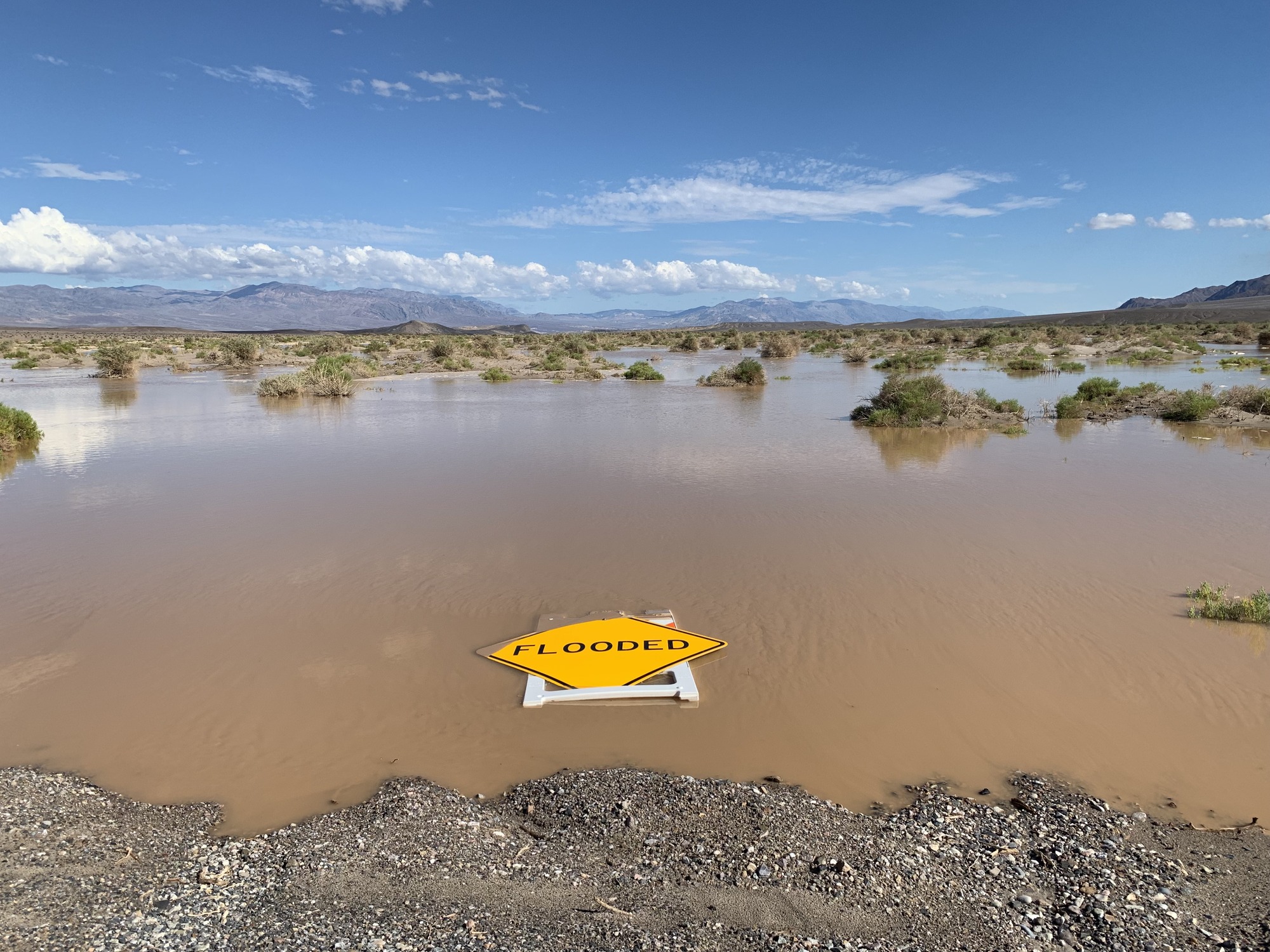
National Park Service staff are taking notice of how climate change is impacting the experience of visitors, according to interviews with 63 staff across 31 NPS units. From sea-level rise at coastal parks to fire and smoke in forested areas, climate change is changing the way visitors interact with national parks across the country.
The interviews are part of a nation-wide study (attached) that sought to tap into the first-hand experience of NPS staff in order to better understand how and why park visitation is changing in the face of climate change. The researchers note that “[park] staff have unique perspectives on how climate change may be affecting factors like visitor behaviour, visitor safety and park operations that are difficult to quantify.”
The insights from the study have implications for daily, seasonal, and annual park operations, all of which are impacted in unique ways due to climate change.
The 31 NPS sites included in the study cover a range of ecological regions, visitation levels, park types (e.g. national parks, national monuments), and settings (e.g. coastal, urban). The participants included park superintendents, interpretive and visitor service managers, natural and/or cultural resource managers, scientists, facilities and maintenance managers, and park rangers, allowing the researchers to get a clear sense of how staff at different levels are interpreting the way climate change is affecting park visitation.
The climate change-related concern most often mentioned by staff was rising temperatures. They noted that higher temperatures affect snowpack, drought, and wildfire occurrence while also shifting seasonality. For example, the timing of spring blooms and fall foliage colors has changed in some parks.
With higher temperatures also comes a longer visitor season. “We don't have a season anymore,” mentioned one interviewee at a Southeastern park. “We're pretty much year-round. Our campground is full all year round because we have a generally warmer climate.”
Another interviewee at a Southwestern desert park explained that higher temperatures also means that they’re having to conduct more search and rescues for visitors who get heat stroke.
Because spring is coming earlier and fall is leaving later, the visitor season has grown longer. “People start to come to the park… for the spring ephemeral wildflowers, and they keep coming around until the fall leaves go away. Fall leaves are coming later. Spring wildflowers are coming earlier. So, it is increasing the duration of our season as well.”
A longer visitor season can be good for those wishing to enjoy the parks, but it can be difficult on the parks themselves, which have less time to recover. The areas near trails, where trampling and compaction occur, benefit from the times when visitors aren’t present.
Other concerns mentioned by park staff included drought, flooding, wildfires, sea-level rise, erosion, and zoonotic and vector-borne diseases caused by ecosystem changes.
One participant at a Southeastern coastal park explained how several issues can be connected, saying, “Increased rainfall leads to a lot more flooding, which damages not just the water system components, but trails and roadways—because most of our trails and roadways are on hillsides.”
In recent years, smoke from wildfires has become a major issue at national parks, especially those in the western U.S. “[P]eople…[come] to engage in active physical behavior: hiking, running, biking, river rafting, kayaking, that kind of stuff,” explained a manager at a Northwest mountainous park. “People had to change their behavior patterns as a result of smoke…[T]here are times that, because of smoke, the values that people were coming to be able to see—the landscape—were impinged upon because of that.”
Increased numbers of coastal storms and hurricanes are causing issues for coastal parks, where infrastructure is at risk of being swept away. For example, several houses collapsed at Cape Hatteras National Seashore in late September due to erosion and higher sea levels.
According to the study, nearly a third of participating NPS units also noted increased instances of invasive species displacing native species, which can shift how visitors view certain national parks.
Beyond the notable impacts on park visitation, many NPS staff commented on how worries around the future impacts of climate change are causing problems for the mental health and morale of park staff across the country.
“You know, we have staff that care a lot and spend a lot of time at this trailhead…giving people advice and helping people understand the dangers,” explained a manager at a Southwestern desert park. “But they can't be there 24/7 and the second they leave that spot to go do something else, somebody walks up the trail they shouldn't and ends up in a search and rescue, and the staff takes that very personally. They really…believe in their work and are frustrated, kind of beating their heads up against a wall, kind of dealing with that over and over.”
Some staff members even expressed concerns that their park would disappear entirely due to the impacts of climate change. “The possibility of [the park] going away, it's heartbreaking,” said a staff member at a Southeastern coastal park. “We need to know that we're doing everything we can to make sure that we accomplish our mission. As long as we can. And that's really important to everybody that works here. Everybody's really invested in it, but it's difficult.”

Story Categories:
A copy of National Parks Traveler's financial statements may be obtained by sending a stamped, self-addressed envelope to: National Parks Traveler, P.O. Box 980452, Park City, Utah 84098. National Parks Traveler was formed in the state of Utah for the purpose of informing and educating about national parks and protected areas.
Residents of the following states may obtain a copy of our financial and additional information as stated below:
- Florida: A COPY OF THE OFFICIAL REGISTRATION AND FINANCIAL INFORMATION FOR NATIONAL PARKS TRAVELER, (REGISTRATION NO. CH 51659), MAY BE OBTAINED FROM THE DIVISION OF CONSUMER SERVICES BY CALLING 800-435-7352 OR VISITING THEIR WEBSITE. REGISTRATION DOES NOT IMPLY ENDORSEMENT, APPROVAL, OR RECOMMENDATION BY THE STATE.
- Georgia: A full and fair description of the programs and financial statement summary of National Parks Traveler is available upon request at the office and phone number indicated above.
- Maryland: Documents and information submitted under the Maryland Solicitations Act are also available, for the cost of postage and copies, from the Secretary of State, State House, Annapolis, MD 21401 (410-974-5534).
- North Carolina: Financial information about this organization and a copy of its license are available from the State Solicitation Licensing Branch at 888-830-4989 or 919-807-2214. The license is not an endorsement by the State.
- Pennsylvania: The official registration and financial information of National Parks Traveler may be obtained from the Pennsylvania Department of State by calling 800-732-0999. Registration does not imply endorsement.
- Virginia: Financial statements are available from the Virginia Department of Agriculture and Consumer Services, 102 Governor Street, Richmond, Virginia 23219.
- Washington: National Parks Traveler is registered with Washington State’s Charities Program as required by law and additional information is available by calling 800-332-4483 or visiting www.sos.wa.gov/charities, or on file at Charities Division, Office of the Secretary of State, State of Washington, Olympia, WA 98504.


National parks and their natural resources belong to you. The National Parks Traveler works to ensure you know how these essential places are being cared for.
Sign Up For Our Weekly Newsletter
Unsubscribe at any time.
INN Member

The easiest way to explore RV-friendly National Park campgrounds.

Here’s the definitive guide to National Park System campgrounds where RVers can park their rigs.
Our app is packed with RVing- specific details on more than 250 campgrounds in more than 70 national parks.
You’ll also find stories about RVing in the parks, tips helpful if you’ve just recently become an RVer, and useful planning suggestions.

