

While national parks like Great Smoky Mountains and Shenandoah are world-famous for their blankets of brilliant fall color, they're also known for big crowds and traffic jams during peak leaf-peeping season.
But there are lesser known parks where autumn leaves are plentiful and the people (usually) aren't. They're places where you can take time to hear the layers of red, orange, and yellow crunch under your feet and feel the crisp air on your cheeks. Places where you can take in the spiritualness of nature in what is, for many of us, our favorite season.
"It's a colorful time of the year, and people enjoy the display just like they enjoy the beautiful colors of flowers," Dr. Howard Neufeld, a biologist at Appalachian State University, told the Traveler in an interview.
For much of the country it's also a time when the weather cools off and becomes less humid, making people more inclined to go outdoors.
Neufeld, known online as "Fall Color Guy," said most areas in the Eastern U.S., including national park sites, could be on track for a robust season for leaf peeping. Which could mean even bigger crowds.
Below are our picks for national parks where the fall leaves can be spectacular and the crowds less daunting. Keep in mind that the "typical peak" varies from year to year. We recommend you follow along on your favorite fall foliage map so you don't miss out.
Effigy Mounds National Monument

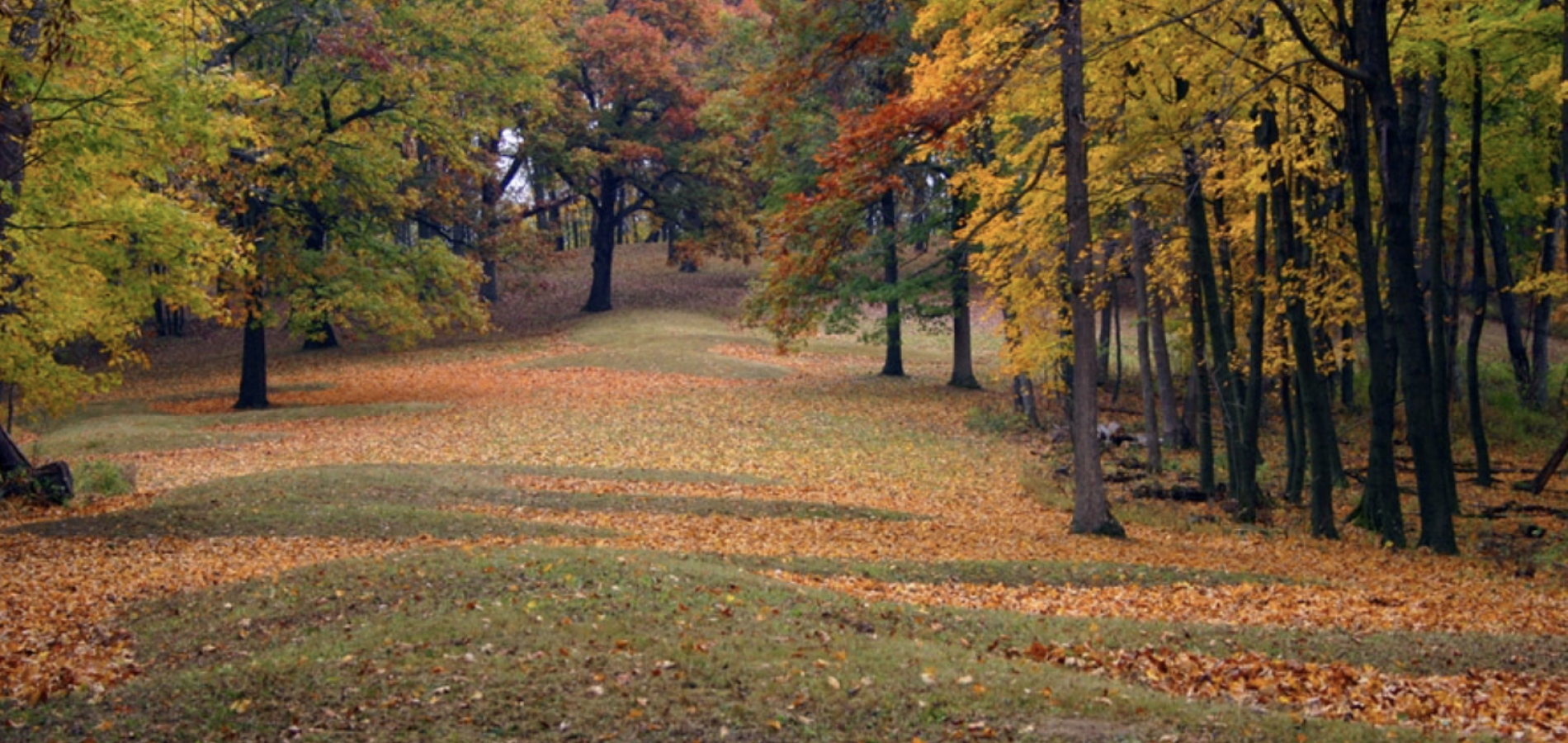
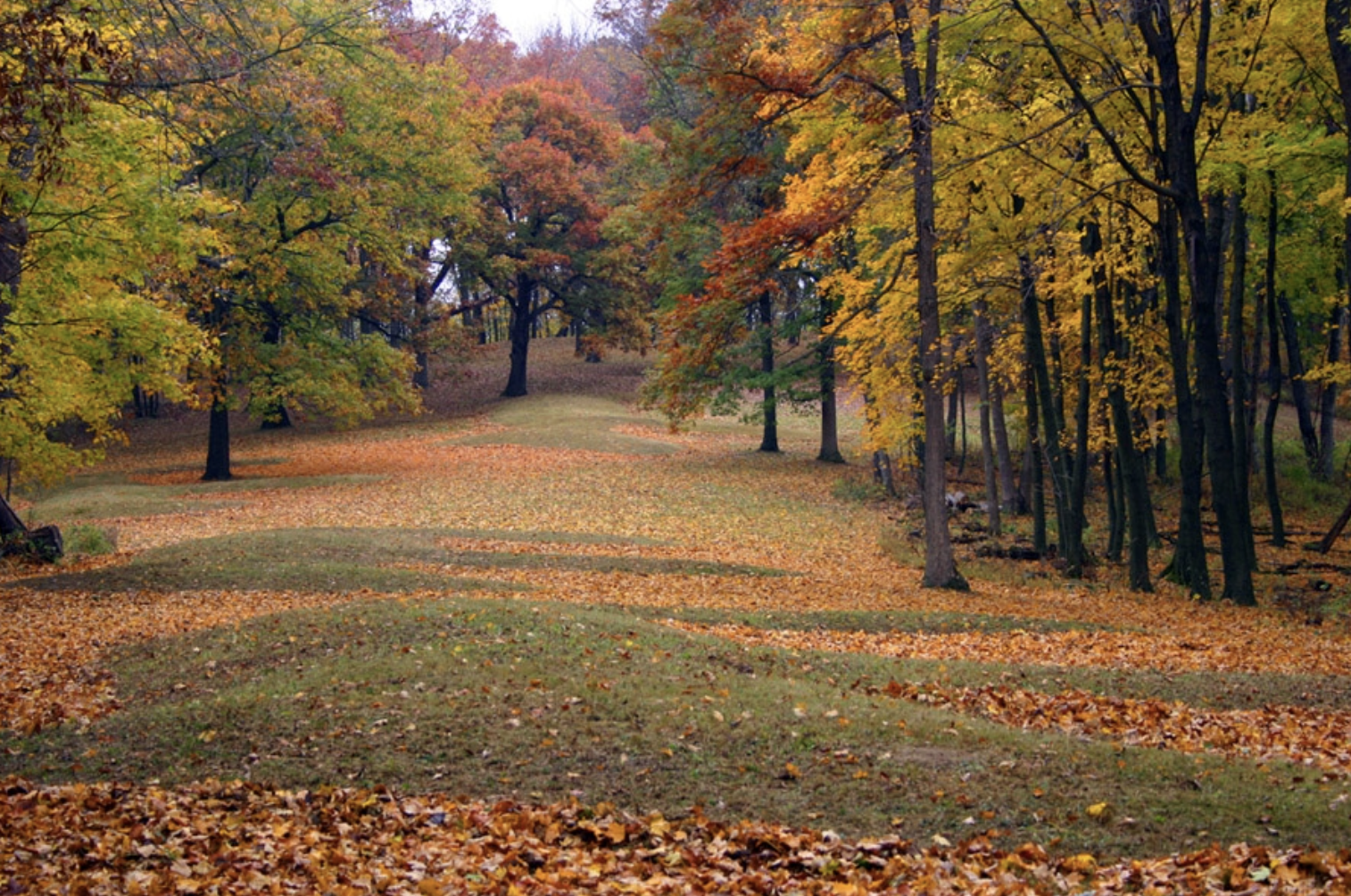
To those who have never visited, it might seem like this park on the western bank of the Mississippi River in Iowa wouldn't have much to offer in terms of fall foliage. But the sacred earthen mounds built by Indigenous North Americans more than 2,000 years ago sit in forested woodlands that turn into a breathtaking canopy of fall color thanks to trees including oaks, white ash, hickory, and maples. The site is relatively small but has a variety of tree-covered trails ranging from easy walks to more strenuous hikes. There's also a series of ranger-led hikes in September and October.
- Location: 151 Hwy 76, Harpers Ferry, Iowa
- Typical peak: Mid-October
- Park website
- More from the Traveler
Indiana Dunes National Park
Nestled on the shore of Lake Michigan less than an hour drive from Chicago, this park is home to rare black oak savannas that dot the landscape at Miller Woods and Tolleston Dunes. Visitors can hike the Paul H. Douglas Trail that winds through the woodlands to the lake, and take photos of the buildings at Bailly Homestead and Chellberg Farm against the backdrop of autumn colors. Note that the park can be crowded on some fall weekends.
- Location: Indiana Dunes Visitor Center, 1215 IN-49, Porter, Indiana
- Typical peak: Around mid-October.
- Park website
- More from the Traveler
Little River Canyon National Preserve
This hidden gem in Northeast Alabama barely breaks into the list of 100 most-visited national parks. Scenic any time of year, Little River Falls and the canyon are framed in fall by sassafras trees turned brilliant orange, purplish dogwoods, red sumacs and maples, and yellow hickory and tulip poplars. Leaf peepers can choose to traverse the park's trails, waterways or roads.
- Location: Little River Canyon Center, 4322 Little River Trail NE, Fort Payne, Alabama
- Typical peak: Late October to early November
- Park website
- More from the Traveler
Morristown National Historical Park

Just 25 miles outside of New York City, this park gives urban dwellers a chance to glimpse giant old-growth tulip trees up to 220 years old and 120 feet tall, against a backdrop of Revolutionary War history. The park includes 27 miles of hiking trails and features a loop through the tree-lined Jockey Hollow. A self-guided walk through the grounds of the Cross Estate provides the opportunity to view historic trees and learn about their importance. There are also trails that accommodate bicycling and horseback riding.
- Location: Jockey Hollow Visitor Center, 586 Tempe Wick Road, Morristown, New Jersey.
- Typical peak: Middle to late October.
- Park website
- More from the Traveler
Saratoga National Historical Park
Some say fall foliage in upstate New York rivals that of Vermont, its busier neighbor. Driving this park’s Battlefield Tour Road offers views of colorful oaks and hickory, with research showing some old growth trees dating to pre-Revolutionary years. A walk through Victory Woods is also a good way to be immersed in autumn.
- Location: Saratoga National Historical Park Visitor Center, 648 Route 32, Stillwater, New York
- Typical peak: Around mid-October
- Park website
- More from the Traveler
Obed Wild & Scenic River
This spot between Nashville and Knoxville offers the chance to experience autumn in Appalachia on a smaller scale. The park itself only covers about 8 square miles, but it includes 500-foot-deep river gorges, scenic bluff overlooks and waterfalls flanked by forests of chestnut oak, beech, various maple species and tulip trees. The park can be explored on foot via numerous trails that offer spectacular views. The more adventurous - and more experienced - can also experience the colors while climbing or whitewater paddling.
- Location: Obed Wild & Scenic River Visitor Center, 208 North Maiden Street, Wartburg, Tennessee
- Typical peak: Mid- to late October
- Park website
- More from the Traveler
Whiskeytown National Recreation Area

Fall colors abound among this Northern California park's chaparral and oak ecosystems, with great leaf peeping along the 3.5-mile Mt. Shasta Mine Loop Trail. The Camden Water Ditch trail, seen in the photo above, glows with yellow maples. You'll see the most vibrant colors at lower elevations, but the mountain shrublands can also show subtle color changes with the seasons.
- Location: Whiskeytown Visitor Center, 14412 Kennedy Memorial Drive, Whiskeytown, California.
- Typical peak: October into November
- Park website
- More from the Traveler
Stories about:
Story Categories:
A copy of National Parks Traveler's financial statements may be obtained by sending a stamped, self-addressed envelope to: National Parks Traveler, P.O. Box 980452, Park City, Utah 84098. National Parks Traveler was formed in the state of Utah for the purpose of informing and educating about national parks and protected areas.
Residents of the following states may obtain a copy of our financial and additional information as stated below:
- Florida: A COPY OF THE OFFICIAL REGISTRATION AND FINANCIAL INFORMATION FOR NATIONAL PARKS TRAVELER, (REGISTRATION NO. CH 51659), MAY BE OBTAINED FROM THE DIVISION OF CONSUMER SERVICES BY CALLING 800-435-7352 OR VISITING THEIR WEBSITE. REGISTRATION DOES NOT IMPLY ENDORSEMENT, APPROVAL, OR RECOMMENDATION BY THE STATE.
- Georgia: A full and fair description of the programs and financial statement summary of National Parks Traveler is available upon request at the office and phone number indicated above.
- Maryland: Documents and information submitted under the Maryland Solicitations Act are also available, for the cost of postage and copies, from the Secretary of State, State House, Annapolis, MD 21401 (410-974-5534).
- North Carolina: Financial information about this organization and a copy of its license are available from the State Solicitation Licensing Branch at 888-830-4989 or 919-807-2214. The license is not an endorsement by the State.
- Pennsylvania: The official registration and financial information of National Parks Traveler may be obtained from the Pennsylvania Department of State by calling 800-732-0999. Registration does not imply endorsement.
- Virginia: Financial statements are available from the Virginia Department of Agriculture and Consumer Services, 102 Governor Street, Richmond, Virginia 23219.
- Washington: National Parks Traveler is registered with Washington State’s Charities Program as required by law and additional information is available by calling 800-332-4483 or visiting www.sos.wa.gov/charities, or on file at Charities Division, Office of the Secretary of State, State of Washington, Olympia, WA 98504.
