
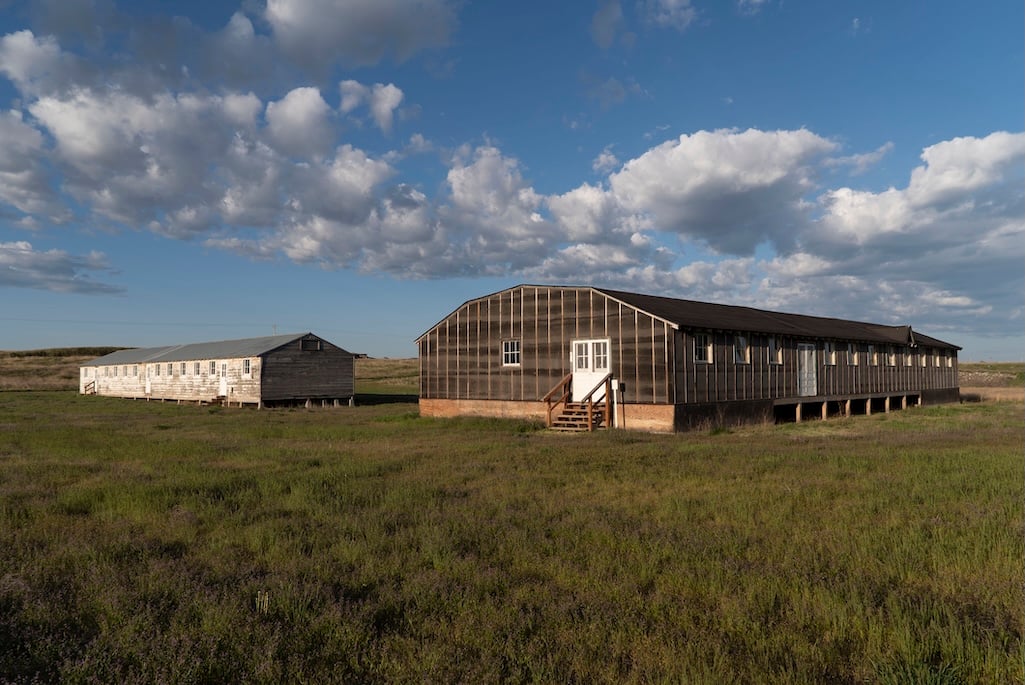
A controversial wind farm project proposed to be located near the Minidoka National Historic Site that preserves a World War II incarceration camp in Idaho has been scrapped by the Trump administration.
Interior Department officials said Wednesday morning that it had "discovered crucial legal deficiencies" that made the so-called Lava Ridge project untenable.
"By reversing the Biden administration's thoughtless approval of the Lava Ridge Wind Project, we are protecting tens of thousands of acres from harmful wind policy while shielding the interests of rural Idaho communities," said Interior Secretary Doug Burgum in a release. "This decisive action defends the American taxpayer, safeguards our land, and averts what would have been one of the largest, most irresponsible wind projects in the nation."
The release did not identify any deficiencies with the project, other than to say Idaho state agencies claimed there was a lack of sufficient consultation with the Bureau of Land Management, which was overseeing the project.
The National Parks Conservation Association had said the project could have involved nearly 250 wind turbines rising 660 feet above the Idaho desert not far from Minidoka, which housed more than 13,000 Japanese Americans during World War II. Both NPCA and Japanese Americans opposed the project.
“It is unconscionable to build an incredibly visible symbol of America’s corporate greed right in front of us–as we try to commune with our ancestors, as we try to bring our last few survivors there to make peace with what befell them, and as we try to engage our youth and others in this erased American history in a deep and personal way," Erin Shigaki, a descendant of a Minidoka internee and leader of the Minidoka Pilgramage Planning Committee, a Seattle-based volunteer-run organization of survivors and descendants of the Japanese American incarceration, said a year ago after the BLM released its preferred proposal.
That National Park Service also opposed the wind farm, saying "[T]he Lava Ridge Project would fundamentally change the psychological and physical feelings of remoteness and isolation one experiences when visiting Minidoka NHS, as the lands north would be transformed into a large-scale renewable energy site marked by hundreds of wind turbines, transmission towers and associated ancillary infrastructure."
"Approaching the site and walking its grounds, visitors would no longer experience the feeling of a rural, undeveloped landscape recalling what Minidoka was like during World War II," the agency continued in its comments on the proposal. "Additionally, the night skies at Minidoka are integral to its cultural and historical fabric. The NPS is concerned that night skies will be impacted by light sources emanating from the project, thereby altering visitors’ experience and capacity to see the nightscapes experienced by those who lived at the camp during World War II."
When it opened on August 10, 1942, the camp was located on 33,000 acres, though just 950 acres were used for administrative and residential purposes, with another 800 acres set aside for farming. The surrounding landscape was an affront to many of the Japanese Americans who had been pulled from lush Washington and Oregon and sent to Idaho by train.
"The first thing that impressed me was the bareness of the land," said Shozo Kaneko in a 1943 interview. "There wasn't a tree in sight, not even a blade of green grass. Coming from the Northwest where there was a lot of green fields and forest, the sights staggered most of us who had never seen anything like that before."
In 2022 the National Trust for Historic Preservation called Minidoka one of the most endangered historic sites in the United States because of the proposed wind farm.
Stories about:
Story Categories:
A copy of National Parks Traveler's financial statements may be obtained by sending a stamped, self-addressed envelope to: National Parks Traveler, P.O. Box 980452, Park City, Utah 84098. National Parks Traveler was formed in the state of Utah for the purpose of informing and educating about national parks and protected areas.
Residents of the following states may obtain a copy of our financial and additional information as stated below:
- Florida: A COPY OF THE OFFICIAL REGISTRATION AND FINANCIAL INFORMATION FOR NATIONAL PARKS TRAVELER, (REGISTRATION NO. CH 51659), MAY BE OBTAINED FROM THE DIVISION OF CONSUMER SERVICES BY CALLING 800-435-7352 OR VISITING THEIR WEBSITE. REGISTRATION DOES NOT IMPLY ENDORSEMENT, APPROVAL, OR RECOMMENDATION BY THE STATE.
- Georgia: A full and fair description of the programs and financial statement summary of National Parks Traveler is available upon request at the office and phone number indicated above.
- Maryland: Documents and information submitted under the Maryland Solicitations Act are also available, for the cost of postage and copies, from the Secretary of State, State House, Annapolis, MD 21401 (410-974-5534).
- North Carolina: Financial information about this organization and a copy of its license are available from the State Solicitation Licensing Branch at 888-830-4989 or 919-807-2214. The license is not an endorsement by the State.
- Pennsylvania: The official registration and financial information of National Parks Traveler may be obtained from the Pennsylvania Department of State by calling 800-732-0999. Registration does not imply endorsement.
- Virginia: Financial statements are available from the Virginia Department of Agriculture and Consumer Services, 102 Governor Street, Richmond, Virginia 23219.
- Washington: National Parks Traveler is registered with Washington State’s Charities Program as required by law and additional information is available by calling 800-332-4483 or visiting www.sos.wa.gov/charities, or on file at Charities Division, Office of the Secretary of State, State of Washington, Olympia, WA 98504.
INN Member

The easiest way to explore RV-friendly National Park campgrounds.

Here’s the definitive guide to National Park System campgrounds where RVers can park their rigs.
Our app is packed with RVing- specific details on more than 250 campgrounds in more than 70 national parks.
You’ll also find stories about RVing in the parks, tips helpful if you’ve just recently become an RVer, and useful planning suggestions.

