

Discarding the "roadless rule," which was adopted in 2001 with much public support, would place Yellowstone, Grand Teton, Kings Canyon, Yosemite, and other national parks at risk from having their surrounding forests opened to logging and energy development, according to the National Parks Conservation Association.
Overall, dropping the rule, a move the U.S. Agriculture Department has proposed, would affect more than 45 million acres of national forests from Alaska to Georgia.
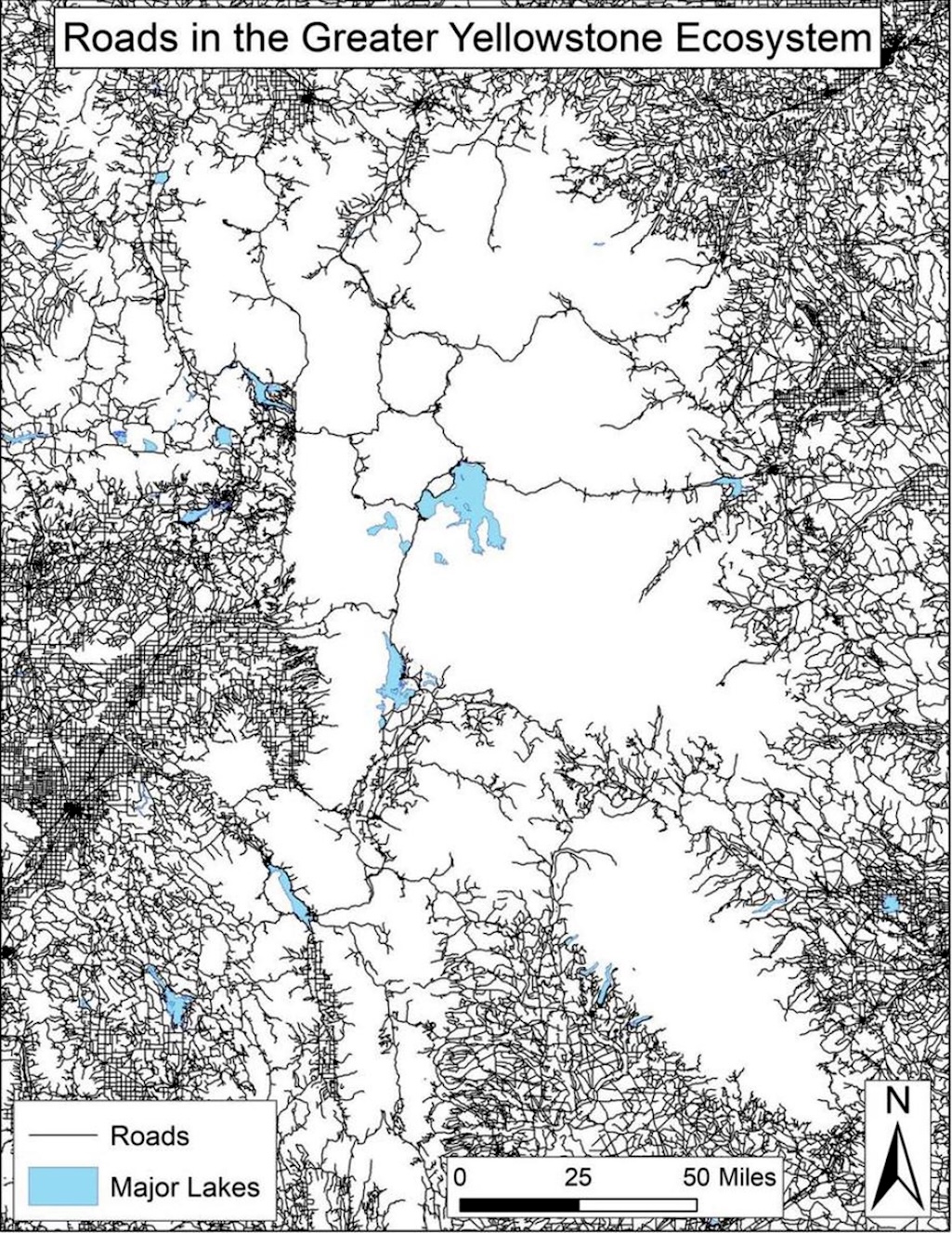
Of that acreage,785,072 of acres protected by the rule surround Glacier Bay National Park and Preserve in Alaska, 775,128 acres line the Appalachian National Scenic Trail, 710,541 acres encircle Yellowstone, and 583,304 acres are adjacent to Wrangell-St. Elias National Park and Preserve, said NPCA.
The NPCA analysis found that 17.5 million acres of inventoried roadless areas are within 30 miles of national park lands and support the greater national park ecosystems.
“Everyone who cares for America’s national parks and public lands should be deeply alarmed about attempts to dismantle the roadless rule,” Beau Kiklis, NPCA's associate director of energy and landscape conservation, said Wednesday. “This is nothing short of another brazen attempt to sell off America’s public lands, by opening up these forest lands for industrial logging, roadbuilding and other development.”
Public comment on the proposed removal of the rule opens Friday and runs for 21 days. President Donald Trump in January issued an executive order on the day he returned to office calling for an opening up of Alaska's landscape to logging, mining, energy development, and other natural resource development.
A coalition of organizations in Alaska spoke out against the proposal, saying it could adversely impact resource habitat for salmon and other wildlife in the Tongass National Forest and also affect tourism.
"I cannot overstate the importance of inventoried roadless areas to Southeast Alaska’s tourism and recreation economy,” said Hunter McIntosh, president of The Boat Company. “The Boat Company is a small cruise vessel eco-tour operator that provides hundreds of visitors each year with scenic views of southeast Alaska’s coastlines, fjords and forests. The Roadless Rule ensures these irreplaceable lands will remain protected and continue to draw visitors from throughout the globe. Remoteness, wildlife and scenery form the main visitor attractions in southeast Alaska.”
The groups pointed out that not only do tourism and fisheries in southeastern Alaska support 26 percent of the region's jobs, but that the Tongass "is home to 13,000 miles of salmon streams that are the backbone of our wild salmon fisheries, which provide 25 percent of the West Coast’s salmon catch."
National Wildlife Federation staff said eliminating the rule would have tremendous impacts on tourism, wildlife habitat, clean water, and Indigenous sites.
“The rule also facilitates world-class hunting, angling, and other outdoor recreation pursuits that support rural economies,” said David Willms, associate vice president for public lands at the National Wildlife Federation. “There are some ways that the Roadless Rule could be improved, but the wholesale repeal of this key conservation tool goes against the best available science and overwhelming public opinion.”
“Robust consultation and meaningful input from tribes and tribal stakeholders is not only the law, but essential to achieving a just and equitable roadless policy. Tribal treaty rights must be centered and upheld in any revision of the 2001 Roadless Rule,” added Gloria Tom, senior strategic and special policy advisor at the National Wildlife Federation. “The current roadless policy protects important Indigenous sites, while allowing Tribes access for traditional food gathering, conducting religious practices, and other cultural practices. It is essential those provisions remain in place.”
The Wilderness Society President Tracy Stone-Manning said the roadless areas in the national forest system "are the latest target in this administration’s unpopular push to give away our lands to drill, mine and log. Gutting the Roadless Rule—which has protected our forests for 25 years—would be the single largest rollback of conservation protections in our nation’s history. Americans cherish their public lands and deserve leaders who protect them for future generations, not give them away to corporations that exploit them.”
Back in June, U.S. Sens. Maria Cantwell, D-Washington, and Ruben Gallego, D-Arizona, along with Reps. Andrea Salinas, D-Oregon, and Yassamin Ansari, D-Arizona, introduced the Roadless Area Conservation Act (RACA), which would codify the 2001 Roadless Rule. Neither chamber have taken up the bill yet.
Story Categories:
A copy of National Parks Traveler's financial statements may be obtained by sending a stamped, self-addressed envelope to: National Parks Traveler, P.O. Box 980452, Park City, Utah 84098. National Parks Traveler was formed in the state of Utah for the purpose of informing and educating about national parks and protected areas.
Residents of the following states may obtain a copy of our financial and additional information as stated below:
- Florida: A COPY OF THE OFFICIAL REGISTRATION AND FINANCIAL INFORMATION FOR NATIONAL PARKS TRAVELER, (REGISTRATION NO. CH 51659), MAY BE OBTAINED FROM THE DIVISION OF CONSUMER SERVICES BY CALLING 800-435-7352 OR VISITING THEIR WEBSITE. REGISTRATION DOES NOT IMPLY ENDORSEMENT, APPROVAL, OR RECOMMENDATION BY THE STATE.
- Georgia: A full and fair description of the programs and financial statement summary of National Parks Traveler is available upon request at the office and phone number indicated above.
- Maryland: Documents and information submitted under the Maryland Solicitations Act are also available, for the cost of postage and copies, from the Secretary of State, State House, Annapolis, MD 21401 (410-974-5534).
- North Carolina: Financial information about this organization and a copy of its license are available from the State Solicitation Licensing Branch at 888-830-4989 or 919-807-2214. The license is not an endorsement by the State.
- Pennsylvania: The official registration and financial information of National Parks Traveler may be obtained from the Pennsylvania Department of State by calling 800-732-0999. Registration does not imply endorsement.
- Virginia: Financial statements are available from the Virginia Department of Agriculture and Consumer Services, 102 Governor Street, Richmond, Virginia 23219.
- Washington: National Parks Traveler is registered with Washington State’s Charities Program as required by law and additional information is available by calling 800-332-4483 or visiting www.sos.wa.gov/charities, or on file at Charities Division, Office of the Secretary of State, State of Washington, Olympia, WA 98504.


National parks and their natural resources belong to you. The National Parks Traveler works to ensure you know how these essential places are being cared for.
Sign Up For Our Weekly Newsletter
Unsubscribe at any time.
INN Member

The easiest way to explore RV-friendly National Park campgrounds.

Here’s the definitive guide to National Park System campgrounds where RVers can park their rigs.
Our app is packed with RVing- specific details on more than 250 campgrounds in more than 70 national parks.
You’ll also find stories about RVing in the parks, tips helpful if you’ve just recently become an RVer, and useful planning suggestions.

