
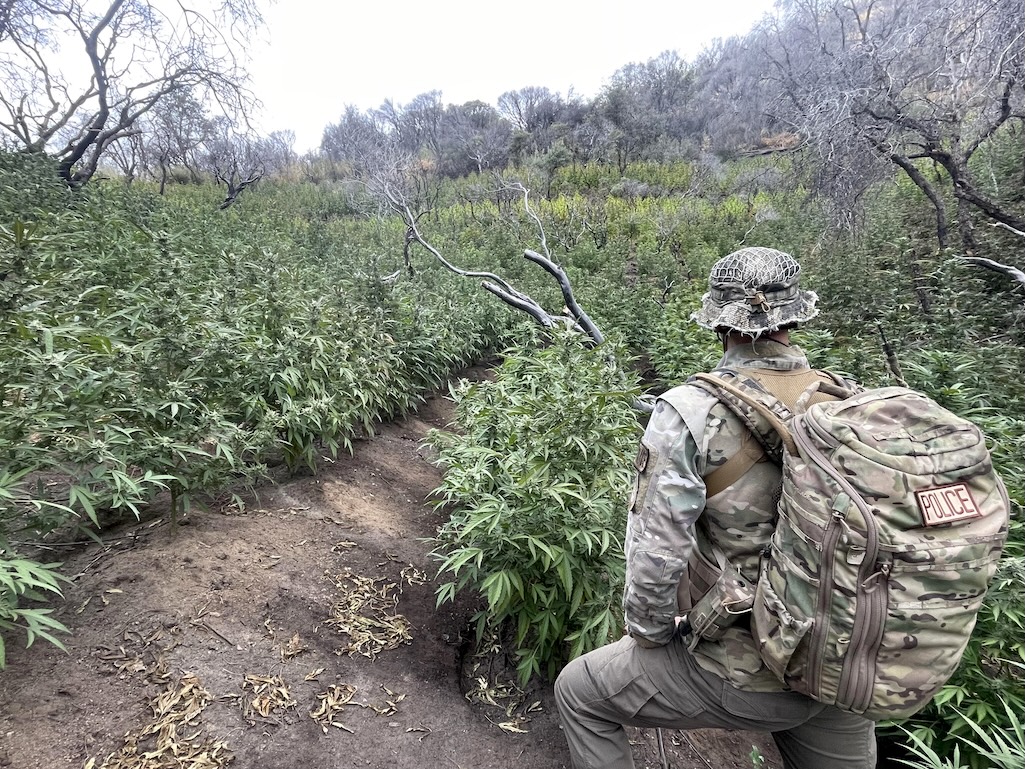
A marijuana operation with thousands of plants was busted in Sequoia National Park, where about 2,000 pounds of trash and hazardous materials were also removed.
The site, with nearly 2,500 mature marijuana plants, was actually spotted last year, but crews did not return until last week to remove the plants, garbage, and infrastructure due to the presence of hazardous chemicals, a park release said Thursday.
The site also contained a semi-automatic pistol and several hazardous chemicals, including about one gallon of Methamidophos, a highly toxic insecticide banned in the United States since 2009.
No arrests have been made, and the investigation is ongoing.
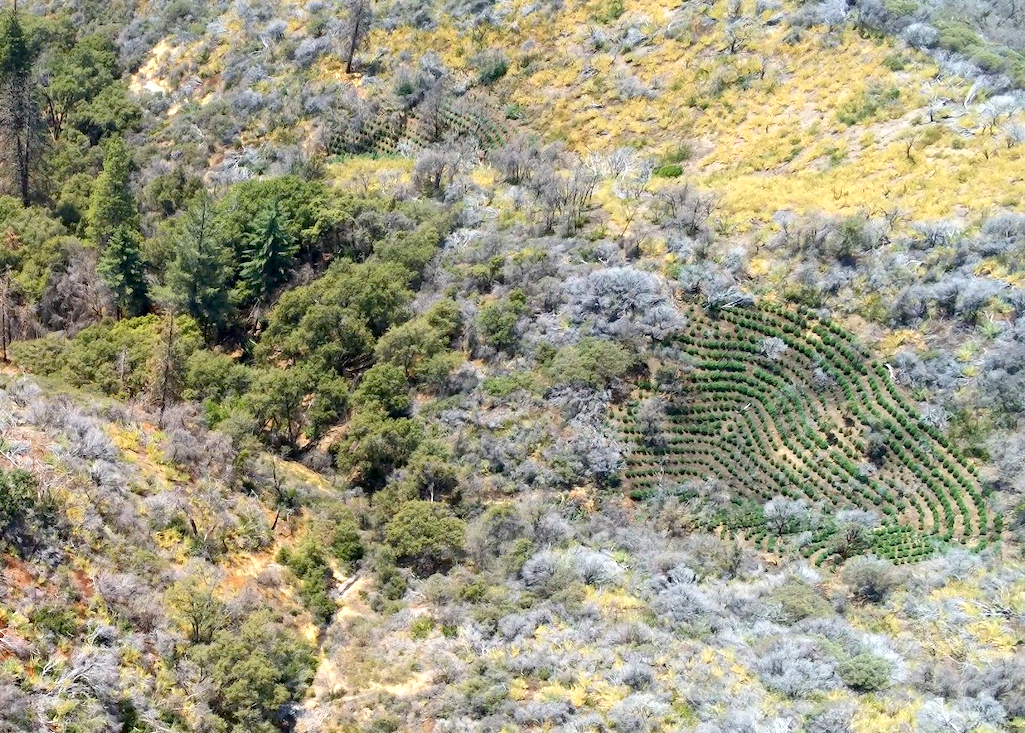
Damage to the approximately 13-acre area includes:
-
Diversion of the natural flow of water from a nearby creek and installation of irrigation lines
-
Construction of several large pits to store diverted water from a nearby creek
-
Significant clearing of natural vegetation
-
Digging of terraces into the hillside for planting of marijuana
-
Development of campsites, kitchen areas, and cultivation sites in a wilderness area
-
Evidence of poaching activity
-
Illegally maintained trails covering approximately two miles
Large marijuana cultivation sites can have major impacts on California's Central Valley. According to the California Department of Fish and Wildlife, a single marijuana plant uses six to eight gallons of water a day that would otherwise nurture wildlife and vegetation. In addition, water for personal use (drinking, bathing, cooking, etc.) and for crop irrigation travels from the mountains within Sequoia National Park to areas of the Central Valley.
Runoff from large cultivation sites may be tainted due to the large variety of pesticides that are used in growing marijuana.
For almost two decades, well-organized drug-trafficking organizations have been operating large-scale cultivation operations in and around Sequoia and Kings Canyon national parks. These cultivation sites cause major damage to the parks’ natural resources and are a threat to public and staff safety. In the last 20 years, nearly 300,000 plants with a value of almost $850 million have been eradicated in Sequoia and Kings Canyon national parks.
Stories about:
Story Categories:
A copy of National Parks Traveler's financial statements may be obtained by sending a stamped, self-addressed envelope to: National Parks Traveler, P.O. Box 980452, Park City, Utah 84098. National Parks Traveler was formed in the state of Utah for the purpose of informing and educating about national parks and protected areas.
Residents of the following states may obtain a copy of our financial and additional information as stated below:
- Florida: A COPY OF THE OFFICIAL REGISTRATION AND FINANCIAL INFORMATION FOR NATIONAL PARKS TRAVELER, (REGISTRATION NO. CH 51659), MAY BE OBTAINED FROM THE DIVISION OF CONSUMER SERVICES BY CALLING 800-435-7352 OR VISITING THEIR WEBSITE. REGISTRATION DOES NOT IMPLY ENDORSEMENT, APPROVAL, OR RECOMMENDATION BY THE STATE.
- Georgia: A full and fair description of the programs and financial statement summary of National Parks Traveler is available upon request at the office and phone number indicated above.
- Maryland: Documents and information submitted under the Maryland Solicitations Act are also available, for the cost of postage and copies, from the Secretary of State, State House, Annapolis, MD 21401 (410-974-5534).
- North Carolina: Financial information about this organization and a copy of its license are available from the State Solicitation Licensing Branch at 888-830-4989 or 919-807-2214. The license is not an endorsement by the State.
- Pennsylvania: The official registration and financial information of National Parks Traveler may be obtained from the Pennsylvania Department of State by calling 800-732-0999. Registration does not imply endorsement.
- Virginia: Financial statements are available from the Virginia Department of Agriculture and Consumer Services, 102 Governor Street, Richmond, Virginia 23219.
- Washington: National Parks Traveler is registered with Washington State’s Charities Program as required by law and additional information is available by calling 800-332-4483 or visiting www.sos.wa.gov/charities, or on file at Charities Division, Office of the Secretary of State, State of Washington, Olympia, WA 98504.
INN Member

The easiest way to explore RV-friendly National Park campgrounds.

Here’s the definitive guide to National Park System campgrounds where RVers can park their rigs.
Our app is packed with RVing- specific details on more than 250 campgrounds in more than 70 national parks.
You’ll also find stories about RVing in the parks, tips helpful if you’ve just recently become an RVer, and useful planning suggestions.

