
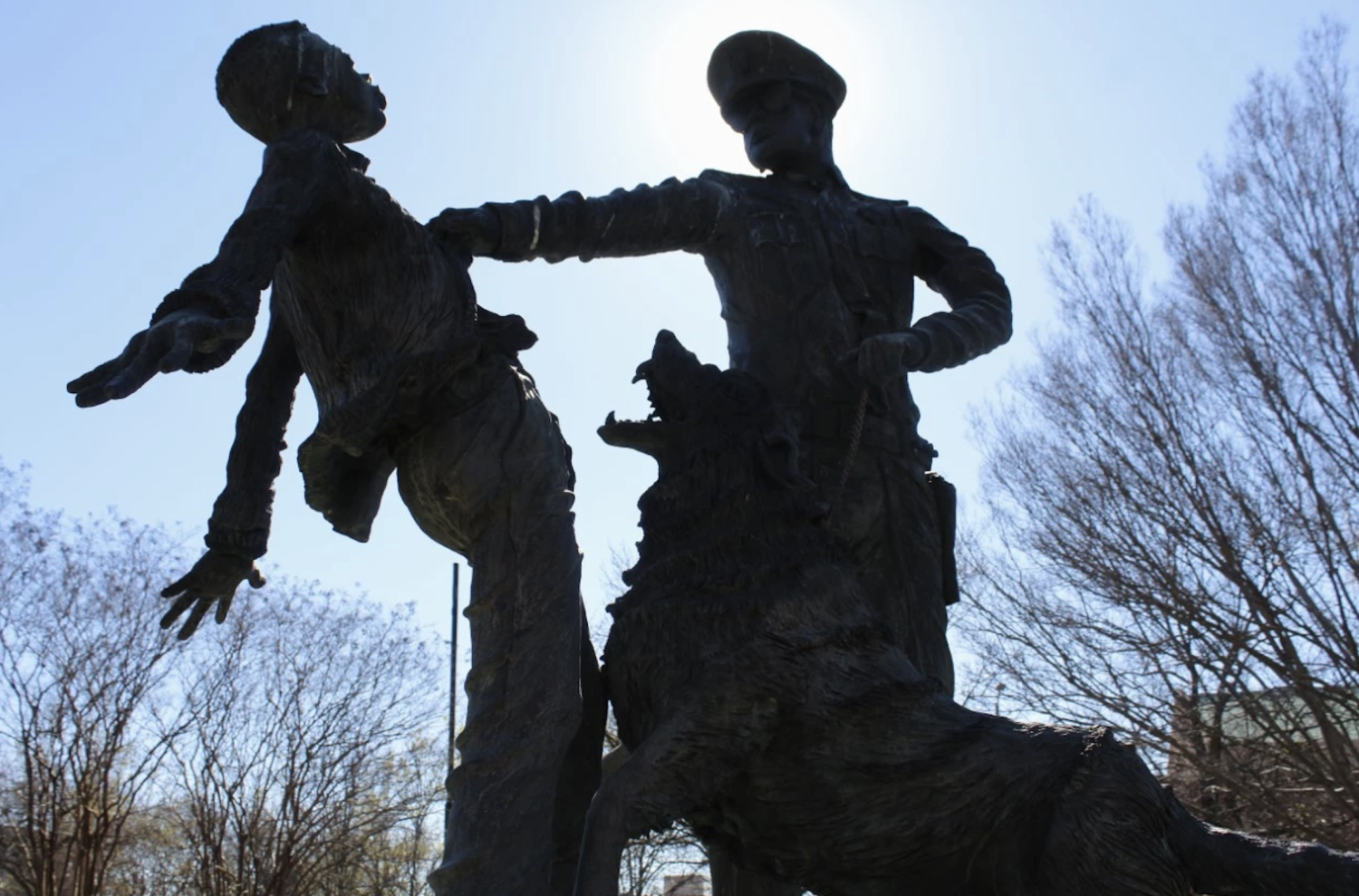
A group of historians and librarians, together with the University of Minnesota, is collecting photos of interpretive signs in national parks to preserve a record in case they disappear.
Nearly 300 photos from parks across the country were submitted to Save Our Signs as of July 17. Anyone who visits a national park is encouraged to add to the catalog.
The effort is in response to an executive order from President Donald Trump that seeks to quash references to U.S. history that the administration considers to "inappropriately disparage" historical figures or contain "partisan ideology." That order was followed by notices posted in parks at the direction of Interior Secretary Doug Burgum, asking visitors to report "any signs or other information that are negative about either past or living Americans or that fail to emphasize the beauty, grandeur, and abundance of landscapes and other natural features."
The Save Our Signs project was launched over fears that a placard or other interpretive display “could just disappear and it would be gone forever," Kirsten Delegard, a historian and director of the university's Mapping Prejudice Project, told the Minnesota Star Tribune.
“We have no way to know what signs have been removed, or what will be removed in the future. We don’t even know what it means to ‘inappropriately disparage America,’” Delegard told the news outlet.
Burgum also directed staff to "identify and, where appropriate, restore historical monuments, markers, and memorials altered or removed since 2020," according to an email Monday from National Park Service headquarters in response to Traveler questions.
"Each piece of public feedback we receive is manually reviewed and evaluated before being referred to the appropriate subject matter expert. This deliberate process helps ensure that the input we act upon is both relevant and credible," the email said. "Already since the president’s executive order was issued, the department has received citizen-submitted concerns about historical accuracy at National Park Service sites and materials and took actions to correct errors."
Two examples were given:
- A visitor at Capital Reef National Park in Utah reported that a souvenir postcard incorrectly mislabeled a nearby landmark and appeared to be copied from Wikipedia.
- A video on the Washington Monument's website was reported to have "inaccurately stated George Washington ended his inaugural oath with a phrase that historians widely agree lacks definitive sourcing."
"In both instances, the National Park Service reviewed the claims and took appropriate corrective or clarifying action," the email said. "These examples underscore the value of public feedback in helping us maintain historical accuracy across our sites and materials."
The quest for visitor input sparked anger in early comments submitted at some parks.
"The executive order asking for feedback is ****,” wrote a Yellowstone National Park visitor in a comment viewed by Government Executive. “Parks already do an amazing job telling stories that contain hard truths and everyone is entitled to the truth to make better decisions in our lives. So what if people feel bad?”
About 30 percent of all National Park Service visits logged in 2024 were at national historic sites, historical parks, memorials, and monuments. Most of those locations in particular focus on history or important cultural moments, from the Revolutionary War to the Underground Railroad to the fight for LGBTQ rights and numerous other pivotal points in the timeline of the U.S.
The Save Our Signs project wants clear and readable photos of signs, exhibits, placards, and text from any Park Service site. Photos must not include people. The submission form doesn't collect any personal information, but asks for the date and location and some other generic information. Save Our Signs plans to publish the photos sometime before mid-October and at that point they will become part of the public domain.
"Real history is not just happy stories," the group says on its website. "We must act quickly to preserve all Americans' stories."
Story Categories:
A copy of National Parks Traveler's financial statements may be obtained by sending a stamped, self-addressed envelope to: National Parks Traveler, P.O. Box 980452, Park City, Utah 84098. National Parks Traveler was formed in the state of Utah for the purpose of informing and educating about national parks and protected areas.
Residents of the following states may obtain a copy of our financial and additional information as stated below:
- Florida: A COPY OF THE OFFICIAL REGISTRATION AND FINANCIAL INFORMATION FOR NATIONAL PARKS TRAVELER, (REGISTRATION NO. CH 51659), MAY BE OBTAINED FROM THE DIVISION OF CONSUMER SERVICES BY CALLING 800-435-7352 OR VISITING THEIR WEBSITE. REGISTRATION DOES NOT IMPLY ENDORSEMENT, APPROVAL, OR RECOMMENDATION BY THE STATE.
- Georgia: A full and fair description of the programs and financial statement summary of National Parks Traveler is available upon request at the office and phone number indicated above.
- Maryland: Documents and information submitted under the Maryland Solicitations Act are also available, for the cost of postage and copies, from the Secretary of State, State House, Annapolis, MD 21401 (410-974-5534).
- North Carolina: Financial information about this organization and a copy of its license are available from the State Solicitation Licensing Branch at 888-830-4989 or 919-807-2214. The license is not an endorsement by the State.
- Pennsylvania: The official registration and financial information of National Parks Traveler may be obtained from the Pennsylvania Department of State by calling 800-732-0999. Registration does not imply endorsement.
- Virginia: Financial statements are available from the Virginia Department of Agriculture and Consumer Services, 102 Governor Street, Richmond, Virginia 23219.
- Washington: National Parks Traveler is registered with Washington State’s Charities Program as required by law and additional information is available by calling 800-332-4483 or visiting www.sos.wa.gov/charities, or on file at Charities Division, Office of the Secretary of State, State of Washington, Olympia, WA 98504.
INN Member

The easiest way to explore RV-friendly National Park campgrounds.

Here’s the definitive guide to National Park System campgrounds where RVers can park their rigs.
Our app is packed with RVing- specific details on more than 250 campgrounds in more than 70 national parks.
You’ll also find stories about RVing in the parks, tips helpful if you’ve just recently become an RVer, and useful planning suggestions.

