

How many amenities should national park campgrounds offer? Fruita Campground, Capitol Reef National Park/Kurt Repanshek file
How do you like your national park campground? Wish there was WiFi so you could stay abreast of news or sports? Want a food truck to show up so you didn't have to cook over a camp stove? Is there a need for hot and cold water showers in each and every campground in the National Park System?
A two-page list (attached below) of recommended improvements to park campgrounds calls for some of those changes, though it remains to be seen how fully Interior Secretary David Bernhardt embraces the suggestions.
Drafted by Interior's Subcommittee on Recreation Enhancement Through Reorganization, the document also suggests that holders of the National Parks and Federal Recreational Lands Senior Pass, an $80 lifetime pass those 62 and older can buy and which provides a 50 percent discount on campground fees, face some blackout dates during busy seasons that would prevent them from that discount. It also recommends that perhaps national park campgrounds should offer cabins for nightly rental, and maybe a tent rental pool as well.
While many campgrounds suffer from deferred maintenance, the draft suggests that concessionaires be encouraged to tackle some of the needs by ensuring they would be repaid by subsequent concessionaires if they ever lost, or surrendered, the campground management contract.
"We're looking at a couple things," said Derrick Crandall, the former president of the American Recreation Coalition who now holds the same title at Outdoor Solutions USA, when asked about the impetus behind the draft plan. "No. 1, we actually have fewer campsites now than we had 30 years ago. And a lot of the reason for that is not by plan, it's because water treatment plants and other kinds of infrastructure have deteriorated and we've seen (campground) closures.
"It is absolutely true that most Park Service campgrounds are ill-prepared to deal with the larger RVs. I don't think that we should be building all of our campgrounds to accommodate 42-foot diesel pushers that are towing a car," he continued during a phone call Friday. "I'm not an advocate for that. I think we need some capacity. I'm more concerned about the fact that we see demand in many national parks for group camping. Where we have extended families to accommodate people who just camp differently than we camp.
"In some cases I think we can do that, so whether it's for a scout troop or whether it's a family reunion of largely Latino and others who are seeking that, I think we need to figure out a way to be able to understand what the current demand is and to have a system in place that tries to accommodate some of this demand."
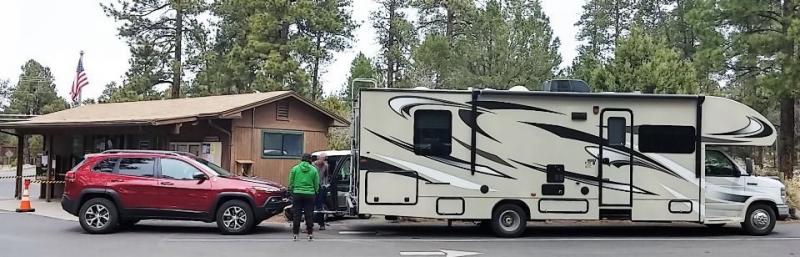
The increasing length of RVs, with secondary vehicles in tow, have some calling for larger campsites in national park campgrounds/NPS
There are many campgrounds across the National Park System that already are operated by private companies, as opposed to Park Service staff. And the Trump administration doesn't seem averse to expanding that practice. President Trump's first Interior secretary, Ryan Zinke, told a gathering of the Recreation Vehicle Industry Association back in 2017 that, "As the secretary, I don't want to be in the business of running campgrounds. My folks will never be as good as you are."
Going a step further, Zinke added that, "We'll be looking at where our employees should be spending their time. ... Yes, cleaning the bathrooms. But actually running services, that's something we should be pushing to somebody who's updated and knows the market better."
The subcommittee's recommendations don't call for a wholesale turnover of park campgrounds to private operators. But it does propose a pilot program of five to 10 campgrounds in the system for "modernization, enhancement or even new construction, especially in park units with low levels of visitor services that now limit public use. The incentive would be an allocation of funds equal to current deferred maintenance, but available for discretionary use to improve the campground and associated infrastructure."
The plan was knocked down by Sierra Club officials, who said it would be another step toward pricing some Americans out of the National Park System.
"Turning our national parks into profit centers for a select few vendors would rob our public lands of just what makes them special. Hiking fees and limiting discounts for seniors will shut out working families and elders on fixed incomes," said Joel Pannell, associate director of Sierra Club Outdoors for All. "We will not allow the embattled Trump administration to turn our national parks into playgrounds for the wealthy and privileged, or permit companies that financially support the Trump campaign to profit from privatization of our public lands. Park lovers and outdoor advocates across the nation will rise up in resistance.”
The campground suggestions come at a time when, according to Kampgrounds of America's 2019 North American Camping Report, park visitors younger than Baby Boomers want more amenities with their campfires.
Even though only 5 percent of campers use the presence of on-site recreation as a determinant of campground selection, when asked to rate the importance of on-site recreation and the campground’s proximity to local cultural events and attractions in selecting campgrounds, about 4 in 10 camping households view these as important considerations.
On-site recreation grew in importance across all age groups in 2018. About 40 percent of millennials and Gen Xers listed on-site recreation as an important factor in their camping experience, with 37 percent of Baby Boomers and 34 percent of Mature campers in agreement.
Once they’re at the campground, clean bathrooms has consistently been the most important factor for campers while staying at a campground (averaging nearly 50 percent since 2014). The second tier of factors include allowing pets (up 4 percentage points since 2014 to 23 percent); being kid friendly (21 percent); and offering recreational activities (20 percent). Interestingly, the importance of free WiFi connectivity has dropped 3 percentage points since 2014, with a 2018 rating of 16 percent.
"I do know absolutely that today's campers are more urban in background than they were 20 or 30 years ago, and in many cases are looking for greater support," Crandall said. "They do want WiFi. They do want some food options. What we're saying is we think there is a strategy to deal with providing food in a campground as opposed to telling people that they basically have to go out of a park to a gateway community to find dinner and come back."
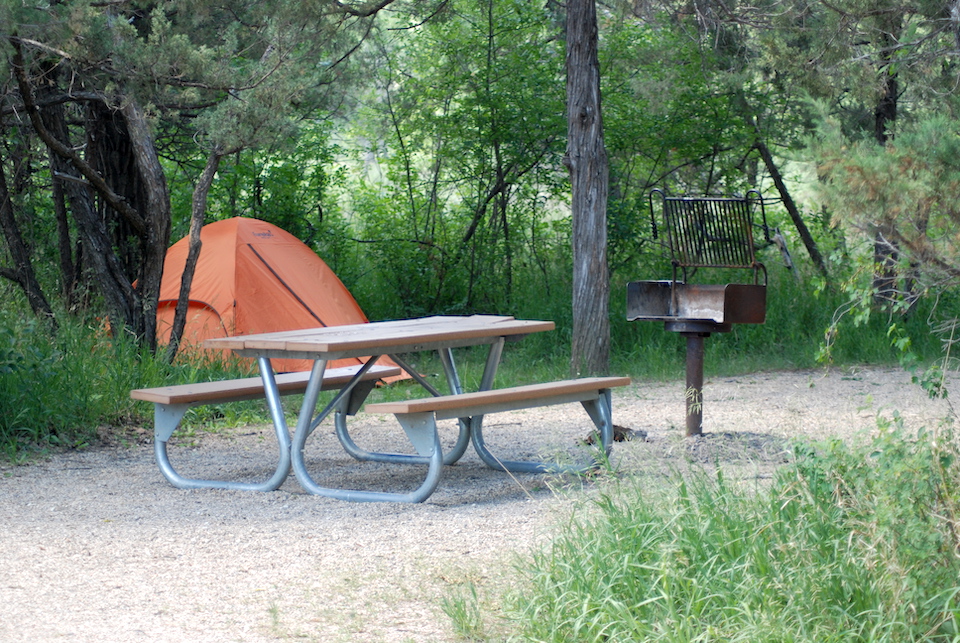
Are the days when most campers pitched a tent and cooked their own meals passing national parks by?/Kurt Repanshek file
Crandall said park superintendents have told him that "part of the traffic congestion (in parks) is caused by people who need things, whether it's just a camp store kind of operation, just basic camp supplies that people who are novices in the outdoors don't know about because they're not aware that there's going to be a drop in the temperature down to 25 degrees in August in a campground."
The KOA report also claimed a decline in national park campers.
Campers continue to be reliant on public lands for their camping trips. About six in ten camper nights is spent on public lands or in public campgrounds.
While the proportion of camper nights spent at both state and national parks is near 2017 levels, there has been a proportional drop in camper nights in national parks since 2016, suggesting that as campers spend more time camping, they are devoting those additional camper nights to different locations (e.g. public & private land outside of campgrounds).
The overall proportion of camping in national parks and state parks has declined since 2015.
The subcommittee's report alludes to those trends in calling for greater investment in national park campgrounds, through private businesses.
There is also broad consensus that the current national park campground system, largely operated by federal employees, combines inadequate and outmoded visitor infrastructure and a need for both capital and operating subsidies with appropriated funds. Overall capacity has not kept up with growth and changes in camping demand, and the infrastructure that does exist, with few exceptions, fails to meet expectations of the contemporary camping market. National park campgrounds are also the victims of other park infrastructure problems, including roads and water systems. In addition to adverse impacts on visitor experiences, the challenges facing campgrounds make the system an underperforming asset.
... As a serendipity, private sector operation of the campgrounds would generate a dramatic increase in NPS awareness of visitor characteristics and satisfaction. The lessons learned with near-immediate operational changes in national parks can be then replicated for other Interior bureaus, including the Bureau of Land Management, the US Fish and Wildlife Service, the Bureau of Reclamation and , cooperatively, on American Indian lands.
The recommendations made by the subcommittee also included a call for a "national charrette" involving experts from the private sector as well as state and national campground operators and relevant federal officials to pull together "a centralized library of information, trends, and best practices" that can be reviewed and used to build an approach to upgrading campgrounds on federal lands.
It also suggests arriving at campground models and the use of "categorial permissions" that would allow construction of utility systems, for example, without the need to go through full-blown NEPA analysis.
Pricing for campsites should be adjusted regularly for inflation and offered options, such as WiFi and RV hookups, the document said, and campground franchise fees -- the percentage of revenues operators agree to return to the Park Service -- should be used for "needed and appropriate NPS services, including education/interpretation, fire, and safety and related."

Story Categories:
A copy of National Parks Traveler's financial statements may be obtained by sending a stamped, self-addressed envelope to: National Parks Traveler, P.O. Box 980452, Park City, Utah 84098. National Parks Traveler was formed in the state of Utah for the purpose of informing and educating about national parks and protected areas.
Residents of the following states may obtain a copy of our financial and additional information as stated below:
- Florida: A COPY OF THE OFFICIAL REGISTRATION AND FINANCIAL INFORMATION FOR NATIONAL PARKS TRAVELER, (REGISTRATION NO. CH 51659), MAY BE OBTAINED FROM THE DIVISION OF CONSUMER SERVICES BY CALLING 800-435-7352 OR VISITING THEIR WEBSITE. REGISTRATION DOES NOT IMPLY ENDORSEMENT, APPROVAL, OR RECOMMENDATION BY THE STATE.
- Georgia: A full and fair description of the programs and financial statement summary of National Parks Traveler is available upon request at the office and phone number indicated above.
- Maryland: Documents and information submitted under the Maryland Solicitations Act are also available, for the cost of postage and copies, from the Secretary of State, State House, Annapolis, MD 21401 (410-974-5534).
- North Carolina: Financial information about this organization and a copy of its license are available from the State Solicitation Licensing Branch at 888-830-4989 or 919-807-2214. The license is not an endorsement by the State.
- Pennsylvania: The official registration and financial information of National Parks Traveler may be obtained from the Pennsylvania Department of State by calling 800-732-0999. Registration does not imply endorsement.
- Virginia: Financial statements are available from the Virginia Department of Agriculture and Consumer Services, 102 Governor Street, Richmond, Virginia 23219.
- Washington: National Parks Traveler is registered with Washington State’s Charities Program as required by law and additional information is available by calling 800-332-4483 or visiting www.sos.wa.gov/charities, or on file at Charities Division, Office of the Secretary of State, State of Washington, Olympia, WA 98504.
INN Member

The easiest way to explore RV-friendly National Park campgrounds.

Here’s the definitive guide to National Park System campgrounds where RVers can park their rigs.
Our app is packed with RVing- specific details on more than 250 campgrounds in more than 70 national parks.
You’ll also find stories about RVing in the parks, tips helpful if you’ve just recently become an RVer, and useful planning suggestions.


Comments
NO! Leave our national park alone! I'd rather wait for a wise administrating to fund our parks rather than five money that belongs to the park system to stinking private biz! Lock me out of parks on peak days just because I'm finally old enough to qualify for a senior pass and you've just posed off a lot of park visitors!
Zinke expressed his views that Interior should get out of the campground business when he created this committee. Surprise surprise when the committee he created comes to the same (predetermined?) conclusion. Many public campgrounds (usually the most profitable) are already run by private concessions. In my experience private run campgrounds are no better and sometimes worse than those operated by agency employees. The report trys to offer a solution to a problem that does not exist. National Park campgrounds are popular because National Parks are popular. The typical "RV Park" looks like a parking lot and has never appealed to me but then we don't need "hookups" to camp.
We need more clothing optional areas in the midwest states.
If Arizona can have a clothing optional area, why not Illinois?
I think the owner's of these big long RV rigs should be paying more in park entrance and campground fees. The NPS has been building special parking spaces and campsites for them but big RVs usually pay the same entrance fee as some one driving a compact sedan and the same camp site fee as some one in a tent site. I am not talking about water, electrical or sewer hooks ups, I'm mean just the shear amount of space they need to drive and park.
I like the public campgrounds I've stayed at on federal lands. I don't the folks in the RV Park industry running them.
Capitalism, you gotta love it ...or else they call you a socialist and try to frame you for stuff you didn't do in Ukraine.
Frame you? LOL. The guy bragged about it. https://thefederalist.com/2019/09/24/watch-joe-biden-brag-about-bribing-... And yes, I love capitalism. The question here isn't so much capitalism vs government run programs, it is a question of whether these developments and services should be added and if so, to what extent.
Yes, if we all have to pay entrance fees I think RV's should pay more for what they're getting i.e. there's campgrounds that limit the space that a tent can occupy, which is less than the space an RV occupies. And if RV's are provided with hookups, then they should be charged extra for those also. If tent sites have water and electric at each site, then the entance/camping fee shoul reflect that. And then there's the question of charging for the water/electric that is used, which would require metering Now we're getting into some infrastructure and maintenance. And no blackout dates for Passes. If passes are being used a lot that just reflects the popularity of the passes and how they are being used as a way to experience those places where they are accepted. First come, first served. Plan ahead, make reservations, Educate yourself on how the system works so that you will be able to have the best experience.
National park campgrounds should remain an alternative to the full service campgrounds outside the park. Their value is in the quiet and nature and star filled experience. The more "rustic" camping also allows wildlife to join the campers - a best experience! please keep the clean bathrooms on the list and potable water. Expand the ranger talks and walks campgrounds. The NPS needs to protect and preserve this type camper experience. The KOAs etc can be the commercial sites outside the park and cater to that experience for food trucks and large RVs and swimming pools, etc. We need both types of camping!
Yeah!!!!! Someone who says what I was going to say.
Agree 100 percent!! I love nature. If I wanted to stay at a KOA then that's where I'd go. There are plenty of alternatives for the younger generations just starting out in camping.
You shouldl offer a disclaimer when linking to The Federalist....."warning; children and impressionable adults should use caution and have adult supervision when reading The Federalist".
Rick, the Federalist didn't write Biden's speach or create the video. But typical of you to try to use the messenger to discredit the message created by someone else.
There is never a one size fits all on what the campground development should be in a park. There are a lot of factors that go into a decision made on going with concession managage or staying NPS manageed (or both). Discretion resided with the Superintendent and nothing here changes that fact.
The argument by the administration is that private business is the only way to address the $12 billion deferred maintenance the National Parks need. BTW, the 2019 budget for defense is $686.1 billion. THAT IS FOR ONE YEAR! So for less than 2% of one year's defense budget, we could fix the National Parks. News last month is that the Pentagon is moving $6.1 billion of this year's budget to build the border wall for President Trump. If you did that for two years in a row but put the money into National Parks, the maintenance would be caught up. https://www.yahoo.com/news/campgrounds-in-national-parks-set-to-be-priva...
I would have alot to say, but to be short, if u prefer jam packed net campgrounds, like say zion, go if u don't find an alternative. We found a great little st park because Zion was overrun with people, that I wouldn't even call campers. JMO.
No food trucks! No need for larger RV spaces, they already take up too much road space and contribute to traffic jams in the parks. The larger ones should stay outside and drive in with a smaller vehicle. These are natural areas, not theme parks. Lets keep them that way.
When I read "more accommodating" I immediately think "less like camping".
I'm assuming the survey was not just of those who stay at KOA's but the report doesn't list their methodology. It has been decades since I've stayed in a KOA and for good reason. In my opinion camping should be rustic, quiet and a place to soak up nature.
Not a place for running generators, having electricity a swimming pool or to watch TV.
While privatizing could be a good solution there should be restrictions as to what they are allowed to add. It should NOT be about attracting more people to an already overcrowded system. Or making things so comfortable that it is like sitting at home in your living room.
I agree with CS. Focus on clean water & bathrooms. I'll add privacy (not tent on top of tent or trailer on top of trailer) and peace and quiet, (eliminate the use of generators).
If you want swimming pools, food trucks, game rooms, Television etc. Stay at a commercial "campground" or better yet a hotel. That isn't camping.
Wild places is spot on ... if there's a huge demand for more camping amenities then let private enterprise provide that kind of camping experience but OUTSIDE the parks in gateway communities. Leave the campgrounds within our parks for a "rustic" experience as an alternative for those who seek out such experiences.
As for clean bathrooms ... aw shucks, that would mean no more scorpions in the urinal in the Hoveneep CG -- there goes viewing wildlife ;)
I used to work with and supervise, intermittently, a relatively well known and very well respected small planning group that occasionally worked with the NPS. They did a number of internal studies of various park housing/lodging strategies, all of which indicated that hotels/lodges/dorms of around four stories served by rail or shuttle buses would serve the most visitors/others with the smallest viable footprint being placed on valuable park lands. Around four stories seemed to be the sweet spot for then current technology with regard to vertical transportation and facility support impacts. Similar multi-story hotels/lodges/dorms served by passenger vehicles (cars, light trucks, minivan things) came in second, although by a significant margin. Any and all conceivable configurations of either rustic campgrounds or RV parking actually have far, far, far greater footprints and associated impacts than these kinds of multi-story hotels/lodges/dorms. So, I know many people have a hard time facing it; however, if you truly do love the outdoors and national parks and you want to do your part to preserve any of it, you might try imagining whether you could cope with parking your vehicle in a controlled lot outside the park, taking a direct shuttle to your "accommodations" at a hotel/lodge/dorm, and then taking smaller local shuttles to trailheads and attractions within the park. The impacts on everything, from land use to overcrowding to ecosystems to wildlife to energy use to air and water quality, would all be much reduced ...just saying.
The principle responisbility of the NPS (per the Organic Act) is preservation of the natural and cultural resources for public benefit and enjoyment. National Parks can not be all things to all people and still fullfill that mission. Just because some people might enjoy having a hottub at every campsite or a zipline across the Grand Canyon does not mean those would advance the principle mission of preservation. There is a place for full-hookup RV campsites with Wifi but I think those are best provided outside the park by private enterprise.
In recent years Signal Mountain campground (run by a concessionaire) at Grand Teton installed electrical oulets at most of the campsites. Now it is hard to get a site that does not have electricity with the added cost. Even if you don't need or want it you end up paying for it. Most of the sites aren't that suitable for RVs. The concessionaire is making more money but does it really best serve the park visitor?
With regard to the responsibility of the NPS (per the Organic Act) to preserve natural and cultural resources and the fact that national parks cannot be all things to all people and still fullfill that mission, please refer to my previous comment, especially the last part about impacts on everything, from land use to overcrowding to ecosystems to wildlife to energy use to air and water quality, all being much reduced.
Derrick Crandall never met a privatization opportunity he didn't like.
NO!!!!! That's part of the magic of these sacred spaces. Truly getting away from all of the technology. Who do we contact? What can we do to make our voices heard on this matter?
I think there should be a shuttle service in all parks to alleviate some of the traffic jams. Denali limits the number of cars that can drive beyond a certain point but had shuttles that run. That was nice. Many other do too. It is nice to have some hook ups in the campground for people who need the power, but not necessary in all of them. Particlularly when there are no outside rv parks within walking distance of the park. Ranger talks are wonderful. They should be available at all campgrounds, particularly at the bigger parks. Wifi only in visitor centers if at all. Food trucks definitely not necessary.
WiFi in national park campgrounds? No way! Keep national park campgrounds primitive, and focus on the natural beauty. Already, most national park campgrounds cater too much to RVs, to the detriment of us tent campers. They allow generators, etc. If people want WiFi, food trucks and such, they should stay at a KOA, not in a national park. And I fully agree with commenters above who say that RV folks should pay more in national parks than tent campers. I have long suspected that we tent campers were subsidizing RV folks.
Okay, they support the responsibility of the NPS (per the Organic Act) to preserve natural and cultural resources; they want to make sure and mention that national parks cannot be all things to all people and still fullfill that mission; and they are concerned about the cost, the overcrowding, and the poor maintenance of the facilities they like to use, as long as nobody else gets there to be using them first. However, they really don't seem to care that serious professional studies indicate that hotels/lodges/dorms of around four stories served by rail or shuttle buses would serve the most visitors/others while having both the smallest viable footprint on our limited and priceless park lands and the lowest level of negative impacts on everything, from land use to overcrowding to ecosystems to wildlife to energy use to air and water quality. But, they're still all very staunch supporters of the outdoors and preservation of the national parks and the environment, just ask them. Okay, I think I'm starting to get the picture.
In some places like Zion I think your scenrio is valid.
Gee, I can't believe it! I was so excited about being old enough for the camping discounts on my birthday in November, so along with Social Security and Medicare, the current administration wants to take it away. NO!
National Park campgrounds do NOT need to be updated and made more urban friendly. That's totally missing the point of what national parks are all about. I believe that these studies you are quoting are biased and the people putting this information out have ulterior motives. There are plenty of private RV parks for the people looking for more amenities with their campgrounds. In select locations, I do agree showers would be nice, as that is something I appreciate with state parks, but only in locations where there are no private businesses offering that service.
It doesn't seem to me that there is any need to make changes to try to recruit more campers, as every national park campground I know of generally fills up by noon. There are plenty of people who want to just experience the outdoors without bringing the suburbs in with them!
I DO believe extending group camping for extended families and others who are not part of a formal organization is a good idea and a way to help make our visitors more diverse.
Is there a place to make public comments directly to the NPS on this proposal? It seems to me that this kind of broad sweeping change should not be made without letting the public know what's happening and allowing for input from a broad base of national park users, not a hand-picked group who will say what the survey givers want them to say. I find this article extremely upsetting.
Privatizing campgrounds is a horrible idea. I have had so many negative experiences with the private campground hosts in Inyo National Forest and the Mammoth Lakes area in the Sierras. I can’t stand how unaccountable these private companies are. Everything in the campgrounds should be done by professional Rangers.
LEAVE NO TRACE
the parks need to remain free from tech and over commercialiaztion. You can get those things everywhere else!
Theses are places of refuge, peace, and nature. Put your phone and wallet away for a while and connect.
The National Parks do NOT need to be a Disneyland. Access to the wonders and beauty of the country does not need to be made easier and more convenient for the rich who buy those huge RVs then want accommodations for them. All that is needed for camping, flat sites to park and pitch a tent, clean water and functioning bathhouses. Why does the NPS believe that they should add to the climate changes by adding more places with electricity service? Every NP I stayed at this past summer, 15 of them, had RV campgrounds outside the park. Please do not basrard the best part of the US into a money making system for the rich.
This is another lame idea of the cronies of a lame dufus in chief.
What a dumass (pronounced du-moss)!
leave our parks alone!
Don't treat our seniors card holders with blackout days! Sad to see our parks modernise. Seems to only justify price increases.
Wifi in a central location would be nice for checking in with family and friends, since pay phones are not very common any more. We do not like generators and feel they have no place in a national park, so if there is an electrical site, we tend to take it, since it is quieter. The campgrounds would lose their charm and privacy if the roads were made larger and sites bigger to accomodate big trailers and rvs Perhaps in one section would be okay and the same applies to generators. Not sure about campgrounds runs by private enterprise. I know some are now. Still need to have the park involved in supervision and monitoring of difficult guests. Sometimes I wonder who I would call if there was an issue. The money the private enterprise pays the park should go for improvements of the camping facilities. But maybe they don't pay you??? I find parks that have guest hosts tend to feel safter and are cleaner. I would promote more of this.
The entire POINT of National Parks is to immerse yourself in nature. The last thing I want to see when I Camp is a food truck and hipsters instagramming on the wifi.
Please keep our parks primitive, as they are some of the last places where I can truly feel free.
Isn't THAT America?
According to who?
according to history "
The First National Park Emerges
Hayden strongly advocated for setting the Yellowstone region aside as a national park, and it did not take long for him to convince Congress. Congress approved the legislation in early 1872, and on March 1st of that year, President Grant signed the bill designating 2.2 million acres of land as "a public park or pleasuring-ground for the benefit and enjoyment of the people."
The second section of the bill gave the Secretary of the Interior responsibility for "the preservation, from injury or spoilation, of all timber, mineral deposits, natural curiosities, or wonders within said park, and their retention in their natural condition."
We have met the enemy and it is definitely him.
The campgrounds are perfect. Thank you.
Maybe perfect. But not enough spots. Updated power and wifi seems reasonable. We don't have a lsrge 5th wheel, but some enlaged spots and more spots total would be welcome. Some spots are so primitive that only tent trailers or tents could use them. I don't expect to see food trucks in there at all.
See nothing there that limits one's activities to immersing oneself in nature. There are many other ways to experience "pleasure, benefit and enjoyment" in the Parks.
The Parks like everything else are evolving. The Nature in the parks is contrived and phony and goes with a elitist view of the Parks that was sold by racist Madison Grant and his ilk in the early 20th century. The American People should get the type of Nature they want in their Parks. Hordes of foreigners take ove in many of our Parks. Is that just Nature?
So, Primitive Camper, it's hard to be sure what your comments are actually intending to communicate. I "think" we might both in favor of some of the same things; but, help me get a clear understanding of what you're actually trying to say. Before we dig into it, I need to mention that, in your first comment, you said you want to "truly feel free" and I have to set that part aside because I spent forty years in national security, working to protect and preserve American democracy against both internal and external threats. A distant in-law who has pretty much never exerted enough energy to hold down a full-time job said those very same words to me about a month ago; he said "I just want to truly feel free" in justifying his position; but, he's really just a mooching doper, just wanted money to clear his debts and grubstake his next misadventure, and he's not alone. There's plenty of that going around, especially among those who inherit enough to prevent them from actually needing to launch. So, I can't deal with words like "freedom" or "liberty" being casually used in vain.
However, all seriousness aside, you also indicate, in that first comment, that you want "to immerse yourself in nature" and so urge everyone to "keep our parks primitive" and that's what I would love to see as well. To back all of that up, you reach back 150 years to the establishment of Yellowstone and, in your second comment, seem to focus on it as a "pleasuring-ground for the benefit and enjoyment of the people" to be retained in its "natural condition" for that purpose.
Are you familiar with today's Yellowstone? Have you "primitive" camped there recently? If so, did you camp in one of the campgrounds? I am extremely familiar with today's Yellowstone, spent more than my share of time there, hiked along miles and miles of streams and across miles and miles of country to get into and back out of those streams. Along the way, I've crossed through a number of park campgrounds, there in pristine Yellowstone where close to five million visitors pass through each year. Let me describe those campgrounds. They are acres and acres of stomped ground, trees clinging to life, no fertile cones, because the soil has been compacted to the point where tree roots are exposed and hardened to the point where moisture cannot penetrate. Rain and runoff just flow away leaving acres and acres of artificial desert at 8,000 feet above sea level and just south of the 45th parallel. There's dust in the air and distemper infected dog feces on the ground, along with the occasional spot of greenish mucus where some diseased camper has spit. Sure, campers say they clean the area before leaving and the campground staff try to police it; but, they only seem to have time to get the "big" stuff. The bottle and can tops, chewing gum, bits of plastic or foil candy wrappers, and the cigarette butts are left behind, not to mention the really gross debris. Vehicles are parked cheek to jowl in every possible helter skelter configuration; unrestrained dogs are barking, fighting, and running up to menace hikers and campers alike; and unsupervised children are yelling and ripping low hanging branches from the trees. There are acres and acres of it, taking up limited park lands and consuming wildlife habitat. I can see that some folks, perhaps you as well, would see it as a "pleasuring-ground" of sorts; but, it's not in any "natural condition" that I can recognize.
Oh, you say you backpack, don’t ever bother with campgrounds, and instead stay at the remote campsites in the backcountry? Well, in that case, I have a few questions. First, many of those remote campsites are situated along streams I frequent and I have to pass by them as I hike. They are more widely distributed and the negative impacts less densely concentrated than the campground carnage, with emphasis on the car; but, the soil is no less stomped into a concrete level of compaction in many cases and there is clearly more trash washed into the water downstream of these sites. Does any of that bother you and, if so, has it led you to any specific conclusions? Second, what if more of those close to five million visitors who pass through Yellowstone each year decide to stay at those remote campsites? They will as overcrowding worsens. Should we just build more remote campsites? Would that be a sustainable strategy? Third and, again, I am extremely familiar with Yellowstone, you get to your backpacking trailhead the same way you would get to a park campground, in a vehicle, over the roads. How was that experience? Did you notice the traffic jams, the crowded roads, the road rage, the overflowing parking lots, the amount of precious park land paved over and devoted to servicing vehicles? Do you think things have been retained in their "natural condition" so far? What do you think it will be like in the future, when there will be even more than five million visitors each year? Do you think that, if you just stick to "primitive" camping on your own, it will somehow revert to its "natural condition" without any need for you to bother yourself about it?
People here have commented on the responsibility of the NPS (per the Organic Act) to preserve natural and cultural resources and the fact that national parks cannot be all things to all people and still fulfill that mission. They have lamented the overcrowding and argued about “primitive” as opposed to “developed” camping. But, for the most part, they still want their senior discounts, their cars, and their RVs and they don’t want to pay a cent more for any of it. If parks are overcrowded, just tell those other people to go away. We’ve even been plagued by the usual vultures wanting to “privatize” everything, as if that ship hasn’t already sailed. Nobody seems to want to think about what needs to be done to preserve our national parks for the future. The future be damned, full speed ahead.
I have offered, repeatedly, that studies indicate hotels/lodges/dorms of around four stories served by rail or shuttle buses would serve the most visitors/others with the smallest viable footprint being placed on limited park lands. These studies show that every conceivable configuration of campgrounds, “primitive” camping, or RV parking actually has a far greater footprint and associated impacts than these kinds of multi-story hotels/lodges/dorms. I have urged folks to try imagining parking their vehicles in a controlled lot outside the park, taking a direct shuttle to a hotel/lodge/dorm, then taking a smaller local shuttle to trailheads and attractions within the park. The impacts on everything, from land use to overcrowding to ecosystems to wildlife to energy use to air and water quality, would all be much reduced and the things we all love about our national parks could be sustained for the future; but, although many profess their true love of nature, the outdoors, and our national parks, only a few seem ready to consider changing their ways to preserve them.
There are even those who say we have too much public land and too many parks and that we should close some of the parks to free up resources for other places. But, usually the only parks that they want to close are either the ones celebrating American diversity or the urban parks that are too small to have or need high margin concessionaire contracts associated with them. The motivations there seem all to obvious.
So, Primitive Camper, do you have any fleshed out ideas about what to do to preserve our national park heritage for future generations or do you just want to keep doing things the way you like to do them and let others worry about the future?
National Park campgrounds provide a variety of site choices for a variety of family types, which is a current benefit that will be lost with commercialization. RVs, car camping and walk-ins provide choice to families and offer an affordable experience with nature to family members of all ages. The wildlife will be negatively affected by commercialization, therefore the experience for families will be too. Charging what the market will bear doesn't provide the democracy for the parks that the founders intended. Enough facilities are opening for glamping, keep fast food out of the NPs!
Let the rangers focus more on the nature walks, campfires, and the huge stores of knowledge they have that is often underutilized. With the emphasis on stewardship and enjoyment of these last open places, the parks will see more of the people who do not make a mess of the bathrooms and campsites. Let the vacation vomiters and those that need someone else to flush their toilet go to the private resorts.
The an calls for a pilot of 5-10 campgrounds, makes a way forward to adjust to the changing needs of modern campers, would also help with the maintenance backlog, and provide additional enhancements for campers and all the Trump-haters can say is, "no." Seriously? Apart from raising taxes, how do you propose that we improve our parks campgrounds? How many of you camp in the NPS campgrounds? They are already mostly privately run.
You have missed it, When I go to National Park I go in my motorhome.
I dont need any hookups no water no elect no sewer. I go to be out with nature.
I can park on gravel,dirt,grass. I do not stay at any koa.
It would be nice to have one place to drive to to dump water and sewer and to fill up with water.
This year I went to Yellow Stone park, It been 20 years since I had been to Yellow Stone.
I will never go back to Yellow Stone, Yellow Stone is to commercialized for me and other people I have talked too.
Keep the parks PRIMITIVE. AND NO DAM WI-FI
Remember The parks belong to the People.
Why dont you keep 50 % of all outdoors sporting goods tax sales go for the parks and not for some contractor.
State of Texas give 40% for there tax money to state parks from sales of sporting goods.
Why do I use a motorhome staying in a tent is little hard for me at 76 years old
Our National Parks need more maintenance and more rangers. Commercial management of campgrounds has not been an improvement. Crater Lake NP is one example of commercial incompetence. Parks should offer clean bathrooms, showers, dishwashing stations, potable water, dump ststions for campers to minimize environmental impacts.
Parks do not need 'recreational amenities' beyond hiking trails. Nature provides the recreation. Ranger talks provide education. Quiet campgrounds provide a natural, restorative environment.
Limit RV size to 25' in most campgrounds and prohibit outside television and music. Restrict generator usage. Provide a separate campground for monster fifth wheelers and motorhomes.
I think they need to ad a big drive in move screen on the side of Mount Rushmore!
Pages