
During the 1930s, most of America’s national parks were located west of the Mississippi. Yet, the majority of the population lived on the eastern side of the nation. The National Park Service, along with Eastern politicians and interested citizens, wanted to remedy this paucity of national parks in the East, and Shenandoah National Park in Virginia was formally established on December 26, 1935, not too long after the official establishment of Great Smoky Mountains National Park.

Shenandoah is nestled within the gentle Blue Ridge Mountains, a backbone of ancient rock with vertebrae rounded by time and the elements. Surrounded by some of the most populous areas in the East, Shenandoah provides much-needed respite and recreation from the hectic day-to-day work world right outside park boundaries.

The single road through this national park is the curvy 105-mile (162.5-kilometer) scenic Skyline Drive, offering visitors access to 75 overlooks showcasing the tranquil beauty of both the Shenandoah Valley to the west and sweeping mountain vistas to the east.
There are four entrances to Shenandoah and Skyline Drive:
- Front Royal Entrance Station (mile 0) by Rt. 66 and 340 in Front Royal, Virginia.
- Thornton Gap Entrance Station (mile 31.5) by Rt. 211 near Luray, Virginia.
- Swift Run Gap Entrance Station (mile 65.5) by Rt. 33 near Elkton, Virginia.
- Rockfish Gap Entrance Station (mile 104.6) by Rt. 64 and Rt. 250 (also the northern entrance to the Blue Ridge Parkway).
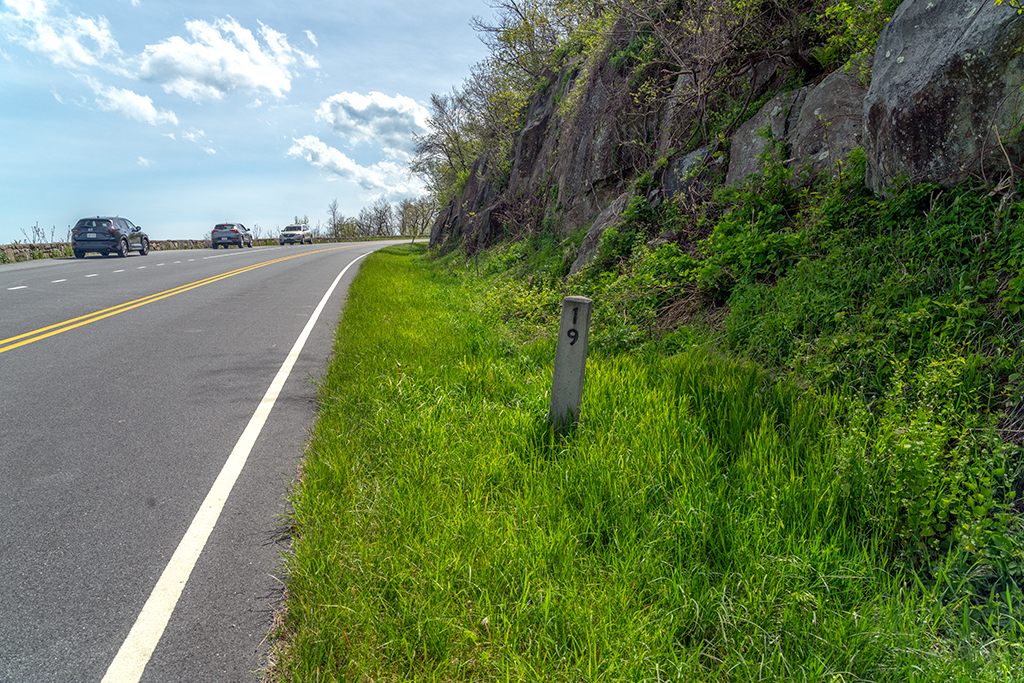
The park marks its locations of lodges, campgrounds, overlooks, trailheads, and waysides by milepost numbers along Skyline Drive and its posted speed limit is 35 mph, allowing you to really see the scenery as well as prevent run-ins with the local wildlife of which you will most likely spot along the roadside. Unlike many roads in western parks, there are no shoulders along Skyline Drive, so the only places to park your vehicle are the overlooks, waysides, campgrounds, picnic areas, and lodges.

If you don’t stop at any of the overlooks it will take about three hours to travel from one end of Shenandoah to the other. But you absolutely should stop at most, if not all the overlooks, because each of them affords visitors a view into the park’s lush landscape, environment, and history – reasons for establishing this particular area as a national park.
There is only one gas station in the park at Big Meadows. For those of you piloting electric vehicles, Plugshare.com indicates an EV charging station at Dickey Ridge Visitor Center (milepost 4.6), and another at Skyland Resort (milepost 41.7).
Three in-park brick-and-mortar lodging choices and four campgrounds provide options for overnight stays. All are open seasonally and extremely popular, so reserve your room or campsite far ahead of your planned visit.
Check those forecasts prior to your trip to Shenandoah. Depending upon the season, weather may be variable. During my spring visit, each day vacillated between heavy rain and cloud-dotted blue sky. Temperatures were surprisingly chilly and I was glad I’d packed raingear and a fleece pullover in addition to t-shirts, long pants, a hat, and warm pairs of socks. It goes without saying I wore sturdy boots with good tread.
Ok, with the basics out of the way, what can you see and do if you only have three days to spend at Shenandoah National Park? Plenty!
Day 1 – Travel The Length Of Skyline Drive
Navigating the length of this engineering marvel and stopping at most, if not all, the overlooks will take you a day all by itself. This also allows for a little park reconnaissance to locate trailheads and choose favorite view areas for watching sunrise and sunset.
Bring your camera to photograph the scenery, as well as any of the park’s wildlife, including 190 species of birds and 110 vertebrate species (not to mention an unknown number of insects, spiders, and invertebrates). It’s practically a given you will spot deer grazing alongside the road, and maybe even a wild turkey.
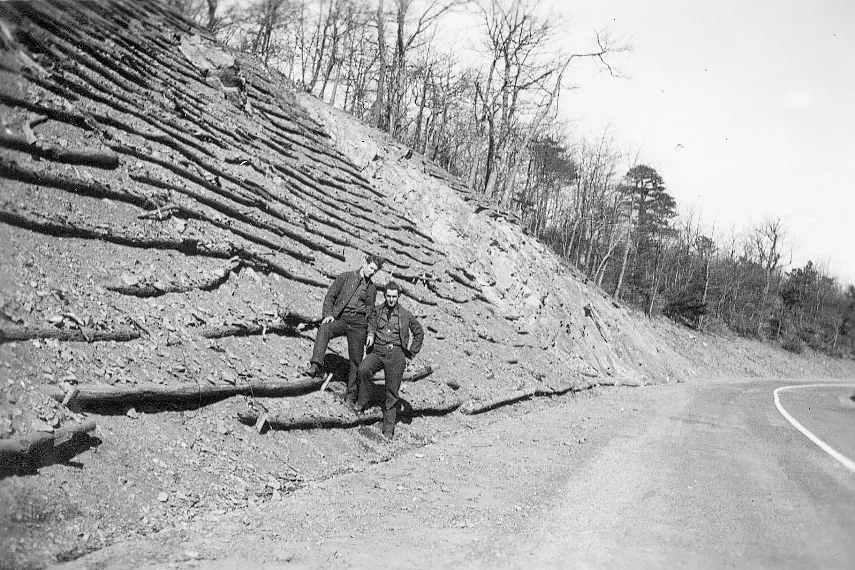
Fun Fact: The scenery you see immediately to either side of Skyline Drive is the creation of the Civilian Conservation Corps (CCC). This was a carefully planned and landscaped highway, and while CCC workers did not build the road themselves, they graded slopes, built stone retaining walls and wooden guardrails, and planted hundreds of thousands of trees as well as grasses, shrubs, and flowers native to the area.


Take a break from driving to check out the two visitor centers (Dickey Ridge at milepost 4.6 and Harry F. Byrd across the road from Big Meadows at milepost 51). You can get your questions answered, watch a film, visit each visitor center’s museum, shop for books and souvenirs, and use the restroom. There are also benches outside the visitor centers for visitors to sit a spell, listen to the birds, and soak in the scenery.
Dine, shop, pick up supplies, and avail yourself of the restrooms at any of the three concession-operated areas of stores, restrooms, and dining known as waysides (Elkwallow, Big Meadows, Loft Mountain). At Big Meadows Wayside, you’ll probably see many hikers with loaded backpacks taking a break from traveling the Appalachian National Scenic Trail, since 101 miles (162.5 kilometers) of the AT wind through the park.
Day 2 – Catch A Sunrise And/Or Sunset, Hike To A Waterfall, Explore Big Meadows

Now that you have the lay of the land, why not wake up early to catch the sunrise or stay up to capture a sunset at your favorite overlook. Shenandoah Valley and most of the peopled countryside (farmland, buildings, towns) are to the West, so all the overlooks with views toward these cultivated areas are perfect for sunsets.
Sunrises occur over the mountains and less populated portions of the landscape on the opposite side of Skyline Drive. The sunrise photo you see above was captured at Thorofare Mountain Overlook (milepost 40.5), the highest overlook in the park at 3,595 feet (1,095 meters) and approximately two miles (3.2 kilometers) north of Skyland Resort.
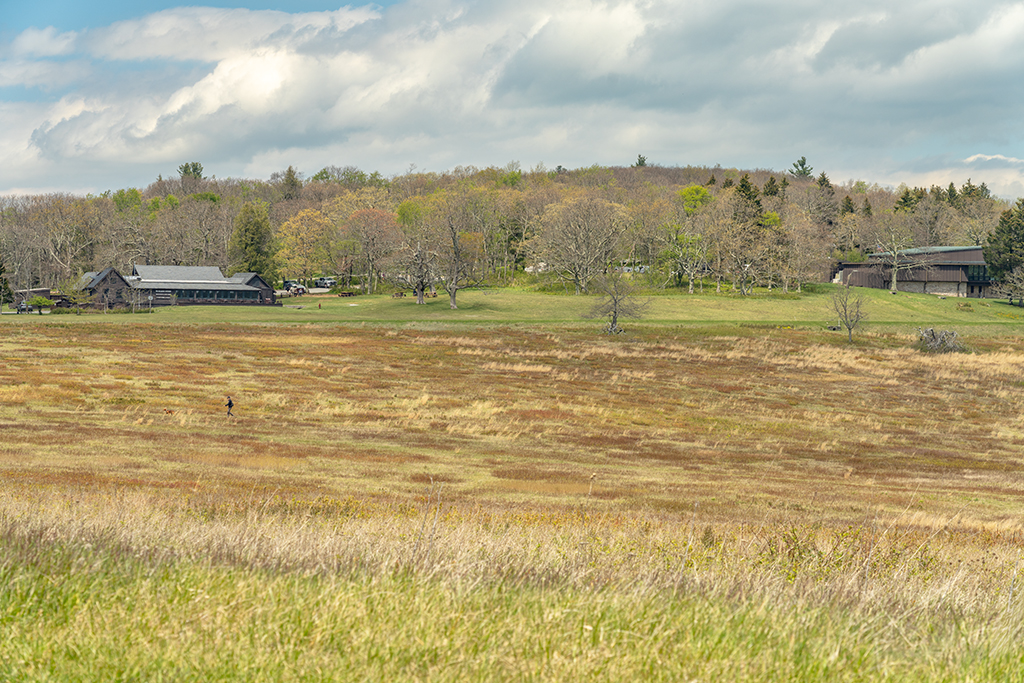
The 136-acre high-elevation grassland known as Big Meadows (milepost 51) will be easy to spot during your drive. There is a small parking lot next to the meadow, and a gravel road in addition to narrow footpaths for exploring the grasslands. The gravel road is open for walking but not for private vehicles. Also make sure to spray your clothing with a repellant like permethrin to protect against ticks within the tall grass and brushy undergrowth. According to a recent Traveler article, ticks are going to be more of an issue this year.

After you’ve finished exploring this meadow terrain, cross the road to visit the Harry F. Byrd Visitor Center (aka Byrd Visitor Center), the Big Meadows Wayside, and fuel up your vehicle at the gas pumps. Maybe even get a selfie with “Iron Mike,” a statue at the building’s entrance donated to honor the young men of the CCC who built much of the infrastructure within Shenandoah.

Once you’ve finished exploring Big Meadows, take the turnoff at the gas station and drive about a mile (1.61 kilometers) further west to Big Meadows Lodge, listed on the National Register of Historic Places.

Here, you can get breakfast, lunch, or dinner in their Spottswood Dining Room, grab a coffee and pastry at the small shop next to the lobby, or just take a break to sit in one of their comfy rocking chairs in front of the picture windows. If you haven’t yet made a room reservation, try your luck at the front reception desk to see if anything is available for a night’s stay.

Feel like walking that meal or snack off? Take a hike to a waterfall! Shenandoah is home to around two dozen named waterfalls and many other unnamed cascades. If you are near Big Meadows, I encourage you to hike Dark Hollow Falls Trail, a popular and relatively short 1.4-mile (2.25-kilometer) roundtrip excursion to a 70-foot (21.3-meter) tall waterfall surrounded by rock and lush green vegetation. Wear sturdy boots because the trail is steep, very rocky, and on rainy days, is a little slick. You might even want to bring hiking poles.
This is not an ADA accessible trail, and pets (other than service animals) are not allowed.
Day 3 – Go Birdwatching, Bicycle, Take Another Hike, View A Starry Night Sky
If you are a birder, a photographer, or simply enjoy spotting and listening to the birds, you’ll be surprised at how many you can see from the overlooks, trails, campgrounds, and even from your car. I spotted this bright yellow American goldfinch in the grass next to the Elkwallow Wayside while sitting in my car munching on a candy bar.

If you don’t see the birds, you’ll definitely hear them. Shenandoah in the spring is filled with birdsong, including owls hooting and wild turkeys gobbling. Early mornings and late evenings are the best times to hear the owls and turkeys.
Feel like hiking a little more? There are over 500 miles of trails from which to choose. If you only want to hike a couple of miles, here are some suggested hikes that won’t take up an entire day.

I followed a trail not listed in the link above: The Story Of The Forest Nature Trail, an easy 1.8-mile (2.9-kilometer) hike introducing visitors to a Shenandoah forest with its flora and fauna. Trailhead access is reached across the entrance road from the Harry F. Byrd Visitor Center at Big Meadows. You can even link this trail to the Dark Hollow Falls Trail if you decide on a longer foray. If you feel like something even more challenging, such as the hike up to Old Rag and its stupendous views, you can do that too, but you’ll need to obtain a day-use ticket in advance since the hike up to the summit is so popular.

Did you bring along your bike? I saw so many people bicycling Skyline Drive during my stay in the park. The only caveat is that there are no road shoulders for cyclists to move onto when a vehicle is behind them. Because of this, it’s incumbent upon us drivers to not crowd a cyclist and wait until a convenient opening occurs before passing. Be patient and don’t pass the cyclist on a blind curve (of which there are plenty along Skyline Drive).
Stay up past your bedtime to view (and maybe photograph) the starry sky on a clear night. Just be aware you might not be able to do this with any consistency depending upon the season of your visit. During my spring trip, all but one night was either cloudy, totally overcast, or pouring buckets of rain.
There are certainly plenty of activities in which to engage when visiting Shenandoah National Park for three days. If you are planning a trip, check out the Traveler’s Essential Park Guide for Shenandoah.

- By Rebecca Latson - June 2nd, 2026 6:18am



