
Mount Rainier National Park in Washington State is open year-round. Visit this park during different seasons of the year, and the landscape will look totally different, from wildflower-carpeted meadows during spring and summer, to huckleberry bushes painted in bright autumn hues of orange and red in the higher elevations, to 50 feet (15 meters) of snow and closed roads during the winter months.
Spring
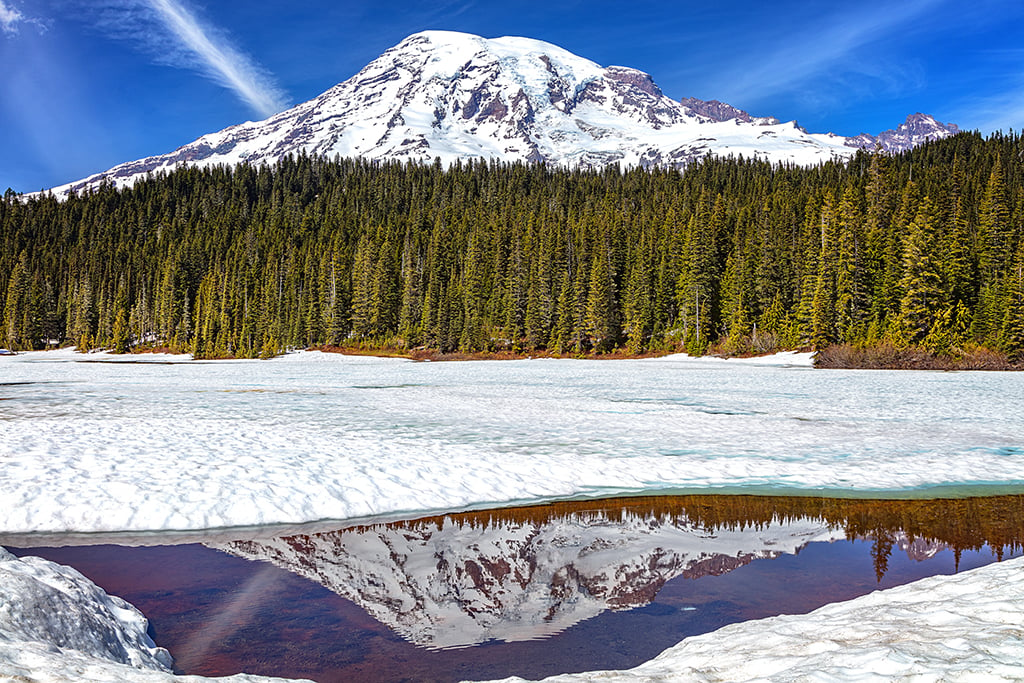
Spring in this national park – particularly in the upper elevations – occurs at a much later date than in the surrounding landscape. March through mid July, much of the park (and its trails) will still be snow-blanketed. Paradise Inn usually does not open until May, and the road to Sunrise won’t even be open until early July. Upper-elevation trails are still snowbound, but lower elevations such as the Longmire area will be snow-free, although wet and rainy. It might be wise to bring along snowshoes or cross-country skis so you don’t find yourself “postholing” (sinking your legs into deep snow with each step) during your walk on the snow. Remember to pack warm clothing for those park forays, too.
You will know it’s officially spring at Mount Rainier when you see the skunk cabbage in bloom, along with trillium and coltsfoot in late June. Throughout July and into early August, glacier lilies and avalanche lilies emerge with the melting snow. Varieties of paintbrush and lupine also start popping up in July, especially in the park’s Paradise and Sunrise areas.
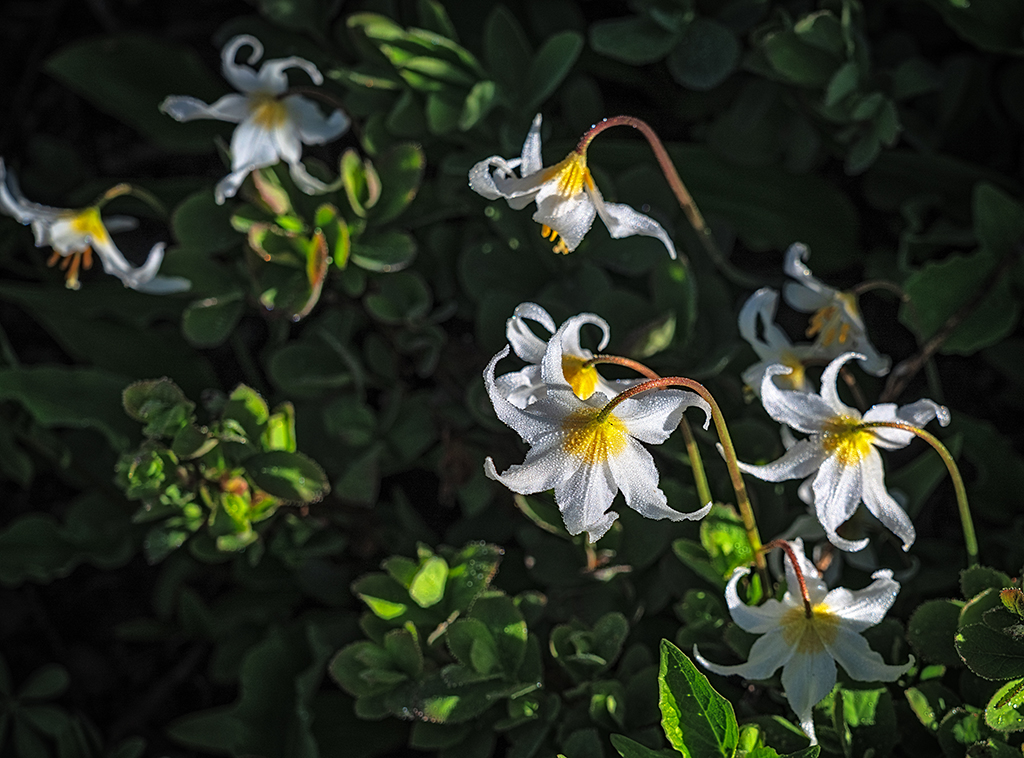
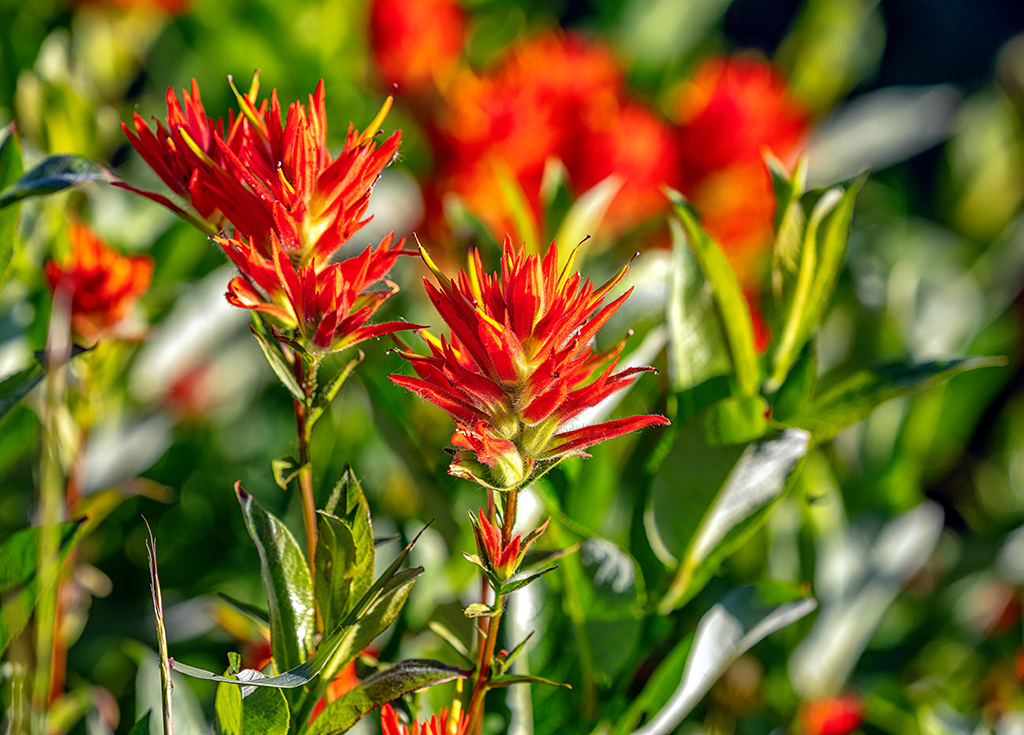
Speaking of wildflowers, other varieties such as beargrass, tiger lilies, penstemon, monkeyflower, spirea, really gear up mid-July through early August.
For those of you wildflower watchers, there are three main ecological zones within Mount Rainier National Park, each with different wildflowers blooming at certain times within these life zones:
- Forest zone (1,700 – 5,000 feet / 518.16 – 1,524 meters) – white flowers, yellow/orange flowers, red/pink flowers
- Subalpine zone (5,000 – 7,000 feet / 1,524 – 2,133.6 meters) – blue/purple flowers, white flowers, yellow/orange flowers, red/pink flowers
- Alpine zone (7,000 – 14,410 feet / 2,133.6 – 4,392.17 meters)
You can download the Subalpine Wildflowers bulletin of the most commonly-seen flowers in the park.
You can also check for updates on what wildflowers happen to be blooming at the time of your visit.
Summer

This is peak visitation season at Mount Rainier. From late July through early September, the trails are free of snow and this will be the clearest, sunniest, warmest time of year for the park. The weather can change in a moment’s notice, however, and within the space of minutes, that sunshine may give way to overcast skies, chilly winds, and soaking rain showers during your hike.
Also, don’t forget even during the summer, the upper elevations will be cold during the nights and mornings.
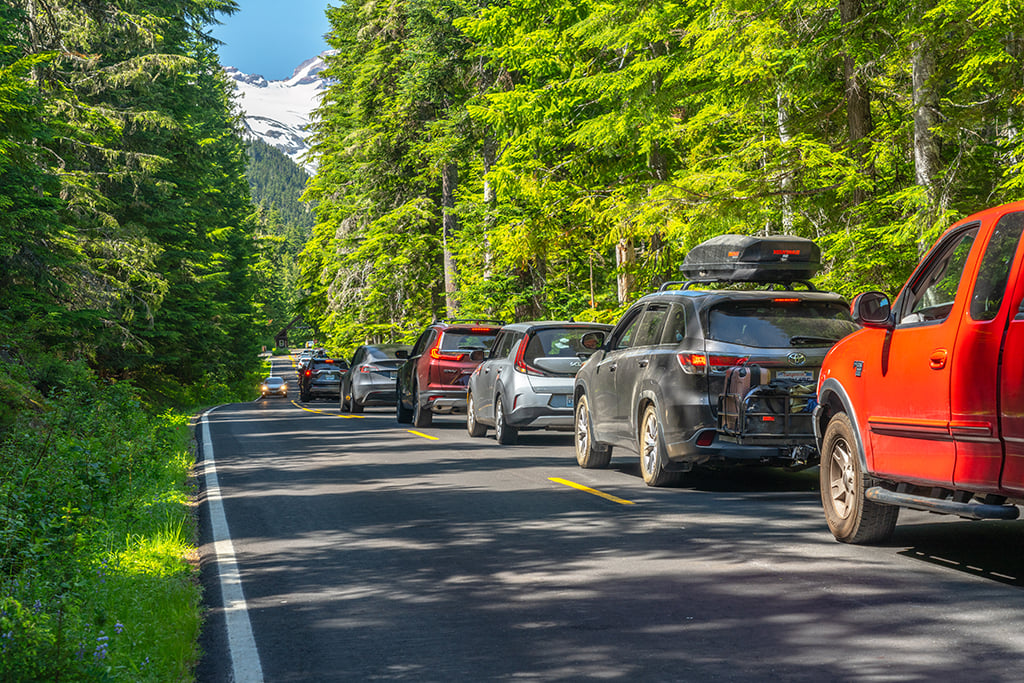
Summertime is also a time of congestion in the park, with long lines of cars waiting at the entrances, few available parking spaces, and solidly-booked park lodging and camping. In 2024, a pilot timed entry reservation system was implemented which seemed to work well. In 2025, a partial timed entry system was applied. For 2026, there is no timed entry reservation, so definitely be prepared for congestion.
Autumn
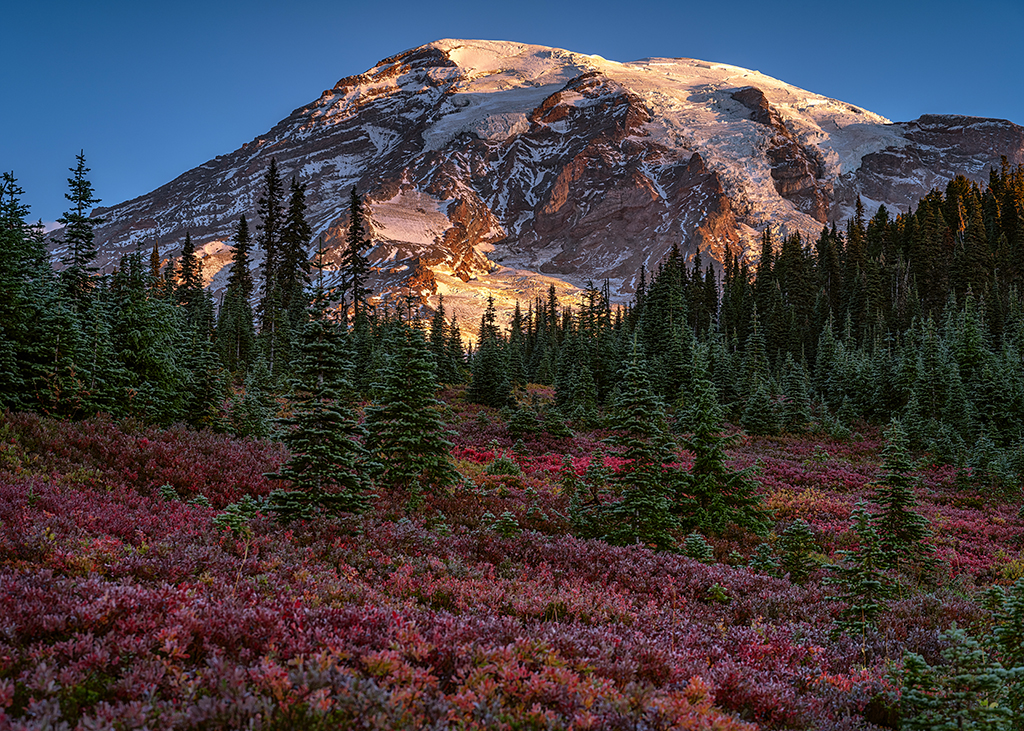
If you are looking for color, you’ve got it with autumn’s bright orange and red huckleberry bushes in the high elevations. Vine maple and larch also provide a punch of bright color. Longmire-area temperatures will range between 68oF – 45oF (20oC – 7oC) and Paradise temps can run 57oF – 41oF (14oC – 5oC) on average. Remember to dress accordingly.
Speaking of huckleberries, these luscious, tiny, tart, berries will be ripe and ready for picking as you hike the upper-elevation trails. Visitors to the park are allowed to pick them for consumption, but no commercial harvesting is permitted.
Also be aware this is the time of year bears will be working to fatten up prior to winter, and huckleberries are a favorite treat.
Winter

While one might think once the snow has blanketed the landscape, the crowds would lessen, but that's not really the case any longer, due to this national park's popularity. Even with required tire chains, the fact that all roads apart from the Nisqually-to-Paradise Corridor, are closed, and the occasional road closure from Longmire to Paradise due to road and weather conditions, snowshoeing, skiing, and winter photography still take center stage and keep the Paradise parking lots full.
It can snow over 600 inches (50 feet /15 meters) during a winter in the high elevations of Paradise (and Sunrise, too, although that area is closed to vehicles during this time). Lower elevations may also experience snow and ice around Longmire, but more often, it’s an icy rain. Remember your vehicle’s tire chains (required to carry in your car whenever it begins snowing heavily in the park) and bring some traction devices for your boots. Prepare for cold, rainy, snowy weather on any given day. Dress warmly and pack water, snacks, and blankets.
It’s always a good idea to check out the webcams for a look at the landscape on the day you wish to visit. Click here to access the park’s weather page and list of weather-related links, and go on over to take a look at the park’s annual snowfall totals from 1920 – 2025.
- By Rebecca Latson - January 20th, 2026 7:20am



