Growing within Organ Pipe Cactus National Monument’s boundaries in Arizona are 31 species of cactus from the giant saguaro, to the park’s namesake organ pipe cactus, to the small pincushion cactus. It will be easy for you to spot one or more of these cacti – just look for the spines (and watch where you step).
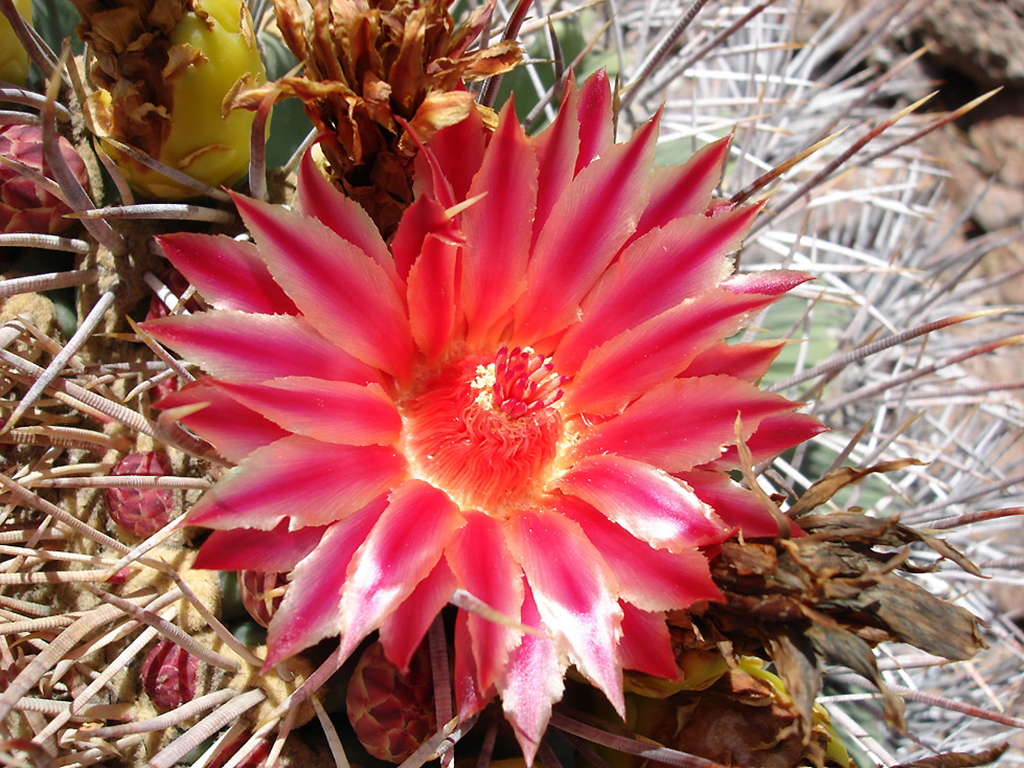
Fishhook barrel cactus and bloom, Organ Pipe Cactus National Monument / NPS file
Cactus is a type of flowering plant, specifically belonging to the family Cactaceae. They are especially adapted for living in harsh, hot, arid environments, with spines to protect while providing shade, thick waxy stems sealing in water, and photosynthesis that occurs at night to prevent water evaporation.
Cacti may grow to 45 feet (14 meters) or taller. They are slow growers and can live for a very long time. Both organ pipe and saguaro (sah-WAH-ro) cacti can live up to 150 years.
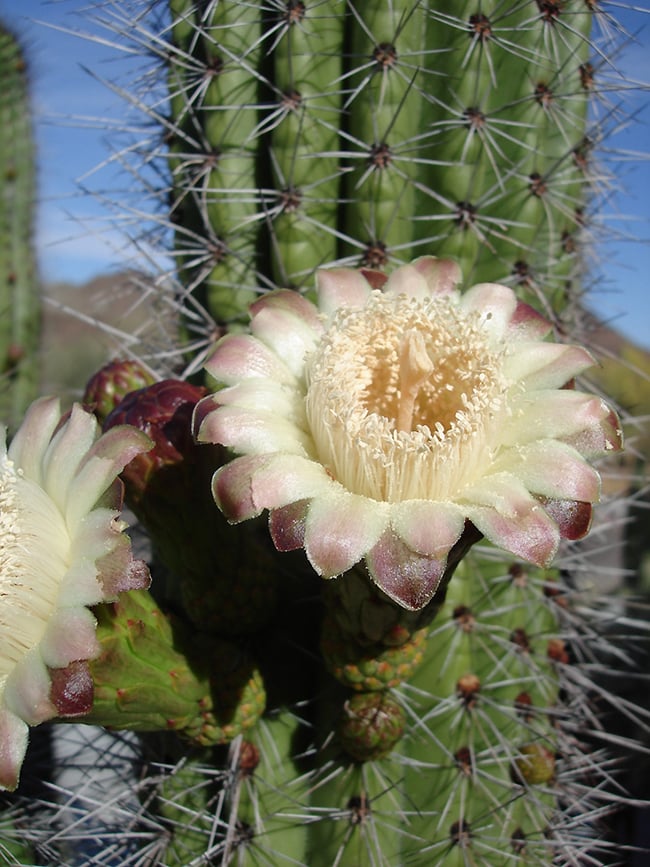
Organ pipe cactus and bloom, Organ Pipe Cactus National Monument / NPS file
This many-limbed cactus is the monument’s namesake, and for good reason. The monument hosts the northernmost wild growing members of this species. This species relies on and provides food for some important animals here. The endangered lesser long-nosed bat (Leptonycteris curasoae) and the white-winged dove feed on the nectar through the night and following day and pollinate the plants. Fruit is consumed and seeds are dispersed by bats, birds, and bighorn sheep, as well as human inhabitants. This species can live for about 150 years. Visit the Organ Pipe Cactus page to learn more about the park’s namesake.
Organ pipe cactus sends many columnar stems out from the base, occasionally sprouting additional limbs from higher up branches. The 5-15 feet (1.5-4.5-meter) tall limbs have 12-19 prominent ridges running its length, and groups of black spines. During the middle of summer, flower buds will appear, blossoming white to pink flowers for just one night and into the next day, before drying up. Fruits are round, thin-skinned, reddish, and covered in small spines. The monument is the northernmost extent of the organ pipe’s range, and they tend to grow on southern slopes to maximize sun exposure.
Saguaro cactus and blooms, Organ Pipe Cactus National Monument / NPS file
This iconic cactus of the desert southwest is the tallest cactus species in North America, usually reaching heights of 45 feet (14 meters), though the tallest saguaro measured was 78 feet (23 meters) tall. These columnar cacti take 10 years to grow one inch (2.54 centimeters) in height and may sprout arms after its first 90 years of life, or 10-15 feet (3 – 4.5 meters) of growth. Woodpeckers will often drill nesting cavities into saguaros that will also be used by other creatures for many seasons. The saguaro is a culturally important part of the Sonoran Desert, with the Tohono O’odham calendar being built around the harvest of the ripe fruit or “bahidaj”. This slow growing cactus may live longer than 150 years. Visit the Saguaro page to learn more about this iconic cactus!
Saguaros are often the tallest plant in the area. An older saguaro may tower over palo verde and ironwood trees nearby, though smaller ones may be found in the protective shade of these “nurse trees.” The girthy stems are covered in 19-25 deep, lengthwise ridges which are dotted with clusters of bristle-like spines. Funnel shaped flowers blossom at the top of the stems in bunches, blooming alternately for 24 hours. Fruit is roughly egg shaped and green, quickly turning bright pink and bursting open, exposing the deep red pulp and black seeds.
Senita (Lophocereus schottii)
Senita cactus, Organ Pipe Cactus National Monument / NPS file
The senita cactus is at the northernmost end of its range in the monument. This cactus has a unique relationship with the senita moth. The moth is the only nocturnal pollinator for this cactus, and the cactus in turn serves as a reliable food source for the moth and host plant for eggs. Traditionally the juvenile stems were cut, boiled, and the liquid consumed as a remedy to various ailments.
The senita cactus grows several limbs from the ground, reaching heights of 20 feet (6 meters). The stems are rarely branched, and have 5-8 ribs down the length. Spines are shorter and more orderly on the lower portions of the stems, but elongate and become shaggy at the top, lending this cactus the nickname of “old man’s beard.” Flowers are white to pink in color, opening at night and closing by morning. Fruits are oval or rounded and filled with nutritious pulp that is quickly eaten by birds and ants, that is, if the larva of the senita moth haven’t already consumed it. This cactus prefers even ground and the most impressive stand in the United States can be found at Senita Basin.
Cholla
You will see two types of cholla cactus in this national monument: chain fruit cholla (Cylindropuntia fulgida) and teddy-bear cholla (Cylindropuntia bigelovii).
Chain fruit cholla cactus, Organ Pipe Cactus National Monument / NPS file
Chain fruit or jumping cholla is a common shrubby cactus found in the monument. The nickname “jumping” cholla comes from its easily detached joints that seem to jump and stick to skin or clothing that brushes it. Fruit is usually sterile, so this cactus reproduces by dropping pieces of itself, or “joints,” and sprouting a new plant through cloning. The fruit, although dry and generally not favored are very high in calcium and are regularly consumed by deer and cattle. The O’odham would eat this fruit to bolster meals during a time of scarcity, and before the tastier, more nutritious saguaro fruit ripened.
You may find chain fruit chollas growing 3-5 feet (0.9-1.5 meters) tall around the monument, though some may grow over 10 feet (3 meters) tall. This cactus is spiny all over, with 1.5 inch-long (3 centimeters) straw-colored spines covering younger, higher up stems, and breaking off of the lower portion to reveal the old, dark stem. Flowers are about the size of a quarter coin and are pink with purple or white accents. Inch-long (2.54 centimeters), spineless fruits are linked end-to-end and hang in drooping “chains.”
Teddy bear cholla cactus, Organ Pipe Cactus National Monument / NPS file
Teddy-bear cholla, like chain fruit cholla, has joints that easily break away to clone elsewhere. Sometimes, these joints begin to grow right next to the adult plant, or only a short distance away, creating a group of cholla known as a cholla garden. Packrats will collect cholla joints and place them around the entrances to their burrows or “middens” as protection against coyotes and kit foxes looking for a meal. Cactus wren and other small birds will similarly nest in the spiny branches of cholla for protection from predators.
Teddy-bear cholla is named for its all-around fuzzy appearance. Teddy-bear cholla is a stout cactus, typically standing 1-5 feet (0.3-1.5 meters) tall, with a crown of branches that doesn’t droop, and a dark lower trunk. Flowers are green, with red on the outside. The spines on teddy-bear cholla are fairly short and densely packed, and the whole plant is stout, whereas chain fruit cholla have more loosely arranged spines, and are taller with drooping arms.
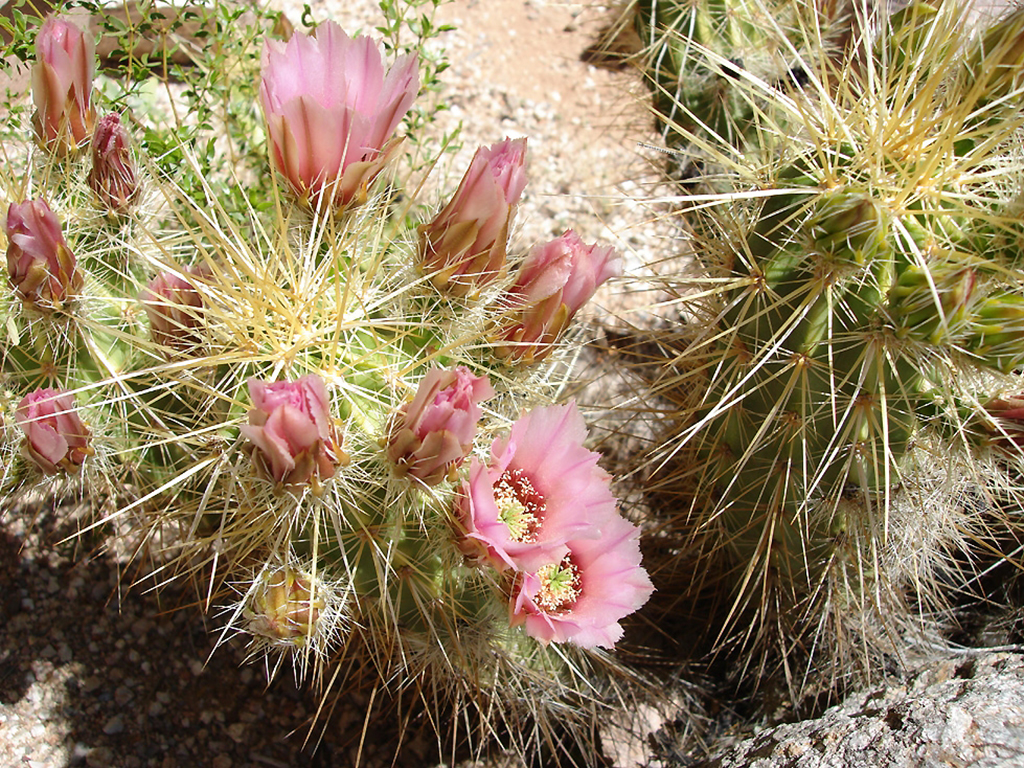
The cacti above are not the only varieties you will see during a visit to Organ Pipe Cactus National Monument. You are sure to spot the Englemann’s prickly pear (Opuntia engelmannii), and probably also the adorably-named hedgehog cactus (Echinocereus sp.), pincushion (Mammillaria sp.), and/or Arizona barrel cactus (Ferocactus wislizennii).