
Some say fishing is a sort of meditation. Others say fishing is a method for catching dinner. Since 95 percent of Biscayne National Park is underwater, you can reel in snapper, tarpon, hogfish, and other species while meditating on what you plan to include with your fish dinner. You can even go lobstering in this national park!
Unless you are under the age of 16, a valid Florida fishing license is required and you must follow the laws and regulations of the state of Florida and - when fishing (or lobstering) within the waters of Biscayne National Park – the laws and regulations of the Florida Fish and Wildlife Conservation Commission. It’s also important to remember Biscayne National Park has specific, often stricter, size and bag limits compared to state waters, including a 10-fish aggregate bag limit.
For other regulations and prohibitions related to fishing with the park, click on the fishing link at the top of the page.
If it’s lobstering that interests you, it is important to note lobsters may be taken east of the islands during the legal season (see map below) except in the Legare Anchorage (where swimming, snorkeling, and diving are prohibited year-round) and the Coral Reef Protection Areas. Recreational trapping is prohibited.
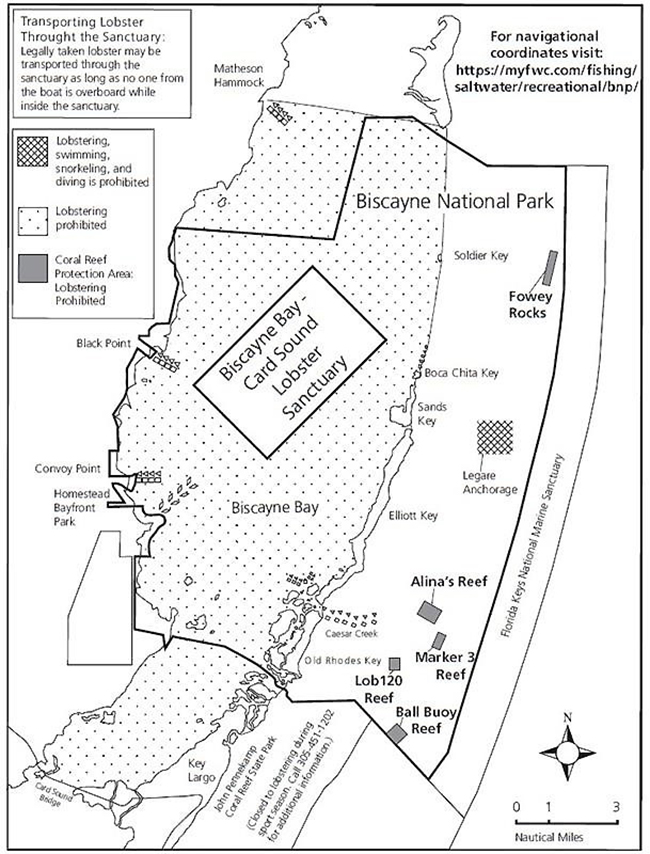
If you’ve legally caught a lobster outside the park’s waters but must transport them through the Biscayne Bay/Card Sound Lobster Sanctuary, you may do so if no one from the boat is overboard (in the water) while inside the sanctuary.
The regular lobster season is August 6-March 31 annually. There is a two-day mini season occurring over the last consecutive Wednesday and Thursday in July. It begins at 12 a.m. Wednesday and ends 11:59 p.m. Thursday.
The daily limit for both seasons is six lobsters per person.
The legal size for a keeper lobster consists of a carapace length of more than three inches (7.62 centimeters). Undersized lobsters must be returned to the water. All lobsters caught must be returned to the mainland in whole condition. “Wringing” or separating the tail from the body is prohibited in Park waters.
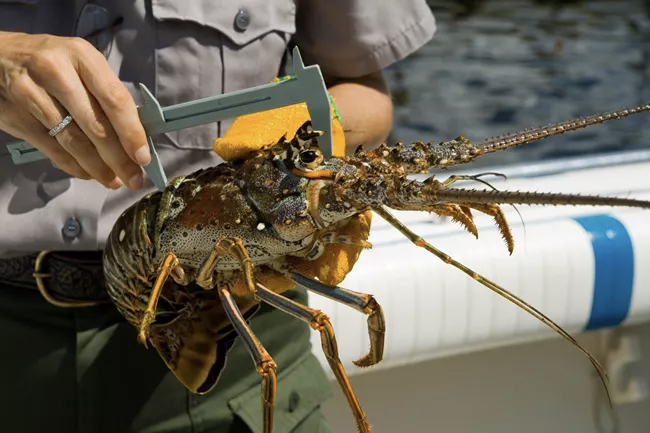
How do you measure spiny lobsters? Aside from the obvious answer of using a measuring device (duh) the measuring process begins at the front edge of the bony part between the horns (does not include the softer portion between the eyes), proceeding along the middle of the back to the rear edge of the top part of the carapace. Measurements pertain only to the carapace length. Tail measurements are not valid.
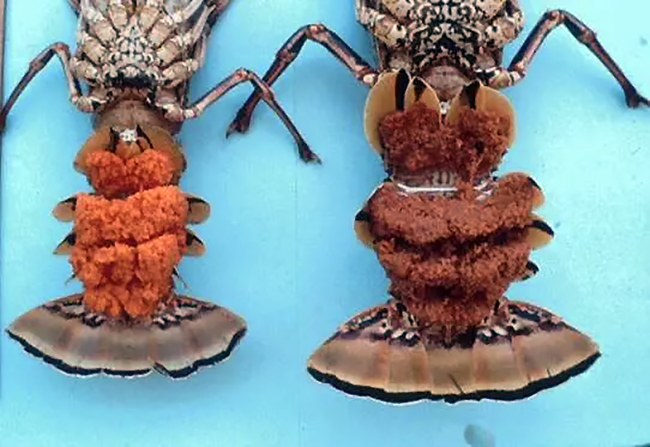
Egg-bearing females, regardless of size, must be immediately returned to the water, unharmed.
To read more about lobstering and scuba diving/snorkeling for them, click on the lobstering link in the first paragraph at the top of the page.
- By Rebecca Latson - March 3rd, 2026 2:04pm



