
Did you know that Channel Islands National Park off the California coast is known for having some of the oldest indications of human inhabitants in the Americas? Not only that, but the islands in this national park provide some of the oldest evidence of maritime seafarers. But wait! The Channel Islands are famous for more than archeological discoveries. Mammoths lived on the islands at about the same time as humans did!

Archaeology
Evidence for human habitation dates back to 13,000 years, with the discovery of Arlington Springs Man on Santa Rosa Island in 1959. In 2017, a prehistoric Native American site thought to date between 8,000 and 13,000 years ago has been unearthed at the park.
Featured In The National Parks Traveler
Prehistoric Native American Site Discovered At Channel Islands National Park
A prehistoric Native American site thought to date between 8,000 and 13,000 years ago has been unearthed at Channel Islands National Park in California, where officials believe the site might be evidence of a coastal migration following the North Pacific Rim from Northeast Asia into the Americas, part of the peopling of the new world.
Park staff discovered the site while conducting archaeological monitoring during a rehabilitation project of the historic Main Ranch House on Santa Rosa Island. The ancient site was found under the Main Ranch House, part of the historic Vail & Vicker Ranch at Bechers Bay, in the process of lifting the building to construct a new foundation.
To read more of this article, head over to this page.
New Discovery In The Story Of The Lone Woman At Channel Islands National Park
In the best-selling children’s novel Island of the Blue Dolphins, the lead character was a Native American woman left on San Nicolas Island by herself from 1835 to 1853. The story, as it turns out, was not entirely fiction.
During a special lecture at Channel Islands National Park on Thursday, December 13, a panel of researchers will reveal information about why the Lone Woman remained on San Nicolas Island after others in her community left for the mainland.
To read more of this article, head over to this page.
Paleontology
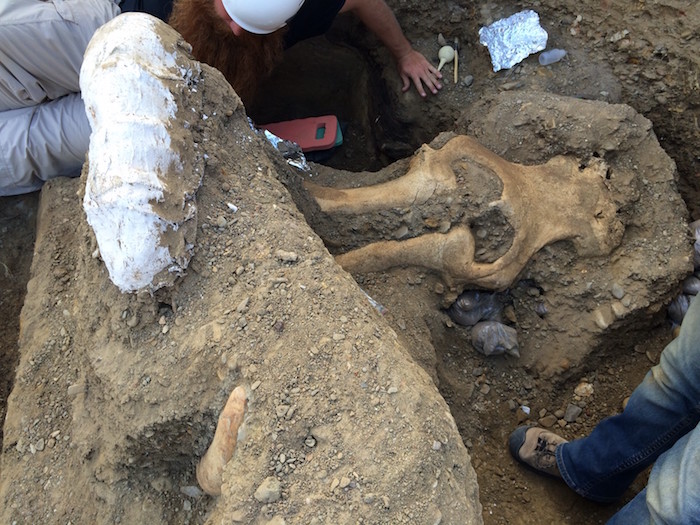
Mammoths roamed the continent of North America beginning approximately 2 million years ago, with Columbian mammoths appearing a million years later. It is believed that the Columbian mammoths migrated to the Channel Islands during the past two ice ages when sea levels were lower and the island land mass was closer to the mainland coast. Over time, descendants of the migrants downsized from approximately 14 feet, the size of the adult Columbian mammoth, to a 6-foot-tall pygmy form, becoming an endemic species known as Mammuthus exilis (aka pygmy mammoth).
According to Park Staff:
In 1994, paleontologists made the remarkable discovery of a pygmy mammoth on Santa Rosa Island, the most complete collection of its kind in the world.
Found only on the California Channel Islands and nowhere else in the world, the pygmy mammoth was probably a small form of the Columbian mammoth found on the mainland. Pygmy mammoths varied from 4.5 to 7 feet high at the shoulders and may have weighed only about 2,000 pounds, compared to the 14-foot tall, 20,000 pound Columbian mammoth. In other respects, they were probably similar, with short fur, a typical mammoth body form, and a relatively large head.
You can read more about this “diminutive” mammoth by clicking here.
Featured In The National Parks Traveler
"Larry," A 13,000-Year-Old Mammoth, Discovered At Channel Islands National Park
A team of scientists has unearthed an exceptionally well-preserved fossil of a complete mammoth skull from an eroding stream bank on Santa Rosa Island within Channel Islands National Park off the California coast.
To read more of this article, head over to this page.
When, And How, Mammoths Reached Channel Islands National Park
It's hard to imagine that mammoths roamed the territory now protected by Channel Islands National Park, but they did during previous Ice Ages. And recent discoveries, particularly a mammoth tusk unearthed in 2014, point to mammoth history dating even further back than previously thought.
To read more of this article, head over to this page.
Ancient Sea Cow Fossil Discovered On The Channel Islands
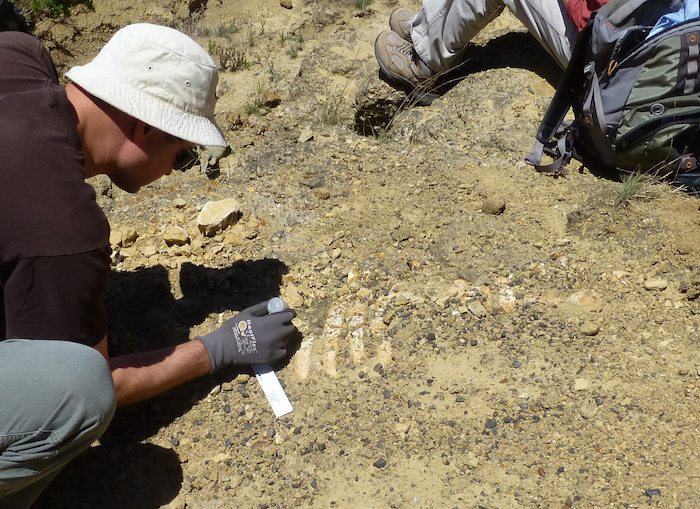
Park staff say the fossil of an extinct species of sea cow was discovered on Santa Rosa Island. They say the fossil conceivably is one of the oldest of its kind ever found on the west coast of North America with an estimated age between 20-25 million years ago. Scientists think that the fossilized remains of a skull and partially articulated rib cage may represent a new species of sea cow, an ancient relative of dugongs known as sirenians. They anticipate this to be confirmed when the skull is analyzed by Dr. Jorge Velez-Juarbe, a marine mammal taxonomic expert at the Natural History Museum of Los Angeles County.
To read more of this article, head over to this page.
- By Rebecca Latson - June 9th, 2026 8:22am



