
Visit Channel Islands National Park off the California coast and you’ll have the opportunity to view some amazing wildlife beneath as well as above the briny depths of the Pacific Ocean, such as the giant black sea bass, the brilliant orange-red Garibaldi, dolphins, seals, and whales. You can even go on cruises to watch whales and coastal wildlife with the NPS authorized concessionaire Island Packers. If you enjoy birding or bird photography, each island is either home to, or a migratory stopping point for, both land- and shorebirds. Skunks, mice, bats, lizards, and salamanders round out the wildlife you might spy during a visit to this national park.

Perhaps the most endearing of Channel Island wildlife species, however, is the island fox. Both the largest of Channel Islands’ native terrestrial mammals and one of the smallest canid species in the world, the island fox lives nowhere else in the world except on six of the eight Channel Islands, including three islands in the park: Santa Cuz, San Miguel, and Santa Rosa islands. Each island population is recognized as a separate endemic or unique subspecies.
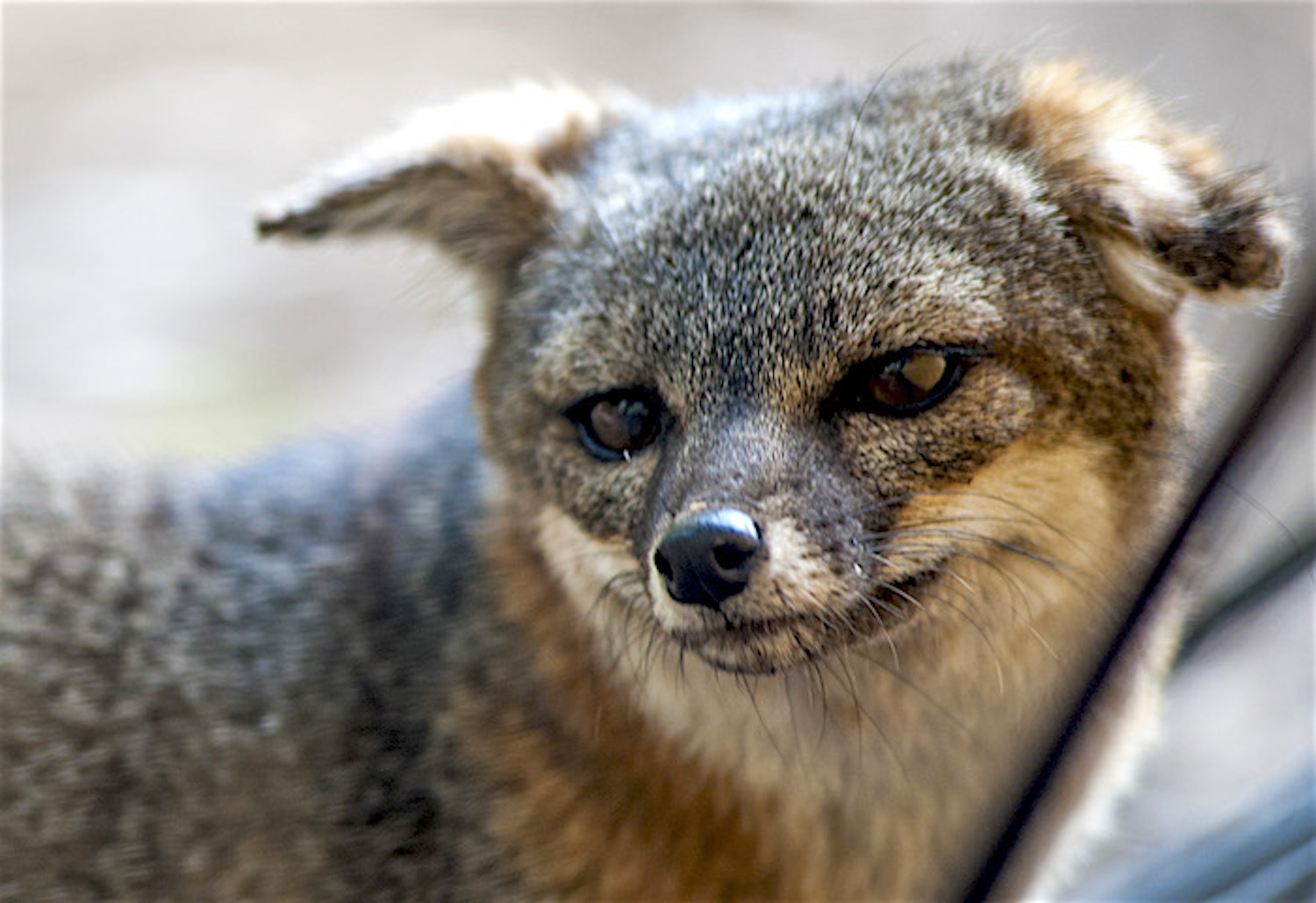
A descendent of the mainland gray fox, the island fox is about the size of a housecat with a lifespan of up to 15 years. It communicates by barking and sometimes growling. Island foxes show signs of submission or dominance through facial expressions and posture. They possess a keen sense of smell, are territorial, and have no natural predators (which means they hunt during the day rather than at night).
During the early 1990s, four of the eight island fox subspecies underwent a drastic decline in population. On the three islands within the national park, this decline was attributed to predation by golden eagles, and by 2004 each subspecies was federally listed as endangered.
A captive breeding and reintroduction program, along with the removal of the resident golden eagles, the re-establishment of bald eagles (a natural predator of golden eagles), and the removal of non-native ungulates which had provided a food source for the golden eagles, helped reverse the decline in these island fox subspecies.
Today, these foxes are closely monitored to ensure their survival.
Featured In The National Parks Traveler
Creature Feature: Rescuing the Island Fox is a Complicated Long-Term Project
The foxes of the Channel Islands were recently rescued from the brink of extinction. Now keeping this species from disappearing is a matter of captive breeding and reintroducing foxes, keeping golden eagles away, restoring abused ecosystems, combating canine distemper, providing medical care, curbing wildlife feeding, reducing vehicle-animal collisions, trapping and radio-collaring, survivor monitoring, prey sampling, ……. and so on.
To read more of this article, head over to this page.
Ecological Balance Benefits Rare Fox At Channel Islands National Park
A story about pigs, foxes, and golden eagles might sound like it was pulled from Aesop's Fables, but at Channel Islands National Park it's one of how ecological balance has rescued one species from possibly vanishing forever.
For were it not for the pigs, which roamed wild on the islands of the national park off the coast of California, the foxes might not have also turned into the eagles' prey.
To read more of this article, head over to this page.
Once-Rare Channel Island Foxes Proposed To Be Delisted From Endangered Species Act Protections
In what the U.S. Fish and Wildlife Service is calling "the fastest successful recovery for any Endangered Species Act-listed mammal in the United States," the agency is proposing to remove three subspecies of the island fox native to the Channel Islands from ESA protection.
The removal of the San Miguel, Santa Rosa, and Santa Cruz Island fox subspecies from the Federal List of Threatened and Endangered Wildlife would be an historic success for the multiple partners involved in recovery efforts.
To read more of this article, head over to this page.
Populations Of Channel Islands Fox Rebound, But Low Genetic Diversity Could Pose Problems
Much was made earlier this year when the U.S. Fish and Wildlife Service announced that three subspecies of the Channel Islands fox had make a remarkable recovery from the brink of extinction, but one of the species' low genetic diversity could pose grave problems for the animals.
To read more of this article, head over to this page.
Celebrating The Unique Biodiversity Of Channel Islands National Park
On an uninhabited island off the coast of Southern California where pygmy mammoths once roamed, I trekked along sandstone cliffs and up a steep footpath into one of the rarest native pine forests in the United States. Dwarfed and gnarled by the fierce winds, the endangered evergreens with freakishly large pine cones were so mesmerizing that I almost missed seeing a fox that is found nowhere else on earth.
To read more of this article, head over to this page.

- By Rebecca Latson - June 9th, 2026 12:01pm



