
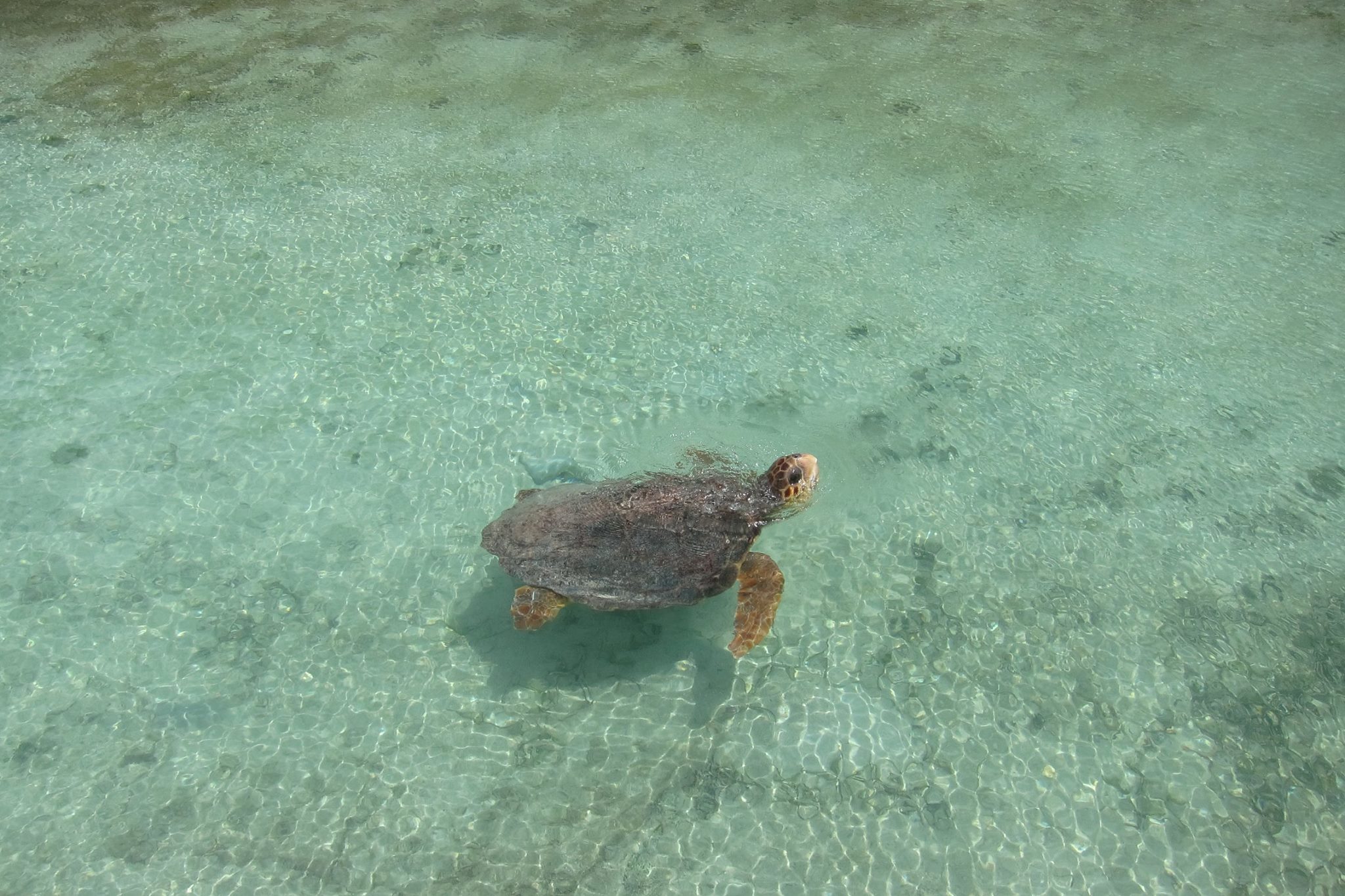
On behalf of the National Wildlife Federation, National Parks Conservation Association, Florida Wildlife Federation, Louisiana Wildlife Federation, and Texas Conservation Alliance, the Southern Environmental Law Center filed a lawsuit to stop the Trump administration’s attempt to bypass compliance with the Endangered Species Act for oil and gas activities in the Gulf of Mexico.
The broad exemption allows the oil and gas industry to operate without any consideration for impacts to listed species, including the highly endangered Rice’s whale and numerous species of listed sea turtles. SELC filed the lawsuit on Wednesday in the U.S. Court of Appeals for the D.C. Circuit.
The Endangered Species Committee, also known as the God Squad or Extinction Committee, was created in 1978 to allow project proponents to apply for an exemption from the ESA under narrow circumstances. The committee has only convened three previous times in the act’s history.
The groups behind the lawsuit say that the committee met and voted on March 31 without the legally required notice, review, or application process. The committee claimed it was necessary because of a “national security emergency.”
“In a 15-minute meeting without appropriate public input, the administration exempted oil and gas drilling and related activities in the Gulf from Endangered Species Act compliance, risking extinction for the Kemp’s Ridley sea turtles, Rice’s whales and other threatened and endangered species that call the waters in and near Gulf national parks home,” said Bart Melton, wildlife program director for National Parks Conservation Association. “National Parks Conservation Association is fighting this decision, which could lead to the extinction of wildlife populations in the name of offshore drilling today, and other disastrous developments near parks in the future.”
The Gulf is home to 10 national park sites and an abundance of wildlife, including several species of sea turtles, migratory birds, Gulf sturgeon, and Rice’s whale that are all protected by the ESA. Oil and gas drilling activities including noise, vessel strikes, and spills are some of the biggest threats to Gulf wildlife but can be managed and mitigated through the ESA’s review process. Importantly, the consideration of impacts to listed species has never halted drilling or production in the Gulf, with oil production from the region at record highs.
“For decades, oil drilling has proceeded in the Gulf in concert, not in conflict with, the Endangered Species Act. The Act has resulted in meaningful mitigation which has allowed exploration and drilling to continue. Bypassing the ESA in the Gulf is completely unnecessary,” said Catherine Wannamaker, a senior attorney in SELC’s Charleston office. “If this administration gets a pass in the Gulf, there’s no telling what industries they will exempt next and the impact that this could have on species around the country.”
A 2024 poll from the Business and Economics Polling Initiative at Florida Atlantic University and NPCA found that 85 percent of Floridians agree that national parks should be protected from extractive industries like oil drilling and mining.
“We understand the role oil and gas development plays in meeting our energy needs, but it must be approached with the long-standing safeguards that protect our most vulnerable species and habitats,” said Grahame Jones, executive director of the Texas Conservation Alliance. “Removing those protections in the Gulf puts fragile ecosystems at risk, sets a dangerous precedent, and reflects a lack of foresight about what we leave behind for future generations.”
Story Categories:
A copy of National Parks Traveler's financial statements may be obtained by sending a stamped, self-addressed envelope to: National Parks Traveler, P.O. Box 980452, Park City, Utah 84098. National Parks Traveler was formed in the state of Utah for the purpose of informing and educating about national parks and protected areas.
Residents of the following states may obtain a copy of our financial and additional information as stated below:
- Florida: A COPY OF THE OFFICIAL REGISTRATION AND FINANCIAL INFORMATION FOR NATIONAL PARKS TRAVELER, (REGISTRATION NO. CH 51659), MAY BE OBTAINED FROM THE DIVISION OF CONSUMER SERVICES BY CALLING 800-435-7352 OR VISITING THEIR WEBSITE. REGISTRATION DOES NOT IMPLY ENDORSEMENT, APPROVAL, OR RECOMMENDATION BY THE STATE.
- Georgia: A full and fair description of the programs and financial statement summary of National Parks Traveler is available upon request at the office and phone number indicated above.
- Maryland: Documents and information submitted under the Maryland Solicitations Act are also available, for the cost of postage and copies, from the Secretary of State, State House, Annapolis, MD 21401 (410-974-5534).
- North Carolina: Financial information about this organization and a copy of its license are available from the State Solicitation Licensing Branch at 888-830-4989 or 919-807-2214. The license is not an endorsement by the State.
- Pennsylvania: The official registration and financial information of National Parks Traveler may be obtained from the Pennsylvania Department of State by calling 800-732-0999. Registration does not imply endorsement.
- Virginia: Financial statements are available from the Virginia Department of Agriculture and Consumer Services, 102 Governor Street, Richmond, Virginia 23219.
- Washington: National Parks Traveler is registered with Washington State’s Charities Program as required by law and additional information is available by calling 800-332-4483 or visiting www.sos.wa.gov/charities, or on file at Charities Division, Office of the Secretary of State, State of Washington, Olympia, WA 98504.


National parks and their natural resources belong to you. The National Parks Traveler works to ensure you know how these essential places are being cared for.
Sign Up For Our Weekly Newsletter
Unsubscribe at any time.
INN Member

The easiest way to explore RV-friendly National Park campgrounds.

Here’s the definitive guide to National Park System campgrounds where RVers can park their rigs.
Our app is packed with RVing- specific details on more than 250 campgrounds in more than 70 national parks.
You’ll also find stories about RVing in the parks, tips helpful if you’ve just recently become an RVer, and useful planning suggestions.

