

It’s now March and time for the monthly Traveler quiz and trivia piece. FYI, all the information in this month’s piece was gathered from various Traveler articles.
1. The Haleakalā silversword is a unique plant that flowers and reproduces only once in its lifetime and lives between 7,000 and 10,000 feet (2,134-3,048 meters) in elevation at Haleakalā on the island of Maui in Hawaii. When the silversword blooms, it has a specific type of inflorescence (grouping or arrangement of multiple flowers). There are three types of inflorescence: racemose, mixed/special, and ___.
a) Cymose
b) Capitulate
c) Paniculate
d) Composite
2. Let’s stick with Haleakalā National Park a little longer. If you read Traveler Associate Editor Rita Beamish’s article about the silversword, you will know that the park hosts ___ plant species protected under the Endangered Species Act.
a) 15
b) 25
c) 36
d) 42
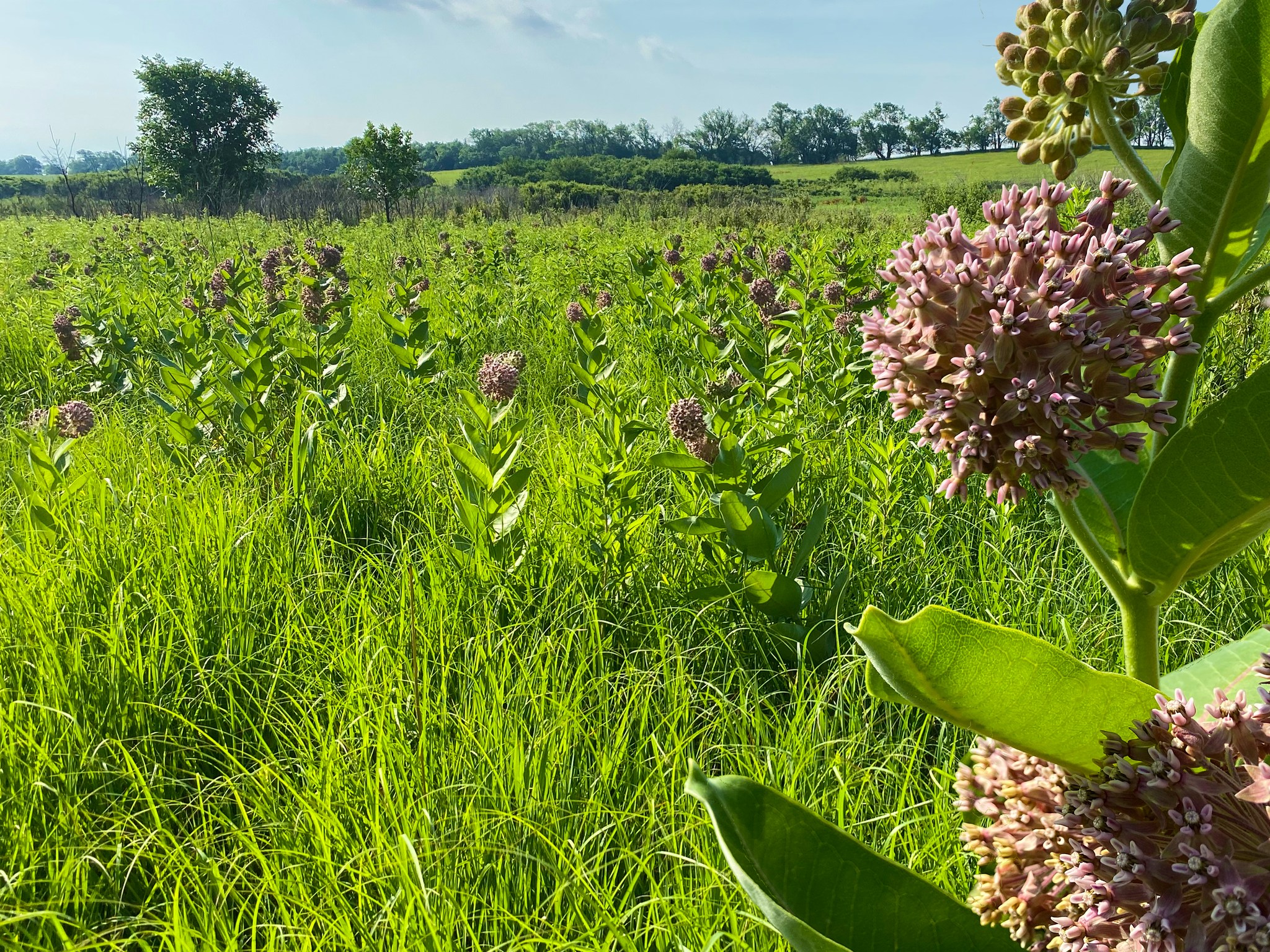
3. Homestead National Historical Park in Nebraska lays claim to ___ acres of restored tallgrass prairie.
a) 100
b) 200
c) 300
d) 400
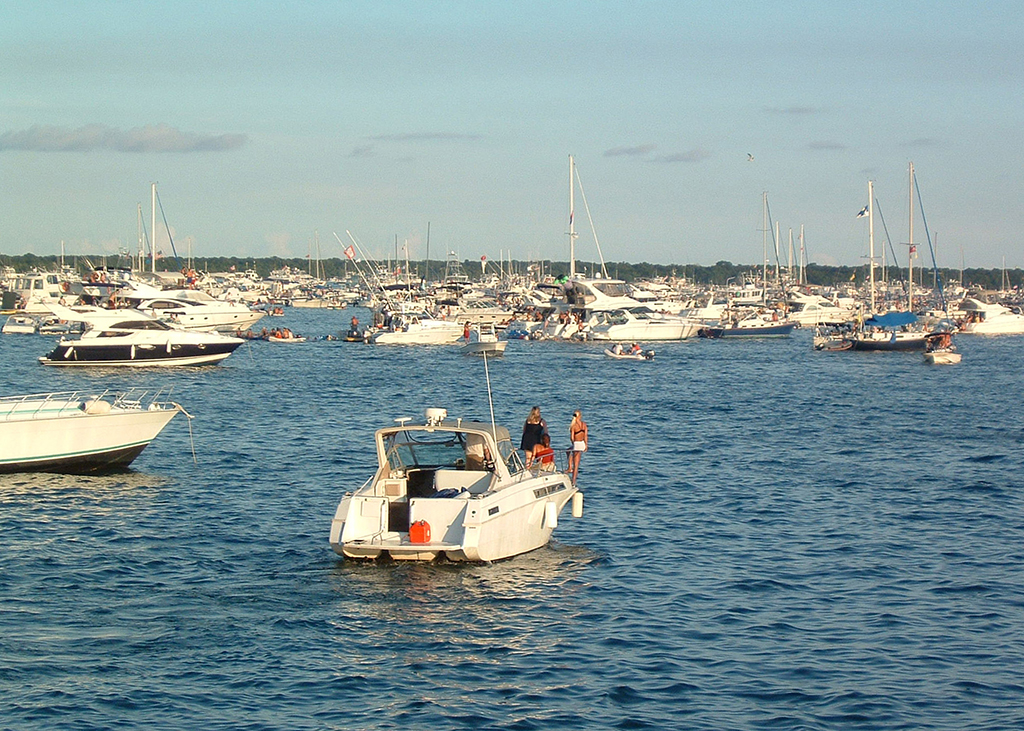
4. Ninety percent of visitors to Biscayne National Park in South Florida enter by boat, because ___ of the park is underwater.
a) 85%
b) 90%
c) 95%
d) 98%

5. Let’s stick with Biscayne National Park a little longer. There’s quite a bit of underwater wildlife in this park. As a matter of fact, the park has documented ___ species of native fish living beneath the shallow waters of this park.
a) 400
b) 500
c) 600
d) 700
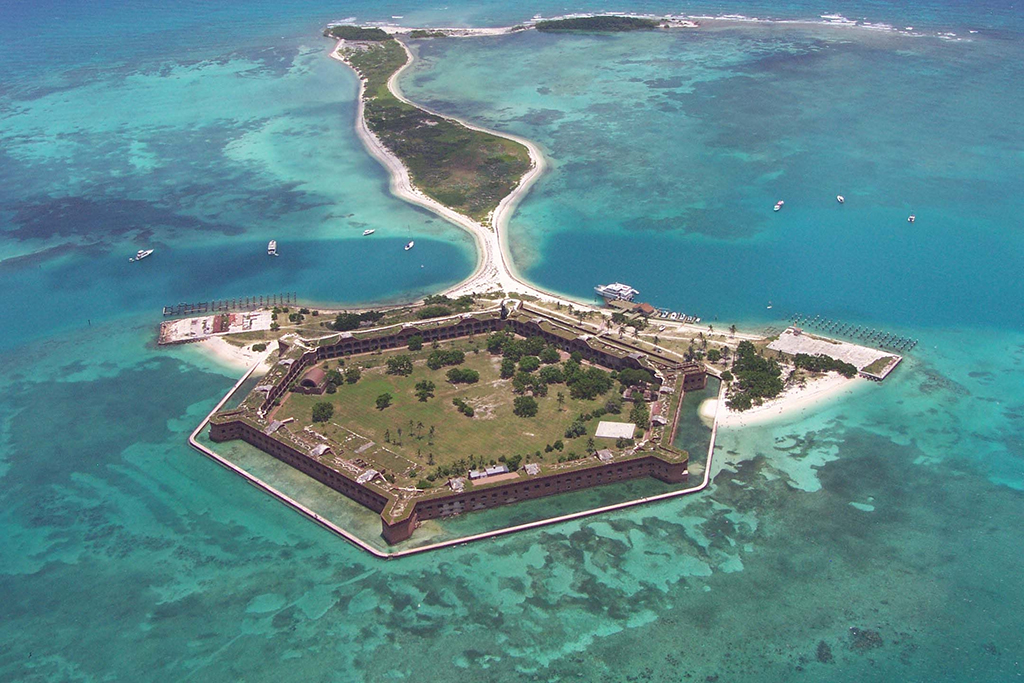
6. Dry Tortugas National Park is a little over 99 percent water. The remaining almost-one-percent consists of dry land comprised of ___ islands.
a) Five
b) Six
c) Seven
d) Eight
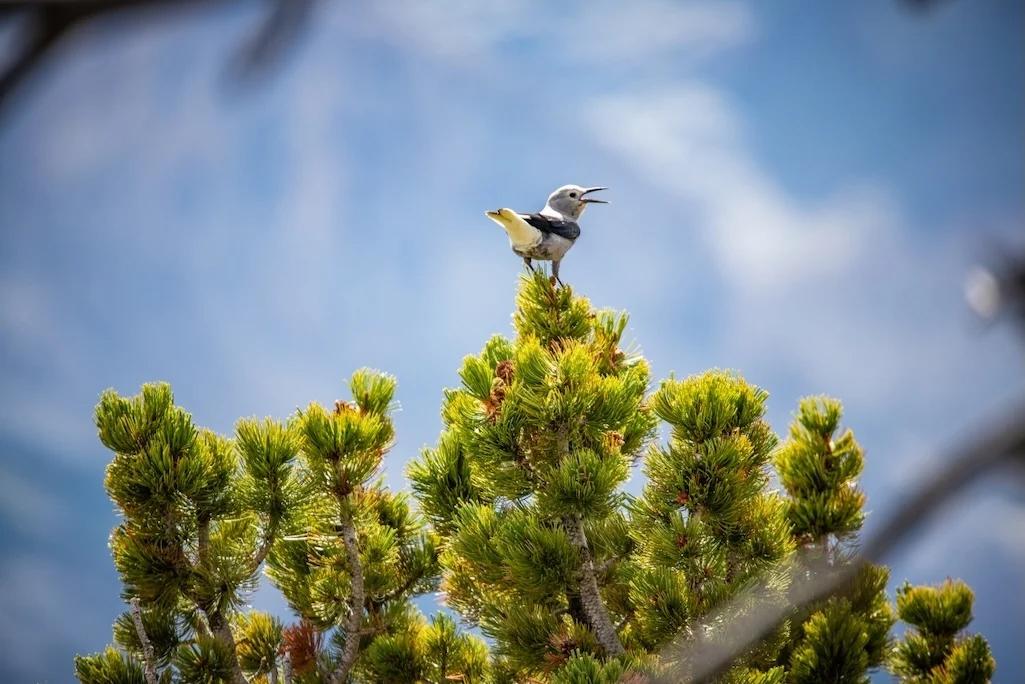
7. Visit Crater Lake, Mount Rainier, or Lassen Volcanic national parks and you might spot a Clark’s nutcracker, a raucous little bird, who loves to eat whitebark pine seeds. These members of the Corvidae family (which also includes crows, ravens, and jays) gather whitebark pine seeds and carry them to cache spots where they stash up to several thousand seeds. They retrieve the seeds to eat when they return the following spring. Clark’s nutcrackers can tuck about ___ seeds into their mouths to carry to those cache spots.
a) 75
b) 85
c) 90
d) 95
8. True or False: The caves within the National Park System are all limestone.
a) True
b) False
9. True or False: Canaveral National Seashore in Florida is the last designated national seashore in the United States.
a) True
b) False
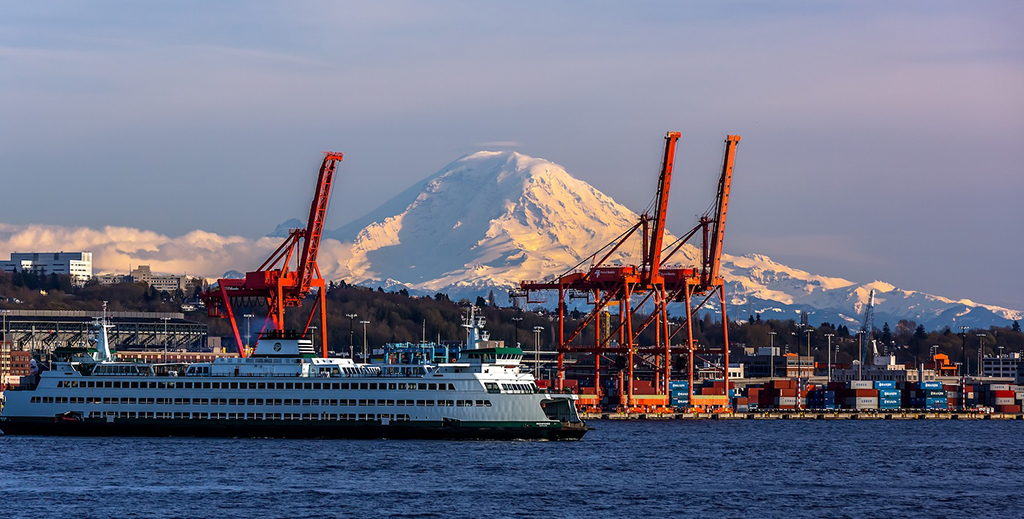
10. Mount Rainier no longer stands 14,410 feet (4,392 meters) above sea level, having lost nearly ___feet of ice from the top of Columbia Crest, historically recognized as Rainier's summit.
a) 21
b) 35
c) 47
d) 53
Trivia
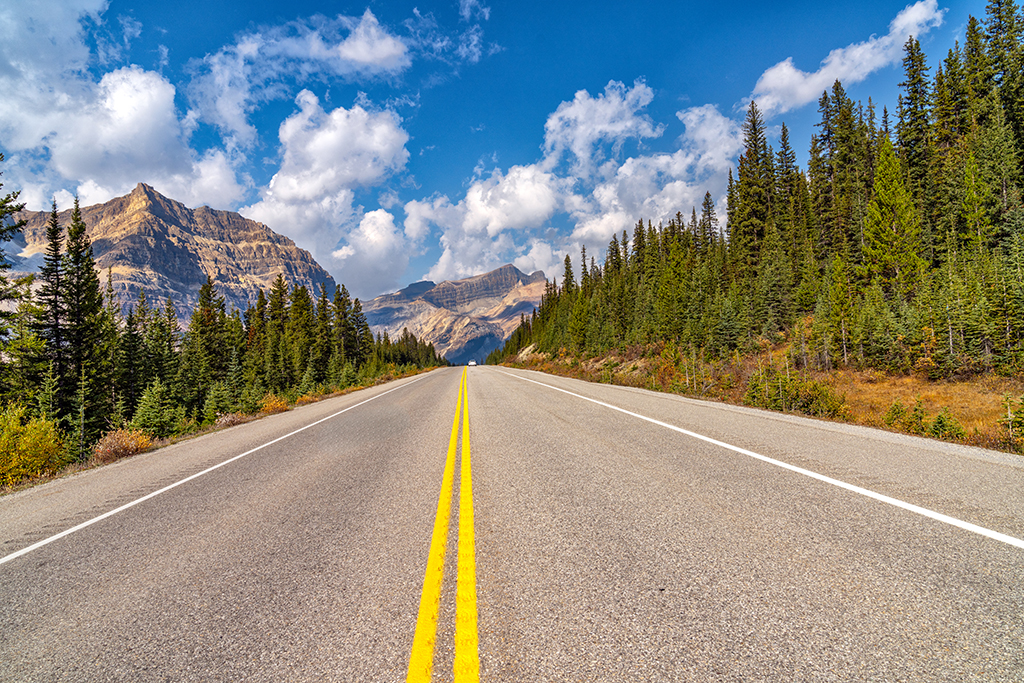
How many of you have traveled to Canada and visited Banff National Park? Populated by rugged mountains soaring into the sky, turquoise-colored glacial lakes, and glaciers you can view from the side of the Icefields Parkway that runs through the park, Banff has been featured in movies such as The Edge and Mystery, Alaska, once served as a backdrop to Canada’s $20 bill (Moraine Lake and the Valley of the Ten Peaks), and is home to the highest town in Canada (the village of Lake Louise). Designated a national park to protect the natural hot springs found by railway workers, Banff was originally named “Siding 29” then later renamed Banff National Park to honor the Scottish hometown of the Canadian Pacific Railway (CPR) president. Banff covers 6,641 square kilometers (2,564 square miles) and you can read more about this national park by heading to this page.
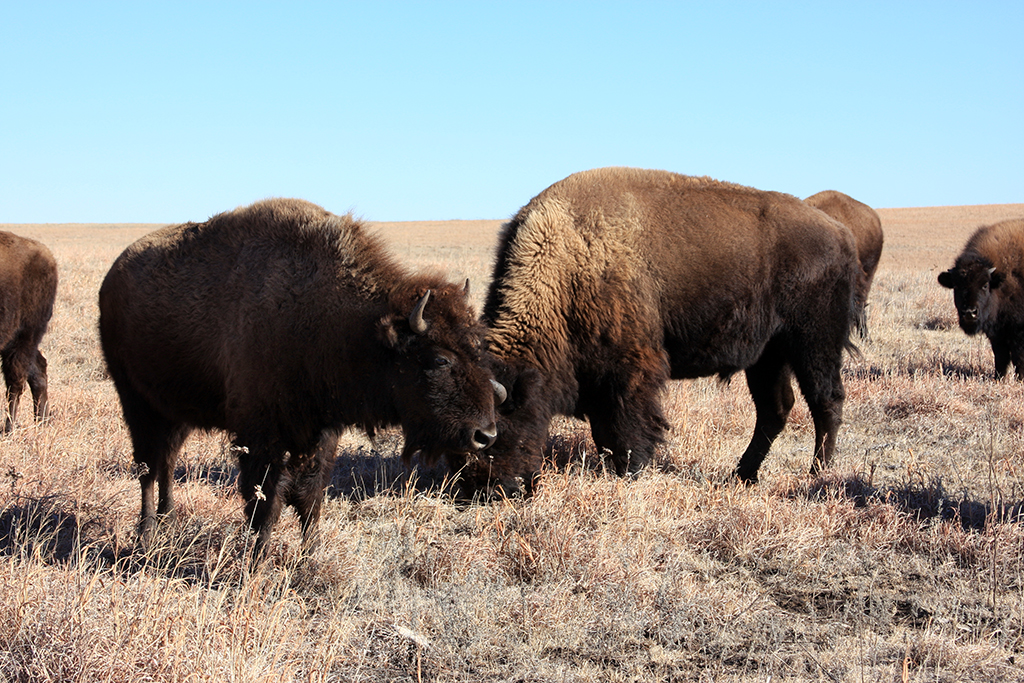
It's been estimated that prior to American colonization there were tens of millions of bison roaming North America, perhaps as many as 60 million. They traveled in huge herds that challenged present-day imagination. So great were bison numbers, and so faithful were they to their migratory routes, that countless years of millions of trampling hooves had carved “traces” as much as 50 feet (15.2 meters) wide across the landscape, paths that humans later turned into roads. Traces are not all that bison herds created (and still create). Visit Tallgrass Prairie National Preserve in Kansas, and you’ll come across small ponds right next to the road. These “ponds” are features known as “wallows,” created by bison repeatedly rolling on the ground to remove pesky insects from their backs and in the process compacting the soil enough for these wallows to hold water. You can read more about the ecological benefits of bison herds in this Traveler article.
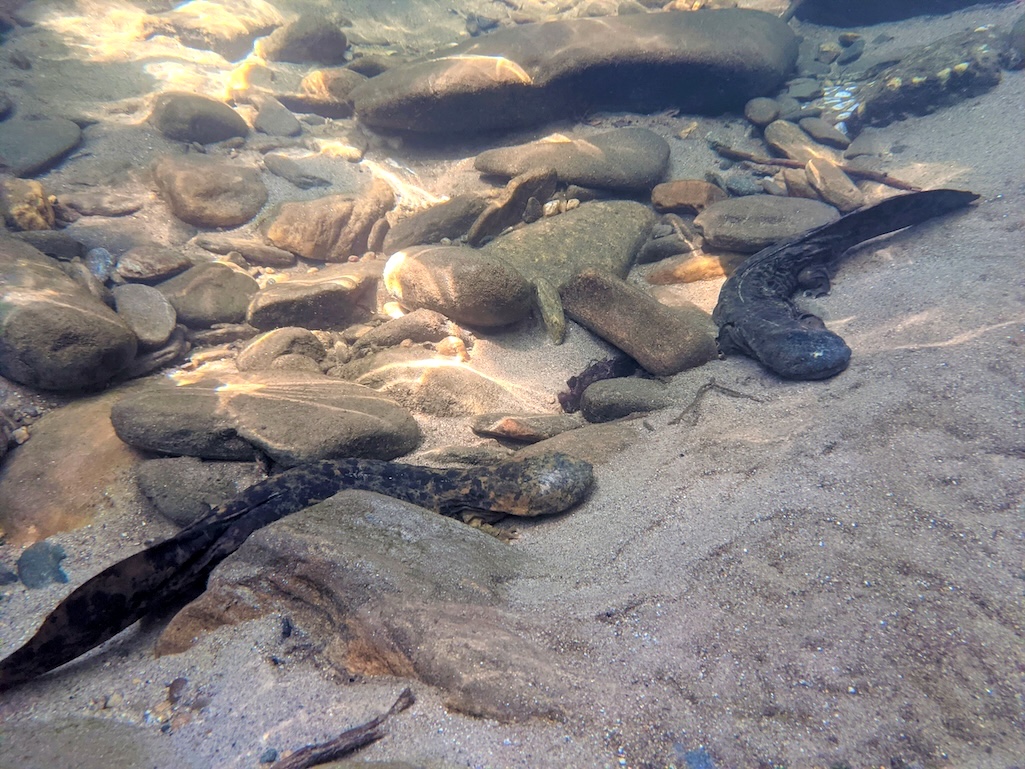
When you think of salamanders, you probably think of a very small amphibian, right? But did you know there is a salamander that measures 20 inches (~51 centimeters) in length? The Eastern hellbender, aka “snot otter,” “mud devil,” and “devil dog,” is an aquatic salamander that can reach a length of 20 inches (a little less than two footballs laid end-to-end). The Eastern hellbender breathes through its skin and feeds primarily on crayfish. It has an extraordinarily long lifespan (for a salamander) of more than 30 years in the wild and needs about six years to reach sexual maturity. This salamander’s range covers parts of 15 U.S. states and can be found in Great Smoky Mountains National Park (aka the "Salamander Capital of the World"). You can read about this unique salamander in this Traveler article Part 1 and this Traveler article Part 2.
Quiz Answers
1a
There are three types of inflorescence: racemose, mixed/special, and cymose. According to Wikipedia: “The silversword has a racemose inflorescence, specifically taking the form of a large, tall panicle or spike-like arrangement (a type of inflorescence often described as a "compound raceme" or simply a large flowering stalk) that grows from the center of the rosette.”
2c
Haleakalā National Park hosts 36 plant species protected under the Endangered Species Act, and 21 federally listed endangered species are being grown in a park nursery, from rare mint species to geraniums and lobeliads.
3a
Homestead National Historical Park lays claim to 100 acres of restored tallgrass prairie. What is a tallgrass prairie? To put it simply, it’s an ecosystem dominated by a predominance of grasses and flowers that can grow 6-10 feet (1.8-3 meters) tall and has a deep root system reaching 4-15 feet (1.2-4.6 meters) below the ground surface (although they mostly pull their water primarily from about the top 12 inches / 30.5 centimeters). You can read more about the tallgrass prairie and how it is one of the most imperiled ecosystems in this Traveler article.
4c
Ninety percent of visitors to Biscayne National Park enter by boat because 95% of the park is underwater.
5c
Biscayne National Park has documented 600 species of fish swimming beneath park waters, both temperate and tropical, ranging in size from one inch (2.5 centimeters) to 10 feet (3 meters).
6c
Dry Tortugas National Park is a little over 99 percent water. The remaining almost-one-percent is dry land comprised of seven islands: Loggerhead, Garden, Bush, Long and Hospital keys, as well as the East and Middle keys. Click here to read more fun facts about this national park.
7a
Clark’s nutcrackers can tuck about 75 seeds into their mouths and carry them to cache spots to stash for future meals. Sometimes, though, they forget where they put those seeds. As such, those seeds stashed beneath the soil may sprout into seedlings if the growing conditions are just right and a bear hasn't dug up the cache to eat the seeds for itself. You can read more about these little birds and the imperiled whitebark pine upon which they depend for food.
8b False
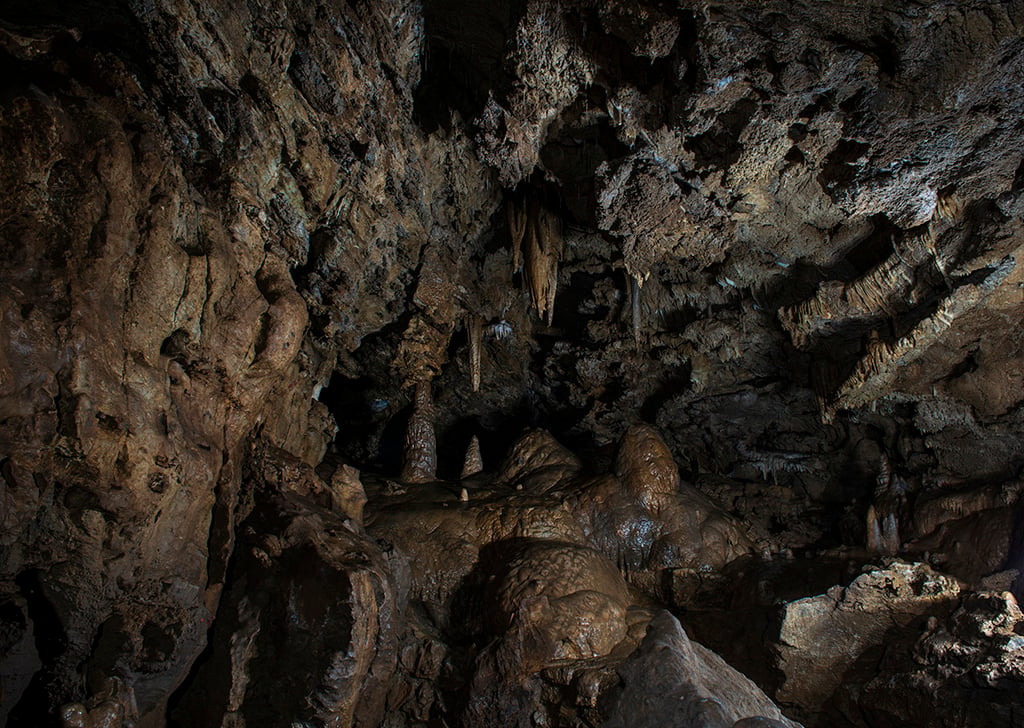
Not all the caves within the National Park System were formed from limestone. Some caves, like those found at Oregon Caves National Monument in Oregon and Sequoia National Park in California were formed from the dissolution of marble. Ok, you could argue that marble is the metamorphic version of limestone – a sedimentary rock – but in the general sense, marble and limestone are different types of rock.
9a True
Granted, you can either consider Canaveral National Seashore the last designated national seashore, or the most recent designation of this particular park unit category, depending on your view. In relation to this quiz question, however, Canaveral National Seashore is the last designated national seashore in the United States, established on January 3, 1975. You can read a Traveler article about this national seashore and its coexistence to the U.S. space program’s busiest rocket launch pads.
10a
Mount Rainier no longer stands 14,410 feet (4,392 meters) above sea level, having lost nearly 21 feet of ice from the top of Columbia Crest, historically recognized as Rainier's summit. You can read more about why and where the new summit is located by heading to this Traveler article.
Stories about:
Story Categories:
A copy of National Parks Traveler's financial statements may be obtained by sending a stamped, self-addressed envelope to: National Parks Traveler, P.O. Box 980452, Park City, Utah 84098. National Parks Traveler was formed in the state of Utah for the purpose of informing and educating about national parks and protected areas.
Residents of the following states may obtain a copy of our financial and additional information as stated below:
- Florida: A COPY OF THE OFFICIAL REGISTRATION AND FINANCIAL INFORMATION FOR NATIONAL PARKS TRAVELER, (REGISTRATION NO. CH 51659), MAY BE OBTAINED FROM THE DIVISION OF CONSUMER SERVICES BY CALLING 800-435-7352 OR VISITING THEIR WEBSITE. REGISTRATION DOES NOT IMPLY ENDORSEMENT, APPROVAL, OR RECOMMENDATION BY THE STATE.
- Georgia: A full and fair description of the programs and financial statement summary of National Parks Traveler is available upon request at the office and phone number indicated above.
- Maryland: Documents and information submitted under the Maryland Solicitations Act are also available, for the cost of postage and copies, from the Secretary of State, State House, Annapolis, MD 21401 (410-974-5534).
- North Carolina: Financial information about this organization and a copy of its license are available from the State Solicitation Licensing Branch at 888-830-4989 or 919-807-2214. The license is not an endorsement by the State.
- Pennsylvania: The official registration and financial information of National Parks Traveler may be obtained from the Pennsylvania Department of State by calling 800-732-0999. Registration does not imply endorsement.
- Virginia: Financial statements are available from the Virginia Department of Agriculture and Consumer Services, 102 Governor Street, Richmond, Virginia 23219.
- Washington: National Parks Traveler is registered with Washington State’s Charities Program as required by law and additional information is available by calling 800-332-4483 or visiting www.sos.wa.gov/charities, or on file at Charities Division, Office of the Secretary of State, State of Washington, Olympia, WA 98504.


National parks and their natural resources belong to you. The National Parks Traveler works to ensure you know how these essential places are being cared for.
Sign Up For Our Weekly Newsletter
Unsubscribe at any time.
INN Member

The easiest way to explore RV-friendly National Park campgrounds.

Here’s the definitive guide to National Park System campgrounds where RVers can park their rigs.
Our app is packed with RVing- specific details on more than 250 campgrounds in more than 70 national parks.
You’ll also find stories about RVing in the parks, tips helpful if you’ve just recently become an RVer, and useful planning suggestions.

