
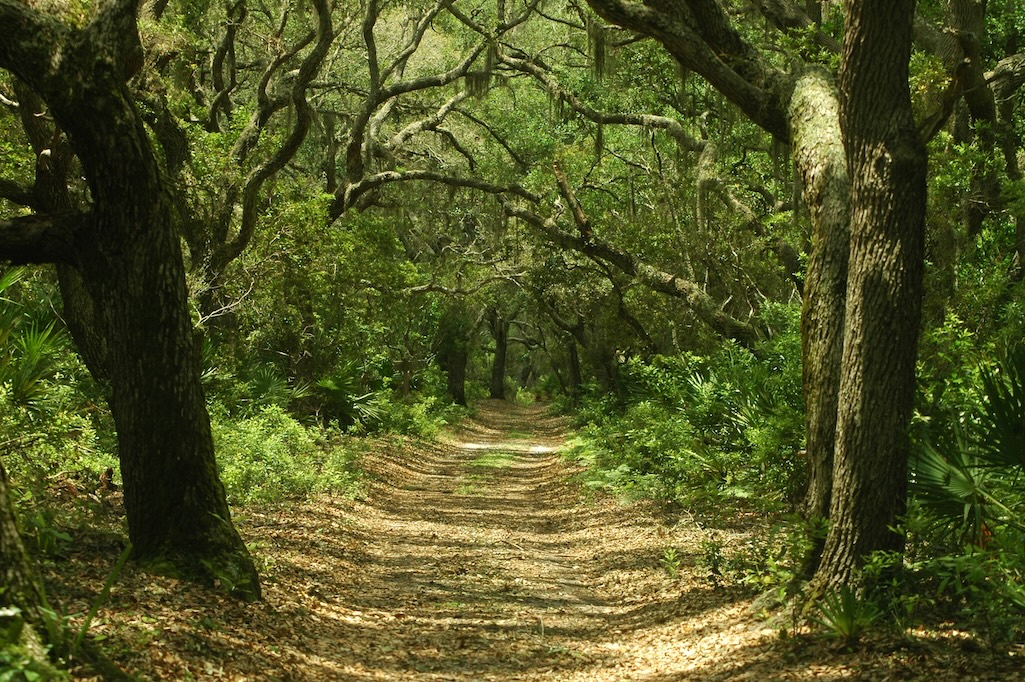
When Congress held hearings in the 1970s to establish Cumberland Island National Seashore, it received much public comment about restricting visitation to the seashore, and the National Park Service eventually settled on a daily cap of roughly 300. Now, however, the agency is proposing to more than double that number and expand access to the largest undeveloped barrier island on the Eastern seaboard.
In proposing to allow more than 700 visitors a day to the island that stands 7 nautical miles from Saint Marys, Georgia, the Park Service said it is being guided by the EXPLORE Act that President Donald Trump signed into law last year. That legislation, while applauded by many in the outdoor recreation community, also was criticized by many who viewed it as encouraging consumption of nature and wilderness, rather than conservation.
Some of that criticism seems valid in reviewing the draft Visitor Use Management Plan (VUMP) for Cumberland Island, although in that document the Park Service states that "the plan is needed to reduce visitor impacts on sensitive natural resources."
Among those resources is the Cumberland Island Wilderness, a tract of more than 9,900 acres of undeveloped beaches, maritime forests, and saltwater marshes. The seashore also claims another 10,710 acres of potential wilderness.
Cumberland Island Superintendent Melissa Trenchik declined to discuss the VUMP and its potential impacts on the seashore in general and its wilderness and potential wilderness areas specifically, saying she was not granting interviews at this time.
While both The Wilderness Act of 1964 and Park Service policies require a wilderness management plan to be developed for Cumberland Island, that has never been done for reasons unexplained.
Under the draft VUMP, the Park Service would allow bike and e-bike use of administrative roads, including the seashore's Main Road that runs through the official wilderness. That allowance, maintains Wild Cumberland, "contrasts with the purpose and design of the Wilderness Act; however, opening administrative roads to bikes and e-bikes in designated Wilderness is an explicit violation of the Wilderness Act and a deliberate act to undermine Wilderness protections."
"The proposed plan appears to include opening all NPS administrative roads and additional trails to bikes and e-bikes," added Wild Cumberland, which advocates for the seashore's ecology and wilderness.
Additionally, the group maintains that the Park Service wants to allow "motorized boat access to Wilderness and Potential Wilderness campsites (Brick Hill, Toonahowie)." And while Wild Cumberland acknowledges that the seashore's public roads "are open to bicycles and e-bikes ... no environmental analysis has been provided on e-bike use within or adjacent to the Wilderness on Cumberland Island."
Cumberland Island offers an unusual mix of cultural, historical, and natural resource features. The Dungeness Historic Area interprets the ruins of a mansion built in 1884 for Thomas Carnegie (the younger brother and business partner of Andrew Carnegie), his wife Lucy, and their 9 children. The 22,000-square-foot Plum Orchard Mansion was built in 1898 as a wedding gift for George Lauder Carnegie and Margaret Thaw and is open for tours.
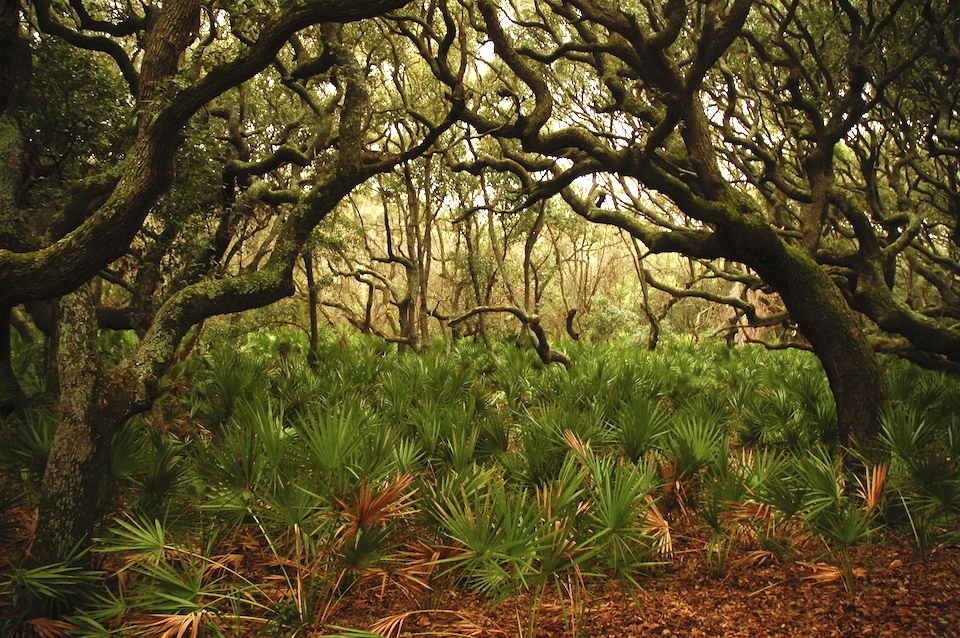
There are acres and acres of maritime forest that harbor live oaks draped with Spanish moss that rise over an understory of Saw palmetto, hollies, grapevine, and Virginia creeper, while white-tailed deer, armadillos, feral horses, and wild hogs roam the island. There are roughly 18 miles of beach that attract loggerhead turtles for nesting; on the northern end of the island stands the First African Baptist Church, which was built in 1893.
The Park Service's draft VUMP also calls for increasing camping capacity from 220 per night to more than 300; adding two more wilderness campsites while closing another; building a retail facility selling health, safety, and essential camping items and merchandise; offering motorized boat tours, and; expanding a ferry service capable to carrying 100 passengers a day to the Plum Orchard dock.
"The plan seeks to maximize visitor numbers and recreation at the expense of the Cumberland Island Wilderness and its wild inhabitants," argues the advocacy group Wilderness Watch.
"In 1982, Congress designated much of the Island’s northern two-thirds as the Cumberland Island Wilderness, or as potential Wilderness in areas where private existing rights would eventually expire," said the group in urging the public to speak up before the comment period ends February 21. "Already quite a treasure, Cumberland Island was on the path to wild restoration and becoming one of the premier Wildernesses in the National Wilderness Preservation System. Tragically, the National Park Service (NPS) has failed to keep the promise of a wild Cumberland Island."
The Park Service in its draft plan acknowledges there could be both beneficial and adverse impacts to the seashore and visitor experience under its preferred alternative.
"Visitors would likely experience beneficial impacts by having more flexibility to see the island and access different areas of the park unit. However, there may be short-term adverse impacts on visitor experience as visitors adapt to potential changes in the service," the agency noted, adding that, "[V]isitors seeking solitude may encounter more people and be more frequently disrupted by others if more visitors are able to access remote areas by bicycles or e-bikes. While more encounters may occur in some areas of the park, the number of encounters with e-bikes would be mitigated through the bicycle management strategy that limits the number of personal bikes transported on the ferry and rented through the on-island concession."
More than two decades ago, in 2004, Lary Dilsaver recognized the growing conflict over visitor access and use at Cumberland Island.
"The history of Cumberland Island National Seashore is riddled with controversy and punctuated by failed attempts to seek compromise and amity. The future no doubt will bring more conflict and almost certainly congressional or court action to settle various disputes," Dilsaver a geography professor at the University of South Alabama, wrote in Cumberland Island National Seashore: A History of Conservation Conflict. "Perhaps when outside forces have solved these issues, all the combatants and the Park Service can collectively enjoy the serenity and beauty of this special island."
Stories about:
Story Categories:
A copy of National Parks Traveler's financial statements may be obtained by sending a stamped, self-addressed envelope to: National Parks Traveler, P.O. Box 980452, Park City, Utah 84098. National Parks Traveler was formed in the state of Utah for the purpose of informing and educating about national parks and protected areas.
Residents of the following states may obtain a copy of our financial and additional information as stated below:
- Florida: A COPY OF THE OFFICIAL REGISTRATION AND FINANCIAL INFORMATION FOR NATIONAL PARKS TRAVELER, (REGISTRATION NO. CH 51659), MAY BE OBTAINED FROM THE DIVISION OF CONSUMER SERVICES BY CALLING 800-435-7352 OR VISITING THEIR WEBSITE. REGISTRATION DOES NOT IMPLY ENDORSEMENT, APPROVAL, OR RECOMMENDATION BY THE STATE.
- Georgia: A full and fair description of the programs and financial statement summary of National Parks Traveler is available upon request at the office and phone number indicated above.
- Maryland: Documents and information submitted under the Maryland Solicitations Act are also available, for the cost of postage and copies, from the Secretary of State, State House, Annapolis, MD 21401 (410-974-5534).
- North Carolina: Financial information about this organization and a copy of its license are available from the State Solicitation Licensing Branch at 888-830-4989 or 919-807-2214. The license is not an endorsement by the State.
- Pennsylvania: The official registration and financial information of National Parks Traveler may be obtained from the Pennsylvania Department of State by calling 800-732-0999. Registration does not imply endorsement.
- Virginia: Financial statements are available from the Virginia Department of Agriculture and Consumer Services, 102 Governor Street, Richmond, Virginia 23219.
- Washington: National Parks Traveler is registered with Washington State’s Charities Program as required by law and additional information is available by calling 800-332-4483 or visiting www.sos.wa.gov/charities, or on file at Charities Division, Office of the Secretary of State, State of Washington, Olympia, WA 98504.


National parks and their natural resources belong to you. The National Parks Traveler works to ensure you know how these essential places are being cared for.
Sign Up For Our Weekly Newsletter
Unsubscribe at any time.
INN Member

The easiest way to explore RV-friendly National Park campgrounds.

Here’s the definitive guide to National Park System campgrounds where RVers can park their rigs.
Our app is packed with RVing- specific details on more than 250 campgrounds in more than 70 national parks.
You’ll also find stories about RVing in the parks, tips helpful if you’ve just recently become an RVer, and useful planning suggestions.

