
Op-Ed | Anti-Ranch Pressure Groups Misrepresent Facts At Point Reyes
By Sarah Rolph
George Wuerthner (Op-Ed | National Park Service Capitulated To Point Reyes Ranchers) strains credulity when he claims the National Park Service capitulated to Point Reyes ranchers; in fact, the NPS has just capitulated to him.
In a last-minute move that appears to be a violation of National Environmental Policy Act, NPS allowed Wuerthner’s anti-ranch pressure group to influence the content of the Final Eenvironmental Impact Statement after it had been finalized. The FEIS requires a 30-day public comment period before the Record of Decision is issued. That period had come and gone, yet before the RoD was issued, the document changed again, without any input from the public or from the Point Reyes agricultural community—but with private input from the anti-ranch lobbyists. That input has supposedly made the document more “balanced.” Apparently Wuerthner is annoyed that NPS didn’t capitulate enough—to him.
These anti-ranch groups habitually misrepresent the history of Point Reyes National Seashore, the ecological facts about Point Reyes, and the legal status of agriculture within the seashore. They pretend to have special knowledge of the situation when they show no understanding of even the most fundamental facts. To take just one example, it’s widely understood that grazing is necessary at Point Reyes to maintain open grasslands and prevent catastrophic wildfires. The EIS is clear on this point. The anti-ranch groups conveniently ignore this important issue.
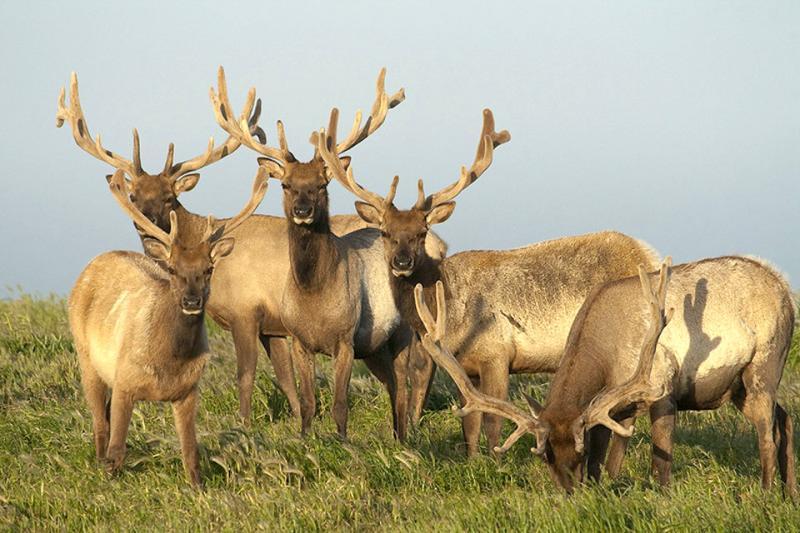
Lately these pressure groups have been working to create the impression there is a sudden elk crisis in Point Reyes, when the truth is that the elk die-offs are the direct and expected result of the seashore’s hands-off elk management policy. As California Department of Fish and Wildlife, the state agency responsible for elk management in California, has noted, Point Reyes National Seashore is not big enough for a free-ranging herd of elk. There is no longer a top predator population at Point Reyes that can effectively control elk numbers. The result is an over-population of elk.
This was not just predictable, it was predicted—in the elk management plan that both the seashore and the activists ignore. The passive-management experiment failed: the elk management plan should have been updated years ago.
One of the professionally-spun lies that has gotten the most traction is the notion that the ranchers want to eliminate the elk. That is not true. All the ranchers want is for the elk to stop consuming the food that the ranchers pay for—including their organic hay—and to stop harming the animals they tend. All that is needed is a new fence to keep the Limantour herd in its wilderness, and some common-sense elk-management efforts in keeping with best practices for a re-introduced species. Birth control would be a good option. The only reason the activists emphasize lethal culling is to upset people as part of their emotional anti-ranch campaign.
If readers are interested in the history of Point Reyes, I highly recommend the definitive book on the topic, The Paradox of Preservation: Wilderness and Working Landscapes at Point Reyes by Dr. Laura Watt: https://www.ucpress.edu/book/9780520277083/the-paradox-of-preservation
For readers interested in a factual history of the re-introduction of elk in Point Reyes, and some background on the tule elk population in the rest of California, I recommend Dr. Watt’s published paper on the topic, “The Continuously Managed Wild: Tule Elk at Point Reyes National Seashore,” which is available for free online: https://www.researchgate.net/publication/286302438_The_Continuously_Managed_Wild_Tule_Elk_at_Point_Reyes_National_Seashore
Sarah Rolph is a longtime business writer and research analyst now working in narrative non-fiction. She is writing a book about the taking of Drakes Bay Oyster Farm.
Stories about:
Story Categories:
A copy of National Parks Traveler's financial statements may be obtained by sending a stamped, self-addressed envelope to: National Parks Traveler, P.O. Box 980452, Park City, Utah 84098. National Parks Traveler was formed in the state of Utah for the purpose of informing and educating about national parks and protected areas.
Residents of the following states may obtain a copy of our financial and additional information as stated below:
- Florida: A COPY OF THE OFFICIAL REGISTRATION AND FINANCIAL INFORMATION FOR NATIONAL PARKS TRAVELER, (REGISTRATION NO. CH 51659), MAY BE OBTAINED FROM THE DIVISION OF CONSUMER SERVICES BY CALLING 800-435-7352 OR VISITING THEIR WEBSITE. REGISTRATION DOES NOT IMPLY ENDORSEMENT, APPROVAL, OR RECOMMENDATION BY THE STATE.
- Georgia: A full and fair description of the programs and financial statement summary of National Parks Traveler is available upon request at the office and phone number indicated above.
- Maryland: Documents and information submitted under the Maryland Solicitations Act are also available, for the cost of postage and copies, from the Secretary of State, State House, Annapolis, MD 21401 (410-974-5534).
- North Carolina: Financial information about this organization and a copy of its license are available from the State Solicitation Licensing Branch at 888-830-4989 or 919-807-2214. The license is not an endorsement by the State.
- Pennsylvania: The official registration and financial information of National Parks Traveler may be obtained from the Pennsylvania Department of State by calling 800-732-0999. Registration does not imply endorsement.
- Virginia: Financial statements are available from the Virginia Department of Agriculture and Consumer Services, 102 Governor Street, Richmond, Virginia 23219.
- Washington: National Parks Traveler is registered with Washington State’s Charities Program as required by law and additional information is available by calling 800-332-4483 or visiting www.sos.wa.gov/charities, or on file at Charities Division, Office of the Secretary of State, State of Washington, Olympia, WA 98504.


National parks and their natural resources belong to you. The National Parks Traveler works to ensure you know how these essential places are being cared for.
Sign Up For Our Weekly Newsletter
Unsubscribe at any time.
INN Member

The easiest way to explore RV-friendly National Park campgrounds.

Here’s the definitive guide to National Park System campgrounds where RVers can park their rigs.
Our app is packed with RVing- specific details on more than 250 campgrounds in more than 70 national parks.
You’ll also find stories about RVing in the parks, tips helpful if you’ve just recently become an RVer, and useful planning suggestions.


Comments
Another classic disinformation piece from anti-public lands operative Sarah Rolph.
Cattle grazing at Point Reyes does not, and will not ever prevent "catastrophic wildfires." Aside from the fact that wildlfire is a natural part of the Point Reyes ecosystem, there is no evidence grazing has any effect in reducing fuels. It is the fire-dependent pine forests at Point Reyes that burn, not the grasslands.
Rolph flips reality on its head by claiming that conservation advocates had special access to alter the management plan. In fact, it was the ranchers who had special access, including dozens of private meetings with park staff, ability to provide hidden comments on regulatory agency enviromental reviews, and they were rewarded with a plan that is the ranchers' personal wish list for maximizing their private profits and activities on the public's land.
More fake news about elk. Point Reyes is in fact the one place that could support a larger population of tule elk than anywhere else in the world, if only the ranchers hadn't forced the Park Service to fence them in, haze them out of prime grasslands, and shoot them so that cows can eat the publicly subsidized grass. No, the state wildlife agency did not say that that Point Reyes is not big enough for a free-ranging herd of elk. Complete fabrication. In fact, the park supports two free-ranging elk herds, and could support more if the welfare cows were removed. There is no overpopulation of elk. The herds are way under the carrying capacity, as determined by the park's elk management plan. There is no ecological reason for elk population control - the only reason is to fatten private ranchers' wallets. The massvie elk die offs that have occurred and are occuring are because of anti-elk, pro-cow policy, and a fence that artificially traps the Tomales elk herd on a small peninsula without adequate water and forage. That fence was put there for the private ranchers.
The ranchers do want to eliminate the elk - from our public lands! Their formal public comments on the plan called for removal of elk from the park, extermination, and fencing to keep elk from being able to move.
More propaganda and misinformation from an entitled interest group that enjoys subsidized grazing leases, rent, and infrastructure paid for by the taxpayers, so they can trash our National Park and kill our wildlife.
You forgot to mention that the elk were at Point Reyes for hundreds of thousands of years before the cattle and that ranchers and market hunters extirpated the elk in the late 1800s for the reasons you mention above (the ranchers didn't want the elk eating forage that belonged to the ranchers). You forgot to mention that on every other National Park unit the wild animals come first and if there is room then perhaps a few cattle are allowed. Not at Point Reyes where the cattle come first. Shame.
Ah, more lipstick on the pig... If you smear enough lipstick on a pig and smear it on thick enough, it can make it harder for some folks to recognize that the pig is still down under there. But, the scent of the pen and the slop the pig the feeds on will eventually still give it away.
You can wave your arms around in the air, point this way and that, yelling "squirrel" the whole time. You can show folks some organic hay and try to disguise the odor with some nice ripe cheese. You can try to shine the pig up by smearing it with nice fresh butter. You can even go behind the scenes and dress up the pig in some kind of magic underwear to try to shield it from the truth.
You can do everything you can think up to try to distract folks from recognizing that the pig is still there. But ultimately, none of those efforts will ever make the pig anything other than pork, nothing more than just greased up pork. And, excessively greasy pork eventually just tends to be hard to digest.
Speaking of things that are hard to swallow, this situation at Point Reyes has pretty much always been an indigestible national scandal. The National Park Service should really be ashamed of being a party to it. Then again, the National Park Service should be ashamed of a lot of things at this point.
I wouldn't expect Jeff Miller to agree with my perspective, since he is a staff member at the Center for Biological Diversity, one of the anti-ranch pressure groups working against agriculture in Point Reyes.
Regarding the issue of wildfires, here is what the Seashore says about that in the ranch EIS:
“Over the long term, however, the cessation of ranching may not result in overall beneficial impacts, especially in grasslands, which constitute 48% of the planning area. Rates of shrub encroachment into grasslands, invasive perennial grasses, vegetative fuels (both herbaceous and woody), and the consequent risk of large, intense wildfires are all likely to increase, resulting in adverse impacts on vegetation."
Regarding the assertion that the ranchers want to eliminate the elk, I challenge Miller to provide some evidence. None of the letters I read from ranchers, or from the Point Reyes Seashore Ranchers Association, resemble Miller's characterization.
There is an excelloent -- and amazingly polite -- letter from the Spaletta family about the elk depredations on their ranch, which is ground zero for the so-called Drakes Beach Herd. Even the Spalettas say: "Since the Drakes Beach Elk Herd first appeared, we have never requested the NPS to cull the elk. We have always requested the elk to be relocated to protect not only our farm, but our neighbors. The fences are necessary to keep the cattle & public safe; they help prevent erosion and encourage a healthy ecosystem."
Whoa, look at that! It's a squirrel and what looks like even more lipstick. Gosh, I don't know about the rest of you folks; but, I got plum distracted there. Well, so, where was I? Oh yeah, the waste, fraud, and abuse associated with the Point Reyes debacle...
Sara Rolph, the Park service is legally free, under NEPA, to make modifications between the FEIS and the ROD, just the same way they are free to ignore the overwhelming public opposition to their “preferred” plan, which is exactly what they did. That you think the “Point Reyes agricultural community” deserves special consideration as to land management of a national park, which belongs to the public, shows your strong bias. The truth is the plan caters to ranchers. Here are things they have asked for that they got: diversified livestock, row crops, bed and breakfasts and other retail, mobile slaughterhouses, 20-year leases, a more permissive succession policy…the Ranchers Association apparently even picked the superintendent, naming Cuyahoga Valley National Park as an example of how they’d like to see things run, leading to Superintendent Kenkel being moved from Ohio to CA. The ranchers even have the park insisting to journalists that they say Point Reyes National Seashore, rather than calling it a “national park,” so the ranchers can continue to pretend there is some legal or policy difference, which is false.
Regarding your accusation of George and others misrepresenting the facts, other than your claim about the ranchers’ attitude towards the elk, which is not a meaningful topic for debate, you give exactly one example: “it’s widely understood that grazing is necessary at Point Reyes to maintain open grasslands and prevent catastrophic wildfires.” If you are implying the grazing necessarily be by domestic cattle, then this is false. If you admit that it could be native animals, such as elk and pronghorn, then it is irrelevant to the debate. The elk preserve, free from cattle since 1973, is not a fire hazard. Native vegetation, such as would be in Point Reyes if not for the heavily impacted ranches and dairies, are deeper rooted and more drought resistant than the shallow-rooted, invasive grasses encouraged by the ranches.
Since you’re unhappy about how it turned out, why don’t you ask the “Point Reyes agricultural community” to consider another compromise: get your dying and polluting industry out of our national park, and we’ll let you keep the money you got for selling your land to the people decades ago, all the profit you made in the interim on taxpayer subsidies, all the property you bought elsewhere in Marin with that money, and the many millions of additional dollars you got from your MALT buddies and extended family, also at taxpayer expense. Deal?
https://www.thewildlifenews.com/2021/03/18/point-reyes-national-somethin...
I wouldn't expect Kenneth Bouley to share my perspective, since he, too, works with one of the anti-ranch pressure groups working against agriculture at Point Reyes. In his case, it's RRI. He wrote the report about the public comments that RRI issued, which was created to bolster the false claim that there is "overwheloming public opposition" to ranching at Point Reyes. That claim is absurd: most of the anti-ranch comments are the direct result of campaigns by these anti-ranch pressure groups. As I have reported: https://www.nationalparkstraveler.org/2016/08/op-ed-anti-ranch-activists...
Kenneth doesn't seem to be up on the recent changes to the EIS; row crops have been eliminated.
Regarding grazing, there is a huge difference between grazing by wildlife and managed grazing. Elk certainly graze, but they eat whatever they want, and they eat it down to the nub. Managed grazing with cattle allows the stewards of the land to direct the grazing, managing which grasses are eaten where, and for how long. That's why the EIS includes that part that I quoted, about the potential cessation of ranching bringing the risk of large intense wildfires. If grazing elk were sufficient to prevent this, I'm sure the Seashore would say that in the EIS. But they don't: the EIS explains that if ranching ceased, mitigation would be required in the form of contracted managed grazing or mowing machines. It would certainly be ironic to kick out the historic ranches only to have to hire someone else's cattle, which I guess would be brought in on trucks. And I think it would be terrible to have the noise of mowing in Point Reyes.
Sometimes I wonder if the anti-ranch crowd has really thought these things through.
Sarah, what you call “anti-ranch pressure groups” are actually just grass-roots environmental groups, which naturally oppose polluting industries in national parks. People join such groups because they represent their values. For you to describe the tens of thousands of people who spoke out against alternative B as “gullible,” is self-serving and condescending. It’s as if your problem is the public commented during the public comment period. And I guess the ranchers’ association was too principled to try to fool anyone into speaking out on their behalf, since hardly anyone did. No one besides the sliver of vested-interest people that already agree with you take this seriously.
About grazing, the EIS says in fact that elk foraging would help somewhat, and it also says removing cattle *may* (not will) increase fire danger in the former pastoral zone. As long as you are willing to cite the EIS with confidence, then you will have to agree that removing cattle would benefit the air, water, soil, and wildlife, since the EIS is crystal clear on all this. Speaking of thinking things through, you also might give some thought to the 24,000 metric tons of greenhouse gasses produced by cattle in the park, and what that does to the climate, and where these catastrophic fires come from.
I agree with you that it is terrible to have the sound of mowing in the park, as currently happens periodically in the silage fields. I similarly dislike the water and hay trucks coming in going, and especially the manure spreading trucks distributing a stench along with the noise. I don’t relish the sound of gunshots, either, but I understand the park has bought silencers.
Sarah Rolph is hilarious! Her claim that grazing by cattle is superior to that by elk is preposterous. All one has to do is see, with their own eyes, the damage the cows do, and compare it to the elk preserve. Elk do not eat plants down to the nub, they wander when not penned in. It's the cattle ranches that are bare, dead ground with little plant life beyond invasive thistles and weeds. Not surprising when you compare both the number and size of all the cows to the elk.
And since when are citizens that want their park back from the ranchers who reneged on the terms of the land sale "pressure groups"? Jared Huffman likes to tell the same lie that the overwhelming public response against continued ranching in our seashore was the result of some organized campaiugn. Not true. The comments to the EIS were from individual people who took it upon themselves to respond to the Park Service's call for comments. When the California Coastal Commission reviewed the EIS and called for comments, the extreme majority of the approximately 50,000 comments again stated opposition to continued ranching. There were some group letters submitted, one signed by over 100 environmental organizations, but why would someone who signed in support of another position letter not have their opinion count? Probably because someone has a financial interest in doing so.
The adopted management plan does indeed allow for row crops, but with the slight proviso that they have to go through another layer of review before being approved.
Ms. Rolph likes to cite Dr. Laura Watt as an expert on the tule elk. Here in the North Bay, she's know as something of a shill for the animal agricultural industry.
Kenneth,
There is nothing grass-roots about Western Watersheds, RRI, or the Center for Biological Diversity. These are advocacy groups that work to change public policy, mostly using legal challenges. The mission is top-down. I'm sure some of the members of these groups understand and approve of the agendas being pursued, but many of them do not. They believe what they are told: that these groups are helping the environment, that cows are a threat, that elk are being slaughtered in Point Reyes as we speak; they even believed that an oyster farm was bad for the environment, when googling "oyster farm environment" yields hundreds of stories about the ecological benefits of oysters. I have read thousands of their comments, and believe me, many of these people are extremely gullible. They say things like this:
"The idea of removing the Elk and replacing them with cattle is horrible."
"It is such a shame to see the native species being slaughtered to make way for domestic livestock."
"I was appalled to read that you plan to slaughter Tule Elk in Point Reyes National Seashore. As you know, this is the only place they live, whereas ranchers have many places they can use for grazing."
(In fact, there are roughly 5,700 tule elk in the state, according to CA Fish & Wildlife.)
Those are all direct quotes from public comments on the ranch DEIS. There are thousands of comments like that. They are obviously the result of outreach campaigns from these groups. They echo their talking points, use the words from their press releases, and show up in the public comments right after their campaigns drop.
The orchestrated comments show no awareness of the NEPA process on which these people are supposedly commenting--because the anti-ranch mailings don't mention the process, and don't provide a link to the document about which the comment will be registered. These group members probably have no idea that their comments are in an official government NEPA database.
The demographics don't even make sense. I'm guessing you didn't follow the link I left yesterday to my story about the anti-ranch comment orchestration process; here's a snippet on the demographics of the highly suspicious anti-ranch scoping comments:
"When you think about it, there’s very little chance that 3,000 people had something substantive to say about the scoping phase of a narrowly-focused planning effort in Point Reyes, California. The notion that these are all sincere public comments seems even more unlikely when one learns that 75 percent of these comments came from outside the state. And 13 percent were international! I guess you go to war with the mailing list you’ve got."
The members of these groups are likely well-intentioned. I think it is disgraceful that they are lied to and used as fodder in a political game they know nothing about.
Regarding the EIS, I definitely did not mean to create the impression that I think it's a worthwhile document. It is a fabric of lies, and stacks the deck against the ranchers. I have published quite a bit about this:
https://www.ptreyeslight.com/article/eight-astonishing-things-you-might-...
https://www.marinij.com/2019/09/20/marin-voice-consider-the-benefits-of-...
https://www.nationalparkstraveler.org/2019/09/op-ed-support-working-land...
My point in citing the document was this: if even the EIS, in its analysis of the potential cessation of ranching, acknowledges that it would be a bad idea because of the risk of major, intense wildfires, it's likely true. You can see in the passage I cited that they are trying to minimize it, but the wildfire threat is a plain fact.
Sarah, I am very familiar with these groups. CBD alone has 1.7 million supporting members. And who said grass roots organizations don’t try to change public policy?
I understand you are repeating your position that thousands of your fellow citizens are gullible, which is not very convincing, especially in context coming from someone so dedicated to a dying and polluting industry as yourself.
Let’s look at your list of alleged mistruths:
“That these groups are helping the environment.” Absolutely, 100% true. More so if they succeed in ridding our national park of this subsidized blight.
“That cows are a threat.” Cows are a threat. “Cut methane emissions to avert global temperature rise, UN-backed study urges.” https://news.un.org/en/story/2021/05/1091402
“That elk are being slaughtered in Point Reyes as we speak.” I suppose it’s the “as we speak” part you object to. Fair point, although they are dying of starvation in large numbers behand the ranchers’ elk fence.” But of course, declared plan would result in the culling of scores of elk. (To be more specific, it would have at the time of the comment period; by now, so many have died miserable deaths as to dip below the now-increased arbitrary management number of 140. Regardless, number 141 thru x is to be killed annually.
“They even believed that an oyster farm was bad for the environment…” Absolutely true. “…when googling "oyster farm environment" yields hundreds of stories about the ecological benefits of oysters.” The internet can be used to support all kinds of claims. But the multimillion-dollar taxpayer funded clean-up, including removing tons of plastic and toxic pressure treated lumber from sensitive habitat, contradicts you.
I have read as many or perhaps more of “their” comments as you, and I saw consistently informed, passionate, and outraged expressions.
I read your article and I have read you before on this topic. Here is another concrete example of your failed attempts to dismiss the public’s sentiment regarding Point Reyes: pointing to the geographically dispersed demographics as not making sense indicates that you fail to take into account that PRNS is a *national* park and that the climate and extinction crises are global. It doesn’t *matter* where commenters live – they have every right to express themselves and not be insulted by industry mouthpieces. Calling it a “narrowly-focused planning effort” is a deflection. How national parks are managed matters, and is the business of the public, not the industries trying to exploit them.
Regarding your last summation of the EIS, it does not say that the cessation of ranching is a bad idea. You may have misspoken; that is untrue. It says, in fact, it would be a GOOD idea for the air, water, soil, vegetation (mostly, this is mixed), and wildlife. It also says wildlife danger, if not mitigated, *might* go up. I’m glad you admit you don’t give the EIS any credit (“a fabric of lies”.) I suggest then, that you stop cherry picking from it, to avoid giving the impression that you are trying to fool your readership. I see nothing in your résumé that leads me to believe you are a reliable filter regarding what is correct and what is not in the EIS.
Ms Rolph,
Now that your comments have come to focus on the credibility/veracity of Mr. Bouley's and what you call the anti-ranching side's comments, wouldn't it be only fair to examine the credibilty/veracity of some of your own past pronouncements?
I seem to remember that, not that long ago, you were claiming, in an apparent bid to stir up the emotions of uneducated lovers of livestock, that the Tule elk at Point Reyes had to be controlled because they mated with the cows and the cows then had to be destroyed. This claim was so sophomorically baseless and untrue that either you were/are outrageously uninformed about basic biology, specifically about interactions between animal species and especially between wildlife and livestock, or that you actually did/do know better and were just unethically and deceitfully spreading misinformation/disinformation to further your obsessions.
Either way, whether driven by a woefully deficient educational background or a missing moral compass and sense of ethics, that claim alone undermined your own credibility/veracity on this topic and rendered your opinions and assertions about the wildlife and livestock situation at Point Reyes effectively worthless. In fact, that claim indicated that your understanding of environmental and conservation issues is so deficient and so far off the spectrum of credible knowledge of these topics that it also indicates that anything else you might have to say or publish regarding oyster farming, Drakes Bay, or Point Reyes is quite probably nothing more than the skewed political rhetoric and propaganda that your comments about elk and livestock seem to be.