
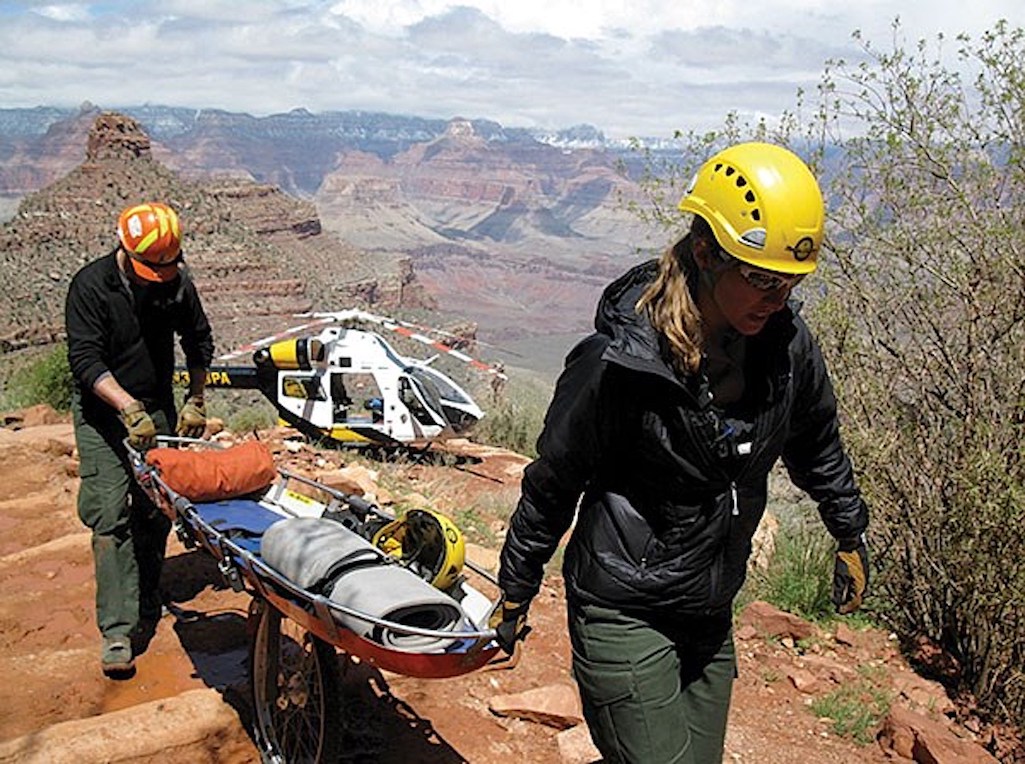
National parks can be dangerous places.
There are animals that will kill you, from slithering snakes to snarling grizzlies; cliffs from which you won’t survive a fall; and lakes with waters so cold you can die of hypothermia before you can swim to shore.
There are bison that will toss and trample those not careful, hot springs that literally will melt you, auto accidents that can kill you, and heat that will also quite literally bake you.
You can’t sanitize the parks.
But Interior Secretary Doug Burgum evidently thinks you can by not mentioning the accidents that claim lives in the parks.
In an order uncovered by the Washington Post that was sent out at the end of last year, the secretary dictated to all department agencies and staff that “Interior shall not confirm a death” nor “confirm the severity of injuries.”
“Interior shall never be the first to inform the public of a fatality or suspected suicide,” the memo adds, which begs the question of who will announce the next fatal bear mauling in Yellowstone, Grand Teton, or Great Smoky Mountains?
Burgum also authorized specific requirements concerning “all Interior communications involving fatalities, suspected fatalities, serious injuries, or emotionally sensitive incidents.”
The memo directed staff not to quote superintendents, not to use adjectives in releases pertaining to accidents, and not to refer media to outside lead agencies without first notifying those agencies.
National parks, according to Burgum and his boss, President Donald Trump, evidently are beautiful places where you won’t hear or read a discouraging word about American history or Americans themselves, per Trump's own fiat: where the deadly aspects of life shall not be mentioned — not even to underscore public safety; and, in short, where skies are not cloudy all day.
The problem is that this is the public domain, not a marketers’ sunny dream of how best to sell a product, and the government is beholden to the people of America who own these public places. That stewardship should include free flow of information about what transpires and how the people’s parks are managed, as well as accountability for policy decisions.
Don't Tell, Don't Answer
The administration's approach adds another chilling layer to the fear Park Service staff already have borne under Trump's leadership for discussing anything — from agreeing to media interviews to answering basic factual questions — beyond prepared and approved scripts. In this case the deadly incident script reads:
Interior is responding to an incident that occurred [general location] on [date]. Emergency responders are on scene, and the incident remains under investigation. No additional information is available at this time.
This directive adds yet another layer to what the Trump team has heaped on the federal workforce to withhold information in the interest of message control, and further obscure what little transparency exists. It’s a telling insight that adds detail to the administration’s long-running requirement that reporters’ questions to National Park Service field staff are shunted up to Washington, from where terse, carefully crafted responses are shipped back, if any reply comes at all.
No doubt Burgum has sent out a companion order banning parks from selling Charles “Butch” Farabee’s riveting Death, Daring, and Disaster, Search and Rescue in the National Parks , as well as Lee Whittlesey’s Death in Yellowstone, Accidents and Foolhardiness In the First National Park, and Over The Edge: Death in Grand Canyon by Michael Ghiglieri and Thomas Myer.
The administration is all but saying, "We can’t scare off the visitors from our marvelous and utterly safe parks!”
Somehow Interior forgot to scrub from nps.gov the longstanding Deaths in National Parks webpage. While it hasn’t been updated since 2019, this in the past helped the Park Service not only identify the leading causes of deaths in parks (auto accidents), but also the activities that lead to deaths, who is at a greater risk of dying (males by a huge margin, 79%-19%), and what factors were involved in a death.
The page also encourages the public to use the collected data “to empower you to plan for and have a fun and injury-free visit to a national park!”
Burgum’s order to have park managers refrain from publicly announcing or even confirming deaths without specific direction from Interior’s Office of Communications does a disservice to the park-going public, which can learn — and take precautions — from deaths and serious incidents.
A perfect example is how the Park Service recently delayed mention that three hikers in Grand Canyon National Park had died from heat-related complications while in the park’s Inner Gorge, where temperatures can soar above 100° Fahrenheit in summer.
As the Traveler had pointed out, it wasn't until almost a week after one heat-related death, and two days after two others, that the Park Service warned hikers to avoid entering the gorge at midday. And even then, instead of a full-throated, attention-getting acknowledgement that yes, the heat has been killing people, the warning only mentioned “a recent influx of heat-related incidents,” not those three deaths or another from June 3 that also was heat-related.
Most hikers might shrug off warnings about high temperatures but knowing that three hikers just died in the heat might give them pause before hiking down the South Kaibab Trail.
“Prevention is key to avoiding heat-related illness,” the Park Service release said.
And knowledge, not sanitization, goes a long way to underscoring the need for prevention.
At a time when the ease of distance travel and the ubiquity of enticing photos that feature the natural world lure many tourists unaccustomed to wilder, or even just non-urban, environments, the free flow of information is more crucial than ever.
Story Categories:
A copy of National Parks Traveler's financial statements may be obtained by sending a stamped, self-addressed envelope to: National Parks Traveler, P.O. Box 980452, Park City, Utah 84098. National Parks Traveler was formed in the state of Utah for the purpose of informing and educating about national parks and protected areas.
Residents of the following states may obtain a copy of our financial and additional information as stated below:
- Florida: A COPY OF THE OFFICIAL REGISTRATION AND FINANCIAL INFORMATION FOR NATIONAL PARKS TRAVELER, (REGISTRATION NO. CH 51659), MAY BE OBTAINED FROM THE DIVISION OF CONSUMER SERVICES BY CALLING 800-435-7352 OR VISITING THEIR WEBSITE. REGISTRATION DOES NOT IMPLY ENDORSEMENT, APPROVAL, OR RECOMMENDATION BY THE STATE.
- Georgia: A full and fair description of the programs and financial statement summary of National Parks Traveler is available upon request at the office and phone number indicated above.
- Maryland: Documents and information submitted under the Maryland Solicitations Act are also available, for the cost of postage and copies, from the Secretary of State, State House, Annapolis, MD 21401 (410-974-5534).
- North Carolina: Financial information about this organization and a copy of its license are available from the State Solicitation Licensing Branch at 888-830-4989 or 919-807-2214. The license is not an endorsement by the State.
- Pennsylvania: The official registration and financial information of National Parks Traveler may be obtained from the Pennsylvania Department of State by calling 800-732-0999. Registration does not imply endorsement.
- Virginia: Financial statements are available from the Virginia Department of Agriculture and Consumer Services, 102 Governor Street, Richmond, Virginia 23219.
- Washington: National Parks Traveler is registered with Washington State’s Charities Program as required by law and additional information is available by calling 800-332-4483 or visiting www.sos.wa.gov/charities, or on file at Charities Division, Office of the Secretary of State, State of Washington, Olympia, WA 98504.
INN Member

The easiest way to explore RV-friendly National Park campgrounds.

Here’s the definitive guide to National Park System campgrounds where RVers can park their rigs.
Our app is packed with RVing- specific details on more than 250 campgrounds in more than 70 national parks.
You’ll also find stories about RVing in the parks, tips helpful if you’ve just recently become an RVer, and useful planning suggestions.

