
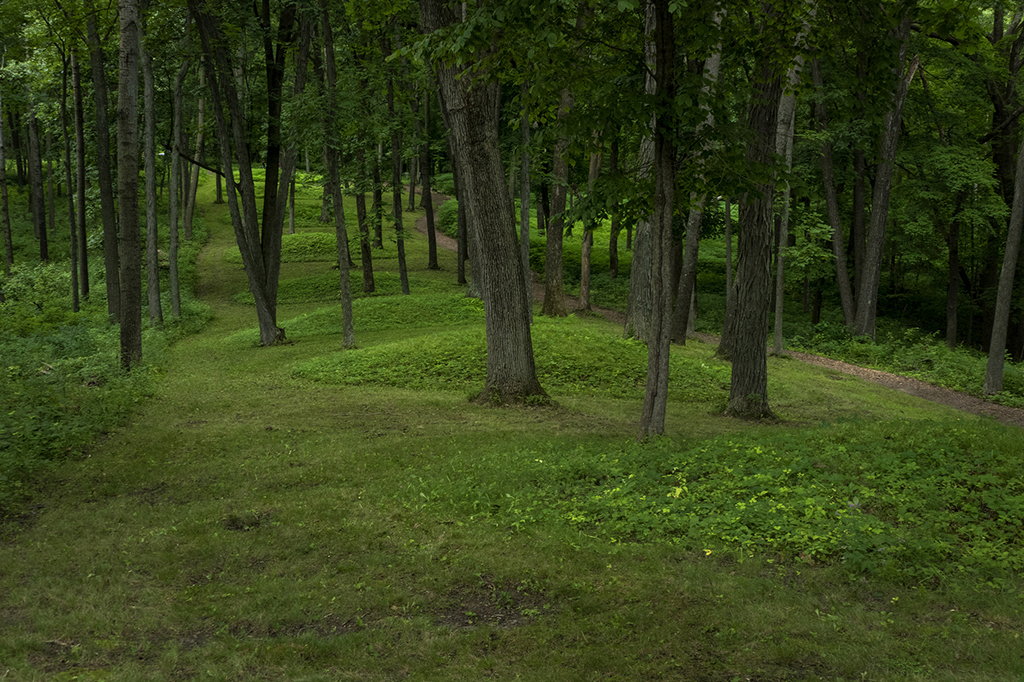
Some units of the National Park System protect landscapes and wildlife. Other units protect the creations, architectural wonders, and history of Native peoples who lived here long before the first white European ever traversed through what is now the United States. Effigy Mounds National Monument in Iowa is just such a park unit.
Located in the Upper Mississippi River Valley, this national monument protects 200 grassy mounds mainly shaped like birds and bears but also shaped like cones and rectangles. Constructed by the people known as the Effigy Moundbuilders, who lived during the Late Woodland Period (1400-750 B.P.), archaeologists and scientists are not totally certain what these mounds represent. Perhaps they were built for ceremonial purposes. Perhaps they marked prime hunting and gathering sites. Regardless of what they represent, they are all considered sacred by the 20 American Indian tribes culturally associated with this national monument.

So, what can you do in a day at Effigy Mounds?
First thing you should do upon arrival is stop off at the visitor center. There, you can orient yourself by picking up an informational park brochure and a map of the hiking trails. The visitor center also hosts temporary exhibits and is home to a formal museum exhibit introducing visitors to the monument's natural and cultural history and displaying artifacts found within the area.
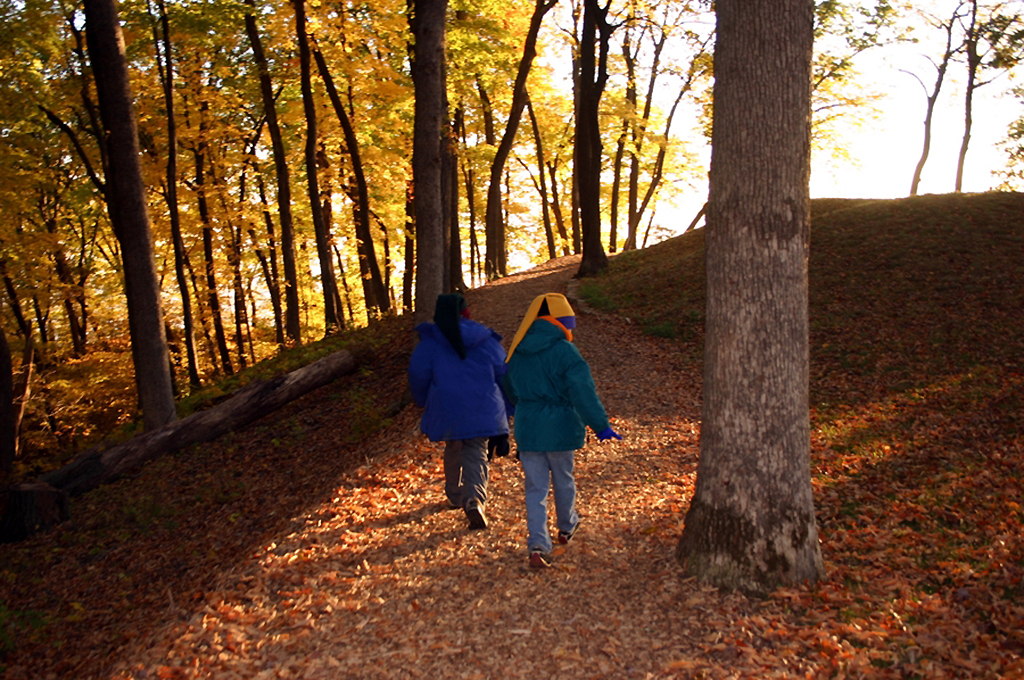
If you are ready for a little outdoor activity, you can take a hike in the park ranging from short walks along accessible trails to extended walks along steep hiking trails. There are three different units to this national monument, and each unit hosts one or more trails:
North Unit: five trails ranging from one to seven miles (1.61-11.27 kilometers) roundtrip.
South Unit: four trails ranging from one to four miles (1.61-6.4 kilometers) roundtrip.
Sny Magill Unit: a single hiking trail in the floodplain on the west bank of the Mississippi River about 10 miles (16 kilometers) south of the headquarters/visitor center. The Iowa Department of Natural Resources maintains a boat ramp, parking area, and access road into the unit. With over 100 mounds, the Sny Magill unit contains 50 percent of all mounds in the monument. It also has the highest concentration of mounds known in the region. A trail leads from the access road to mounds at the northern end of the unit.
You can also join a ranger talk or guided tour offered during the summer months.
During your walks, it’s possible you might spot local wildlife such as deer, wild turkeys, chipmunks, frogs, muskrat, fox, and maybe even the elusive five-lined skink.

If you are a birder, a bird photographer, or simply enjoy spotting the birds around you, Effigy Mounds National Monument is in the center of the Mississippi Flyway and borders the Upper Mississippi Wildlife Refuge, so you’ll definitely see one or more of the 291 species of birds nesting or migrating through the monument.
For you wildflower lovers out there, the monument is in a transition zone of several vegetation communities. During the springtime, you’ll see some of the best wildflower displays in the area, including Dutchman's breeches, wild geranium, bellwort, bloodroot, wild violets, trillium, rue anemone, and wild ginger. Visit in the summer to view asters, apple tree blooms, Virginia waterleaf, daisy fleabane, cardinal flower, jewelweed, woodland sunflower, bergamot, and goldenrod. The grassy prairie around Effigy Mounds also hosts colors produced by yellow stargrass, wild bergamot, black-eyed Susan, blue vervain, butterfly milkweed, clover, coneflower, Culver's root, flowering spurge, and lead plant.
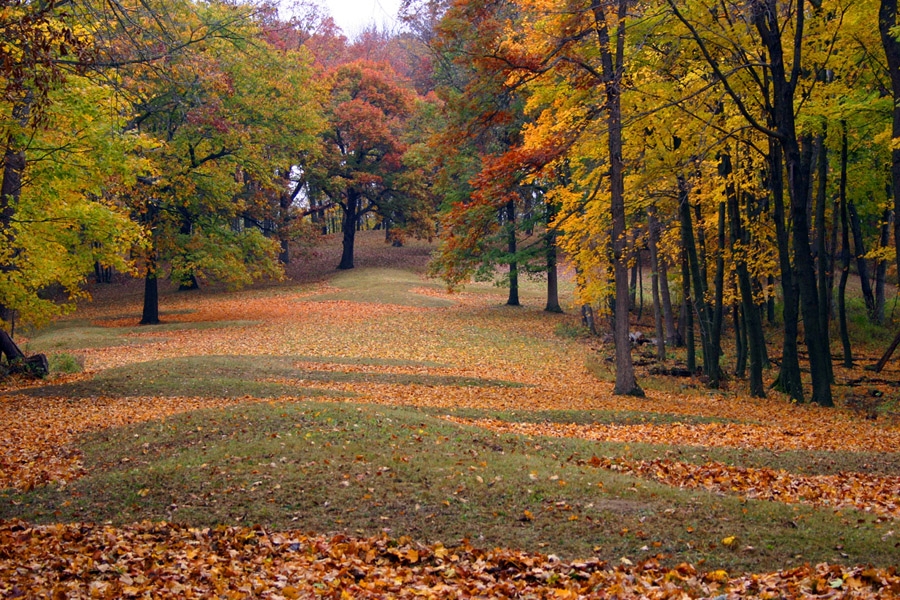
Visit Effigy Mounds in the fall and you’ll be surrounded by foliage displaying vibrant shades of red, orange, and yellow. It’s a great park for “leaf peepers” to stroll the short trails and capture photos of the brilliant autumn colors.
If you have some extra time after a visit to Effigy Mounds, there are several stateside attractions in both Iowa and Wisconsin, including Yellow River State Forest and Driftless Area Wetlands Centre in Iowa, and Ft. Crawford Medical Museum and National Historic Landmark in Wisconsin.
Traveler’s Choice For: Native American culture, wildflowers, fall colors, Effigy Moundbuilders history
Stories about:
Story Categories:
A copy of National Parks Traveler's financial statements may be obtained by sending a stamped, self-addressed envelope to: National Parks Traveler, P.O. Box 980452, Park City, Utah 84098. National Parks Traveler was formed in the state of Utah for the purpose of informing and educating about national parks and protected areas.
Residents of the following states may obtain a copy of our financial and additional information as stated below:
- Florida: A COPY OF THE OFFICIAL REGISTRATION AND FINANCIAL INFORMATION FOR NATIONAL PARKS TRAVELER, (REGISTRATION NO. CH 51659), MAY BE OBTAINED FROM THE DIVISION OF CONSUMER SERVICES BY CALLING 800-435-7352 OR VISITING THEIR WEBSITE. REGISTRATION DOES NOT IMPLY ENDORSEMENT, APPROVAL, OR RECOMMENDATION BY THE STATE.
- Georgia: A full and fair description of the programs and financial statement summary of National Parks Traveler is available upon request at the office and phone number indicated above.
- Maryland: Documents and information submitted under the Maryland Solicitations Act are also available, for the cost of postage and copies, from the Secretary of State, State House, Annapolis, MD 21401 (410-974-5534).
- North Carolina: Financial information about this organization and a copy of its license are available from the State Solicitation Licensing Branch at 888-830-4989 or 919-807-2214. The license is not an endorsement by the State.
- Pennsylvania: The official registration and financial information of National Parks Traveler may be obtained from the Pennsylvania Department of State by calling 800-732-0999. Registration does not imply endorsement.
- Virginia: Financial statements are available from the Virginia Department of Agriculture and Consumer Services, 102 Governor Street, Richmond, Virginia 23219.
- Washington: National Parks Traveler is registered with Washington State’s Charities Program as required by law and additional information is available by calling 800-332-4483 or visiting www.sos.wa.gov/charities, or on file at Charities Division, Office of the Secretary of State, State of Washington, Olympia, WA 98504.
INN Member

The easiest way to explore RV-friendly National Park campgrounds.

Here’s the definitive guide to National Park System campgrounds where RVers can park their rigs.
Our app is packed with RVing- specific details on more than 250 campgrounds in more than 70 national parks.
You’ll also find stories about RVing in the parks, tips helpful if you’ve just recently become an RVer, and useful planning suggestions.

