
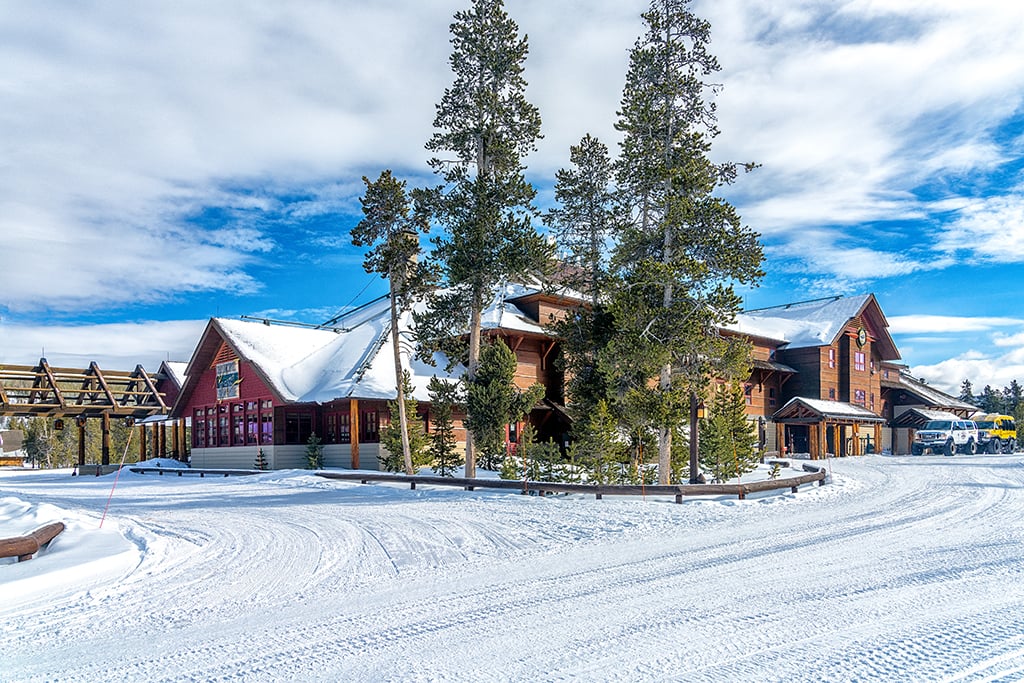
Mid-December through the end of February heralds the winter season at Yellowstone National Park, so If you are considering spending a few winter days in this park, there is still time to do so before the season ends. In Part 1, you learned about getting to the park and your lodging. Part 2 of this three-part series discusses lodging, dining, and packing for your trip.
Staying In The Park
Operated by concessioner Xanterra, the only two brick-and-mortar establishments open in winter at Yellowstone are the Mammoth Hot Springs Hotel & Cabins (Mammoth Hotel) at the park’s northern border four miles south of Gardiner, Montana, and the Old Faithful Snow Lodge (Snow Lodge) within the park’s interior at Upper Geyser Basin, reachable only by snowcoach or snowmobile.
If you prefer to camp or park your RV beneath the stars – even though the temperatures may drop into the single or negative digits at night - there is also Mammoth Campground, open year-round with sites available on a first-come, first-served basis during the winter season ($25 per night payable through recreation.gov’s Scan and Pay mobile app; Seniors/Access passholders receive a 50 percent discount).
Both lodges offer winter specials on rooms, depending upon length of stay, day, month, and room/cabin choice. For Mammoth Hotel, prices may range from less than $223.47 to over $600.00. For the Snow Lodge, prices may range from less than $138.42 to over $246.67. January holds the best deals for the Snow Lodge. The prices noted here do not include taxes and fees.
Tip: If you want to see prices on a day-by-day basis on the Yellowstone National Park Lodges website, click the Check in-Check out box and select Flexible Dates. Choose the month during which you intend to stay as well as how many nights you wish to spend and the site will pull up daily rates for the cheapest room available as well as any special deals. During my 2026 trip, I received a discount for staying three days or more at the Snow Lodge. Click on the first day of your planned stay and the site will pull up a list of available rooms/cabins, starting with that cheapest room and going up in price and room type from there.
So, what about those rooms?
During my 2022 mid-February winter stay, I booked a room in the main building of the Mammoth hotel, which was basic but nicely appointed for around $150 per night thanks to a special. I reserved a second-floor room with a king bed at the Snow Lodge. It was comfortable, quiet, and came with a coffee maker and mini-fridge. The price was around $225 per night, if I remember correctly.


I did not stay at Mammoth for my recent 2026 stay, but a visitor who rode the snowcoach with me told me he had reserved a cabin with a hot tub (the only room available at the time of his reservation) but was ultimately upgraded to a suite in the hotel because the cabin’s hot tub wasn’t working. Without any sort of special, the cabins with hot tubs were selling for almost $400 nightly, and the suites cost even more, so this gentleman got a great deal all because of a non-working hot tub.
For my stay at the Snow Lodge in late January 2026, I chose a Western Cabin, which is not so much a single cabin as a room in a 4-plex. For my 4-nights there, the cabin averaged around $212 nightly, not including taxes and fees. These are comfortable rooms, but if your neighbor is particularly noisy – as mine was – you can hear them.
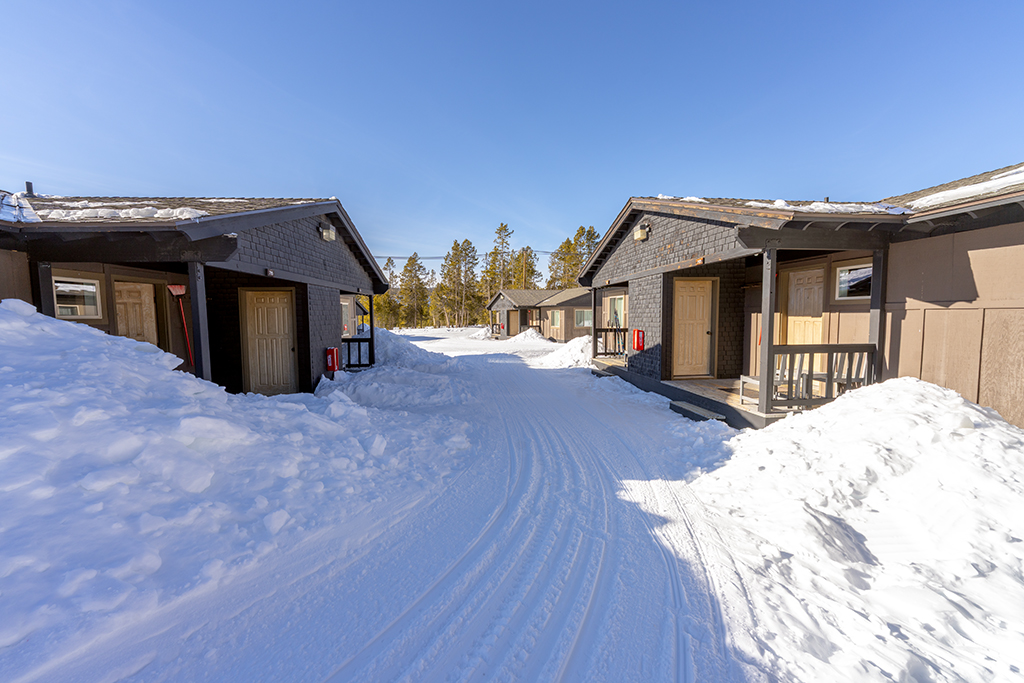
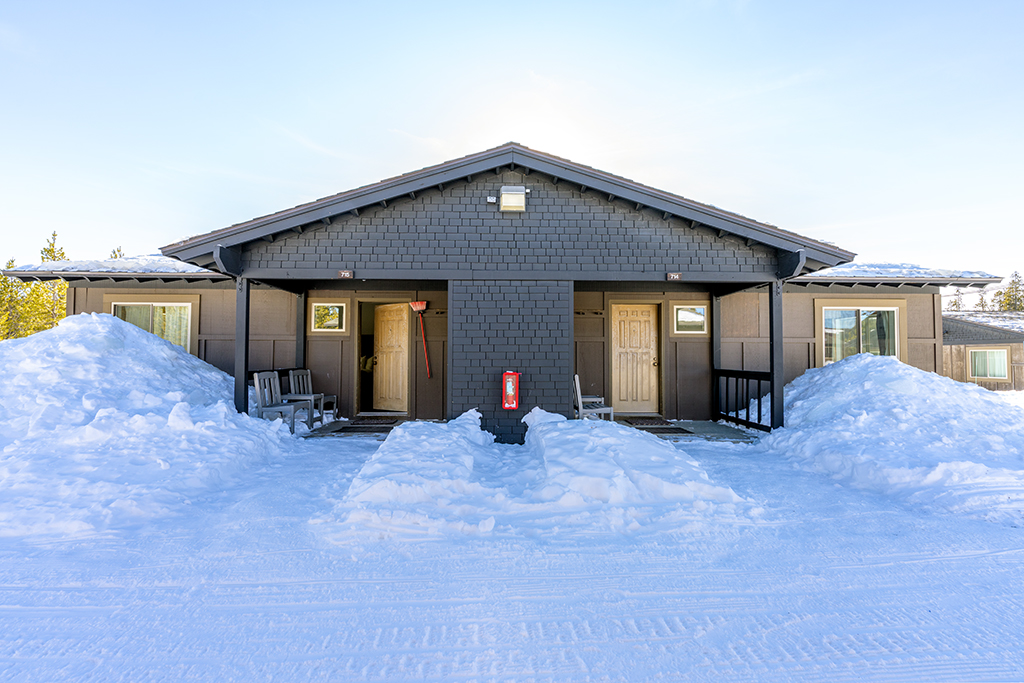
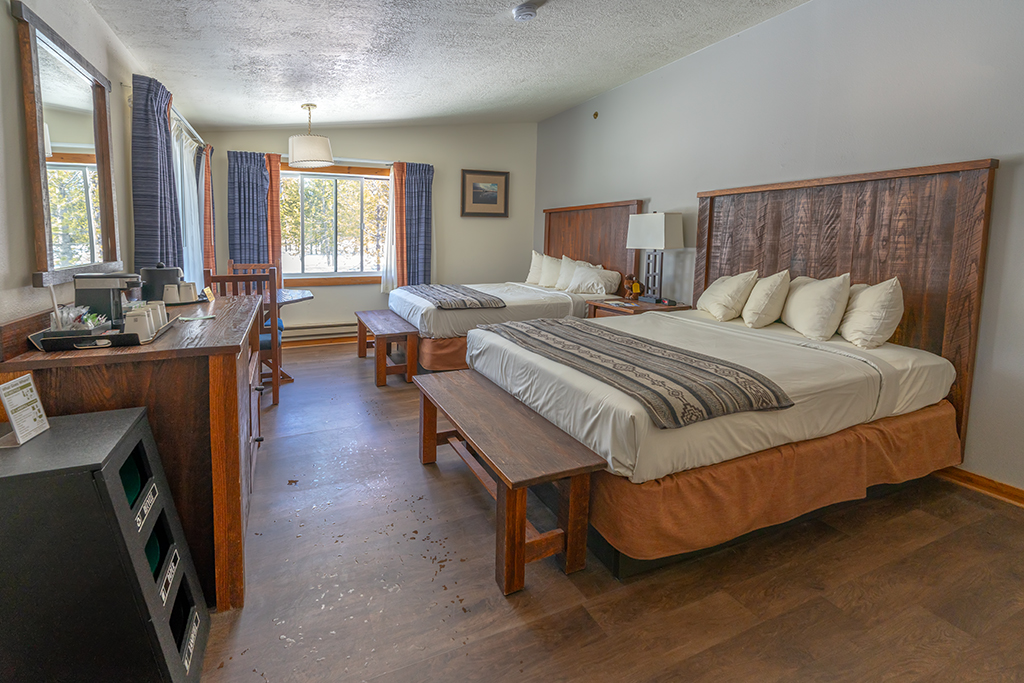
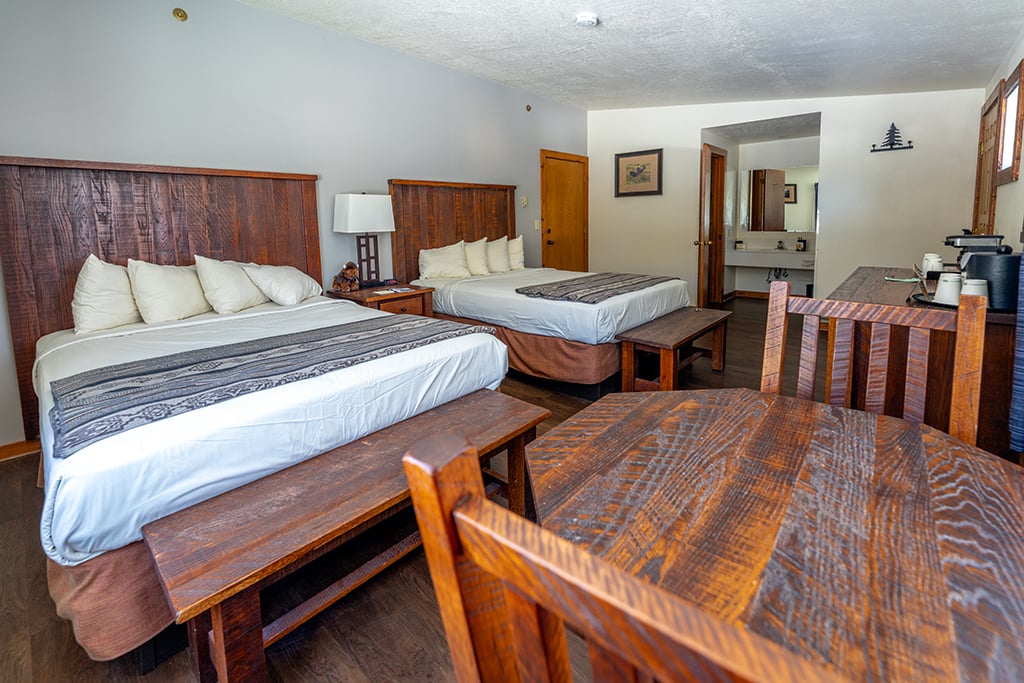
My Western Cabin room came with a mini fridge – which had absolutely no wall outlet so there was no way to turn it on and use it for chilling drinks and foods such as cheeses and cold cuts. A one-serving coffee maker also came with the room, and could have been moved to a working outlet but I didn’t use it because the inner water chamber was filthy and greasy (this is why I always pack my own small coffee maker). For all I know, someone could have used the cup from which they first drank to refill the coffee maker’s water chamber over and over again for successive coffees, instead of using a new cup for refilling the water chamber.
Two large windows allowed nice, bright natural light into my room and a 2-light lamp plus overhead light fixture provided good lighting in the early morning and at night. In addition to two queen-sized beds, there was a table and two chairs in the corner of the room, and a small table between the beds. Faucets provided hot water quickly. In return, guests were asked to leave the faucets on at a trickle so the pipes didn’t freeze.
The cabins are a little distance from the main lodge, so if you have heavy luggage or more than one suitcase, it’s a good idea to utilize the lodge’s luggage delivery service. Check with the bellman at the lodge’s entrance.
Since a separate over-snow truck transports your luggage from Mammoth to the Snow Lodge, your suitcases will be awaiting for you upon arrival. Check-in is at 4 p.m., so more than likely, your room will not yet be ready. In which case, it’s fine to leave your luggage in the area just outside the lodge lobby while you begin your exploration of the geyser basin’s geothermal wonders.
Food And Dining
Prior to my transportation to the Snow Lodge, I ate an all-you-can-eat buffet breakfast at the Mammoth Hotel’s restaurant, a separate large building across the street from the hotel. For $21.00 (not including taxes), I had a choice of two different kinds of scrambled eggs, bacon, sausage, biscuits and gravy, potatoes, fruit, yogurt, and juices. I ultimately decided the buffet was too much for just me, so when I ate breakfast there again several days later, I ordered separately, which worked out better for me but cost almost as much as the buffet would have. FYI, guests used to be able to serve themselves at the Mammoth restaurant buffet, but that is no longer an option and a staff member will spoon out your hot food choices onto a plate for you.
Cooking is not allowed in either Mammoth or Snow Lodge, so you won’t see a microwave in your room. However, at the Snow Lodge, you can purchase prepared foods such as wraps, sandwiches, cheese/meat/cracker combos, or freeze-dried meals to which you can add hot water, or other food items you can heat in a microwave at the small snack shop right inside the lodge’s entrance. For hot meals, you can purchase burgers, salads and sandwiches at the Geyser Grill next to the Bear Den Gift SHop, or enjoy a sit-down breakfast, lunch, or dinner in the Snow Lodge’s Obsidian Room (reservations are required for dinner).
I enjoyed my double smashburger lunch in the Obsidian Room. Thankfully they serve the vegetable add-ons to the side of the burger because I noticed a moldy center to a sliced tomato. Aside from that, the burger and fries were both perfectly cooked. Lunchtime tends to not be as crowded as dinner in the Obsidian Room.

Speaking of dinner, I splurged my final night at the lodge and ordered their filet mignon, which came with a choice of baked sweet potato or regular potato, and a vegetable side – usually Brussels sprouts (which I like). On that evening, however, the kitchen ran out of Brussels sprouts and my filet mignon arrived atop a rather gummy mound of creamed spinach. I recommend the filet mignon but not the creamed spinach.

I also ordered a nice glass of red wine, prices of which range from $11 on up, depending upon wine choice. Wine is also sold by the bottle, and you can also order a cocktail, mocktail, or beer from the Firehole Lounge adjoining the Obsidian Room.
Packing For Your Winter Stay
Even if it’s not snowing in the park, it’s going to be cold, ranging from over 40 degrees Fahrenheit (>4.4 degrees Celsius) to below zero. Bring layers: thermal base layer, fleece top and bottoms, ski pants, insulated jacket or vest, and definitely a hat and gloves. You might wish to pack those air-activated hand- and foot-warmers, too, which can be packed into your carry-on or checked luggage if you fly.
Don't forget to bring a water bottle and snacks. You may not feel thirsty or hungry while out there in the snow and cold, but the dry winter air will dehydrate you quickly - every puff of vapor you see on your breath means you are losing moisture. And it's important to keep your energy up for a day of cold-weather activities by munching on dried fruits, nuts, or even a candy bar.
You’ll experience bare ground, packed snow, and ice both on trails and boardwalks, so snow boots or insulated hiking boots with deep tread are helpful as are boot traction devices such as Yaktrax Walk Traction or Kahtoola Microspikes. Just remember to affix or remove your traction devices in the separate areas outside the lodges lobbies to avoid damaging the interior floors.
You might also want to bring ski poles for better footing while navigating the snowy/icy trails and boardwalks.
Speaking of ski poles, you can bring your own cross-country skis or snow shoes. You can also rent both inside the Snow Lodge’s Bear Den Ski Shop, and purchase boot traction devices there, too.
If you forget to pack a particular toiletry item, the Bear Den Gift Shop carries all sorts of extras, from hand warmers, to plastic razors, to pain relievers, to fingernail clippers, to batteries, to sodas and other cold drinks.
If you have questions, the Snow Lodge’s front desk staff are all helpful.
The final Part 3 of this series details activities in which you can engage during your winter stay within Yellowstone, whether you are at Mammoth Hotel, the Snow Lodge, or just happen to stop off in the park for the day.
Stories about:
Story Categories:
A copy of National Parks Traveler's financial statements may be obtained by sending a stamped, self-addressed envelope to: National Parks Traveler, P.O. Box 980452, Park City, Utah 84098. National Parks Traveler was formed in the state of Utah for the purpose of informing and educating about national parks and protected areas.
Residents of the following states may obtain a copy of our financial and additional information as stated below:
- Florida: A COPY OF THE OFFICIAL REGISTRATION AND FINANCIAL INFORMATION FOR NATIONAL PARKS TRAVELER, (REGISTRATION NO. CH 51659), MAY BE OBTAINED FROM THE DIVISION OF CONSUMER SERVICES BY CALLING 800-435-7352 OR VISITING THEIR WEBSITE. REGISTRATION DOES NOT IMPLY ENDORSEMENT, APPROVAL, OR RECOMMENDATION BY THE STATE.
- Georgia: A full and fair description of the programs and financial statement summary of National Parks Traveler is available upon request at the office and phone number indicated above.
- Maryland: Documents and information submitted under the Maryland Solicitations Act are also available, for the cost of postage and copies, from the Secretary of State, State House, Annapolis, MD 21401 (410-974-5534).
- North Carolina: Financial information about this organization and a copy of its license are available from the State Solicitation Licensing Branch at 888-830-4989 or 919-807-2214. The license is not an endorsement by the State.
- Pennsylvania: The official registration and financial information of National Parks Traveler may be obtained from the Pennsylvania Department of State by calling 800-732-0999. Registration does not imply endorsement.
- Virginia: Financial statements are available from the Virginia Department of Agriculture and Consumer Services, 102 Governor Street, Richmond, Virginia 23219.
- Washington: National Parks Traveler is registered with Washington State’s Charities Program as required by law and additional information is available by calling 800-332-4483 or visiting www.sos.wa.gov/charities, or on file at Charities Division, Office of the Secretary of State, State of Washington, Olympia, WA 98504.


National parks and their natural resources belong to you. The National Parks Traveler works to ensure you know how these essential places are being cared for.
Sign Up For Our Weekly Newsletter
Unsubscribe at any time.
INN Member

The easiest way to explore RV-friendly National Park campgrounds.

Here’s the definitive guide to National Park System campgrounds where RVers can park their rigs.
Our app is packed with RVing- specific details on more than 250 campgrounds in more than 70 national parks.
You’ll also find stories about RVing in the parks, tips helpful if you’ve just recently become an RVer, and useful planning suggestions.

