
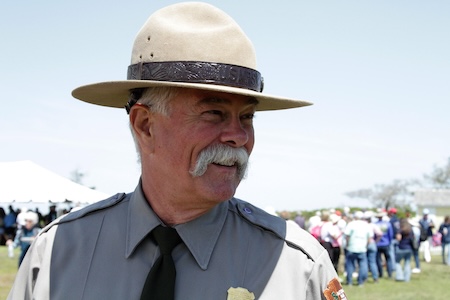
The National Park Service does not suffer from a lack of something to do or a lack of dedication. It suffers from a lack of operational capacity.
For years, discussions about the future of the National Park Service have centered on funding levels, political shifts, vision statements, concession reform, climate change, figuring out ways to charge visitors more money, and organizational restructuring. Some of these issues are important. But beneath these debates lies a more fundamental issue: whether parks have the people, authority, and support necessary to carry out the mission entrusted to them in 1916.
The Service’s foundation remains clear: conserve the scenery, natural and historic objects, and wildlife of the national parks unimpaired for the enjoyment of future generations. That mandate has endured across administrations, funding cycles, and social change because it rests on a powerful idea — public trust stewardship.
The challenge today is not whether the Service can adapt. It must. Visitor use patterns have shifted. Infrastructure has aged. Technology has transformed expectations. Workforce demographics are evolving. Adaptation is necessary. The real question is whether adaptation strengthens the foundation — or erodes it.
Staffing Is the Climate, Not the Weather
Political uncertainty is part of federal life. Process requirements fluctuate. Budget battles are cyclical. These are weather patterns, while staffing levels represents serious change more akin to climate changes.
Across the system, parks are operating with fewer permanent employees than in previous decades, even as visitation and operational complexity have increased. Maintenance backlogs are often discussed in terms of dollars, but infrastructure does not deteriorate because money alone is missing. It deteriorates because there are not enough mechanics, electricians, wastewater operators, project managers, and facility specialists to maintain it proactively.
When parks lack adequate operational staff, the mission becomes reactive. Superintendents become vacancy managers instead of strategic leaders. Resource protection competes with immediate operational triage. Law enforcement staffing gaps strain coverage and safety. Cultural resource projects slow. Administrative burdens fall on fewer shoulders. Every division in the NPS is impacted and the mission has suffered.
If there is a single action that would most quickly restore confidence across the system, it is lifting hiring restrictions for park-level operational positions. Restoring functional capacity restores mission execution.
Reconnecting Hiring to Place
One of the most consequential structural shifts in recent years has been the centralization of hiring. While designed to improve compliance and consistency, it has often created a disconnect between recruitment decisions and the realities of individual parks.
Hiring in national parks is not abstract. It is place-specific. When hiring processes are removed from context, position descriptions become generic. Certification lists may meet minimum qualification standards but miss the deeper qualities required for success in remote, multi-duty environments. When centralized HR gets a request to hire a waste water treatment operator, they see a GS-540 series, grade 9, wastewater operator and the general requirements of the position. They do not see the things the park sees – perhaps they have to be a boat operator to get to the different areas, perhaps they will have to travel in all weather in a 4x4, live in a remote location, keep the park open, and prevent environmental violations. Unless you understand the place, you cannot fully understand the needs.
The solution is not abandoning merit principles or compliance standards. It is restoring contextual intelligence. Parks must have meaningful input into position design and candidate evaluation. Human resources professionals must understand the environments they serve. Slightly slower hiring with full contextual alignment is preferable to rapid misalignment that destabilizes operations for years.
Regions, Support, and Execution
Regional consolidation has already occurred in significant ways. The greater need now is not further compression, but restoration of technical support capacity — contracting officers, planners, compliance specialists, budget analysts, and subject-matter experts who enable many parks to function efficiently. And guess what – contextual relationships to the parks in these positions is just as important as it is in hiring.
Execution capacity determines whether appropriated dollars translate into completed work. Strengthening park-level and regional support positions improves the effectiveness of every infrastructure dollar.
Listening Before Directing
Leadership reform in the National Park Service does not begin with issuing directives. It begins with asking questions.
Superintendents and field leaders possess deep operational knowledge of their landscapes, communities, and workforce realities. A director who begins by asking, “What is getting in your way?” signals respect for place-based expertise and acknowledges that solutions must be grounded in field experience.
Modern pressures will continue. The Service must adapt. But adaptation must reinforce the foundation, not weaken it. The National Park Service does not need reinvention. It needs reinforcement. That foundation rests on the Organic Act preservation mandate, public trust above private interest, professional place-based leadership, consistent stewardship standards, and operational competence.
Preserve the foundation. Adapt the methods. Empower the field.
About the Author
Jeff B. West retired in 2025 after more than 40 years with the National Park Service, including service as a volunteer, maintenance worker, forestry technician, park ranger, area ranger, district ranger, law enforcement specialist, chief ranger, deputy superintendent, and superintendent. His career focused on field-based stewardship, operational leadership, and infrastructure management. He writes about institutional capacity, leadership, and the future of America’s national parks.
Story Categories:
A copy of National Parks Traveler's financial statements may be obtained by sending a stamped, self-addressed envelope to: National Parks Traveler, P.O. Box 980452, Park City, Utah 84098. National Parks Traveler was formed in the state of Utah for the purpose of informing and educating about national parks and protected areas.
Residents of the following states may obtain a copy of our financial and additional information as stated below:
- Florida: A COPY OF THE OFFICIAL REGISTRATION AND FINANCIAL INFORMATION FOR NATIONAL PARKS TRAVELER, (REGISTRATION NO. CH 51659), MAY BE OBTAINED FROM THE DIVISION OF CONSUMER SERVICES BY CALLING 800-435-7352 OR VISITING THEIR WEBSITE. REGISTRATION DOES NOT IMPLY ENDORSEMENT, APPROVAL, OR RECOMMENDATION BY THE STATE.
- Georgia: A full and fair description of the programs and financial statement summary of National Parks Traveler is available upon request at the office and phone number indicated above.
- Maryland: Documents and information submitted under the Maryland Solicitations Act are also available, for the cost of postage and copies, from the Secretary of State, State House, Annapolis, MD 21401 (410-974-5534).
- North Carolina: Financial information about this organization and a copy of its license are available from the State Solicitation Licensing Branch at 888-830-4989 or 919-807-2214. The license is not an endorsement by the State.
- Pennsylvania: The official registration and financial information of National Parks Traveler may be obtained from the Pennsylvania Department of State by calling 800-732-0999. Registration does not imply endorsement.
- Virginia: Financial statements are available from the Virginia Department of Agriculture and Consumer Services, 102 Governor Street, Richmond, Virginia 23219.
- Washington: National Parks Traveler is registered with Washington State’s Charities Program as required by law and additional information is available by calling 800-332-4483 or visiting www.sos.wa.gov/charities, or on file at Charities Division, Office of the Secretary of State, State of Washington, Olympia, WA 98504.
INN Member

The easiest way to explore RV-friendly National Park campgrounds.

Here’s the definitive guide to National Park System campgrounds where RVers can park their rigs.
Our app is packed with RVing- specific details on more than 250 campgrounds in more than 70 national parks.
You’ll also find stories about RVing in the parks, tips helpful if you’ve just recently become an RVer, and useful planning suggestions.

