
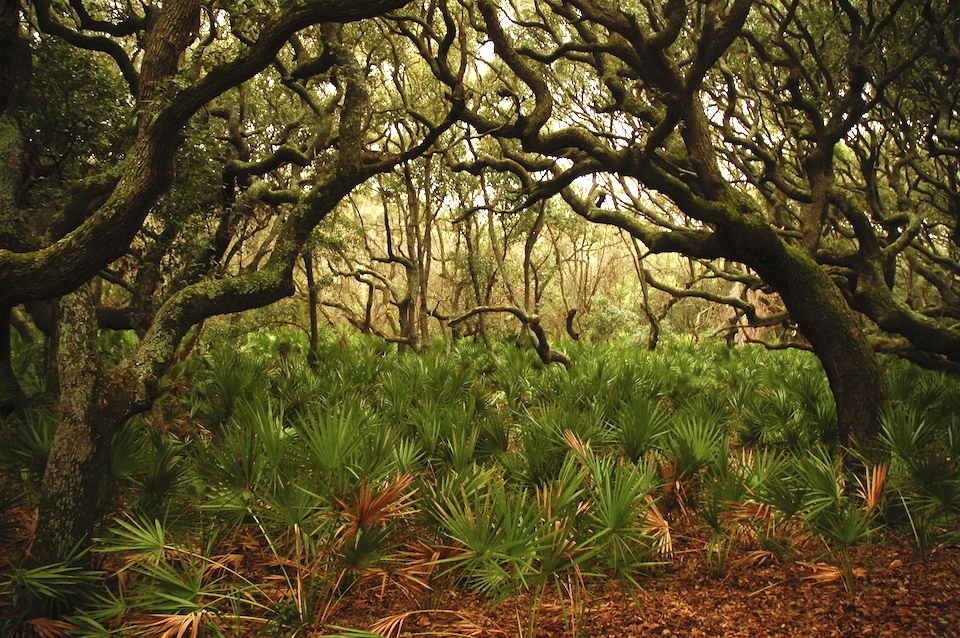
A draft visitor use plan for Cumberland Island National Seashore calls for a more than doubling of visitation to the barrier island off Georgia's coast and more visitor facilities and amenities.
The plan, which is open for public comment through February 6, has raised concern from park advocates that the National Park Service is seeking to greatly increase infrastructure and the human impact on the island.
As drafted, staff at Wild Cumberland, which advocates for the seashore's ecology and wilderness, says the plan calls for:
- Increasing the camping capacity from 220 to 304 campers.
- Daily visitation to the seashore allowed to go from 300 to 700, though no upper cap was stated.
- Adding a frontcountry campsite, bathhouse, and concurrent infrastructure adjacent to an ecologically important area for shorebirds and loggerhead turtle critical habitat, as well as adding sewer, water, and power.
- Adding two beachfront pavilions approximately three-quarters-of-a-mile apart
- Adding a backcountry campsite adjacent to the roughly 9,000-acre Cumberland Island Wilderness and two Wilderness campsites (including one site, Sweetwater Lake, that would require campers to source drinking water from a typically brackish lake with a large American alligator population)
- Abandon an existing Wilderness campsite to the wilderness (Yankee Paradise)
- Add on-island retail store selling health, safety, and essential camping items and merchandise (e.g., books and souvenirs)
- Add on-island kayak/canoe rental service, 18-mile kayak trail along the back barrier, offer motorized boat tours, and expand a ferry service transporting 100 passengers daily to the Plum Orchard dock adjacent to the Wilderness Area, all of which are within the migration zone of West Indian manatees
- Officially establish and Expand bicycle and e-bike access on the shoreline
The proposal also calls for more daily ferry boats to take visitors from St. Marys, Georgia, to Cumberland Island and back again, expanded motorized concession opportunities, and increased visitor education through literature and placards.
Efforts to mitigate the additions would include, but not be limited to:
- Educating ferry operators and boaters about manatees, sea turtles, and other marine life;
- Enforcing regulations that aim to protect Endangered Species Act-listed manatees and sea turtles;
- Working to prevent disturbances of threatened wood storks and other wading birds near Plum Orchard Mansion;
- Developing an educational program for concession staff and park interpretive staff that focuses on threatened and endangered (T&E) species identification and proper actions when species are encountered, and;
- Having staff monitoring beaches for nesting American oystercatchers and least terns; monitoring sea turtle nests for human disturbances.
- The plan's intent is to "determine appropriate opportunities for visitors to use, experience, and enjoy Cumberland Island National Seashore and to
develop strategies to concurrently protect resources."
Wild Cumberland is hosting a virtual town hall on Wednesday, January 21, at 7 p.m EST to review the proposed changes in detail. More information and registration link here.
Cumberland Island offers an unusual mix of cultural, historical, and natural resource features. The Dungeness Historic Area interprets the ruins of a mansion built in 1884 for Thomas Carnegie (the younger brother and business partner of Andrew Carnegie), his wife Lucy, and their 9 children. The 22,000-square-foot Plum Orchard Mansion was built in 1898 as a wedding gift for George Lauder Carnegie and Margaret Thaw and is open for tours.
There are acres and acres of maritime forest that harbor live oaks draped with Spanish moss that rise over an understory of Saw palmetto, hollies, grapevine, and Virginia creeper, while white-tailed deer, armadillos, feral horses, and wild hogs roam the island. There are roughly 18 miles of beachline that attract loggerhead turtles for nesting; on the northern end of the island stands the First African Baptist Church, which was built in 1893.
Under the national seashore's general management plan, which was adopted in 1984, daily visitation to the park has been held to "approximately 300 people per day."
In recent years the national seashore has been in the news over a legal battle seeking to remove the nonnative horses that the Park Service acknowledges are detrimental to the environment and ESA-listed species and over proposed plans to engineer land swaps to remove private parcels from within the national seashore's boundaries.
A federal judge, though sympathetic to the plight of the feral horses, late in 2024 dismissed a lawsuit asking her to order the National Park Service to remove them to a more suitable home.
In her 53-page ruling Judge Sarah E. Geraghty acknowledged the dire conditions the horses were confronted with and expressed her hopes that the Park Service, or another agency, might take action to benefit the horses as well as the seashore's environment and endangered species.
The land exchange has not been executed.
Stories about:
Story Categories:
A copy of National Parks Traveler's financial statements may be obtained by sending a stamped, self-addressed envelope to: National Parks Traveler, P.O. Box 980452, Park City, Utah 84098. National Parks Traveler was formed in the state of Utah for the purpose of informing and educating about national parks and protected areas.
Residents of the following states may obtain a copy of our financial and additional information as stated below:
- Florida: A COPY OF THE OFFICIAL REGISTRATION AND FINANCIAL INFORMATION FOR NATIONAL PARKS TRAVELER, (REGISTRATION NO. CH 51659), MAY BE OBTAINED FROM THE DIVISION OF CONSUMER SERVICES BY CALLING 800-435-7352 OR VISITING THEIR WEBSITE. REGISTRATION DOES NOT IMPLY ENDORSEMENT, APPROVAL, OR RECOMMENDATION BY THE STATE.
- Georgia: A full and fair description of the programs and financial statement summary of National Parks Traveler is available upon request at the office and phone number indicated above.
- Maryland: Documents and information submitted under the Maryland Solicitations Act are also available, for the cost of postage and copies, from the Secretary of State, State House, Annapolis, MD 21401 (410-974-5534).
- North Carolina: Financial information about this organization and a copy of its license are available from the State Solicitation Licensing Branch at 888-830-4989 or 919-807-2214. The license is not an endorsement by the State.
- Pennsylvania: The official registration and financial information of National Parks Traveler may be obtained from the Pennsylvania Department of State by calling 800-732-0999. Registration does not imply endorsement.
- Virginia: Financial statements are available from the Virginia Department of Agriculture and Consumer Services, 102 Governor Street, Richmond, Virginia 23219.
- Washington: National Parks Traveler is registered with Washington State’s Charities Program as required by law and additional information is available by calling 800-332-4483 or visiting www.sos.wa.gov/charities, or on file at Charities Division, Office of the Secretary of State, State of Washington, Olympia, WA 98504.


National parks and their natural resources belong to you. The National Parks Traveler works to ensure you know how these essential places are being cared for.
Sign Up For Our Weekly Newsletter
Unsubscribe at any time.
INN Member

The easiest way to explore RV-friendly National Park campgrounds.

Here’s the definitive guide to National Park System campgrounds where RVers can park their rigs.
Our app is packed with RVing- specific details on more than 250 campgrounds in more than 70 national parks.
You’ll also find stories about RVing in the parks, tips helpful if you’ve just recently become an RVer, and useful planning suggestions.

