

National seashores have plenty in common: beaches and beachcombing, the ocean, fishing, paddling, hiking, and biking. Assateague Island National Seashore in Maryland and Virginia also has a little something extra: wild horses.
Sure, these wild horses – descendants of domestic stock – are a strong pull. Who doesn’t enjoy watching these beautiful equines wander the seashore? But, there’s so much more to do and see along this 37-mile-long (59.5 kilometers) undeveloped barrier island shared by Maryland and Virginia.
Believe it or not, at one time, Assateague was not an island.
According to Park Staff:
[Assateague] was connected to the popular Fenwick Island. A storm in August of 1933 ripped through the long island opening an inlet between the southern end of Ocean City and the new Assateague. Taking advantage of this new opening, the inlet was fortified to keep it open, allowing passage from the ocean to the bay. To this day you can stand on the tip of either island and view the other from across the inlet.
So, in addition to all the other neat stuff you can do and learn at this national seashore, there’s some cool history to the place. Click here to read more about this history.
You’ve decided to check this place out for yourself (probably because of the horses, right?). What can you do during a day in this park (besides watching the wild horses)? Plenty!
Feel like stretching your legs? There are several short trails ranging from one-fourth mile to seven-and-a-half miles (0.4-12 kilometers) through forests, marshes, and on dunes introducing visitors to diverse environments within this park. It’s not all just seashore, you know.
Speaking of the seashore, you can get a workout along the 37 miles (59.5 kilometers) of beach while looking for shells and other treasures. Believe it or not, hiking on a flat beach is more strenuous than hiking on a hard surface because the sand is softer and uneven. It takes a little more effort to walk the beach.
You can also opt for a two-wheeled exploration of this park along several miles of bike trails, both paved and unpaved. No bike? No problem. Rental bicycles are available seasonally on both the Maryland and Virginia portions of the park.

Take to the waters of the bays in the park for a truly a unique view of Assateague Island National Seashore, where you can paddle the bays, coves, and salt marshes. Assateague Outfitters on the Maryland side of the park offer seasonal kayak rentals (in addition to bike rentals).
If renting sounds like too much work, you can opt for a ranger-guided kayak tour (offered during the summer). Click here for the calendar to search for various programs, most of which conclude at the end of summer.
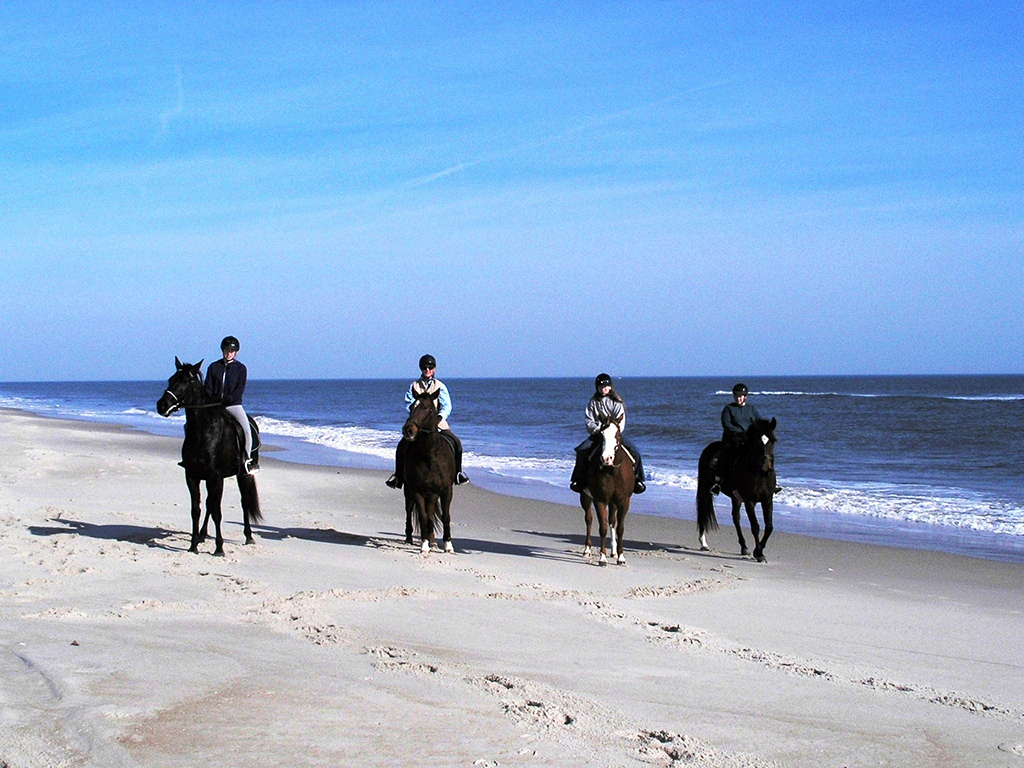
Assateague allows you to drive or ride a horse along the beach. For driving, you are required to obtain an Over Sand Vehicle (OSV) permit ($110 to $200) and must stay on established roads, parking areas and designated Over-Sand Vehicle (OSV) routes.
For horseback riding, you’ll need to bring your own horse since the park does not rent nor offer horseback tours.
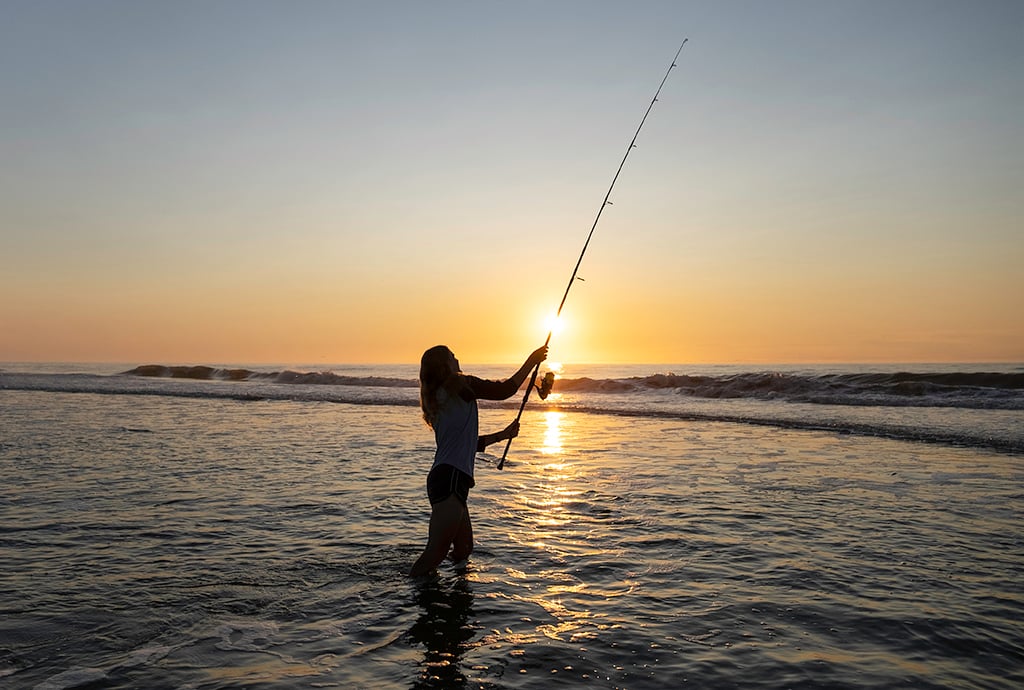
Feel like catching some seafood for dinner? Surf fishing and crabbing are two popular activities in which to engage. There are, of course, regulations to follow for both activities, and you’ll need a saltwater license to surf fish.
Ok, let’s take a look at the wild horses, since they may be the main reason for you visiting this national seashore in the first place.

According to Park Staff:
The "wild" horses on Assateague are actually feral animals, meaning that they are descendants of domestic animals that have reverted to a wild state. Horses tough enough to survive the scorching heat, abundant mosquitoes, stormy weather and poor quality food found on this remote, windswept barrier island have formed a unique wild horse society. There are two herds, one on the Maryland side of the park, and a herd on the Virginia side known as the "Chincoteague" ponies.
How did these horses get here in the first place? There’s the colorful story of their descendants surviving a shipwreck off the Virginia coast, and there’s the more plausible story of them being brought here by landowners in the late 17th century to avoid fencing laws and livestock taxation.
If you plan to view these horses, please remember they are wild and you should never approach, pet, or feed them. Human food can make them sick, and these horses are unpredictable and will kick, bite, or knock you down. They do make for awesome photographs, but as with all other wildlife, it’s best to use a telephoto lens or setting to capture close-ups.
For tips on safely viewing the wild horses of Assateague Island, click here.

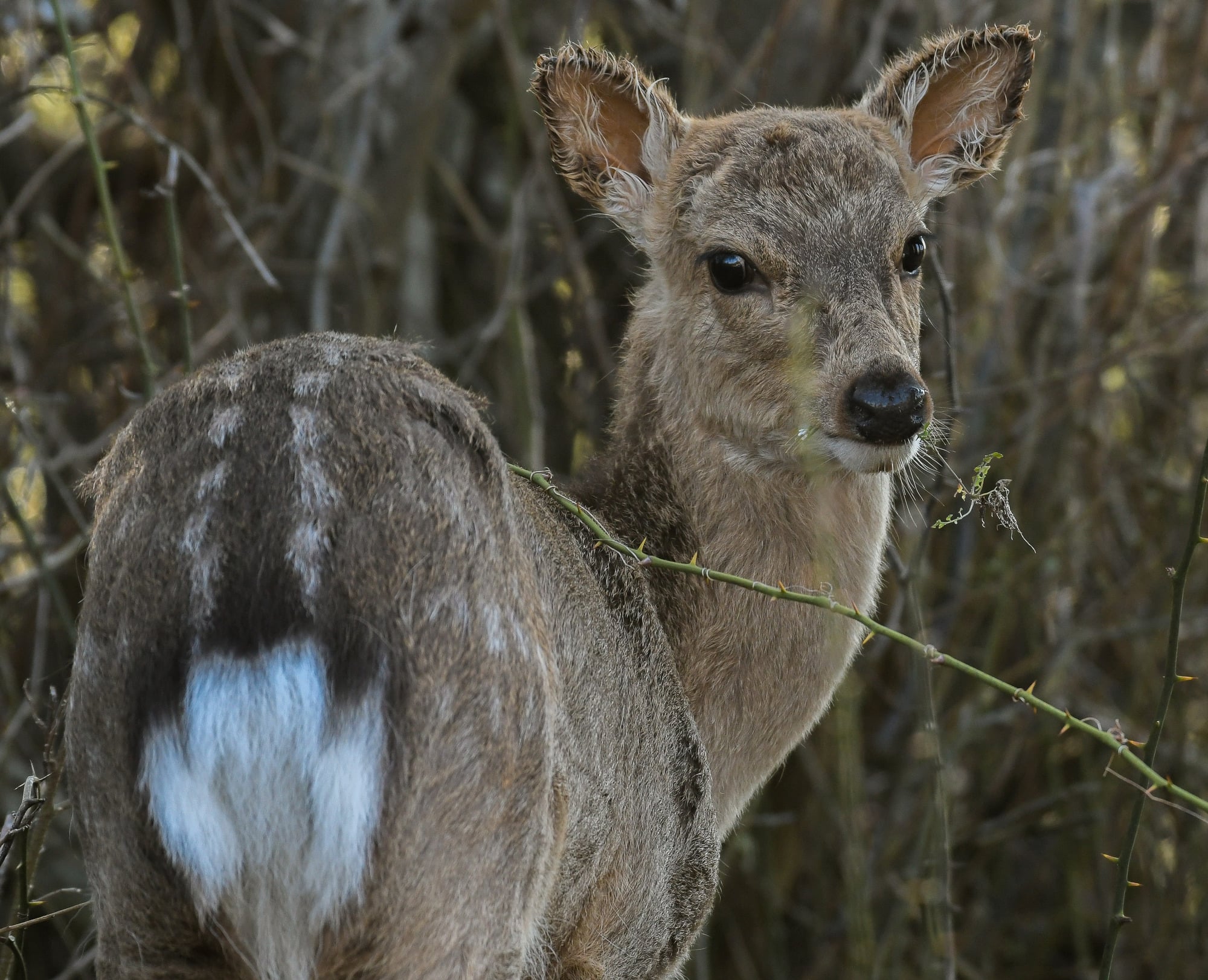
Of course, there is more wildlife than just the horses. Along your hike, you might spot a non-native sitka deer or out on the water a bottlenose dolphin. As you beachcomb, you might spy a ghost, blue, or fiddler crab. Visit during the spring and it’s possible you may even spy a horseshoe crab as it wanders the beach looking for a mate or to lay its eggs. These “living fossils” have been around for about 450 million years, without much change.
Assateague Island National Seashore is located along the Atlantic migratory flyway, so bring your binoculars and/or telephoto lens with you to photograph not only the wild horses but also any of the more than 200 species of birds ranging from piping plovers, to egrets, to brants (a small goose), to woodpeckers, to owls and other birds of prey.
When planning your trip, bear in mind there is no public transportation to this national seashore. You’ll be flying and then driving (or just driving if you intend to make it a full road trip) to reach this park. The nearest large commercial airports with a wide selection of airlines from which to choose are Washington, D.C.’s Dulles International Airport (IAD) (179 miles/288 kilometers from the park’s north entrance), the Washington-Baltimore International Thurgood Marshall Airport (BWI) (139 miles/223.7 kilometers from the park’s north entrance), and Philadelphia International Airport (PHL) (142 miles/228.5 kilometers from the park’s north entrance).
Open year-round, there are two entrances to this national seashore. The north entrance is is at the end of Route 611, eight miles (12.9 kilometers) south of Ocean City, Maryland. The south entrance is at the end of Route 175, two miles (3.2 kilometers) east of Chincoteague, Virginia. It’s not a straight line from Point A to Point B, however. You won’t be able to drive between the two entrances on Assateague Island. To get to the south entrance from the north (or vice versa), you must return to the mainland.
Perhaps you will decide to spend more than one day at Assateague. Or, maybe you will be too tired after a busy day at the seashore to travel anywhere else. Where can you overnight? There is no in-park brick-and-mortar lodging, but nearby Ocean City, Maryland and Chincoteague Island, Virginia provide overnight options to fit every budget.
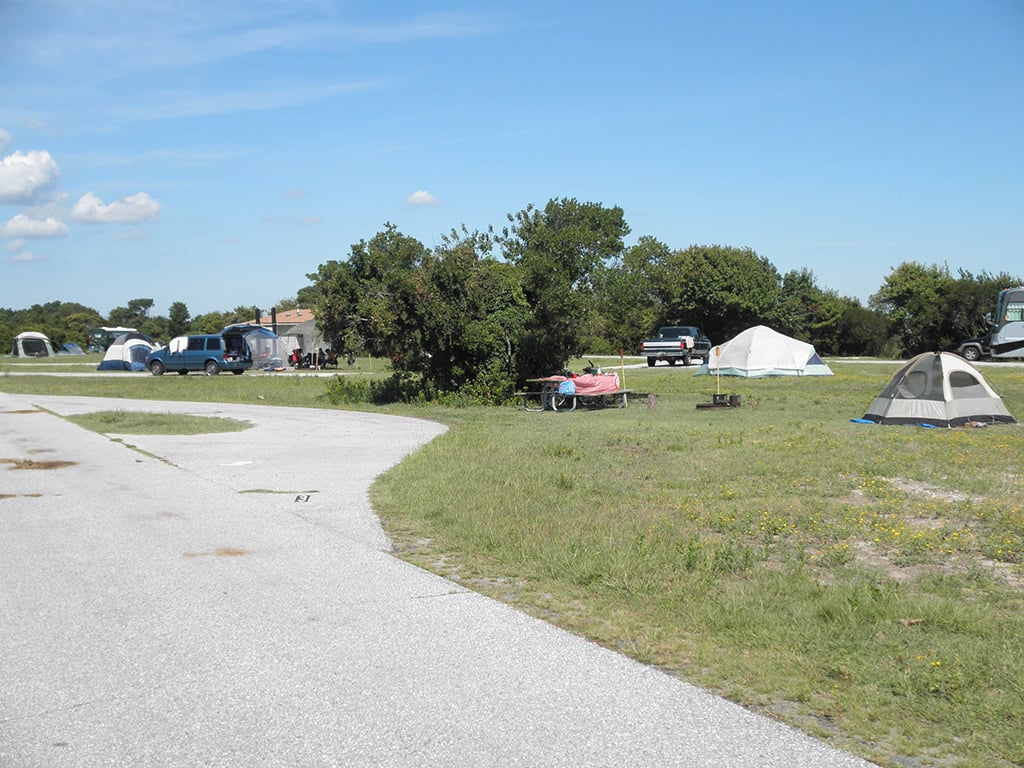
If pitching a tent or parking your RV directly beneath the stars is more to your liking, Assateague Island National Seashore offers two campgrounds: Oceanside and Bayside, providing both drive-in and walk-in campsites. There are even two sites available for horse camping.
It’s easy to spend one day at this national seashore, but you’ll find yourself wanting to spend more than one day here.
Traveler’s Choice For: wild horses, beach activities, birding, photography
Stories about:
Story Categories:
A copy of National Parks Traveler's financial statements may be obtained by sending a stamped, self-addressed envelope to: National Parks Traveler, P.O. Box 980452, Park City, Utah 84098. National Parks Traveler was formed in the state of Utah for the purpose of informing and educating about national parks and protected areas.
Residents of the following states may obtain a copy of our financial and additional information as stated below:
- Florida: A COPY OF THE OFFICIAL REGISTRATION AND FINANCIAL INFORMATION FOR NATIONAL PARKS TRAVELER, (REGISTRATION NO. CH 51659), MAY BE OBTAINED FROM THE DIVISION OF CONSUMER SERVICES BY CALLING 800-435-7352 OR VISITING THEIR WEBSITE. REGISTRATION DOES NOT IMPLY ENDORSEMENT, APPROVAL, OR RECOMMENDATION BY THE STATE.
- Georgia: A full and fair description of the programs and financial statement summary of National Parks Traveler is available upon request at the office and phone number indicated above.
- Maryland: Documents and information submitted under the Maryland Solicitations Act are also available, for the cost of postage and copies, from the Secretary of State, State House, Annapolis, MD 21401 (410-974-5534).
- North Carolina: Financial information about this organization and a copy of its license are available from the State Solicitation Licensing Branch at 888-830-4989 or 919-807-2214. The license is not an endorsement by the State.
- Pennsylvania: The official registration and financial information of National Parks Traveler may be obtained from the Pennsylvania Department of State by calling 800-732-0999. Registration does not imply endorsement.
- Virginia: Financial statements are available from the Virginia Department of Agriculture and Consumer Services, 102 Governor Street, Richmond, Virginia 23219.
- Washington: National Parks Traveler is registered with Washington State’s Charities Program as required by law and additional information is available by calling 800-332-4483 or visiting www.sos.wa.gov/charities, or on file at Charities Division, Office of the Secretary of State, State of Washington, Olympia, WA 98504.
INN Member

The easiest way to explore RV-friendly National Park campgrounds.

Here’s the definitive guide to National Park System campgrounds where RVers can park their rigs.
Our app is packed with RVing- specific details on more than 250 campgrounds in more than 70 national parks.
You’ll also find stories about RVing in the parks, tips helpful if you’ve just recently become an RVer, and useful planning suggestions.

