

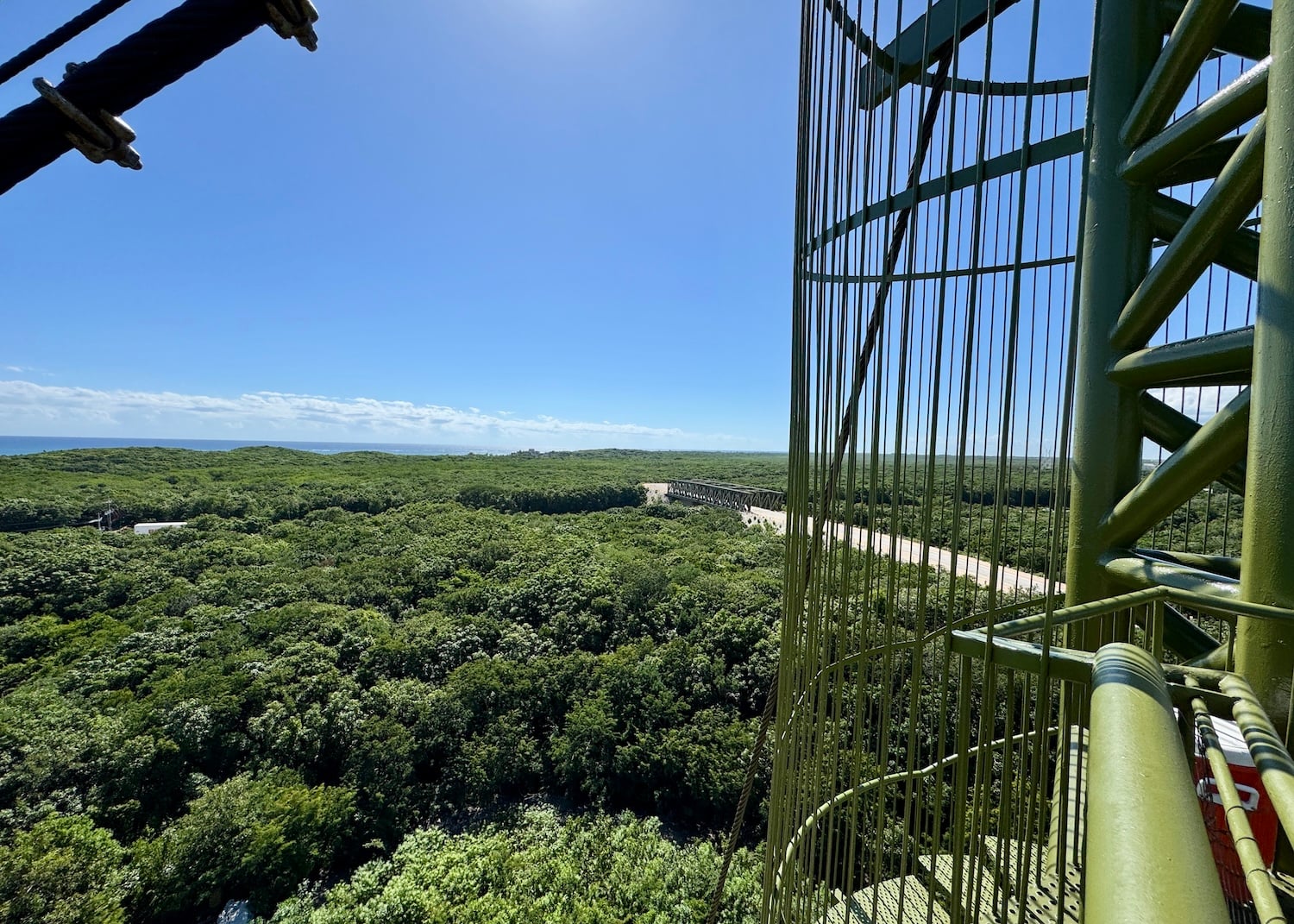
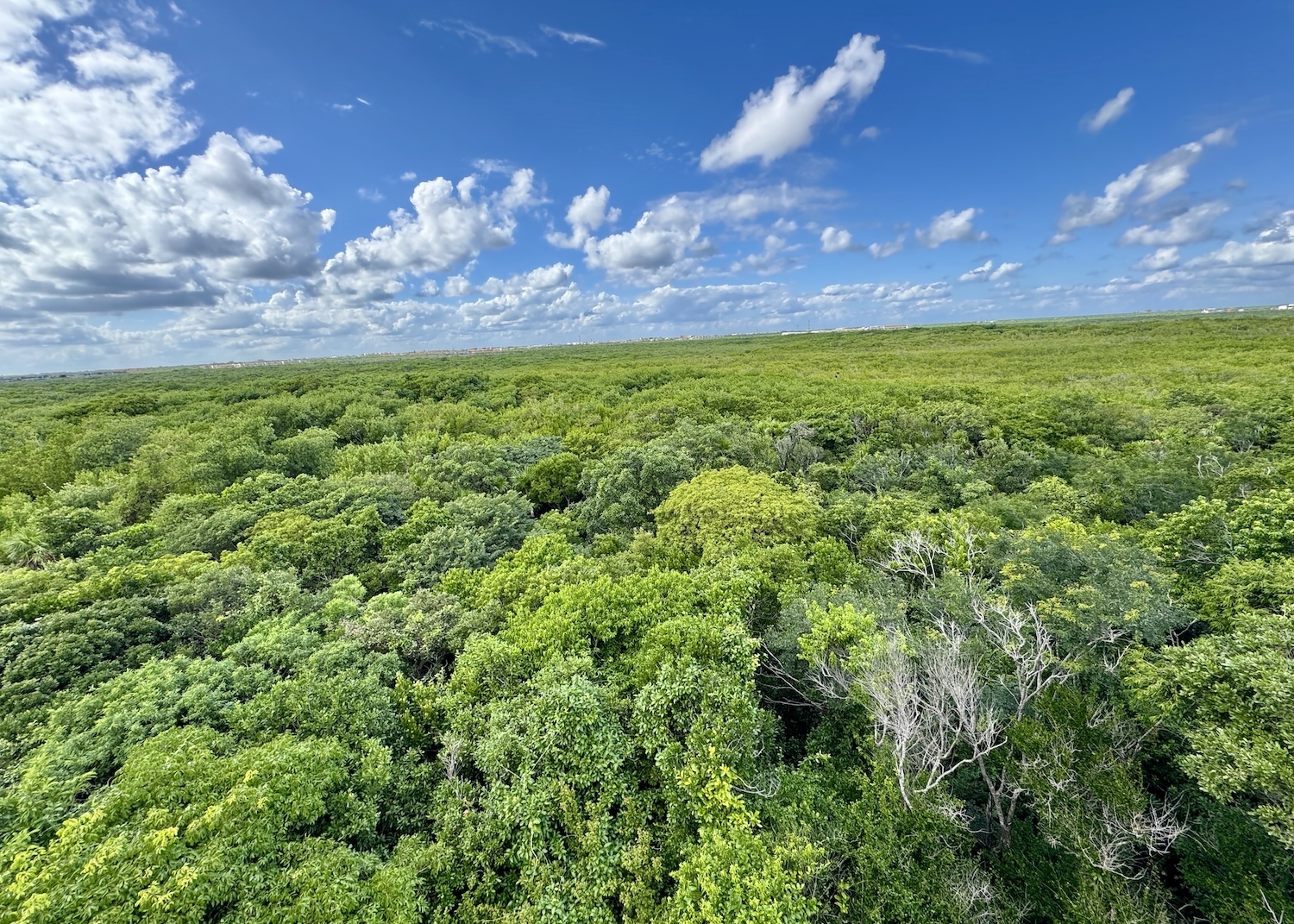
Things finally start to make sense once you’re standing on a narrow circular platform 82 feet above the Maya jungle. That’s where, after climbing 137 steps to the open-topped deck of the Torre de Avistamiento (Observation Tower), you’re rewarded with 360-degree views of what the new Parque del Jaguar is trying to protect.
To the east, there’s the bridge the park built over Federal Highway 307 to reconnect this jungle ecosystem with what’s on the other side — the Caribbean Sea and Mexico’s third most visited archaeological zone.
To the west, you can just make out the central entrance complex, the museum that celebrates Maya culture, the roof of the Tren Maya’s Tulum station, and the former airstrip that’s now used by electric shuttles to whisk people around the park.
To the south is the tourism hotspot of Tulum. And in all directions, there’s a green sea of trees like ceibas that are sacred for the Maya, “chiclets” whose sap made the first chewing gum, chechens that ooze a toxic sap that causes rashes, and chacás whose sap is said to be the antidote.

There are things you can’t see from this height. A few secretive wild jaguars that apparently roam among the coatimundi, agoutis, snakes, foxes, turtles, monkeys, wild turkeys and birds galore. A 14-mile protective stone perimeter wall inspired by the Yucatecan “albarrada” and stacked by gravity without mortar.
What a stunning park. But what a complicated park. The Tulum Times calls it “a case study in layered governance” that’s “part of a larger effort to blend ecological tourism, cultural heritage, and military oversight.”
Announced in 2022 and opened in September 2024 after construction costs of $2.7 billion pesos ($148 million USD), Parque del Jaguar is run by the military in collaboration with multiple government departments.
This sprawling 7,198-acre (2,912-hectare) ecological and archaeological project has integrated Tulum National Park, the Jaguar Flora and Fauna Protected Area, the Tulum Archaeological Zone and some of the Caribe Mexicano Biosphere Reserve’s beaches.
The mission, however, is simple. Protect “Mexico’s natural, cultural and historical wealth.” Prevent encroaching real estate development and excessive urban growth.
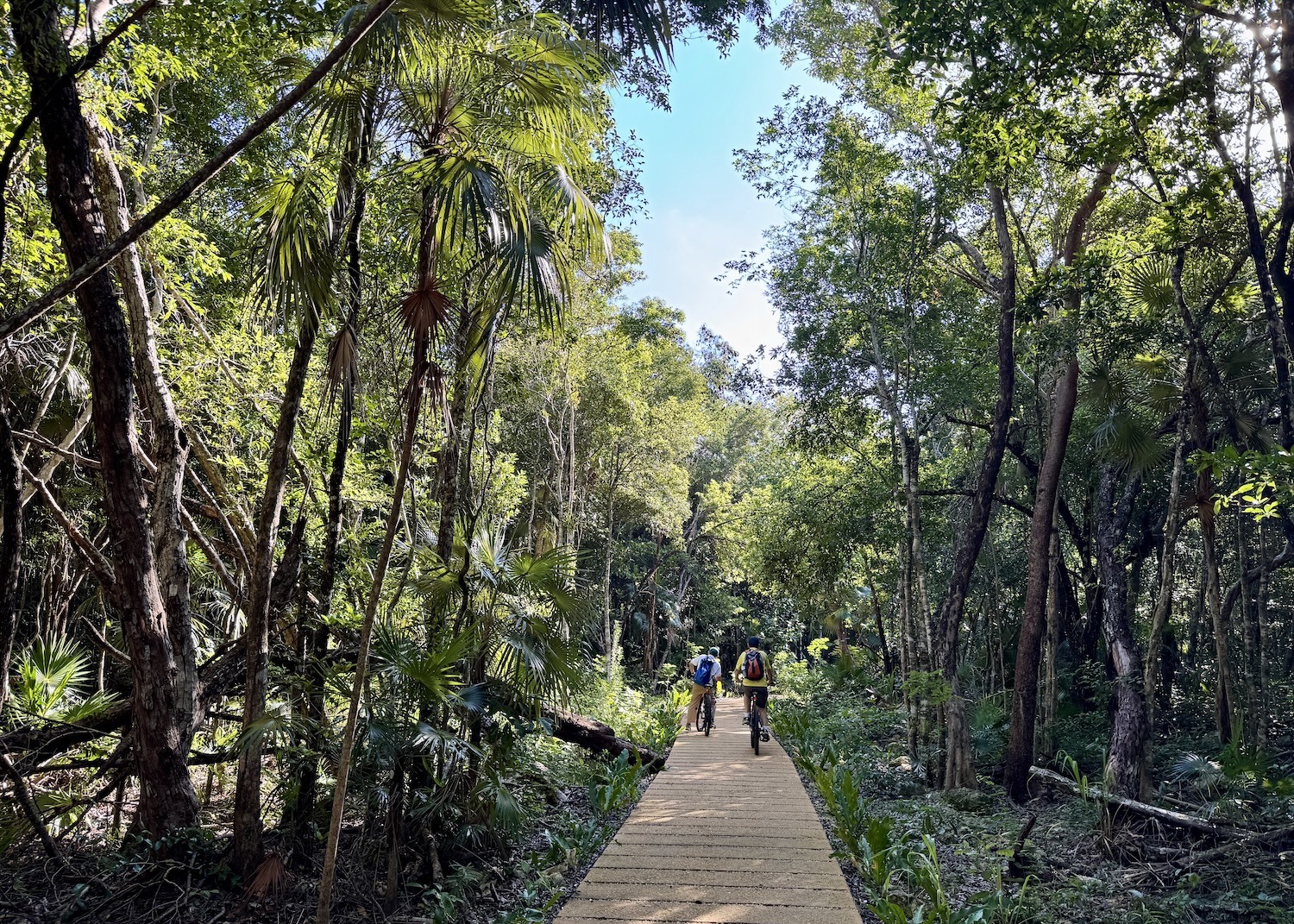
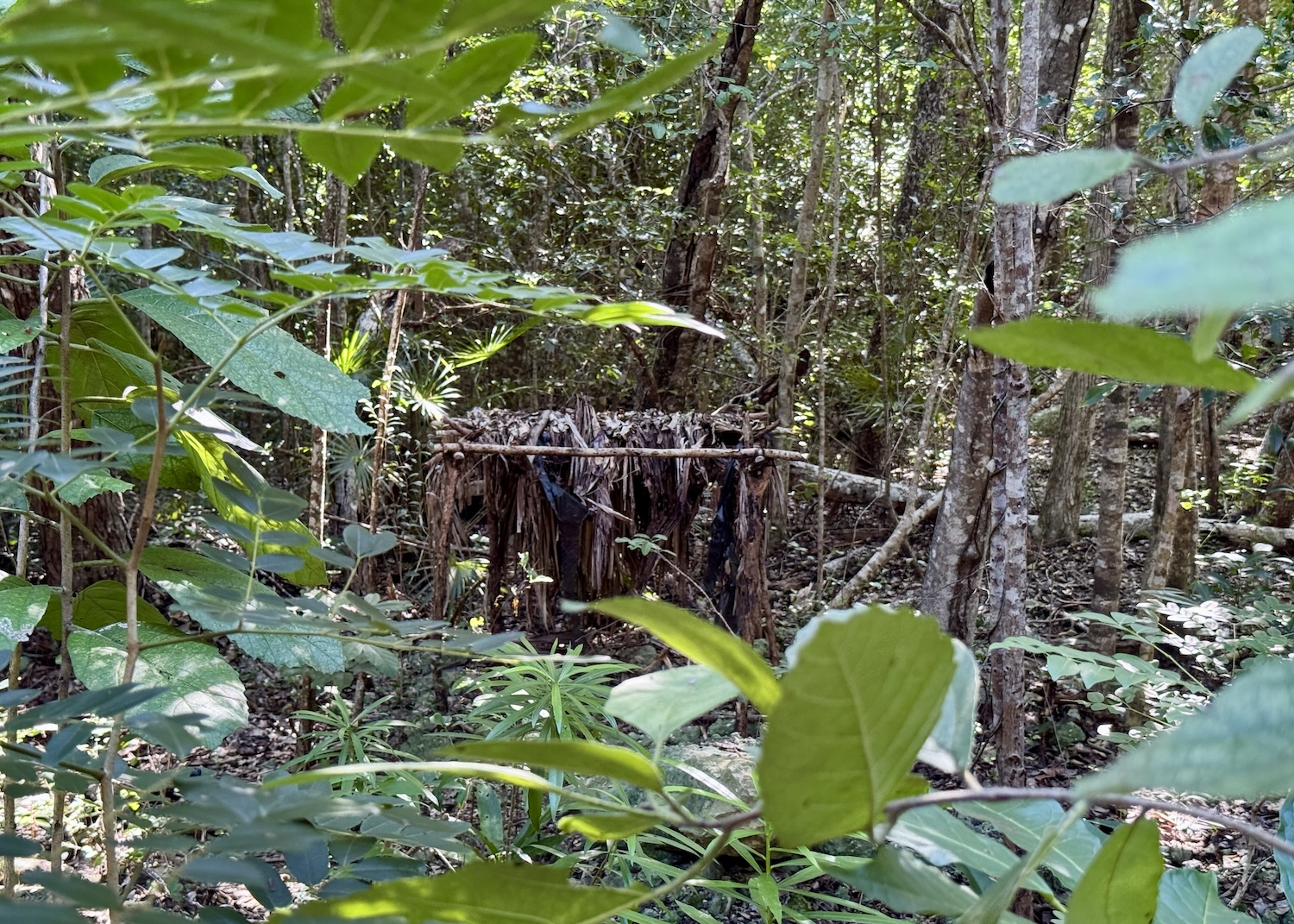
Cycling down Sendero Aguadas (Aguadas Trail) — designed to highlight the Yucatán Peninsula’s system of underground rivers — I spotted something unusual in the bush.
Made of trees and palm leaves, it was an altar used in a Maya ceremony to ask permission from the elf-like spirits of the natural world to create paths during construction.
Most people would have biked or walked right by. Actually, most people would never have been on the trail in the first place.
Free public tours, and the paid ones that bring in resort guests, typically last two hours and only have time to highlight the archaeological zone and museum. Many visitors come just for the beaches. Not too many realize that you can rent bikes, cycle the park from end to end, and practically have the jungle to yourself on three short trails.
It was on Sendero Selva Sur (South Jungle Trail) that I heard the colorful stories behind all the key trees and learned how the path is made of concrete slabs interspersed with gravel so they don't crack in the heat.
It was on Sendero Selva Norte (North Jungle Trail) that I dawdled watching butterflies and listening to the sweet songs of birds.

My guide spoke eloquently about his Maya heritage, and his love for this protected space, but couldn’t be named or photographed. His insights must be attributed to “Parque Mundo Maya del Jaguar,” the park’s name combined with the military-linked tourism enterprise that manages it.
We set out from the new central entrance that takes you past an open-air restaurant area, through gardens and straight to a museum. I spotted National Guards here at the Centro de Atención a Visitantes (CATVI for short). They handle security and patrols at tourism sites across Mexico.
Just to confuse matters, there are three entrance fees that you should pay for in a bundle at the official ticket counter — not from roving scalpers. For foreign tourists, $515 MXN (about $28 USD) gets you one ticket and two wristbands that cover a park entrance fee plus fees to the government agencies that care for nature and the archaeological and historical heritage.
On the day that I visited, entrance fees were waived (it’s a Sunday thing across Mexico) but I still had to pay two fees at other spots deeper inside the park. One was cash only. Complicated, right?
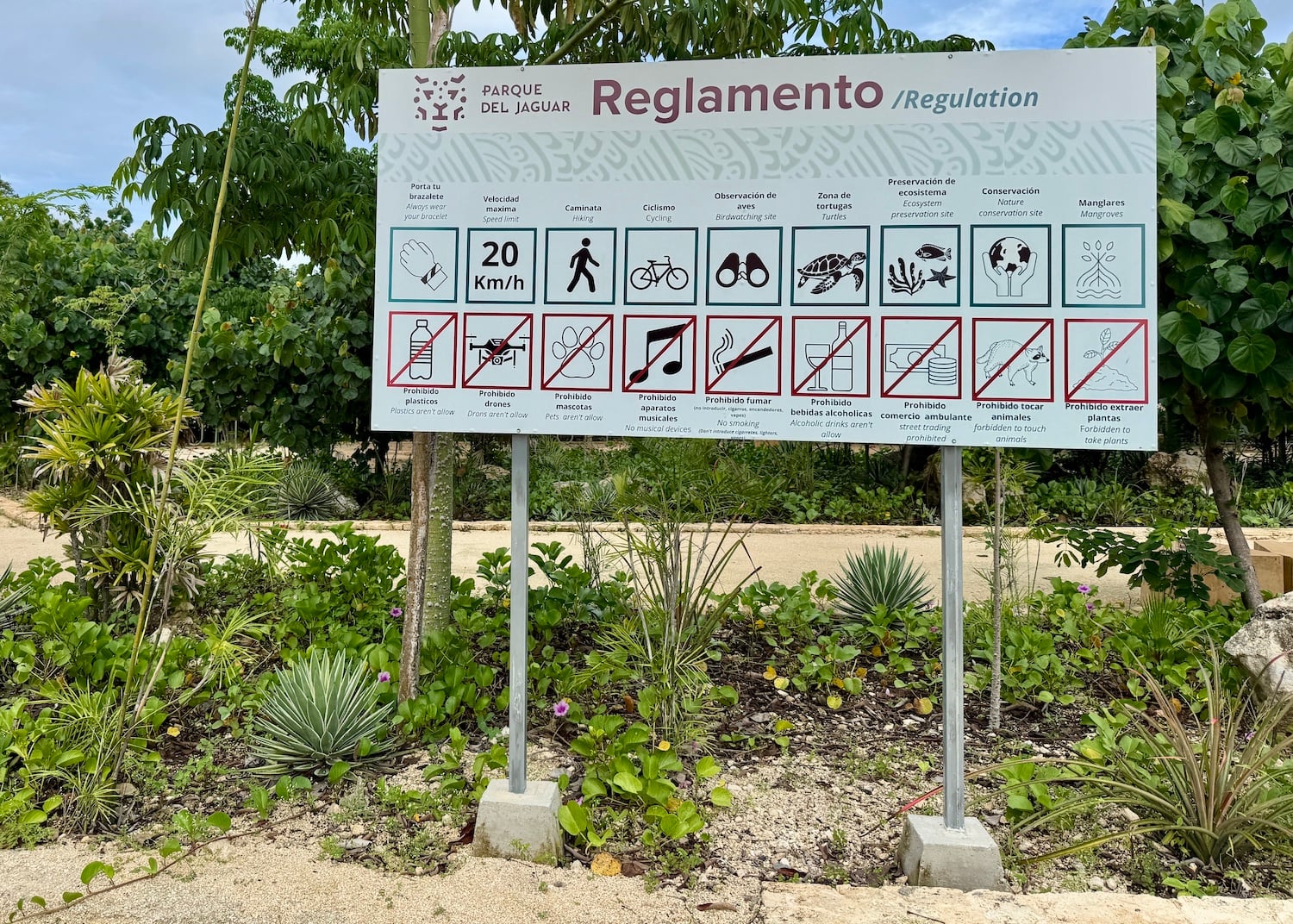
Oh, and single-use plastics are banned so bring reusable water bottles.

Anyway, the Museo Regional de la Costa Oriental is an architectural stunner and an air-conditioned reprieve from the heat. Outside is a limestone monument that reminds us how the Maya collected rainwater, and stone carvings of various gods, including the Goddess of Suicide, Ixtab.
“A space for contemplation and connection with nature,” is how the park’s social media team describes the museum. “Here, water and design intertwine to evoke the essence of this sacred land.”
The Tulum Times has called the museum “a cultural turning point” for the city and praised it for “emphasizing the Maya’s spiritual and scientific achievements, from cosmology and calendrics to architecture and environmental stewardship.”
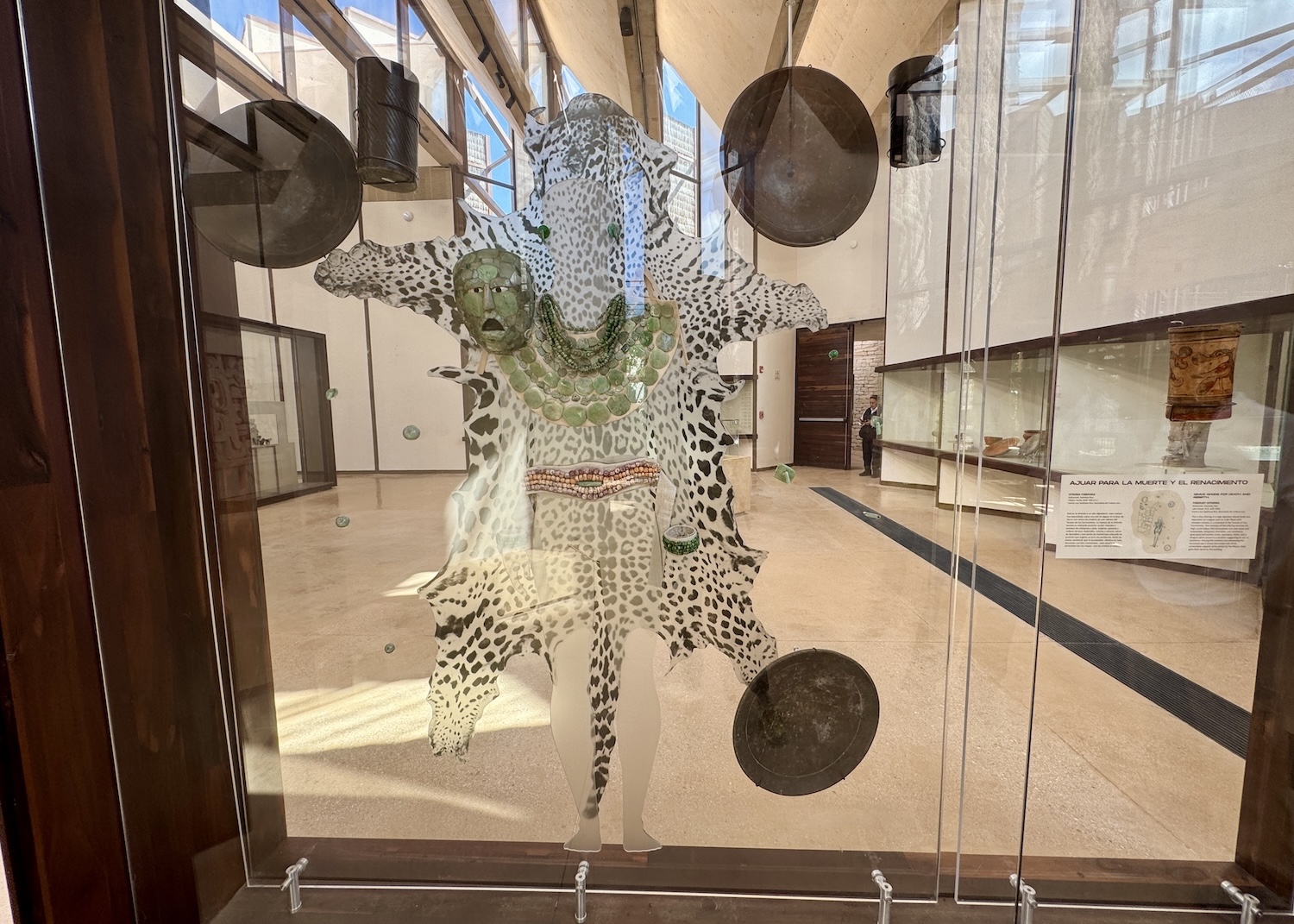
Three small halls focus on geology, the Maya world and the Maya of this region. They showcase more than 300 original archaeological pieces and high-quality replicas.
This is the only place you’re likely to see evidence of the park’s namesake, although jaguars are only depicted on ancient ceramics and as part of a funerary offering for a dignitary who was laid to rest on a pelt with other items that signified his status.
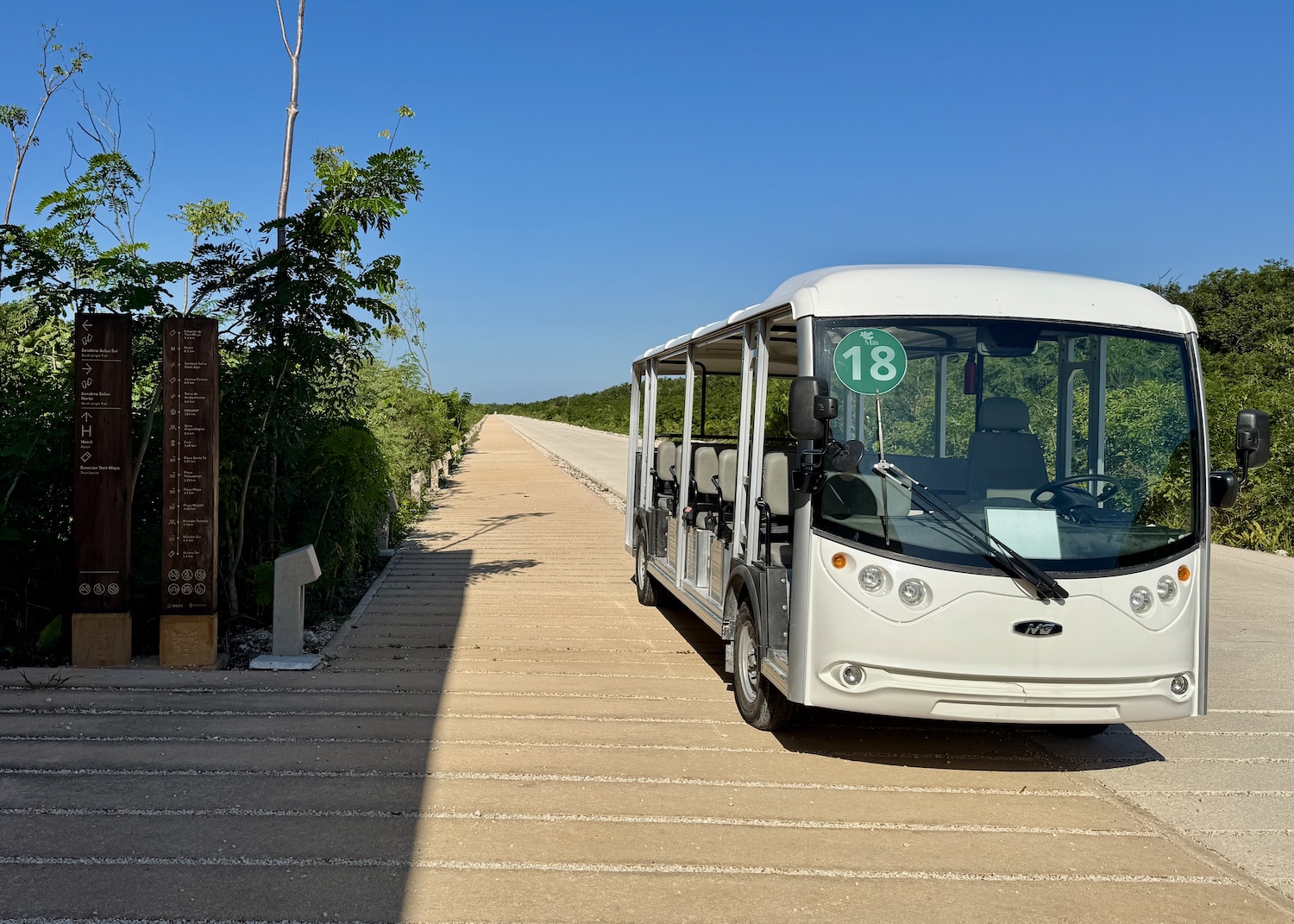
Outside the museum is the rendezvous point for free electric shuttles that will transport you across the park, which is five miles from the train station to the south entrance. These vehicles are plentiful, hold 23 people and abide by speed limits of 12 miles an hour because of the chance of wildlife crossings.
We got to stop for one unidentified but non-poisonous snake and a flock of Chachalacas, a long-tailed tropical chicken.
The shuttle's less-traveled direction takes you as far west as Tren Maya’s Tulum station just outside the park and past two of its three trails. The well-traveled route takes you east past the third trail and observation tower, over the bridge and to the archaeological zone and beaches.

A few more thoughts about that eye-catching circular tower that was designed to blend with the natural environment.
We got special access but it’s closed through mid-December for maintenance due to the way the sea air causes rust and corrosion. There’s no elevator so climbing those 137 steps is your only option. The platform at the top is narrow and more than 440 feet in diameter. The wood panels are being replaced but include nods to the complex Maya calendar.
“From the top of our observation tower, you can feel the presence of the jaguar's ancestral magic,” the park promises on its Instagram page. “A symbol of strength, mystery, and connection to the jungle, reminding us that every corner of Jaguar Park holds ancient stories.”

Indeed, every piece of infrastructure has a story to tell — even the seemingly utilitarian Puente de Interconexión (Interconnection Bridge).
Shuttles don't stop by the bridge, but it's well worth walking to it and then walking over it.
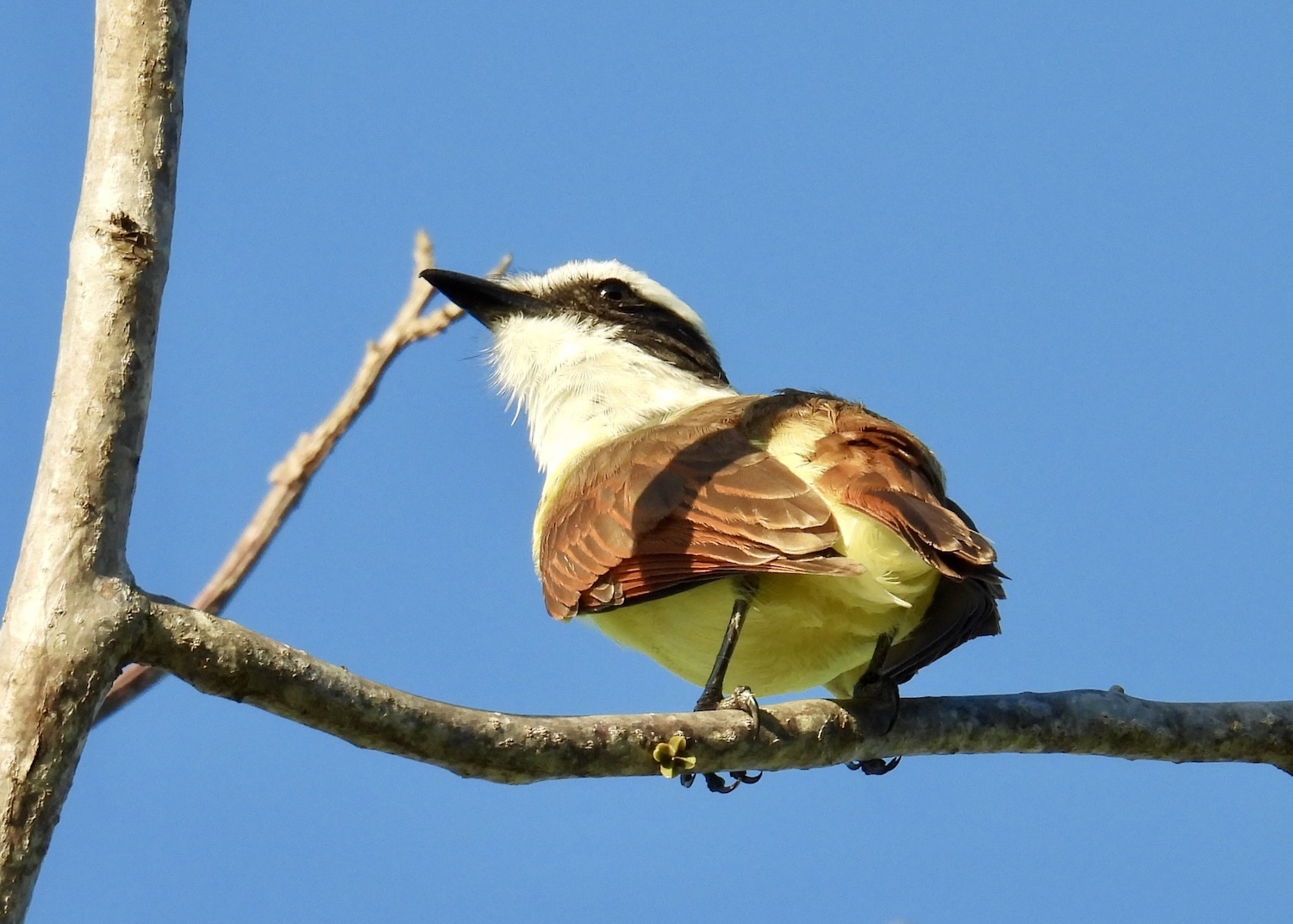
Designed as “architecture that connects with nature,” it crosses the highway that links Tulum and Cancún and features a clever pedestrian pathway loaded with greenery. Great Kiskadees and Social flycatchers are regulars on the railings. Wildlife cameras have caught bigger fauna crossing at night.
The bridge leads to the busy side of the park and its crown jewel — the Tulum Archaeological Zone.
As the only Maya site built on cliffs overlooking the Caribbean Sea, the walled complex has become the country’s third most visited archaeological site behind Teotihuacan and Chichén Itzá. (These important places are no longer called ruins.)
A government report titled Jaguar Park: A Legacy for Environmental and Cultural Conservation details how it became vital to better protect this archaeological marvel in the face of 1.3 million annual visitors to Tulum.

“Nestled in the heart of a protected area and surrounded by lush tropical vegetation, the archaeological zone needed improved conditions to cope with the influx of tourists,” the report explains. “Furthermore, the rampant real estate speculation in the surrounding area threatened to jeopardize this important heritage site, which belongs to all Mexicans but must also be preserved for the world to see.”
Expect to jockey for space with selfie seekers at a couple of stunning seaside viewpoints. Easier to photograph are all the spiny-tailed iguanas.

My time in Parque del Jaguar was divided between two November visits before high season.
The first visit, on a group trip from a resort north of Tulum, lasted just two hours and spat me out at the Plaza de Artesanos exit where vendors are allowed to congregate.
The second, on a private media tour, lasted the better part of a day and ended quietly at the park's south access point.
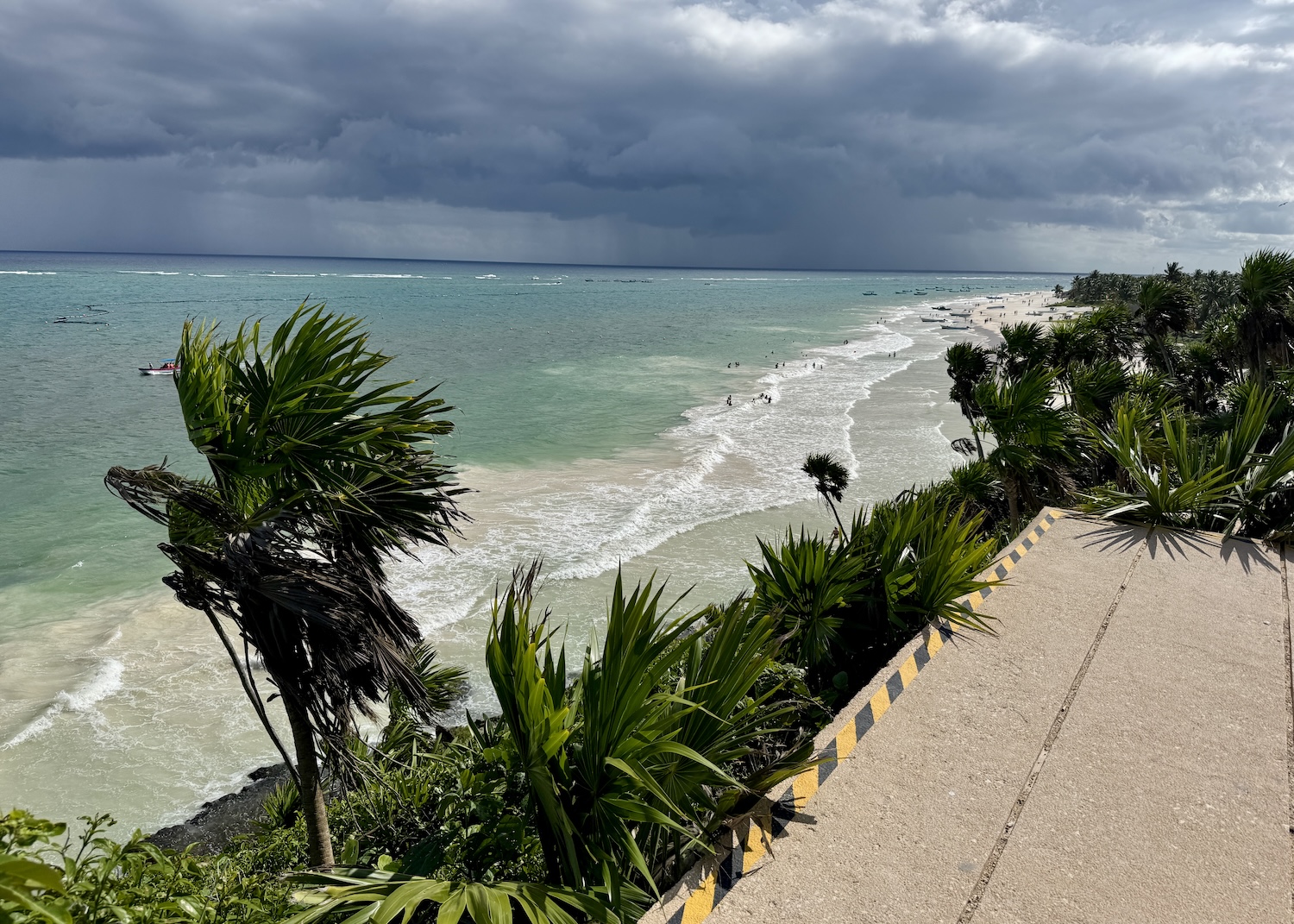
To get there, we made our way from the archaeological zone to Mirador Faro, a seaside lookout at a small reconstructed lighthouse.
Controversial government restrictions on free beach access had just been lifted and we looked down on people enjoying the sand and sea. There's never enough time to do everything, though, so we didn't climb down the stairs to that beach.
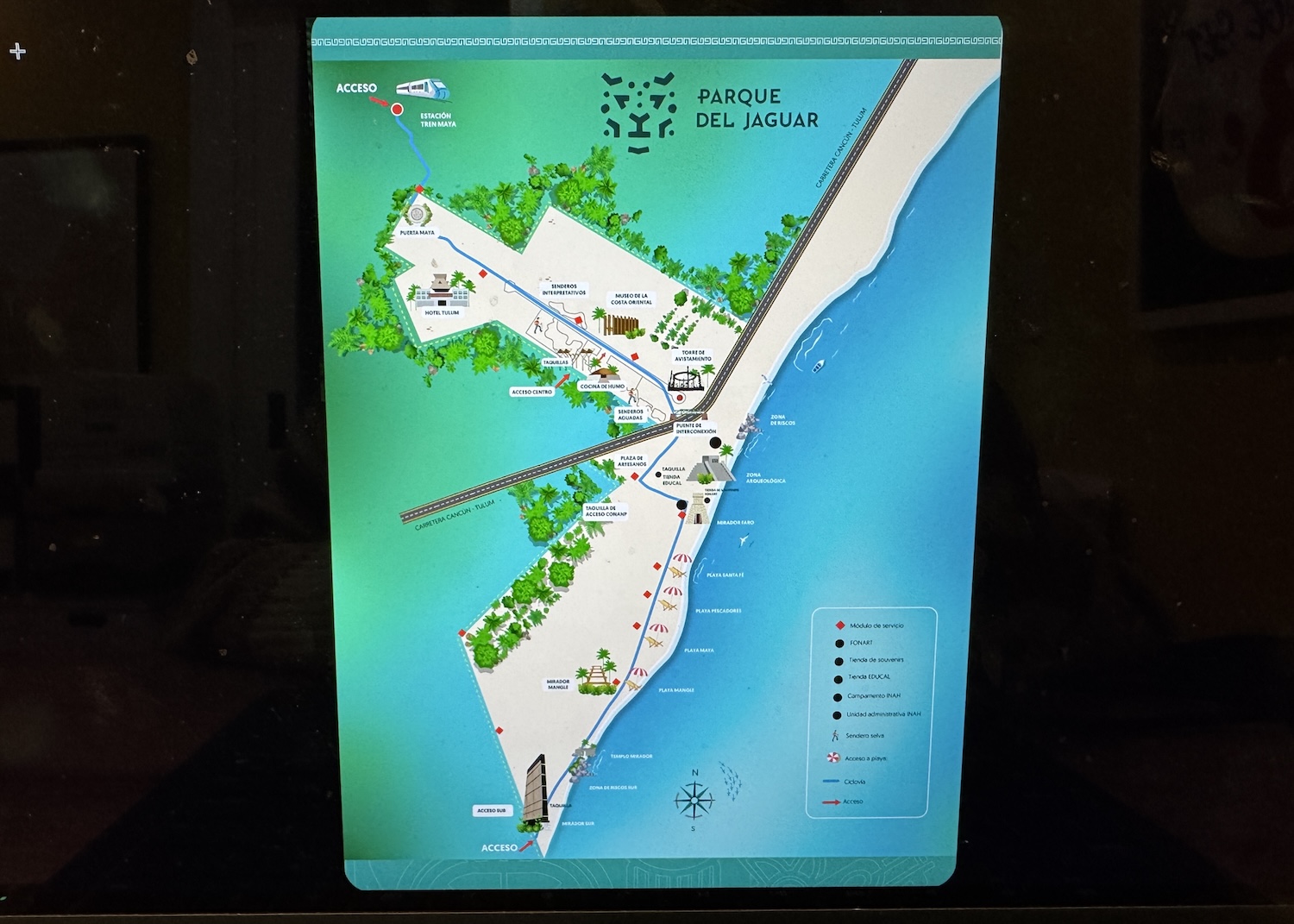
Our guide shared a few more lesser-known spots on the way out. Together we climbed a lookout called Mirador Mangle for a second round of sweeping views of the protected green space. There was time to wander across the road to Playa Mangle, a nesting beach for marine turtles between May and November.
Then we visited Templo Mirador, the original and reconstructed remains of a stone temple by the sea. But I only had eyes for the bright blue and black Yucatan jays that flew over the road by the trailhead and disappeared into the trees.
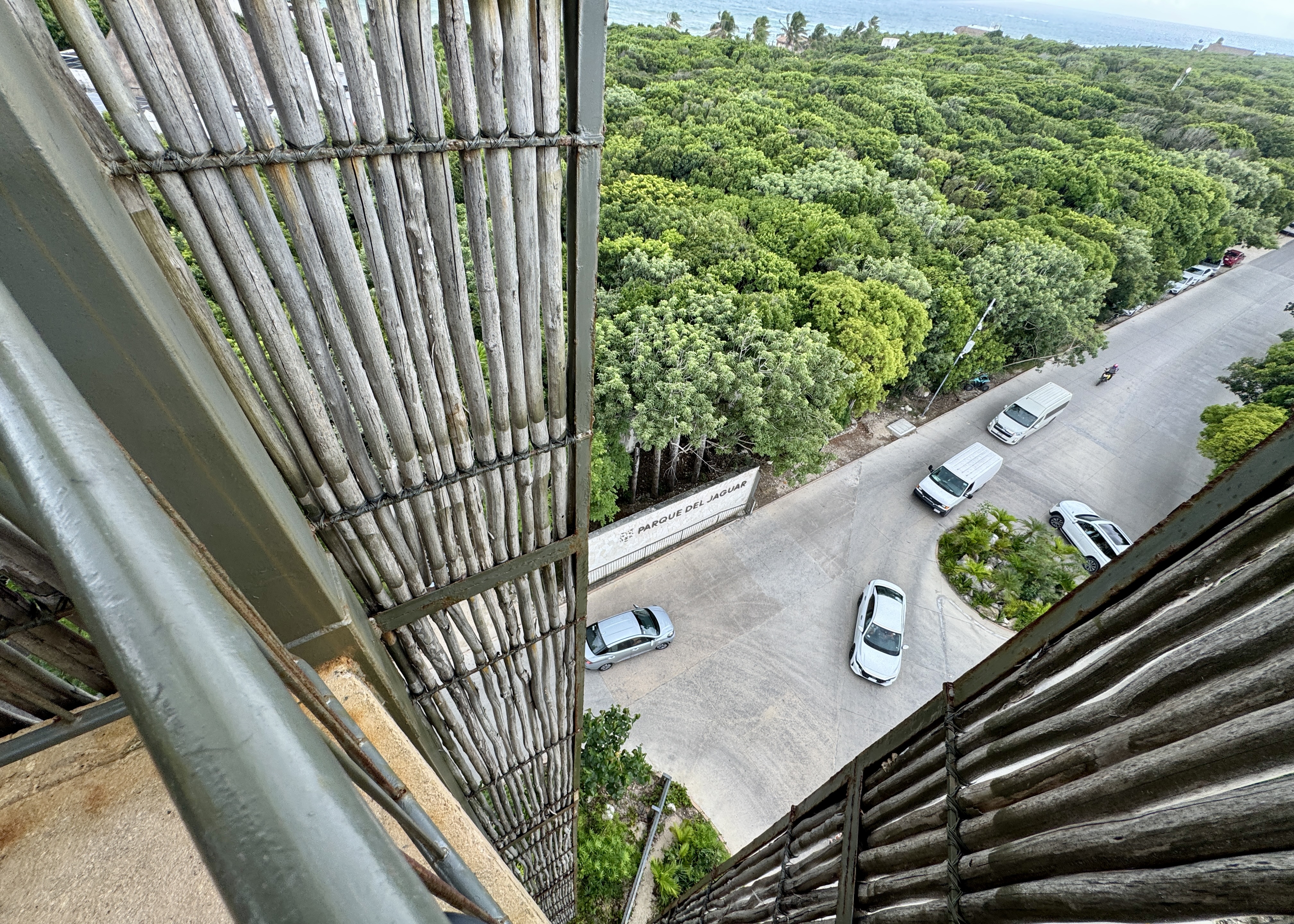
My second visit ended, as it began, in a tower considering Parque del Jaguar from above.
Below me was sea, jungle and city but also park officials vetting vehicles passing through a climate-responsive entry/exit plaza that’s shaded, vegetated and made of wooden beams and thatch. No new hotels are allowed inside the park's boundaries, but a handful of existing ones have been grandfathered in.
What do people see when they look at a park, I always wonder. Do they understand restrictions or just chafe at them? Do they value biodiversity or just beach? This ambitious park confused and challenged me at first, but it was also a pleasure to start to get to know.
Stories about:
Story Categories:
A copy of National Parks Traveler's financial statements may be obtained by sending a stamped, self-addressed envelope to: National Parks Traveler, P.O. Box 980452, Park City, Utah 84098. National Parks Traveler was formed in the state of Utah for the purpose of informing and educating about national parks and protected areas.
Residents of the following states may obtain a copy of our financial and additional information as stated below:
- Florida: A COPY OF THE OFFICIAL REGISTRATION AND FINANCIAL INFORMATION FOR NATIONAL PARKS TRAVELER, (REGISTRATION NO. CH 51659), MAY BE OBTAINED FROM THE DIVISION OF CONSUMER SERVICES BY CALLING 800-435-7352 OR VISITING THEIR WEBSITE. REGISTRATION DOES NOT IMPLY ENDORSEMENT, APPROVAL, OR RECOMMENDATION BY THE STATE.
- Georgia: A full and fair description of the programs and financial statement summary of National Parks Traveler is available upon request at the office and phone number indicated above.
- Maryland: Documents and information submitted under the Maryland Solicitations Act are also available, for the cost of postage and copies, from the Secretary of State, State House, Annapolis, MD 21401 (410-974-5534).
- North Carolina: Financial information about this organization and a copy of its license are available from the State Solicitation Licensing Branch at 888-830-4989 or 919-807-2214. The license is not an endorsement by the State.
- Pennsylvania: The official registration and financial information of National Parks Traveler may be obtained from the Pennsylvania Department of State by calling 800-732-0999. Registration does not imply endorsement.
- Virginia: Financial statements are available from the Virginia Department of Agriculture and Consumer Services, 102 Governor Street, Richmond, Virginia 23219.
- Washington: National Parks Traveler is registered with Washington State’s Charities Program as required by law and additional information is available by calling 800-332-4483 or visiting www.sos.wa.gov/charities, or on file at Charities Division, Office of the Secretary of State, State of Washington, Olympia, WA 98504.
INN Member

The easiest way to explore RV-friendly National Park campgrounds.

Here’s the definitive guide to National Park System campgrounds where RVers can park their rigs.
Our app is packed with RVing- specific details on more than 250 campgrounds in more than 70 national parks.
You’ll also find stories about RVing in the parks, tips helpful if you’ve just recently become an RVer, and useful planning suggestions.

