
Editor's note: Yellowstone Caldera Chronicles is a weekly column written by scientists and collaborators of the Yellowstone Volcano Observatory. This week's contribution is from Margery Price, physical science technician with the Yellowstone National Park Geology Program.
Ever wonder who collects hats blown into Yellowstone hot springs, repairs damage to bacterial mats or thermal ground, and monitors the health of Yellowstone’s thermal features? Meet the Yellowstone Geology Program!
When recreating or working in Yellowstone National Park, it’s not uncommon to stumble across a team of National Park Service (NPS) geologists in distinctive red safety vests. These folks are part of Yellowstone’s Geology Program: a specially trained team dedicated to protecting, remediating, and studying Yellowstone’s incredible geology and hydrothermal features. No two weeks are the same for the Geology Program team. Let's walk through some of the responsibilities of this unique NPS working unit!
One of the Geology team’s most important tasks is hydrothermal area cleanup. Yellowstone’s picturesque landscapes are visited by over four million visitors each year. This immense amount of visitor traffic combines with the area’s intense winds to create a near-constant stream of trash and hats that blow into delicate hydrothermal areas. Nearly all of this litter is unintentional, although sunflower seed shells, orange peels, and other food materials discarded by the occasional visitor accumulate as well and are particularly time-consuming for the team to remove.
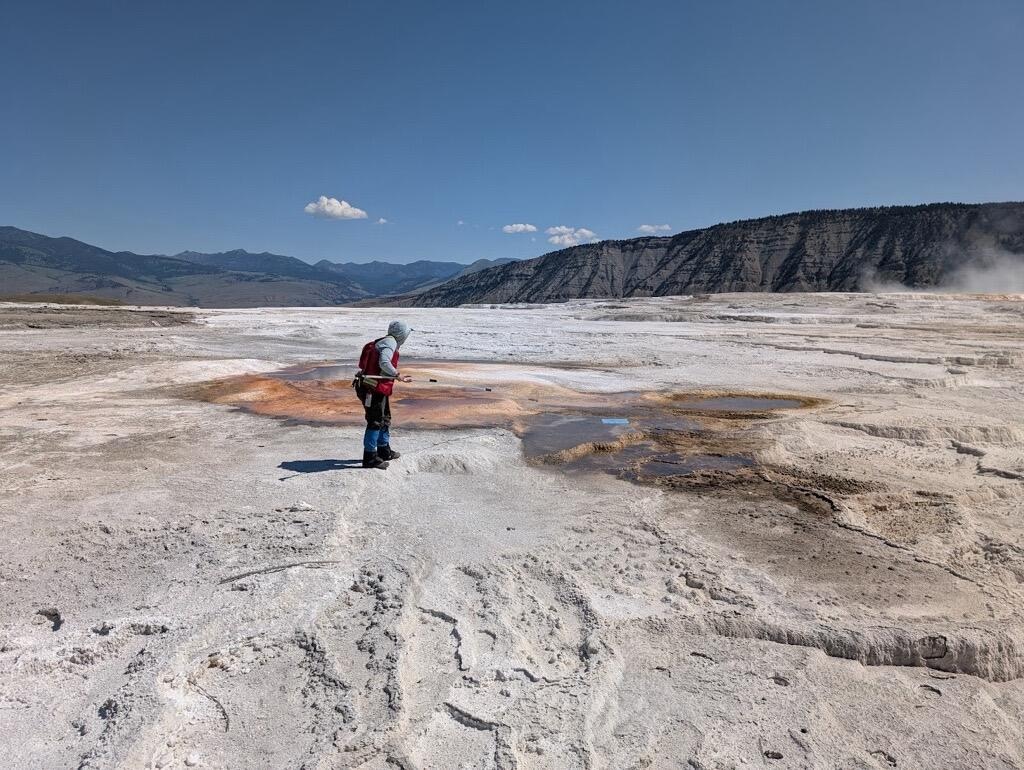
Sticks and rocks need to be removed from thermal springs, too! Although these items are “natural,” it’s not a coincidence that hydrothermal features near boardwalks and trails accumulate more rocks and sticks than more remote features. Debris thrown into a hot spring can irreversibly change its behavior, resulting in lower temperature, changes to color, and altered (or halted altogether!) eruption behavior—this is what caused a change in the color of Morning Glory pool, for example.
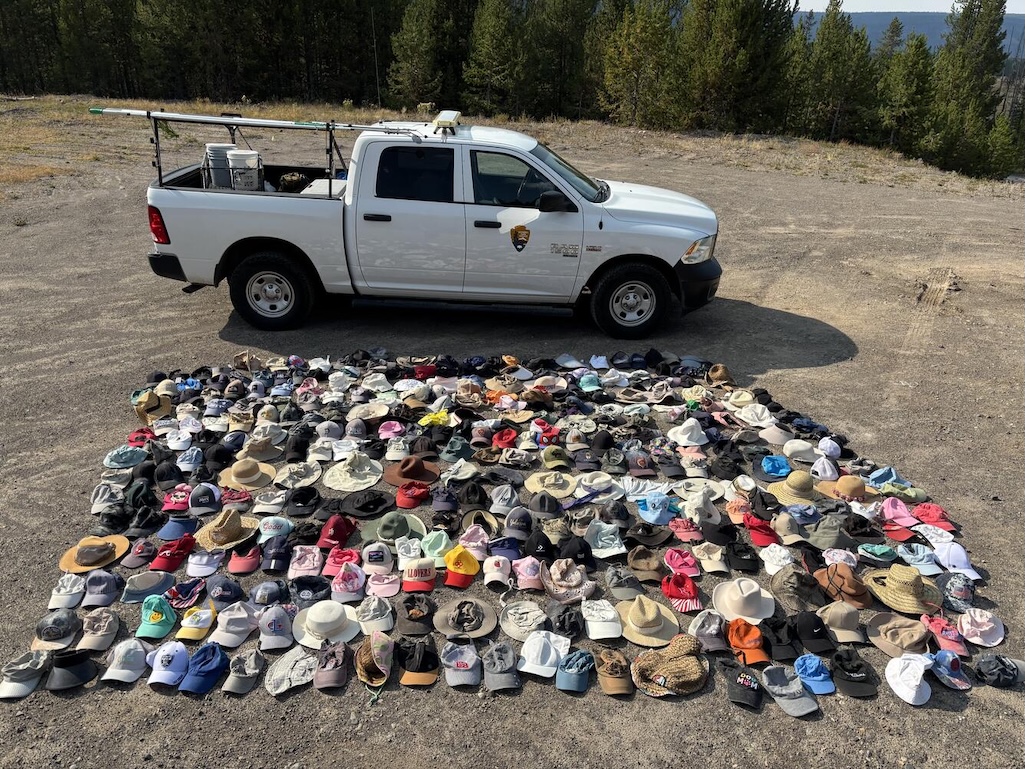
So far in 2025, the Yellowstone Geology crew has collected more than 13,000 pieces of trash, 4,000 rocks and sticks, and more than 300 hats (estimated to be worth upwards of $6,000!) from hydrothermal areas. In doing so, they have covered over 2,100 kilometers (1,300 miles) of trails and boardwalks on foot and have driven more than 18,000 kilometers (11,000 miles) to reach the various thermal areas throughout Yellowstone National Park.
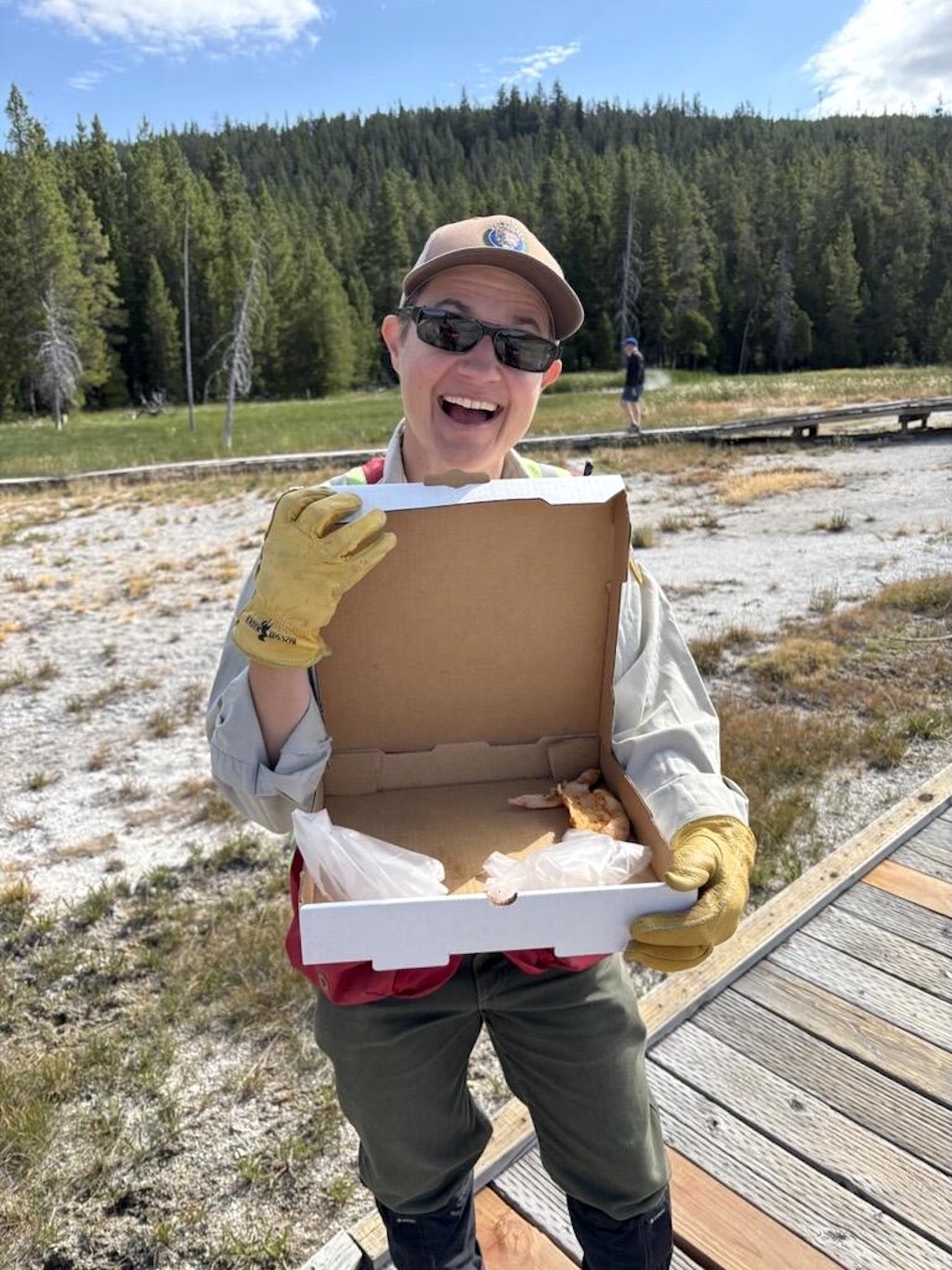
With so much time spent collecting debris, it’s only natural to find some bizarre items. Favorite finds from the team during the summer of 2025 include a Birkenstock sandal, a pizza box with slices still inside, a fake Louis Vuitton bucket hat, a stuffed koala toy, a ball cap with the phrase “I PEE IN THE LAKE,” and a Polaroid picture of Excelsior Geyser—which was found within Excelsior Geyser’s crater!
In addition to hydrothermal trash collection, the Geology team also conducts a lot of science! The staff use water quality instruments and a network of more than 100 temperature sensors to measure chemical composition and the eruptive activity of features across the park—information that is used by the park’s interpretive staff to help predict geyser behavior. Even more monitoring is done in collaboration with the Yellowstone Volcano Observatory (YVO), with Geology team members helping YVO partners install and maintain instruments that measure seismic activity, weather patterns, hydrothermal features, and more.

But that’s not all! The crew also spends time installing hazard signage, remediating footprints and graffiti, supervising maintenance work in hydrothermal areas, assessing geologic damage or hazards in collaboration with law enforcement investigations, and examining scientific records and resources to answer questions from other park departments.
The Geology team educates the public, too! They frequently stop to chat with curious visitors along boardwalks and trails, teach Junior Rangers about hot springs, and explain scientific concepts to tour groups—all important ways to help the public understand more about Yellowstone’s unique landscape.
You can help protect Yellowstone as well! When you visit the park, hold on tight to your hats, stay on marked boardwalks and trails, and make sure all your trash (even the food!) ends up in a trash can.
Stories about:
Story Categories:
A copy of National Parks Traveler's financial statements may be obtained by sending a stamped, self-addressed envelope to: National Parks Traveler, P.O. Box 980452, Park City, Utah 84098. National Parks Traveler was formed in the state of Utah for the purpose of informing and educating about national parks and protected areas.
Residents of the following states may obtain a copy of our financial and additional information as stated below:
- Florida: A COPY OF THE OFFICIAL REGISTRATION AND FINANCIAL INFORMATION FOR NATIONAL PARKS TRAVELER, (REGISTRATION NO. CH 51659), MAY BE OBTAINED FROM THE DIVISION OF CONSUMER SERVICES BY CALLING 800-435-7352 OR VISITING THEIR WEBSITE. REGISTRATION DOES NOT IMPLY ENDORSEMENT, APPROVAL, OR RECOMMENDATION BY THE STATE.
- Georgia: A full and fair description of the programs and financial statement summary of National Parks Traveler is available upon request at the office and phone number indicated above.
- Maryland: Documents and information submitted under the Maryland Solicitations Act are also available, for the cost of postage and copies, from the Secretary of State, State House, Annapolis, MD 21401 (410-974-5534).
- North Carolina: Financial information about this organization and a copy of its license are available from the State Solicitation Licensing Branch at 888-830-4989 or 919-807-2214. The license is not an endorsement by the State.
- Pennsylvania: The official registration and financial information of National Parks Traveler may be obtained from the Pennsylvania Department of State by calling 800-732-0999. Registration does not imply endorsement.
- Virginia: Financial statements are available from the Virginia Department of Agriculture and Consumer Services, 102 Governor Street, Richmond, Virginia 23219.
- Washington: National Parks Traveler is registered with Washington State’s Charities Program as required by law and additional information is available by calling 800-332-4483 or visiting www.sos.wa.gov/charities, or on file at Charities Division, Office of the Secretary of State, State of Washington, Olympia, WA 98504.


National parks and their natural resources belong to you. The National Parks Traveler works to ensure you know how these essential places are being cared for.
Sign Up For Our Weekly Newsletter
Unsubscribe at any time.
INN Member

The easiest way to explore RV-friendly National Park campgrounds.

Here’s the definitive guide to National Park System campgrounds where RVers can park their rigs.
Our app is packed with RVing- specific details on more than 250 campgrounds in more than 70 national parks.
You’ll also find stories about RVing in the parks, tips helpful if you’ve just recently become an RVer, and useful planning suggestions.

