
Together, we worked to ensure that the National Park System remained a source of pride, connection, and opportunity for every American. Together, we wanted to ensure every American saw a reflection of themselves in their parks.
But the federal-state partnerships that have been the bedrock of the National Park Service’s work for more than 100 years are now under great threat.
Secretary of the Interior Doug Burgum recently appeared at a Senate briefing to defend President Donald Trump’s proposal to offload national parks to the states. The idea may sound like a gesture of local empowerment, but let’s be clear: it’s a plan to shift costs, weaken protections, and dismantle a system that has long served the American people.
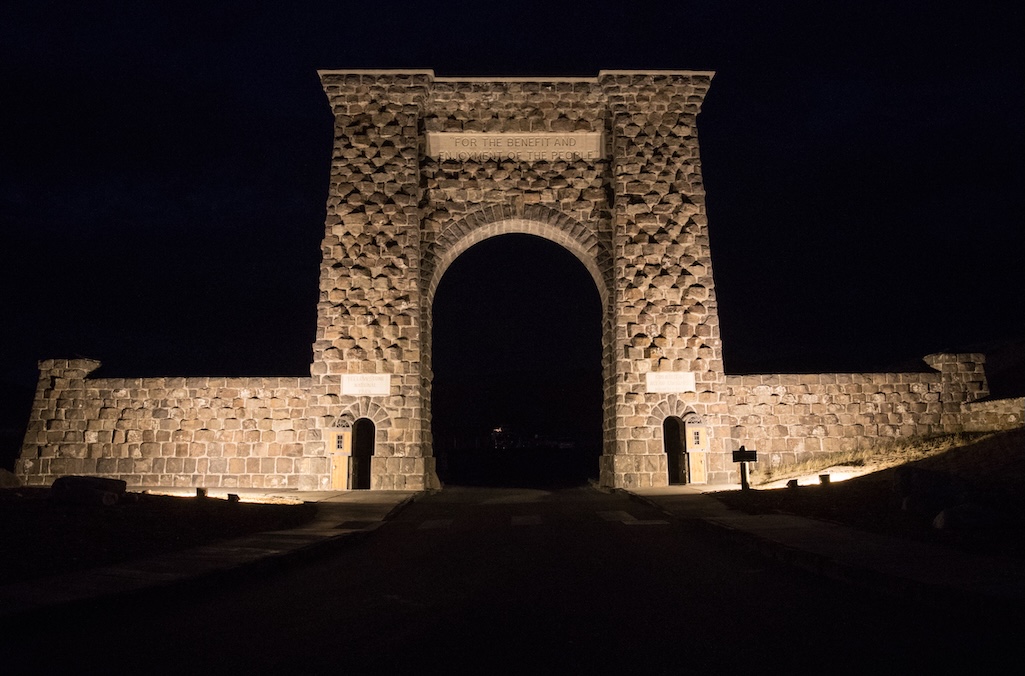
One of the largest challenges facing the National Park Service is its more than $23 billion in maintenance backlog. Tackling this challenge was a top priority during my time as Director. From rebuilding vital bridges at Yellowstone National Park that will preserve year-round public access, to replacing dilapidated maintenance facilities at Acadia National Park that will better assist the park’s campgrounds and wastewater systems. But while we made incredible progress to address the backlog in parks across the country, there is still a lot of work left. Instead of addressing that burden, the President and Secretary Burgum’s proposal simply dumps it on state governments, most of which don’t have the budget or capacity to take it on.
A recent report from Climate Power outlines how much of this maintenance backlog would be absorbed by individual states: $646 million in North Carolina, including a share of the $557 million tied to the Blue Ridge Parkway; $589 million in Pennsylvania, including $430 million for smaller park units outside Philadelphia’s Independence National Historical Park; and $218 million in Ohio, including over $100 million for parks beyond Cuyahoga Valley National Park.
The proposal would also fracture our coordinated wildfire response. The National Park Service plays a critical role in deploying trained personnel and resources during fire season, capabilities states alone cannot replicate at scale. The Dragon Bravo Fire at Grand Canyon National Park that has now been raging for more than a month underscores the dangers of dismantling this system. Under state control, parks would lose access to critical federal resources, including the $2.85 billion Wildfire Suppression Operations Reserve Fund and other funding for wildfire preparedness and fuels management, important tools for preventing and combating catastrophic fires.
As a Tribal citizen and a Navy veteran, I’ve always believed in honoring our commitments—to our lands, to our people, and to our neighbors. That’s why it’s deeply troubling that this proposal would strip away access to our national parks for more than 17 million veterans and 10 million seniors. Today, members of the U.S. military and their dependents, Gold Star Families, and veterans are eligible for free annual or lifetime passes to national parks. Similarly, Americans aged 62 and older can enjoy our public lands through programs like the Senior Lifetime Pass. These programs were created to honor those who have served our country and contributed to its strength, they’ve earned the right to enjoy the beauty of our shared public lands. Under state control, these programs would be fragmented, and the promises we made as a nation would disappear.
Our national parks are a reflection of who we are as a nation and what we value as a people. They remind us that some places are worth protecting, not just for their beauty or history, but for the connection they offer to one another and to the land itself. The strength of the National Park System has always come from our collective commitment to care for these places, together. Dismantling that commitment puts too much at risk. We owe it to the generations that came before us, and those still to come, to ensure our parks remain accessible, resilient, and protected for all.
Story Categories:
A copy of National Parks Traveler's financial statements may be obtained by sending a stamped, self-addressed envelope to: National Parks Traveler, P.O. Box 980452, Park City, Utah 84098. National Parks Traveler was formed in the state of Utah for the purpose of informing and educating about national parks and protected areas.
Residents of the following states may obtain a copy of our financial and additional information as stated below:
- Florida: A COPY OF THE OFFICIAL REGISTRATION AND FINANCIAL INFORMATION FOR NATIONAL PARKS TRAVELER, (REGISTRATION NO. CH 51659), MAY BE OBTAINED FROM THE DIVISION OF CONSUMER SERVICES BY CALLING 800-435-7352 OR VISITING THEIR WEBSITE. REGISTRATION DOES NOT IMPLY ENDORSEMENT, APPROVAL, OR RECOMMENDATION BY THE STATE.
- Georgia: A full and fair description of the programs and financial statement summary of National Parks Traveler is available upon request at the office and phone number indicated above.
- Maryland: Documents and information submitted under the Maryland Solicitations Act are also available, for the cost of postage and copies, from the Secretary of State, State House, Annapolis, MD 21401 (410-974-5534).
- North Carolina: Financial information about this organization and a copy of its license are available from the State Solicitation Licensing Branch at 888-830-4989 or 919-807-2214. The license is not an endorsement by the State.
- Pennsylvania: The official registration and financial information of National Parks Traveler may be obtained from the Pennsylvania Department of State by calling 800-732-0999. Registration does not imply endorsement.
- Virginia: Financial statements are available from the Virginia Department of Agriculture and Consumer Services, 102 Governor Street, Richmond, Virginia 23219.
- Washington: National Parks Traveler is registered with Washington State’s Charities Program as required by law and additional information is available by calling 800-332-4483 or visiting www.sos.wa.gov/charities, or on file at Charities Division, Office of the Secretary of State, State of Washington, Olympia, WA 98504.
INN Member

The easiest way to explore RV-friendly National Park campgrounds.

Here’s the definitive guide to National Park System campgrounds where RVers can park their rigs.
Our app is packed with RVing- specific details on more than 250 campgrounds in more than 70 national parks.
You’ll also find stories about RVing in the parks, tips helpful if you’ve just recently become an RVer, and useful planning suggestions.

