
The writer Isabel Wilkerson once wrote that, in pursuit of a story, she doesn’t do formal interviews. Instead, she has conversations. She builds relationships with her sources. She seeks to create what she calls “accelerated intimacy,” so people feel comfortable enough to share things with her. The only way to create this intimacy is with effort and care.
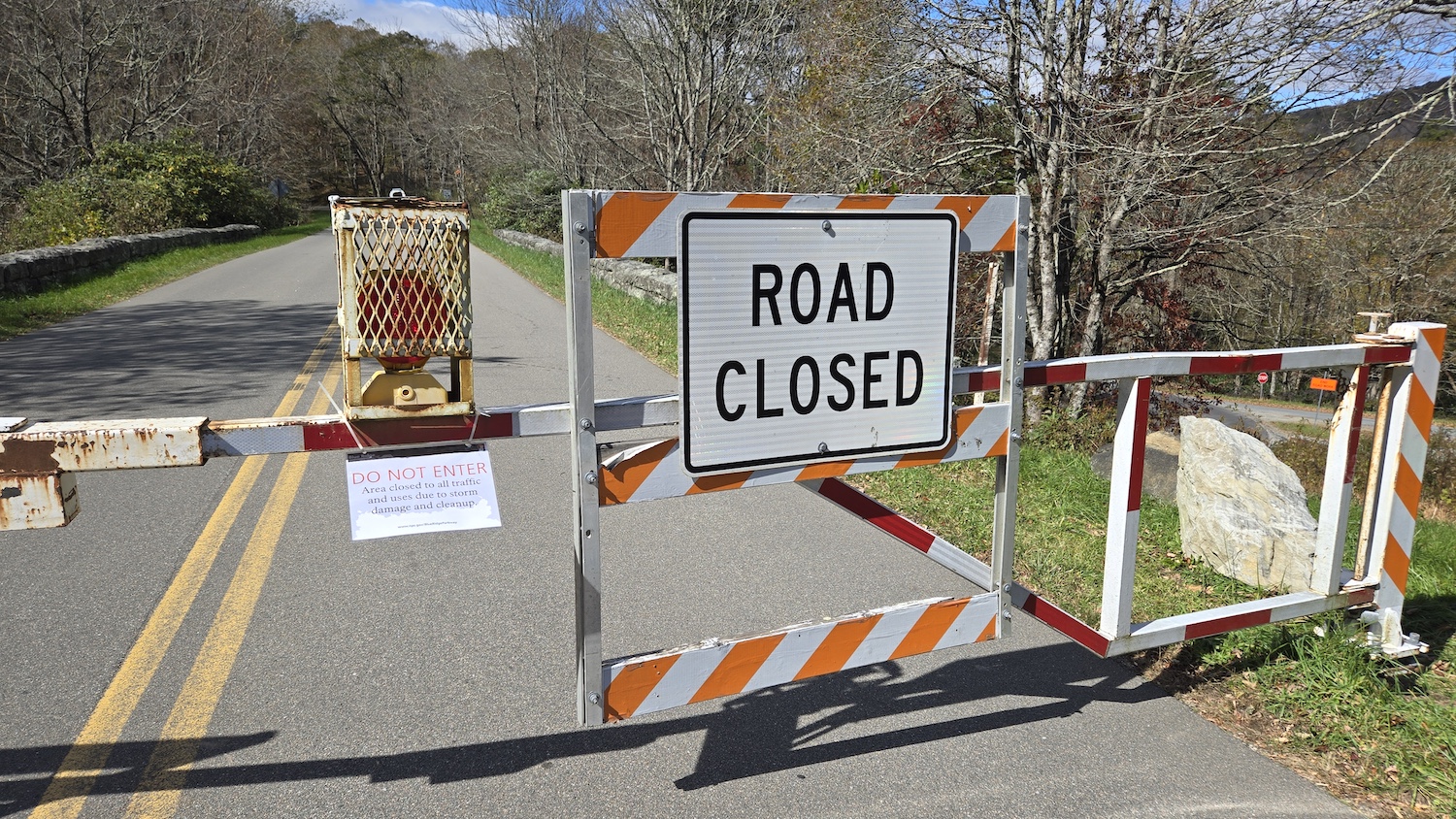
I thought about Wilkerson’s words when I traveled to western North Carolina nearly a year ago to report on the economic aftermath of Hurricane Helene. A Category 4 hurricane at its peak, the storm was still just recent history when I headed in mid-October from my home in Arlington, Virginia, to the mountain town of Boone, famous for Appalachian State University and only a few minutes from the Blue Ridge Parkway. At the time, most of the parkway in North Carolina was still closed because of storm damage.
I chose to visit Boone and the nearby parkway town of Blowing Rock because these gateway towns were undeniably affected by the hurricane—and particularly the intense flooding it spawned—but the damage wasn’t as severe as it was farther south in places like Asheville, which officials were still urging people to stay away from, due to extensive hazardous conditions.
In Boone and Blowing Rock, I met with several tourism and business officials, from whom I hoped to gain an understanding of how the parkway’s closure was affecting tourism in what was normally peak leaf-peeping season and how businesses were likely to be impacted over the coming months. What I expected were facts and figures, contingency plans, and logistical concerns, but what I gained was accelerated intimacy.
In addition to being a writer, I am also a writing instructor for Johns Hopkins University’s master’s in science writing program. Time and again, I have told my writing students—some of whom are from a generation that might prefer conducting interviews via text—that nothing beats interviewing people in person. We connect with one another with our words, yes; but we also connect with our body language, our gestures, our energy.
By taking the time to meet with these tourism officials in person, I was able to get on the same page with them much more quickly. Within several minutes of meeting, nearly every person I interviewed for the story got choked up or shed a tear, talking about the severity of impacts—the loss of lives and livelihoods, the chaos inherent in sorting out the recovery, and the uncertainty of what lay ahead. That comes with creating trust that I was going to take care with their stories, which all good reporters must do.
It's not always possible to travel to a national park in person to report on a story, but whenever possible, National Parks Traveler attempts to send its journalists to meet people where they are, to view these places we write about with our own eyes. We do good work from our desks, too, but getting out in the field is unmatched in its storytelling power.
With federal budget cuts and increasing government limits on press access to the National Park Service, this kind of on-the-ground reporting is more difficult than it’s ever been, which makes it more important than ever. I hope you’ll support the Traveler so we can continue to bring these kinds of stories to you.
A copy of National Parks Traveler's financial statements may be obtained by sending a stamped, self-addressed envelope to: National Parks Traveler, P.O. Box 980452, Park City, Utah 84098. National Parks Traveler was formed in the state of Utah for the purpose of informing and educating about national parks and protected areas.
Residents of the following states may obtain a copy of our financial and additional information as stated below:
- Florida: A COPY OF THE OFFICIAL REGISTRATION AND FINANCIAL INFORMATION FOR NATIONAL PARKS TRAVELER, (REGISTRATION NO. CH 51659), MAY BE OBTAINED FROM THE DIVISION OF CONSUMER SERVICES BY CALLING 800-435-7352 OR VISITING THEIR WEBSITE. REGISTRATION DOES NOT IMPLY ENDORSEMENT, APPROVAL, OR RECOMMENDATION BY THE STATE.
- Georgia: A full and fair description of the programs and financial statement summary of National Parks Traveler is available upon request at the office and phone number indicated above.
- Maryland: Documents and information submitted under the Maryland Solicitations Act are also available, for the cost of postage and copies, from the Secretary of State, State House, Annapolis, MD 21401 (410-974-5534).
- North Carolina: Financial information about this organization and a copy of its license are available from the State Solicitation Licensing Branch at 888-830-4989 or 919-807-2214. The license is not an endorsement by the State.
- Pennsylvania: The official registration and financial information of National Parks Traveler may be obtained from the Pennsylvania Department of State by calling 800-732-0999. Registration does not imply endorsement.
- Virginia: Financial statements are available from the Virginia Department of Agriculture and Consumer Services, 102 Governor Street, Richmond, Virginia 23219.
- Washington: National Parks Traveler is registered with Washington State’s Charities Program as required by law and additional information is available by calling 800-332-4483 or visiting www.sos.wa.gov/charities, or on file at Charities Division, Office of the Secretary of State, State of Washington, Olympia, WA 98504.
INN Member

The easiest way to explore RV-friendly National Park campgrounds.

Here’s the definitive guide to National Park System campgrounds where RVers can park their rigs.
Our app is packed with RVing- specific details on more than 250 campgrounds in more than 70 national parks.
You’ll also find stories about RVing in the parks, tips helpful if you’ve just recently become an RVer, and useful planning suggestions.

