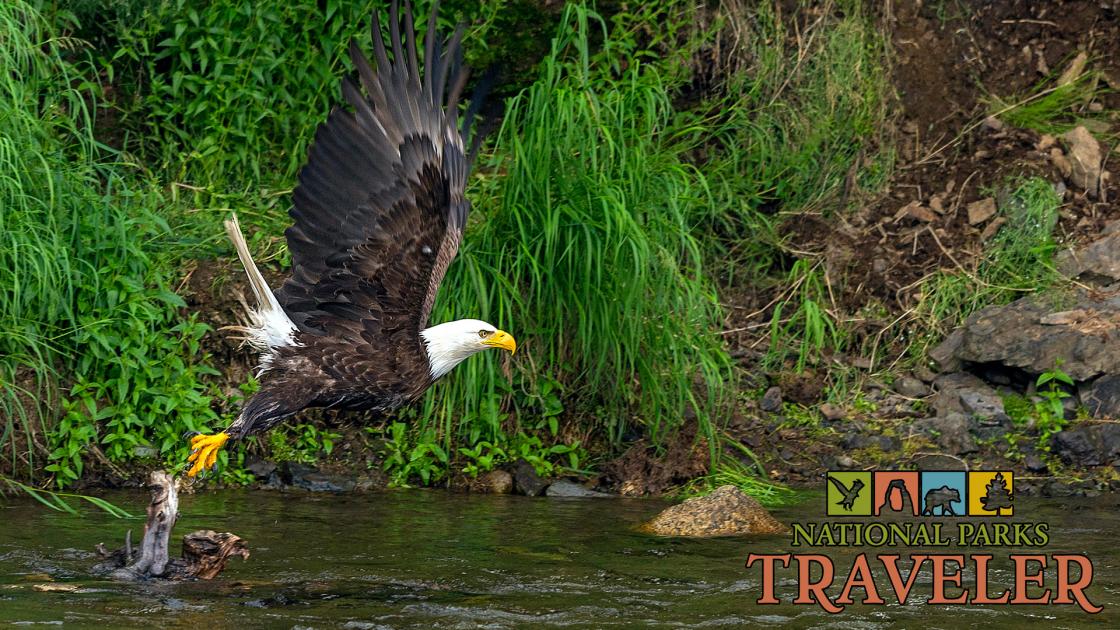
Having just gone through the 2020 presidential election, what better time to talk about the symbol of American democracy – the bald eagle. The bald eagle first appeared on the Great Seal of the United States in 1782 – holding in its talons an olive branch and 13 arrows. Less than 200 years later, the national bird of the United States was nearly extinct.
Whether an endangered species can rebound and how quickly this can happen depends on many factors: food availability, disappearing habitats, exposure to pollutants, successful reproduction, and the scientists who assess and measure these things.
In this week’s podcast the Traveler’s Lynn Riddick talks with one such scientist, Dr. Bryan Watts, an authority on bald eagle populations around the Chesapeake Bay. His research indicates that when it comes to breeding success, bald eagles that utilize national park lands around the Chesapeake Bay may have a slight advantage over the bay’s other estuarine systems.
:02 National Parks Traveler introduction
:12 Episode introduction with Kurt Repanshek
1:44 Big Country - Randy Petersen - The Sounds of Yellowstone
2:16 Western National Parks Association promotion
2:40 WildTribute.com promotion
3:05 North Cascades Institute promotion
3:34 Traveler's Lynn Riddick and Dr. Bryan Watts discuss Chesapeake Bay bald eagles and how national park units benefit them.
28:07 Wonder Lake - Various Artists - The Spirit of Alaska
28:26 National Parks Traveler promotion
28:41 Friends of Acadia promotion
29:09 Blue Ridge Parkway Foundation promotion
29:33 Washington’s National Park Fund promotion
30:07 Grand Teton National Park Foundation promotion
30:42 The discussion of Chesapeake Bay bald eagle populations continues.
39:41 Caribbean Song - Tim Heintz - The Sounds of the Everglades
39:52 Episode Closing
41:07 Orange Tree Productions promotion
41:43 Splitbeard Productions
41:54 National Parks Traveler footer
- By NPT Staff - November 8th, 2020 7:00am