Travel to Cape Hatteras National Seashore in North Carolina, and you might have the opportunity to see both land- and sea-based wildlife during your visit. What you spot depends upon where you are, the time of day, and the season you visit.
Land Mammals
Deer, muskrats, raccoons, and coyotes are prevalent mammals seen on land, with deer the most commonly-seen. The coyote, however, is becoming a more frequently-seen mammal as well, due to its adaptability to a wide range of habitats. It’s distinctly possible you may see a coyote wandering one of the seashore’s beaches.

Coyotes and all the other mammals you might see here are wild animals and unpredictable. Please don’t ever approach or feed them. They become habituated to humans and will choose to be aggressive in their search for more human food rather than eat the naturally-occurring foods that are healthier for them. If you own a cat or small dog, make sure both are leashed since coyotes see these small animals as prey and there is the distinct possibility they might attempt to attack them. Remember, you are on the coyotes’ home turf.
Marine Mammals
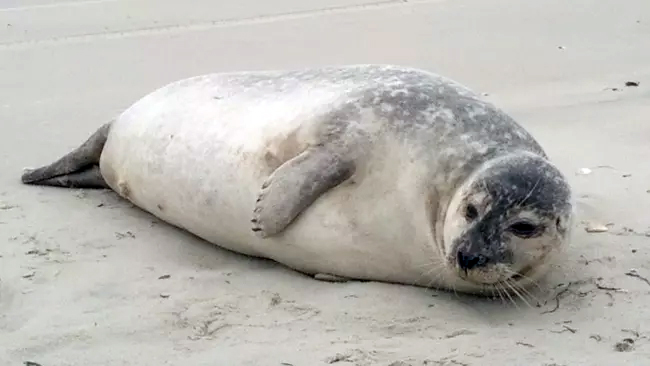
This is a national seashore, so it’s highly likely you might spot a seal resting on the beach, sunning itself. You might also spy a whale or dolphin out in the distant waters.
Reptiles
During your visit, there’s a possibility of spotting a reptile, since there are 60 species living on the Outer Banks. This includes lizards, alligators, sea- and land-based turtles, and snakes, including at least four venomous snakes. Keep your eyes open as you wander the dunes and marshes of this national seashore.
Sea Life
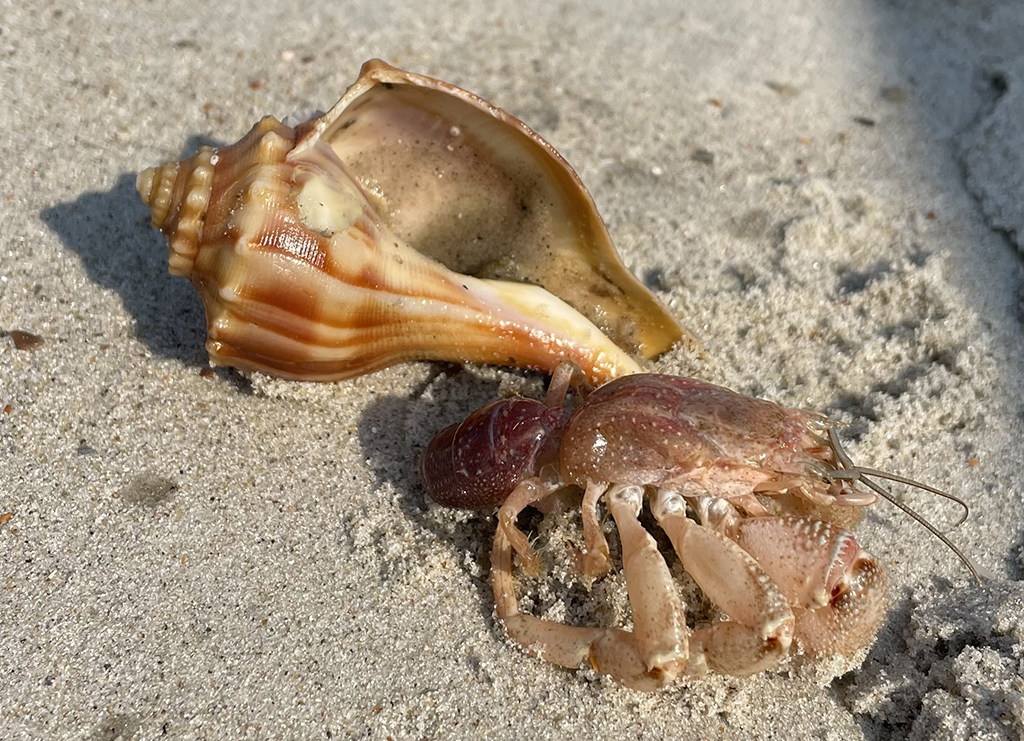
It goes without saying you’ll probably see crabs, including hermit crabs, ghost crabs, and sand crabs. Cannonball jellyfish, moon jellies, and even the siphonophore Portuguese Man o’ War might wash upon the beach, too. Don’t ever touch them, even if they appear dead. Their stinging cells can still cause minor skin and eye irritations or more serious pain and swelling requiring medical attention.
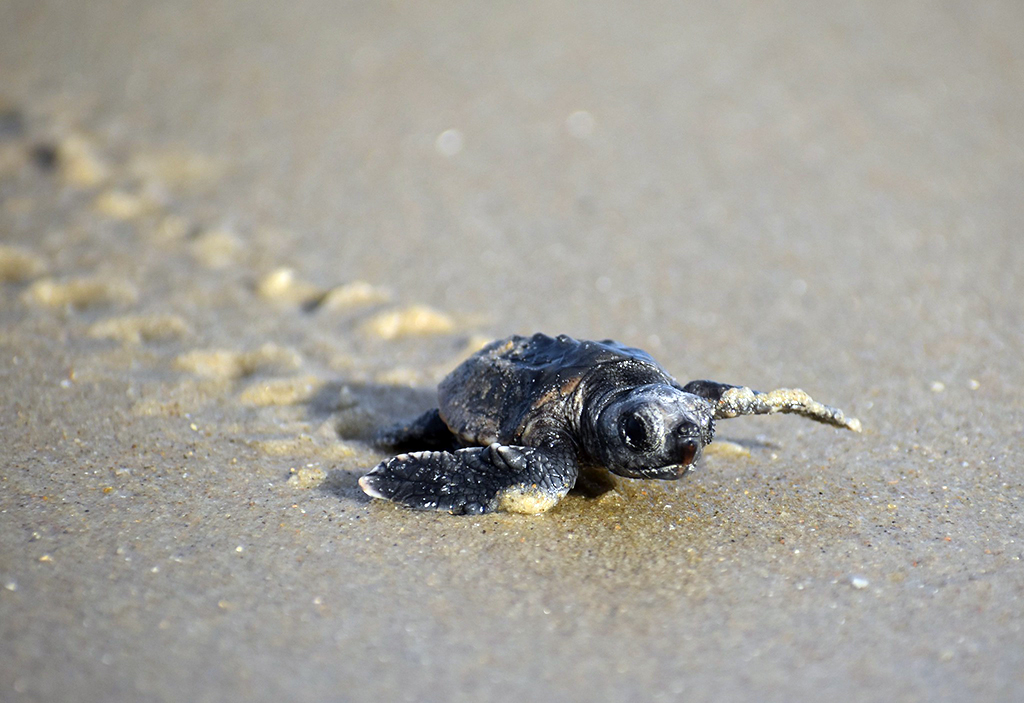
The most iconic of wildlife you might be fortunate enough to spot while wandering the beaches or paddling your kayak or canoe is the sea turtle.
According to Park Staff:
There are five species of sea turtles found along the Cape Hatteras National Seashore - the leatherback, hawksbill (rarely seen), Kemp's ridley, loggerhead and green. While all five of these sea turtle species can be found in Seashore waters throughout the year, it is the female loggerhead and green turtles—and occasional leatherback and Kemp's ridley turtles—that nest on these beaches, which are considered to be the extreme northern limits of their nesting grounds. Hawksbills were documented nesting on Cape Hatteras for the first time in 2015, with two nests laid by a single female.
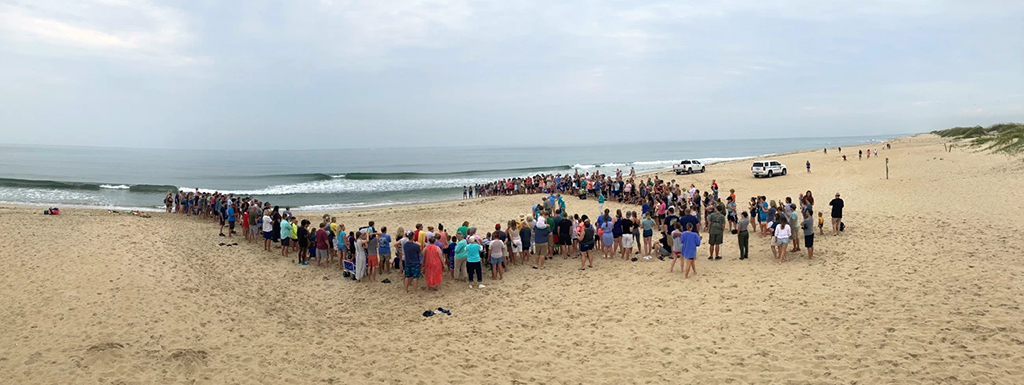
During August and September, after the sea turtles have laid their eggs and the hatchlings have “swum” across the sand, visitors traveling to the national seashore during that time have the chance to attend a public sea turtle nest excavation.
According to Park Staff:
[During an excavation], biologists check what’s left in the nest after the turtles have hatched. Biologists will document what remains in the nest after a natural hatch has occurred for research. They count the empty eggshells, collect unhatched eggs, and sometimes find live or dead hatchlings. While this is happening, a park ranger will talk about sea turtles and explain what the biologists have found.
Nest excavations are an important way for the National Park Service to collect valuable data on sea turtle hatch and emergence success rates. This data is added to the turtle nesting databases for the Seashore and the State of North Carolina.
The five species of sea turtles are all protected under the Endangered Species Act. Why?
According to Park Staff:
The greatest threat to sea turtle survival is human activity including: the loss of nesting habitat due to coastal development, drowning in fishing gear, being hit by boats, disturbance of nesting beaches (development, beach lighting, sea walls, jetties, items left on the beach overnight, and nighttime activity on the beach), pollution and non-degradable debris in the ocean, and harvesting of eggs and adults for food and commercial goods. Although we may not be able to stop all of these things from affecting certain species, conservation and protection of fish, wildlife, and plants can only benefit the planet for, according to the Endangered Species Act (ESA), these species "are of esthetic, ecological, educational, historical, recreational, and scientific value to the Nation and its people."
Like all National Parks, the seashore is a special place that was established to help uphold the National Park Service's mission "to preserve unimpaired the natural and cultural resources and values of the National Park System for the enjoyment, education, and inspiration of this and future generations." Conserving endangered species is an important part of this mission and a responsibility of all those who would be stewards of Cape Hatteras National Seashore.
Sea turtles were placed under the protection of the ESA including the five species found in the Seashore's waters with the Kemp's Ridley, leatherback and hawksbill listed as Endangered, the loggerhead as Threatened, and the green as Threatened in its entire range except in the breeding populations in Florida and on Mexico's Pacific coast, where it is listed as Endangered.
If you see a sea turtle, always call 252-216-6892 to report any sighting (nesting, live, cold-stunned, dead, tangled, etc.).
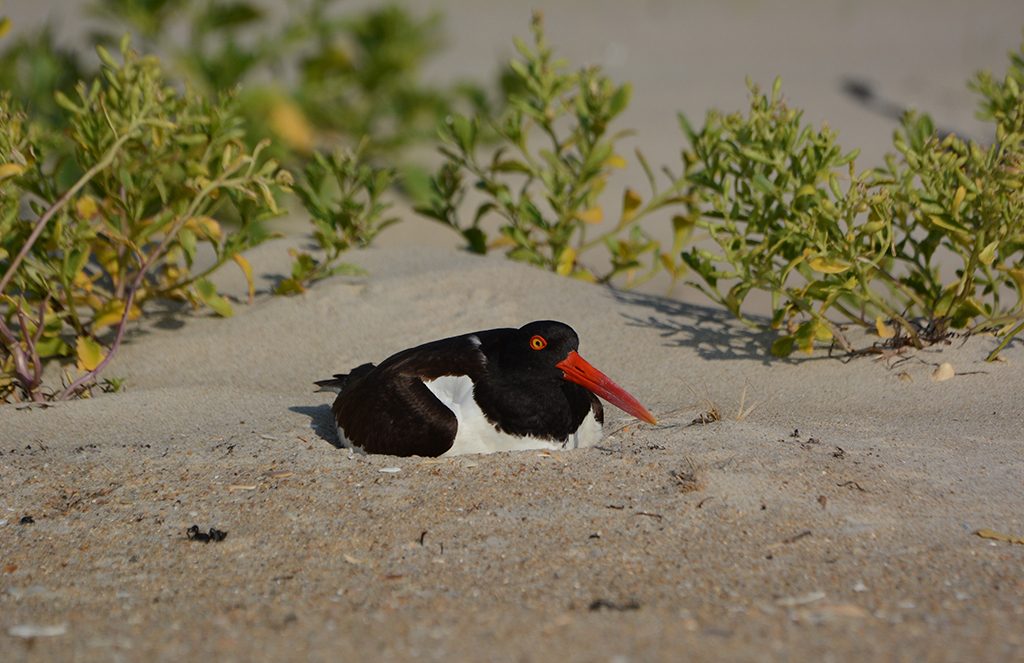
More than 250 species have been found at Cape Hatteras National Seashore. This makes it a birding paradise for serious birders, bird photographers, and those simply enjoying watching the birds in their element. What might you see during a visit? If you walk along the beaches – especially in the early morning – it’s possible to spot shorebirds like the American oystercatcher, Eastern willet, and least tern. Look up into the sky and you might spy an osprey or a brown pelican, or a black skimmer or laughing gull.

As you wander the beach, watch your feet so you don’t step into a piping plover nest. These birds are perfectly camouflaged to match the sand and make their nests directly on the ground in shallow depressions called scrapes.
Featured In The National Parks Traveler
Photography In The National Parks: Birdy, Birdy In The Sky
For a number of years, the Traveler featured a regular column titled “Birding In The Parks,” by Kirby Adams. These wonderful articles by Adams provided the reader with examples of birds one might see when visiting a particular national park or other protected land. Now, I’m not a birder, nor am I a hardcore bird photographer, and I generally don’t think to research what kind of birdlife I might see during my travels (my bad). That said, if I can catch a photo of a bird, I’ll do it, because I know our avian friends help flesh out the story of a national park.
This month’s column is not so much about deliberately seeking, staking out a spot, and using a mega-telephoto lens to photograph a specific bird as it is about getting good photos of whatever bird you happen to see with whatever lens you have on your camera as you hike the trails and stop at the overlooks of national parks and other NPS units.
To read more of this article, head over to this page.
- By Rebecca Latson - August 23rd, 2025 12:24pm