
With a little over 99 percent of Dry Tortugas National Park in Florida covered by the turquoise-hued saltwater of the Gulf of Mexico, it’s no surprise that snorkeling, scuba diving, and swimming are the most popular activities within the park. A world of color and life await those of you willing to get into the water to explore a part of the Florida Reef that includes the wreck of the Windjammer Avanti.

Swimming And Snorkeling
Feel like a little swim or snorkel? There are designated swim beaches on Garden Key (North, South, and East beaches) as well as on the northwest side of Loggerhead Key. When swimming or snorkeling at any of these beaches, remember:
- There is no lifeguard on duty. Swim at your own risk.
- Make sure to stay within your abilities.
- Watch children closely.
- Don’t swim alone.
- Beware of strong current.
- Do not touch or stand on coral or stand on seagrass.
- Do not enter moat or dive from walls.
- Snorkeling And Diving The Florida Reef
The coral reefs over which you snorkel and dive serve as habitat for approximately 25 percent of all marine fish species. Poke your head beneath the briny blue to spot more than 30 species of corals and over 400 reef fish species. Don your snorkel or scuba gear and silently glide over and between elkhorn, staghorn, pillar, and star corals. You might find yourself surrounded by schools of gray snapper and smallmouth grunts or sidling past a lone stoplight parrotfish or goliath grouper.
As you explore the reef and its life, remember to look but not touch. According to Park Staff:
All coral, reef fish, and cultural artifacts are protected. You should not fear an attack from the marine wildlife, but you need to keep a lookout to make sure YOU don't bump into them. Not only will an accidental brush up against the coral probably kill it, you may be bumping into any number of potentially dangerous animals, include fire coral, jellyfish, sea urchins, or the exotic venomous lionfish.
While a commercial guide is not required to snorkel or dive at Dry Tortugas National Park, there are authorized tour operators who will help take the stress out of figuring out where to go, yourself.
|
Forever Young Charter Company LLC |
(305) 680-8879 |
|
|
Finz Dive Charters Corporation |
(305) 395-0880 |
|
|
Conch 'N Around Charters, LLC. |
(321) 202-6501 |
|
|
Laid Back Key West Inc. |
(303) 900-7200 |
Arriving in the park by ferry? Fins, mask, and snorkel are provided by the ferry company for a day of exploring the waters around Fort Jefferson.
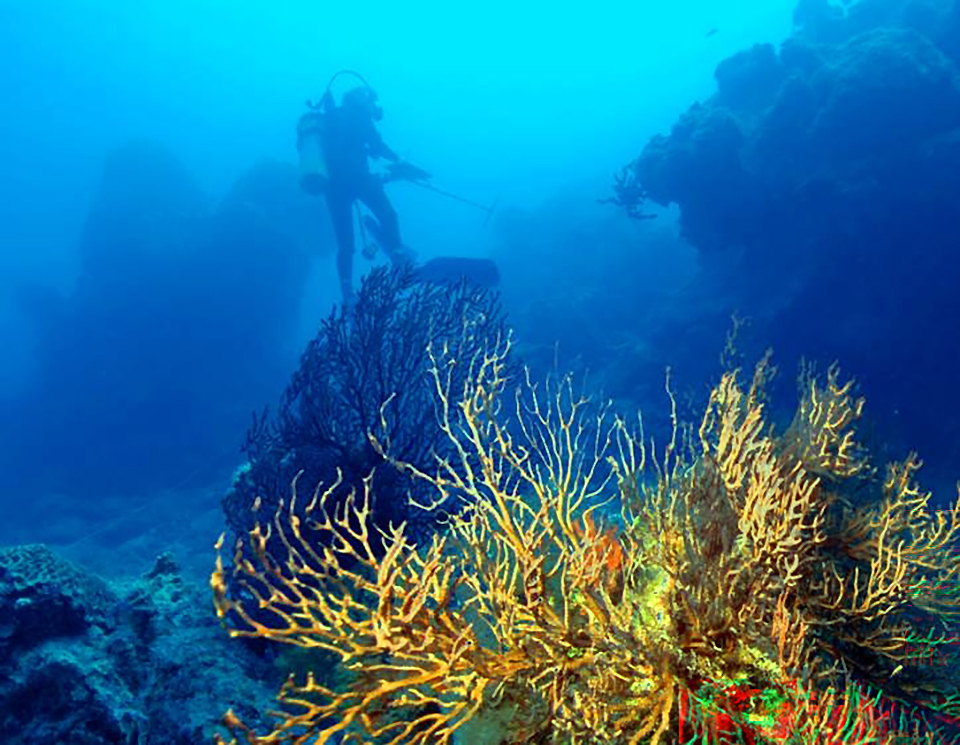
If you’d rather scuba dive, you should know the ferry and seaplane are unable to carry compressed canisters aboard. You’ll need to arrive by your own boat, rental boat, or a charter vessel in order to bring all dive gear, including dive tanks.
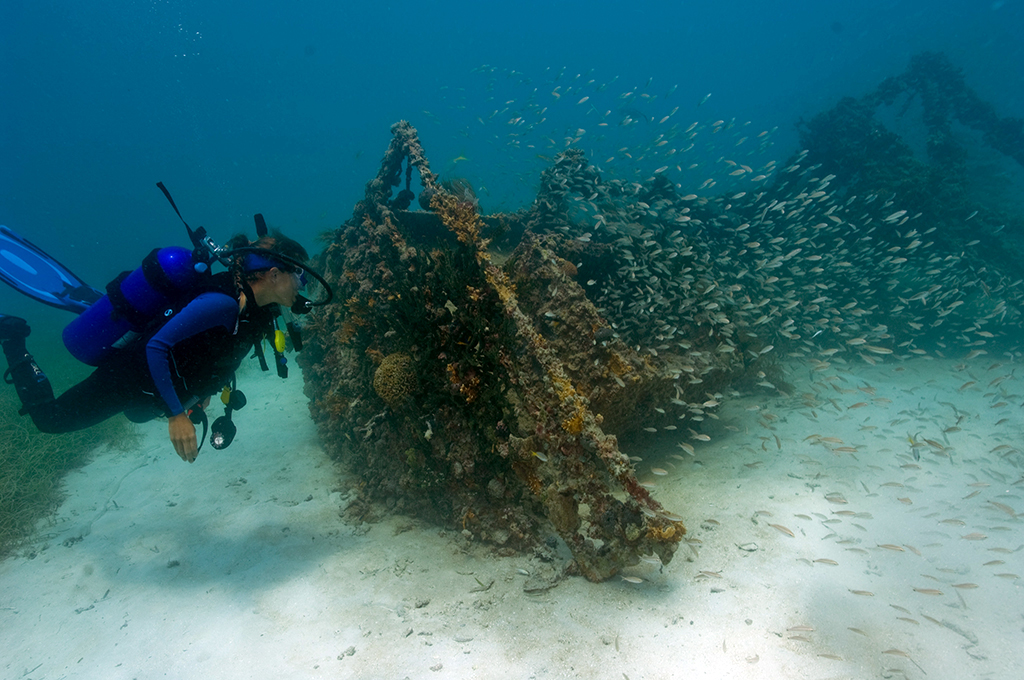
Scuba dive a shipwreck. The Windjammer (aka Avanti) sank in 1901off of Loggerhead Key. It’s one of the most popular dive sites and it’s also great for snorkeling. Park Staff say the best visibility of the site is during flood tide. In addition to the wreck itself, you’ll see colorful corals and fish, since the wreck acts as an artificial reef.
The park offers many sites perfect for snorkeling, diving, and swimming. Click on the link at the very top of the page to learn about these locations.
Featured in the National Parks Traveler
What Is The Florida Reef?
Stretching nearly 350 miles and forming a major part of both Biscayne and Dry Tortugas national parks, the Florida Reef is the only coral barrier bank reef in the continental United States and the third-largest in the world.
This dynamic underwater ecosystem, with biodiversity rivaling that of tropical rainforests, supports more than 1,400 species of plants and animals. Among them are a third of Florida’s threatened and endangered species, including elkhorn and staghorn corals, green sea turtles, Nassau grouper, and humphead wrasse.
The reef is approximately 10,000 years old, having developed when sea levels rose following the last ice age. But its building blocks date back some 200,000 years to when sandbars in what are now the lower Florida Keys were shaped by tidal currents flowing between Florida Bay and the Atlantic Ocean. Coral reefs that dated to the same time period died when water levels dropped around 100,000 years ago. After sea levels stabilized following the ice age, corals began to grow on the former reefs.
To read more of this article, head over to this page.
Key Species Of The Florida Reef
The Florida Reef supports more than 1,400 species of plants and animals along its 350 miles, including many corals, turtles and fish that are designated as threatened or endangered on the federal Endangered Species Act list.
This diversity helps the reef maintain balance, researchers have found. For example, wrasses, parrotfish, sea urchins, and other herbivores help corals by grazing on algae, which can otherwise overgrow the reef. Larger predators, such as snappers, groupers, barracudas and sharks, also have important roles in the ecosystem and help maintain biodiversity.
Like any complex ecosystem, that of the reef relies on a delicate balance of its many diverse species that each play an important role. Here’s a look at several key reef species and how they both depend on the reef and contribute to its overall health.
To read more of this article, head over to this page.
Florida's Reef, Highly Valued And Harshly Impacted
Captain Slate’s Scuba Adventures offers tourists a familiar suite of snorkeling, diving, and scuba certification opportunities in the colorful underwater world off the Florida Keys. On special occasions like weddings the captain, Spencer Slate, goes the extra watery mile. For “two grand or less” people can tie the knot amidst the natural beauty of Florida’s coral reef.
“They say their vows, take their regulators out, and kiss. We do the ring exchange, and we film it,” said Slate.
Then the newlyweds celebrate — and so does Slate. Like the more than 4,000 businesses making money in these stunning waters off Monroe County in southeast Florida, Slate’s dive shop depends on tourism to pay the bills.
It’s not surprising that the Florida Reef, with its 6,000 marine species, including rainbow-colored fish, green sea turtles, shark, and barracuda, along with shipwrecks to swim through, is a moneymaker — not just for the businesses involved but also for state and local governments, including coastal communities that would flood without the reef’s protective barrier during storms.
To read more of this article, head over to this page.
A Rocky Mountain Refuge For Florida Reef Corals
Down the hall from thousands of butterflies, next to a room crawling with arachnids, and a mile above sea level, the small aquarium helps preserve the future of the Florida Reef 2,000 miles away in the Atlantic Ocean.
For nearly 200 years, glass-walled aquariums have been used to keep freshwater and marine life within reach, whether for study or enjoyment. But the aquarium at the Butterfly Pavilion, a nonprofit invertebrate zoo 15 minutes from downtown Denver, carries a more ambitious objective.
While corals still attached to the Florida Reef are dying from stony coral tissue loss disease (SCTLD), climate-change impacts, pollution, and damage from anchors and trawlers, the corals in the wall aquarium here at the Butterfly Pavilion offer hope.
To read more of this article, head over to this page.
Florida's Ailing Reef
The Florida Reef, heralded in tourist come-ons as a “world-class natural wonderland waiting to be discovered,” is a vast and vibrant underwater world, extending from Atlantic Ocean waters north of Biscayne National Park, arcing south around the bottom of Florida, and swinging into the Gulf of Mexico where Dry Tortugas National Park is mostly submerged.
Its 350-mile length —also bordering Everglades National Park— make this the world’s third-largest barrier reef ecosystem, and the only living coral barrier bank reef in the continental United States. The corals create vital habitat for biodiversity, harboring complex structures that nourish, protect, and provide breeding areas for thousands of marine organisms. The submerged panorama is an economic powerhouse for the state of Florida, drawing millions of visitors to South Florida each year to swim, boat, and fish its waters.
But there’s a caveat: The Florida Reef, thousands of years in the making, is in trouble.
To read more of this article, head over to this page.
- By Rebecca Latson - March 12th, 2026 8:13am





