
New River Gorge National Park and Preserve (aka “The New”) in West Virginia is one of the most popular climbing venues in the East. There are over 1,400 established rock climbs ranging in height from 30 feet to 120 feet (9 – 36.6 meters). Most routes are 5.9 and harder, and most sport routes fall in the 5.10 - 5.12 range.
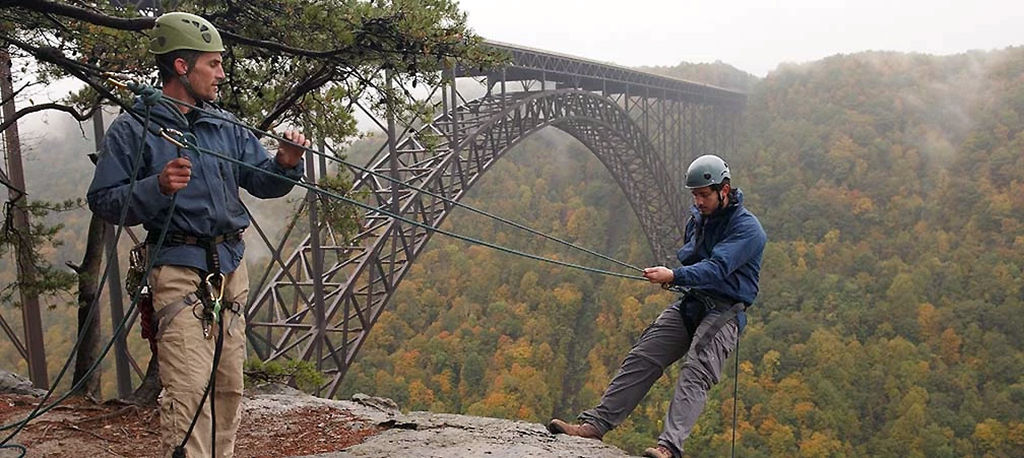
What makes this national park and preserve such a premier spot? That very hard sandstone and accompanying amazing views. In a 2022 article for Gripped Climbing magazine, author Noah Walker claims, “The New River Gorge is one of America's best single pitch sport crags.”
Note: single pitch climbing is where the entire route, from ground to anchor, is completed within one rope length usually between 100 – 230 feet (~30 – 70 meters).
You can climb there any time of year, but the best months – according to park staff - are usually late April to mid-June, and mid-September to late October.
If you are considering a climbing adventure at New River, there are regulations which must be followed to limit your impact on the landscape.
- Leave historical and natural objects undisturbed for the next visitor.
- The use of motorized drills is by permit only.
- Do not trespass on private property.
- Park only in designated parking areas.
- Use existing trails whenever possible.
- Pets must be on a leash.
- Pack it in, pack it out.
- If you are within one-quarter of a mile (0.4 kilometers) from a restroom or pit toilet facility, human body waste must be appropriately disposed of in such facilities. In non-developed areas more than a quarter of a mile from restroom facilities, human body waste must either be containerized and carried out, or it must be buried at a depth of 6 inches in organic soil and at a location not frequented by the public. Human waste may not be buried within 200 feet or in sight of any trail, road, parking lot, developed area, campsite, cliff or rock formation, climbing route or climbing area, water source or the high-water mark of any stream, whether intermittent or not.
In addition to requiring a permit for the use of motorized drills, a permit is required for organized, non-commercial groups of 10 or more people, or for climbing specifically authorized activities like route development.
Safety
Rock climbing in this national park and preserve is challenging and most of the routes are geared toward the experienced, advanced climber. If you intend to answer the challenge of a rock climb at New River Gorge, research and know your route and the park regulations.
- Check the weather forecasts.
- Make sure all your gear is in good, working condition.
- Never climb alone.
- Watch for falling rocks and be careful about dropping rocks on people below.
- Wear a helmet.
- Take drinking water.
- Wear bright colors (blaze orange is recommended) – especially during hunting season.
- There are two venomous snakes in the park: the copperhead and timber rattlesnake. Know what they look like and be careful where you place your hands since snakes love to hide in crevices in the rock faces.
- Be able to identify poison ivy.
- Open cliffs are very dangerous during a lightning storm; seek safe shelter away from the rim and tall trees.
- The use of top anchors decreases impacts on cliff-top ecology. Please do not use tree trunks or other vegetation as anchors.
- Do not "clean" the cliff top by removing moss, lichens, leaves, and other natural materials. This destroys critical wildlife habitat.
- Defacing, damaging, or altering the natural rock surface is prohibited.
- Use "Leave No Trace Outdoor Ethics"
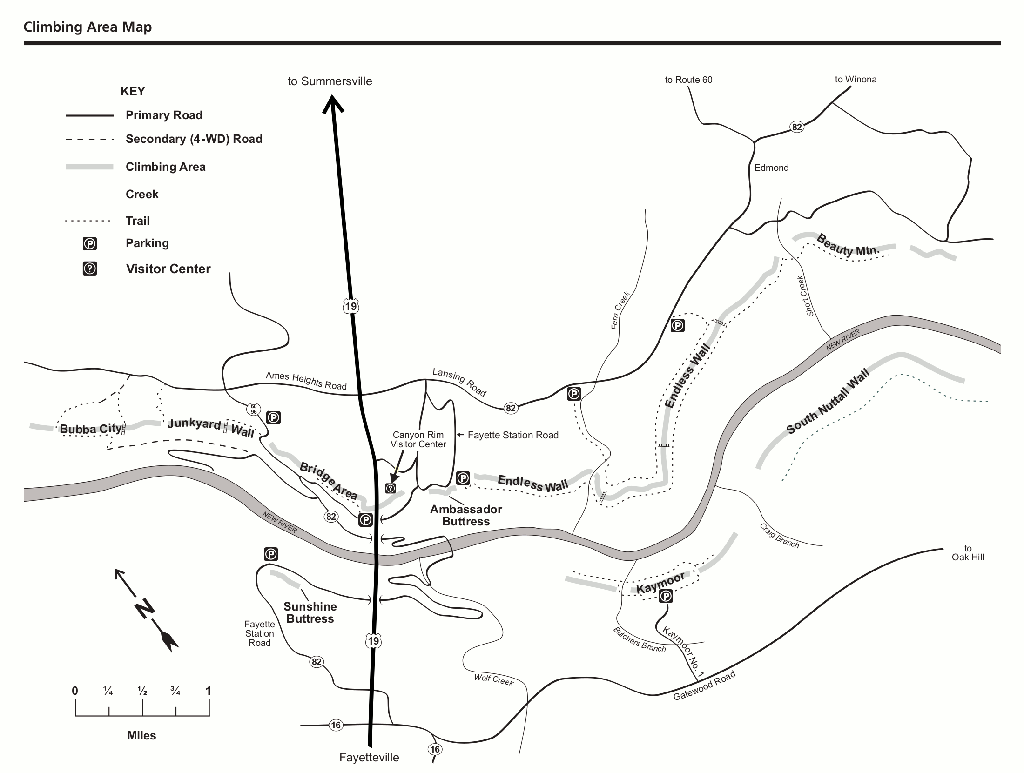
What are the best climbing routes in the park? According to the team at Adventures On The Gorge blog site, popular areas (known as “crags”) include Endless Wall, Bubba City, Kaymoor, Lower Meadow, and Upper Meadow. The Cirque, a crag at Endless Wall, is popular with very experienced climbers.
- By Rebecca Latson - May 2nd, 2026 7:18am





