
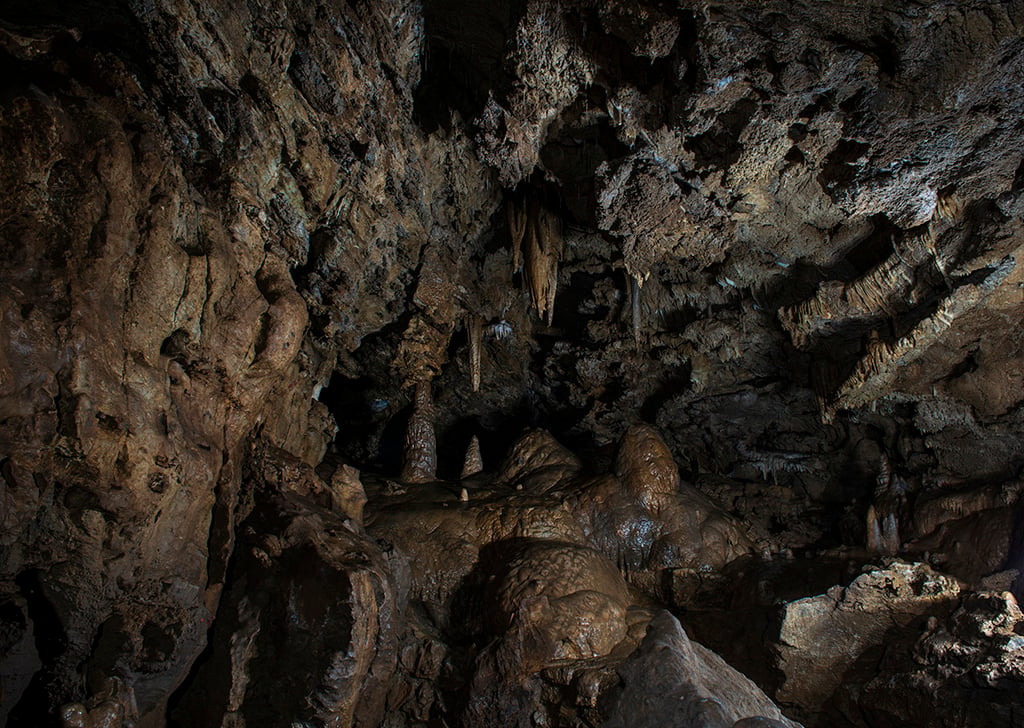
Many units of the National Park System include caves you can explore, such as Sequoia and Kings Canyon National Parks (Crystal Cave). Several park units are totally cave-centric with a focus on the cave(s) after which they are named (Wind Cave, Jewel Cave, Carlsbad Caverns, Mammoth Cave). Oregon Caves National Monument and Preserve in Oregon is one of those cave-centric parks.
Located in southern Oregon, near the border with California, Oregon Caves is actually a single cave named with the plural (Caves instead of Cave) because early explorers believed there were several different caves rather than the current interconnected system.
Originally established on July 12, 1909, by President William Howard Taft after passage of the Antiquities Act by Congress, this national monument protects the caves discovered in 1874 by Elijah Davidson. At the time of establishment, the monument encompassed 480 acres to preserve only the cave system. Today, the park covers 4,554 acres, including forests and the Upper Cave Creek watershed.
What makes Oregon Caves National Monument and Preserve so special is not just the 3.5 miles (5.63 kilometers) of explored, surveyed, and mapped passageways, but the fact that this cave is “a prime example of marble karst topography,” according to Park Staff.
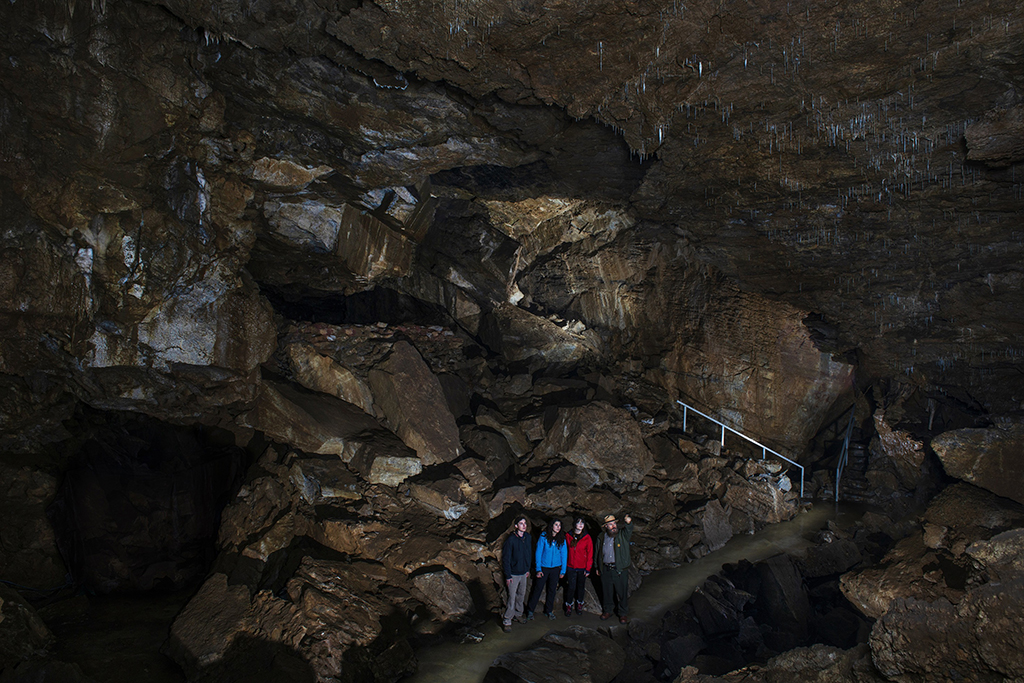
All caves are the same, right? Not exactly.
Most of the caves you visit within the National Park System were created by the dissolution of limestone or dolostone, sedimentary rocks also known as carbonate rocks. Carbonates are composed of calcite (CaCO3) and dolomite (CaMg(CO3)2), formed mainly by the accumulation of shells, corals, and chemical precipitation in shallow, warm marine waters.
Oregon Caves is unique because this cave is formed primarily of marble, which is limestone that’s been subjected to immense heat and pressure, making a denser, harder rock known as a metamorphic rock. Think of your marble countertop or marble tiles or marble carving. This is harder rock, but it can still be dissolved by acidic waters.
To learn more about the unique geology of this national monument and preserve, you can read online or download the National Park Service’s Geologic Resources Inventory Report.
So, if you have a day to spend at this cave-centric national monument and preserve, what can you do? Take a guided cave tour! Four different tours are currently offered: an easy, family-friendly tour, a lantern tour to view the cave as the early explorers did, a more in-depth guided tour of the cave to learn about its geology, and – if you are looking for something more adventurous – an off-trail tour, squeezing through tight spaces, crawling on your belly, and exploring the depths of Oregon Caves with experienced caving guides. Be prepared to get dirty if you opt for this physically-demanding tour.
Note: You can only explore the cave on a guided tour and must reserve a spot through recreation.gov.
If dark, sometimes narrow cave passages are not your thing and you prefer to explore this national monument and preserve topside, you can do that along six different trails ranging from easy to strenuous, with roundtrip distances anywhere from one mile (1.61 kilometers) to over nine miles (14.5 kilometers). You’ll hike through forests and meadows, over marble outcrops, past pristine lakes, and to views of broad mountain and forest vistas.

Bring your camera with you to photograph not only the scenery, but also the wildlife you might spot along your hikes. It’s entirely possible you’ll see deer, chipmunks, ground squirrels, and perhaps a black bear, cougar, or bobcat. Look to shaded areas near streams or moist forest ground and you might spy a Pacific tree frog, Western skink, Pacific giant salamander, or an Ensatina – a lungless salamander that breathes entirely through its skin.
If you enjoy birding and/or bird photography, there are 130 species of birds that either call Oregon Caves National Monument and Preserve home or that migrate through the area. Ravens, Steller’s jays, and woodpeckers are the more common birds you will see, but you might also spot a sooty grouse or Northern spotted owl, too.
Stop off at one of the two visitor centers in the park to orient yourself to the park, ask questions, and pick up a book about area plants or wildlife to help you identify what you see during your hikes.
Hiking the longest trail in the park or reserving a spot on more than one cave tour can take up a full day, so you might decide to spend more than one day here, or at least spend the night before heading out. At one time, you could stay in-park at the historic Oregon Caves Chateau. Unfortunately, it is closed until further notice (and has been closed since 2018). So, the nearest lodging to this national monument will be found at nearby communities.
Featured in the National Parks Traveler
Chateau At Oregon Caves National Monument And Preserve Among Most Endangered Places
A national park lodge built to blend into the deep Oregon woods that surround it has stood silently since 2018 when structural issues forced its closure. While the National Park Service is working to stabilize the Chateau at Oregon Caves National Monument and Preserve, its condition has landed it on the National Trust for Historic Preservation's most endangered list.
To read more, head over to this page.
Saving The ‘Purely American’ Monterey Furniture of Oregon Caves
It has been said that “a room full of Monterey furniture always seems to have a sense of humor about it.” The pieces in this storage room in Grants Pass, Oregon are clearly having a grand old time while off-duty and jammed into their temporary home.
Beds are disassembled. Armchairs are stacked on shelves. Mirrors lean against each other. Whimsical floral and Mexican motifs hand-painted on wood are refusing to fade completely away. Headboards are unabashedly chipped. Desks are gleefully scratched.But as the 240 original pieces of furniture that belong to the Oregon Caves National Monument & Preserve mix with the 150 pieces that have been donated to the Friends of the Oregon Caves and Chateau, they have one thing in common. They’re all slated to be lovingly restored and returned to the Chateau, a six-story, 25-room lodge built during the Great Depression in a canyon beside a marble cave.
To read more, head over to this page.
If pitching your tent or parking your RV directly beneath the stars is more your style, there are several public and private campgrounds you can check out, one of which is in-park.
Featured in the National Parks Traveler
Musings From Oregon Caves National Monument
Okay, let’s get the most important thing out of the way right off the bat. If you are thinking of camping using a big RV or even a small camp trailer at Cave Creek Campground near the edge of Oregon Caves National Monument and Preserve, I have some very important advice: DON’T EVEN THINK ABOUT IT!
The road up into the national monument and Cave Creek is, shall we say, interesting. The entire campground is vertical. Absolutely vertical. Few, if any, of the campsites appear to invite a trailer or RV of any size. You may pitch a tent there, but if you decide to go potty, you’d better make sure someone you trust has a good belay on you.
To read more, head over to this page.
The park is open year-round for surface activities like hikes. Cave tours are seasonal, closing during the winter. For 2026, tours will begin on Saturday March 21.
Oregon Caves National Monument and Preserve is a cashless park unit, accepting only credit/debit cards for cave tour fees, campground fees, and park entrance fees.
Traveler’s Choice For: Caves and cave tours

Stories about:
Story Categories:
A copy of National Parks Traveler's financial statements may be obtained by sending a stamped, self-addressed envelope to: National Parks Traveler, P.O. Box 980452, Park City, Utah 84098. National Parks Traveler was formed in the state of Utah for the purpose of informing and educating about national parks and protected areas.
Residents of the following states may obtain a copy of our financial and additional information as stated below:
- Florida: A COPY OF THE OFFICIAL REGISTRATION AND FINANCIAL INFORMATION FOR NATIONAL PARKS TRAVELER, (REGISTRATION NO. CH 51659), MAY BE OBTAINED FROM THE DIVISION OF CONSUMER SERVICES BY CALLING 800-435-7352 OR VISITING THEIR WEBSITE. REGISTRATION DOES NOT IMPLY ENDORSEMENT, APPROVAL, OR RECOMMENDATION BY THE STATE.
- Georgia: A full and fair description of the programs and financial statement summary of National Parks Traveler is available upon request at the office and phone number indicated above.
- Maryland: Documents and information submitted under the Maryland Solicitations Act are also available, for the cost of postage and copies, from the Secretary of State, State House, Annapolis, MD 21401 (410-974-5534).
- North Carolina: Financial information about this organization and a copy of its license are available from the State Solicitation Licensing Branch at 888-830-4989 or 919-807-2214. The license is not an endorsement by the State.
- Pennsylvania: The official registration and financial information of National Parks Traveler may be obtained from the Pennsylvania Department of State by calling 800-732-0999. Registration does not imply endorsement.
- Virginia: Financial statements are available from the Virginia Department of Agriculture and Consumer Services, 102 Governor Street, Richmond, Virginia 23219.
- Washington: National Parks Traveler is registered with Washington State’s Charities Program as required by law and additional information is available by calling 800-332-4483 or visiting www.sos.wa.gov/charities, or on file at Charities Division, Office of the Secretary of State, State of Washington, Olympia, WA 98504.


National parks and their natural resources belong to you. The National Parks Traveler works to ensure you know how these essential places are being cared for.
Sign Up For Our Weekly Newsletter
Unsubscribe at any time.
INN Member

The easiest way to explore RV-friendly National Park campgrounds.

Here’s the definitive guide to National Park System campgrounds where RVers can park their rigs.
Our app is packed with RVing- specific details on more than 250 campgrounds in more than 70 national parks.
You’ll also find stories about RVing in the parks, tips helpful if you’ve just recently become an RVer, and useful planning suggestions.

