
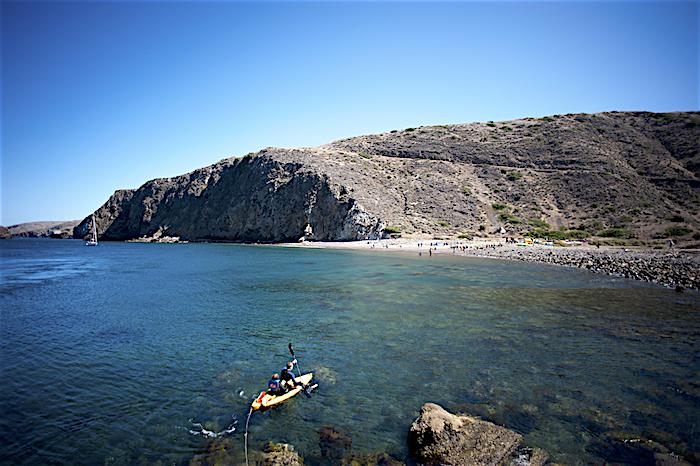
Forests of kelp waving to and fro in the currents. Archaeological and paleontological surprises. An incredible assemblage of wildlife that has the area known as the 'Galapagos of the North'. These are just some of the reasons to explore Channel Islands National Park off California's coast.
The five islands that comprise the national park that started out in 1938 as a national monument long have lured the curious, industrious, and adventurous. Native peoples found the Channel Islands between 15,000-20,000 years ago, Spanish explorers landed here in the mid-1500s, and abalone harvesters and sheep and cattle ranchers arrived roughly 300 years later.
Ever since, people have been leaving the California mainland to head out to sea for the islands -- Anacapa, Santa Barbara, Santa Cruz, Santa Rosa, and San Miguel -- and their unique, remote setting and unusual fauna. They come to enjoy nearly 250,000 acres of bluffs, rocky shorelines, scrub, chaparral and grasslands -- all surrounded by the Pacific -- that offer a primitive experience for hikers and campers. No lodges, no stores. Just winds, sea spray, and tent sites.

It's the water that attracts most. Beneath the Pacific's blue surface lapping the islands rise towering 'forests' of kelp and rich beds of sea grass that offer habitat for more than 1,000 species of marine life. Sea kayakers come year-round to both explore sea caves that time and waves have gouged into the islands' foundations and to slip beneath the surface with mask and snorkel or scuba gear to take a closer look at this unusual seascape.
Bald eagles wheel in the skies over the islands, rare island foxes romp the grasslands, and California Common Murres have been spotted nesting on 100-foot-tall cliffs within the park.
This rich natural and cultural history, as well as the land- and seascapes, make Channel Islands National Park unique among the National Park System's paddling destinations.
Beyond the recreational delights of Channel Islands, there are the scientific wonders. Back in September of 2016 a mammoth skull was excavated on Santa Rosa Island. U.S. Geological Survey geologists have dated charcoal samples adjacent to the specimen to approximately 13,000 years ago. The dating is significant, since it coincides with the age of Arlington Man, the oldest human skeletal remains in North America.
Mammoths roamed the continent of North America beginning approximately 2 million years ago, with Columbian mammoths appearing a million years later. It is believed that the Columbian mammoths migrated to the Channel Islands during the past two ice ages when sea levels were lower and the island land mass was closer to the mainland coast. Over time, descendants of the migrants downsized from approximately 14 feet, the size of the adult Columbian mammoth, to a 6-foot-tall pygmy form, becoming an endemic species known as Mammuthus exilis.
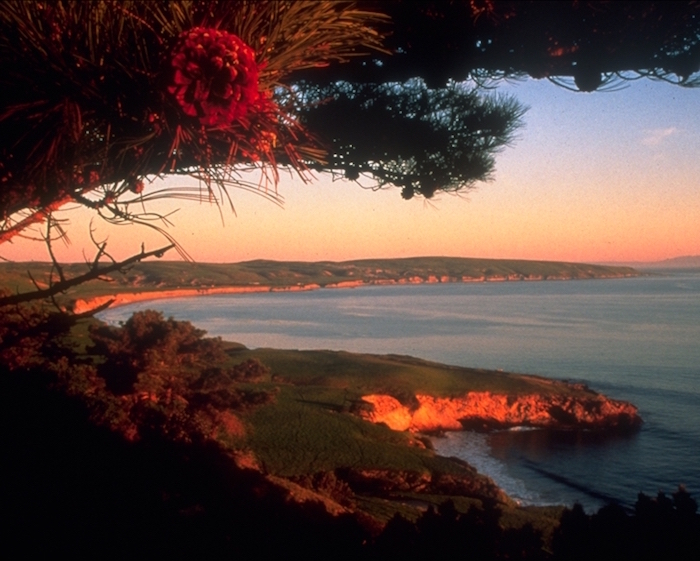
In 2017, a prehistoric Native American site thought to date between 8,000 and 13,000 years ago was unearthed in the park. Officials believe the site might be evidence of a coastal migration following the North Pacific Rim from Northeast Asia into the Americas, part of the peopling of the new world. Also in 2017 a fossil of a sea cow that could be 25 million years old was discovered in the park.
Those who make the effort to visit Channel Islands National Park find themselves surrounded by an ocean where the golden fish, the Garibaldi, is prolific along with hundreds of other species in an underwater forest of kelp beneath wave-battered sea caves. Imagine a place that is still California as it once was, a century ago, with adobe ranch houses, sweeping vistas of cliffs and beach, mountains and valleys, grasslands and cypress groves, and unbelievable quiet.
Traveler's choice for: Sea kayaking, solitude, bird-watching, snorkeling, scuba diving, marine life, fishing
Stories about:
Story Categories:
A copy of National Parks Traveler's financial statements may be obtained by sending a stamped, self-addressed envelope to: National Parks Traveler, P.O. Box 980452, Park City, Utah 84098. National Parks Traveler was formed in the state of Utah for the purpose of informing and educating about national parks and protected areas.
Residents of the following states may obtain a copy of our financial and additional information as stated below:
- Florida: A COPY OF THE OFFICIAL REGISTRATION AND FINANCIAL INFORMATION FOR NATIONAL PARKS TRAVELER, (REGISTRATION NO. CH 51659), MAY BE OBTAINED FROM THE DIVISION OF CONSUMER SERVICES BY CALLING 800-435-7352 OR VISITING THEIR WEBSITE. REGISTRATION DOES NOT IMPLY ENDORSEMENT, APPROVAL, OR RECOMMENDATION BY THE STATE.
- Georgia: A full and fair description of the programs and financial statement summary of National Parks Traveler is available upon request at the office and phone number indicated above.
- Maryland: Documents and information submitted under the Maryland Solicitations Act are also available, for the cost of postage and copies, from the Secretary of State, State House, Annapolis, MD 21401 (410-974-5534).
- North Carolina: Financial information about this organization and a copy of its license are available from the State Solicitation Licensing Branch at 888-830-4989 or 919-807-2214. The license is not an endorsement by the State.
- Pennsylvania: The official registration and financial information of National Parks Traveler may be obtained from the Pennsylvania Department of State by calling 800-732-0999. Registration does not imply endorsement.
- Virginia: Financial statements are available from the Virginia Department of Agriculture and Consumer Services, 102 Governor Street, Richmond, Virginia 23219.
- Washington: National Parks Traveler is registered with Washington State’s Charities Program as required by law and additional information is available by calling 800-332-4483 or visiting www.sos.wa.gov/charities, or on file at Charities Division, Office of the Secretary of State, State of Washington, Olympia, WA 98504.


National parks and their natural resources belong to you. The National Parks Traveler works to ensure you know how these essential places are being cared for.
Sign Up For Our Weekly Newsletter
Unsubscribe at any time.
INN Member

The easiest way to explore RV-friendly National Park campgrounds.

Here’s the definitive guide to National Park System campgrounds where RVers can park their rigs.
Our app is packed with RVing- specific details on more than 250 campgrounds in more than 70 national parks.
You’ll also find stories about RVing in the parks, tips helpful if you’ve just recently become an RVer, and useful planning suggestions.

