

All units of the National Park System protect and preserve something, be it history, culture, landscape, wildlife, one or more ecosystems, or all the above. If you happen to travel to or through Kansas, you should stop off for a visit to Tallgrass Prairie National Preserve in the Kansas Flint Hills. This park is one of those units that indeed preserves and protects all of the above. Step out of your vehicle and gaze into a broad panorama covered by almost 11,000 acres (4,451.4 hectares) of a tall “sea” of grass waving in the wind.
According to Park Staff:
Tallgrass Prairie National Preserve, established November 12, 1996, is the only unit of the National Park System dedicated to the rich natural and cultural history of the tallgrass prairie ecosystem.
You might feel like there is wavy grass as far as the eye can see. What you see, however, is the remaining four percent of what was once 170 million acres (~69 million hectares) of tallgrass prairie in North America. Agriculture and urban development plowed under the other 96 percent.
This national preserve is more than just tall grass. While the grassland is, indeed, the main focus of the park, it’s really what you might call the Big Picture. Within this Big Picture are many smaller things telling the story of this landscape.
For instance, did you know 720 species of plants and animals live within or roam through this national preserve? The park documents 500 plants, nearly 150 birds, 39 reptiles and amphibians, and 31 mammals.
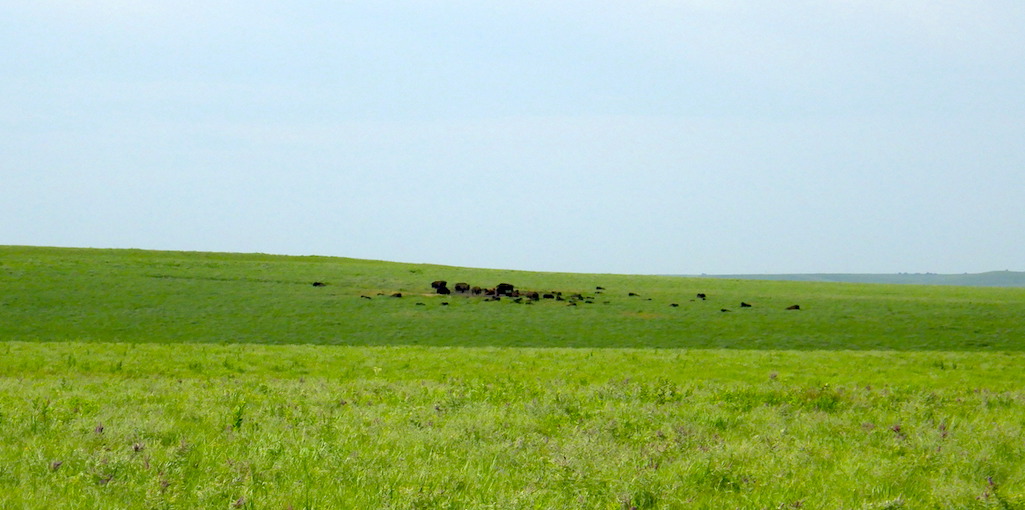
Some of these species are quite large and easy to spot, like the American bison.
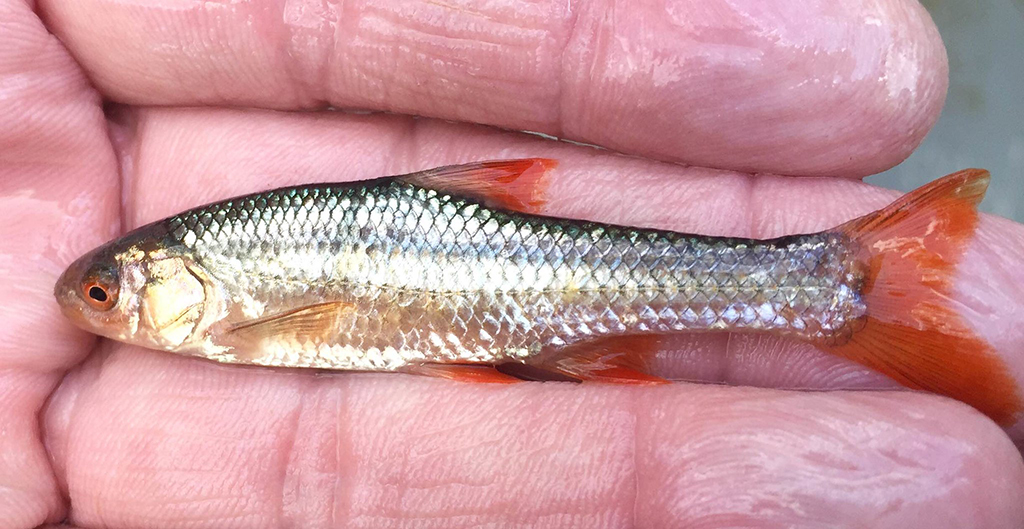
Other species are very small and even threatened and endangered, like the Topeka shiner, a minnow that swims within park waters as well as in other prairie streams.
Visit between March and October, and you’re likely to see swaths of wildflowers adding color and sustenance for pollinators across the prairie.
According to Park Staff:
Most native prairie wildflowers are classified as forbs: any herbaceous plant growing in its native habitat except grasses and grass-like forms. Herbaceous plants are non-woody vegetation with succulent leaves and stems … Every two weeks, another few species add their annual color to the beauty of the landscape.
Aesthetics aside, wildflowers and account for roughly 80 percent of the prairie's biodiversity. Despite this high number, they only cover 20 percent of the ground. The remaining 80 percent of ground is covered by 70 grass species. Three hundred species of forbs and flowers are found in an area dominated by 70 grasses.
OK, so what can you do in this park other than watch the grass blowing in the wind?
- You can take a guided prairie tour, or you can take a cell phone tour.
- You test your angling skills with catch-and-release fishing at the preserve.
- Bring your binoculars or camera to look for wildlife, including rabbits, deer, bobcats, fox, or North America’s largest land mammal, the American bison.
- If you are a birder, bird photographer, or simply enjoy listening to and watching the birds, it’s possible you will spy a bald eagle, red-shouldered hawk, or northern harrier skimming the currents above the grass in search of breakfast, lunch, or dinner. Visit this national preserve in the springtime and you might hear before you even see the iconic male prairie chicken demonstrating his devotion to the ladies with a booming call amplified by his brightly-colored inflatable neck sacs. Stand still and listen to the songs of a meadowlark or red-winged blackbird hidden somewhere in the grass.
- Feel like stretching your legs a bit? There are 40 miles (64.4 kilometers) of backcountry prairie hiking trails to explore. Just remember to bring tick repellant to spray on your clothing before venturing out into the grassland.
If you are looking for tall grasses, your best bet is to visit in the fall. The park has a saying: “Tall in the Fall,” because that is when the grasses have grown their tallest before turning brown and going to ground during the winter.
Want to learn a little bit of history about this park? There’s plenty of it, starting around 12,000 years ago, when Native Americans hunted large mammals and gathered plants living within the tallgrass prairie. Truly, these people were the first managers of the prairie ecosystem, lighting fires for plant and grazing improvements (although none of this on any large scale).
Following the path of these Native Americans, Mexican vaqueros were the first cowboys to cross the terrain, herding what are now called Texas longhorn cattle over the prairie for the ranchers who settled on this grazing land to raise those herds while building the infrastructure necessary for long-term living.
Tallgrass Prairie preserves several historic buildings within its borders. Here, you can visit the largest limestone barn in Kansas (three stories tall), the Spring Hill Farm and Stock Ranch and associated outbuildings, and the one-room Lower Fox Creek Schoolhouse, a symbol of “a more settled, stable, and established existence … taking shape in the American West,” according to Park Staff.

Tallgrass Prairie National Preserve is not a park where you can waterski or kayak or climb a mountain, but it’s worth a stop and looksee. This preserve is a “contemplative” park unit and more of a destination at which to stop on the way to your planned destination. Here, you can reset from the stress of home, job, or travel. You can feel the calm and let your mind wander across the windblown prairie while listening to that meadowlark or red-winged blackbird.
Featured In The National Parks Traveler Podcasts
Podcast Episode 178 | Walking Tallgrass Prairie National Preserve
Recently I had the opportunity to tour four of those overlooked units. I started this audible road trip last week with my visit to Scotts Bluff National Monument in western Nebraska. Today’s stop is at Tallgrass Prairie National Preserve in Kansas, an unusual park rich in both cultural and natural history. I’ll be back in a minute with my walk through the tallgrass with Ranger Eric Patterson.
To listen to this podcast episode, head over to this page.
Podcast Episode 193 | The Bison of Tallgrass Prairie
Back in 2009, a small herd of bison was relocated from Wind Cave National Park in South Dakota to Tallgrass Prairie National Preserve in Kansas. The goal was not only to restore an essential foundational species of wildlife that had not grazed on those lands for more than a century, but to also reestablish the unique ecological benefits bison bring to the landscape while preserving the genetic integrity of the species.
In this week’s podcast, the Traveler’s Lynn Riddick takes us to Tallgrass Prairie National Preserve and chats with Park Superintendent Kristen Hase to see how this special conservation herd has been faring lately.
To listen to this podcast episode, head over to this page.
Podcast Episode 345 | Kansas Road Trip
Kansas is a big place, and not one particularly well-known for national park destinations. But that doesn’t mean you should overlook the Sunflower State.
In the closing days of September, as the country seemed destined for a government shutdown, the Traveler's Kurt Repanshek and Patrick Cone headed into Kansas to visit some of the parks there to better understand their role in the National Park System.
To listen to this podcast episode, head over to this page.
Traveler’s Choice For: History and culture, photography, wildlife, wildflowers and ecosystems
Stories about:
Story Categories:
A copy of National Parks Traveler's financial statements may be obtained by sending a stamped, self-addressed envelope to: National Parks Traveler, P.O. Box 980452, Park City, Utah 84098. National Parks Traveler was formed in the state of Utah for the purpose of informing and educating about national parks and protected areas.
Residents of the following states may obtain a copy of our financial and additional information as stated below:
- Florida: A COPY OF THE OFFICIAL REGISTRATION AND FINANCIAL INFORMATION FOR NATIONAL PARKS TRAVELER, (REGISTRATION NO. CH 51659), MAY BE OBTAINED FROM THE DIVISION OF CONSUMER SERVICES BY CALLING 800-435-7352 OR VISITING THEIR WEBSITE. REGISTRATION DOES NOT IMPLY ENDORSEMENT, APPROVAL, OR RECOMMENDATION BY THE STATE.
- Georgia: A full and fair description of the programs and financial statement summary of National Parks Traveler is available upon request at the office and phone number indicated above.
- Maryland: Documents and information submitted under the Maryland Solicitations Act are also available, for the cost of postage and copies, from the Secretary of State, State House, Annapolis, MD 21401 (410-974-5534).
- North Carolina: Financial information about this organization and a copy of its license are available from the State Solicitation Licensing Branch at 888-830-4989 or 919-807-2214. The license is not an endorsement by the State.
- Pennsylvania: The official registration and financial information of National Parks Traveler may be obtained from the Pennsylvania Department of State by calling 800-732-0999. Registration does not imply endorsement.
- Virginia: Financial statements are available from the Virginia Department of Agriculture and Consumer Services, 102 Governor Street, Richmond, Virginia 23219.
- Washington: National Parks Traveler is registered with Washington State’s Charities Program as required by law and additional information is available by calling 800-332-4483 or visiting www.sos.wa.gov/charities, or on file at Charities Division, Office of the Secretary of State, State of Washington, Olympia, WA 98504.


National parks and their natural resources belong to you. The National Parks Traveler works to ensure you know how these essential places are being cared for.
Sign Up For Our Weekly Newsletter
Unsubscribe at any time.
INN Member

The easiest way to explore RV-friendly National Park campgrounds.

Here’s the definitive guide to National Park System campgrounds where RVers can park their rigs.
Our app is packed with RVing- specific details on more than 250 campgrounds in more than 70 national parks.
You’ll also find stories about RVing in the parks, tips helpful if you’ve just recently become an RVer, and useful planning suggestions.

