
Editor's note: This updates with response from Interior Department officials.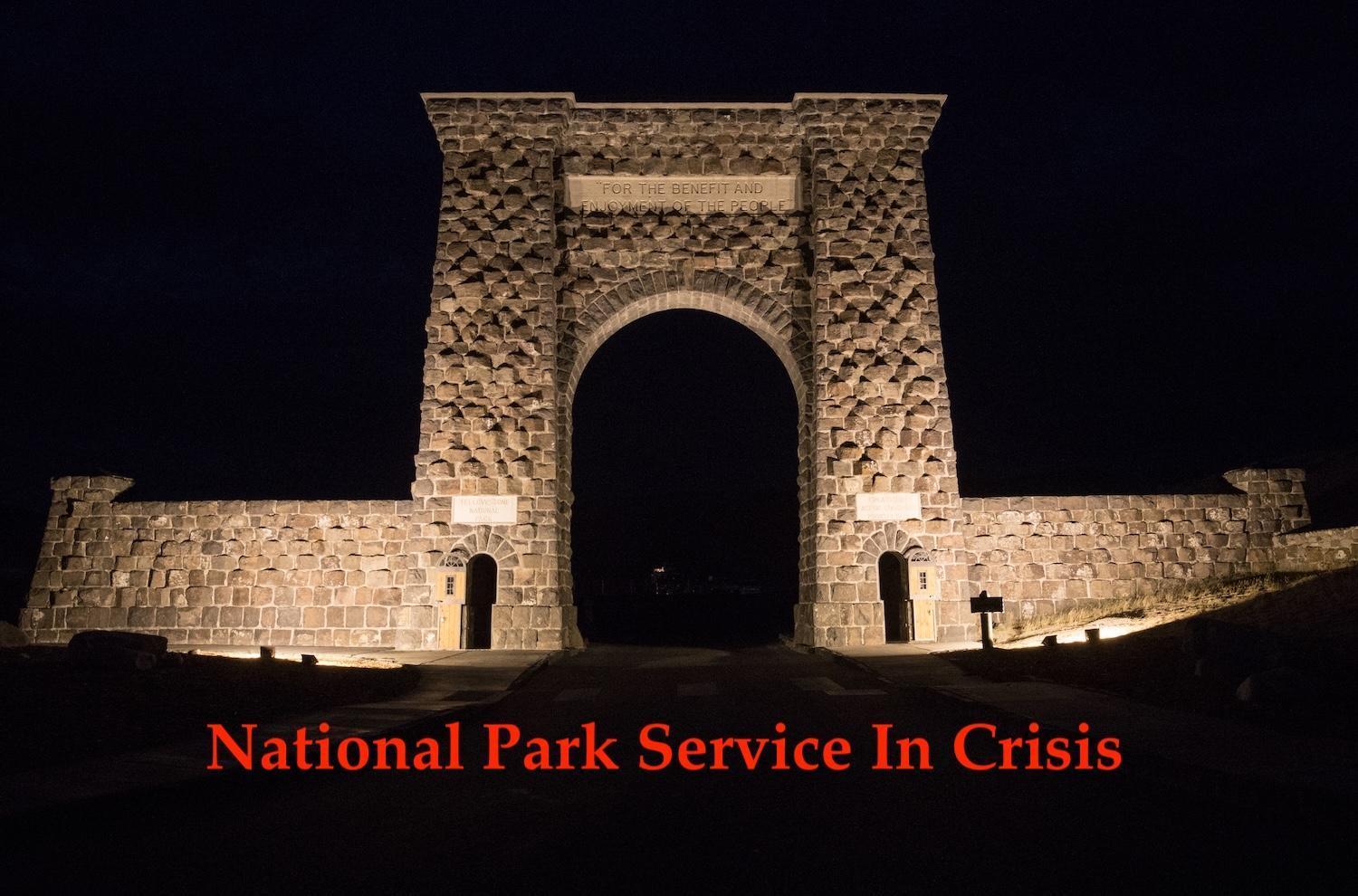
Internal operational data from the National Park Service pinpoints how staffing and funding cuts implemented by the Trump administration are impacting facility maintenance, have led to canceled youth programs and reduced staffing in campgrounds, has been straining remaining staff, and risking visitor safety.
The impacts, some of which were predicted in a National Parks Traveler story in January, have led parks to seek volunteers to perform trail work and provide guided tours, stick to winter operational hours rather than expanding to summer hours, and slowed repairs to facilities damaged by past years' hurricanes.
Some campgrounds have opened with severely restricted hours, some parks have gone without maintenance workers, museum hours are limited in some parks, and other parks have had to pull staff "from all divisions" to staff visitor centers.
“This crisis was both predictable and preventable. Gutting staff, freezing seasonal hiring, and pushing out experienced rangers was a recipe for disaster," Theresa Pierno, president and CEO of the National Parks Conservation Association, said Wednesday. "NPCA has been sounding the alarm for months, and now we’re seeing the consequences of the administration’s reckless actions play out across the country. Parks are cutting hours, closing visitor centers and struggling to respond to emergencies simply because there aren’t enough staff."
Earlier this summer NPCA announced that nearly a quarter of the Park Service's workforce has left since President Donald Trump took office in January, and seasonal staff hiring is far below where it was projected to be.
Interior Department officials strongly refuted the reported impact on park operations, saying news outlets were "peddling a false narrative, staffing levels and operations at our National Parks this summer are on par with previous years. Full Stop."
"The doom-and-gloom spin is not only misleading, but it is also to the detriment of the tremendous Park Service employees on the ground who are working hard to provide a world class experience to visitors," continued Aubrie Spady, Interior's deputy press secretary. "This false narrative also doesn't hold up with the millions of visitors who've experienced our parks firsthand this summer. This truth is, our parks are open, our mission is strong, and our workforce is delivering on all fronts to protect America’s natural treasures and provide safe, meaningful, and enriching experiences for the public.”
The internal report (attached below) outlining operational problems came to light this week, more than four months after Interior Secretary Interior Doug Burgum ordered the Park Service to ensure that the National Park System "is properly staffed to support the operating hours and needs of each park unit."
In response to that order, acting Park Service Director Jessica Bowron told superintendents to use their ingenuity when it comes to accomplishing that task. Borrowing staff from other parks, reassigning existing staff, reaching out to state parks, even using volunteers and partner organizations was mentioned in a directive she sent out.
In February, former Park Service Director Jon Jarvis told the Traveler that the administration's freeze at the time on summer seasonal hiring for the Park Service would lead to "chaos."
"There will be a lot of dirty toilets and a lot of visitors unsatisfied with their experience, and hopefully not too much damage to the resource," Jarvis said. "But if you don't have folks on the ground out there, we certainly saw this during the last shutdown [in 2018-19] when they didn't staff the parks, and we saw vandalism, intentional damage."
At Cumberland Island National Seashore in Georgia, according to the internal communications, "[T]rash/construction debris removal from the island has been eliminated. Trash is typically hauled off the island on the park barge. Park project-generated construction debris cannot be removed from the island. Park offices and 12 residences in park housing are unable to place trash in trash compactor for removal from the island. Trash is transported off one bag at a time on crew boats. The barge is not operating due to staffing."
Trail maintenance at the seashore also has halted, the staff reported.
At the George Washington Memorial Parkway, staff was removed "from monitoring permitted events. Impacts include a decreased capacity to ensure visitor safety and resource protection, due to lack of staff available to provide information, observe visitor activities, and respond to emergencies."
At the Coalition to Protect America's National Parks, Phil Francis said the data underscore that "[O]ur national parks across the country are being pushed to the brink. Gutting the NPS workforce has set our parks on an unsustainable and dangerous path — and Secretary Burgum's order that parks remain ‘open and accessible’ has put them in an impossible situation."
"Clearly, staffing cuts are already impacting the ability of some park units to respond to emergencies, ensure visitor safety, continue routine maintenance, lead tours and educational programs, and keep facilities open," Francis added. "While some of these impacts are already visible to the public, it is very likely that this situation will get much worse.”
Among the issues raised in the internal documents:
- At Gettysburg National Military Park in Pennsylvania, flooding of the historic David Wills House in September 2024 led to removal of artifacts, including the bed that President Lincoln slept in, and the park's inability to maintain "museum quality environmental conditions" means the artifacts won't be returned for display. The park is working on a plan to "re-envision" the home's use.
- Glacier National Park has been unable at times to staff the Camas Entrance Station
- Grand Canyon National Park staff have had a "reduction in ability to provide pest management services, both immediate needs and preventative in all buildings and park lodging. Also, no monitoring or prevention of zoonotic diseases (plague, rabies, hantavirus, bedbugs). There will also be less response to visitor/wildlife interactions impacting visitor safety." Additionally, the staff has struggled to maintain restroom facilities, and South Entrance Gate staffing has been cutback due to insufficient staff, resulting in a loss of fee revenue.
- Great Smoky Mountains National Park staff has been unable to open the Round Bottom Horse Campground due to damage to facilities there and the access road caused by Hurricane Helene.
- At Indiana Dunes National Park, four of six supervisors in the park's interpretive division took advantage of the administration's offer to retire. As a result, "ranger-led tours have been reduced from 575 to approximately 100 (for the year). While the total number is reduced, a full range of programming persists. These changes ensure maintenance of core visitor services to reach the greatest number of visitors during high-visitation hours."
- Staffing issues at Joshua Tree National Park have led to a reduction in "fee booth shift coverage and reduced ability to provide visitor safety and trip planning. ... Current staffing does not allow for a late afternoon/evening shift. Reduced services include: 1) fewer visitors get information needed for safe and enjoyable experience, 2) less fee revenue to support visitor center and fee booth staffing, 3) potential for increased vehicle congestion, search and rescue call outs, 4) less revenue to support improved facilities to serve the public (e.g. new toilets, repairing potholed roads, properly signing trails)."
- Manassas National Battlefield Park has been unable to hire an exhibit specialist, landscape manager, and maintenance position due to the administration's hiring freeze. "This has significantly impacted our preservation crew's capacity and ability to maintain our historic structures. We have 43 historic structures at the park that require a great deal of maintenance."
Yellowstone National Park reported no problems, but at Yosemite a shortage of rangers had temporarily led to a halt in ranger-led tours in the Yosemite Valley.
Zion National Park reported a reduction in cleaning of comfort stations "caused by multiple tasking of employees trying to carry out additional responsibilities of former employees." The park in southwestern Utah also reported that it overall had "[L]ess capacity to respond to visitors having an emergency," to respond to fires in the park and "threats to public safety."
"With the volume of visitation at Zion, it's not uncommon to have multiple emergencies happening at once. Local and county emergency responds have limited capacity to assist," the park added.
Whether conditions improve depends on whether Congress provides more funding to make up for the losses in its Fiscal 2026 budget proposal. However, a budget proposal for the Interior Department crafted by the House Natural Resources Committee calls for a $176 million cut in the Park Service's budget, according to NPCA.
President Trump has called for cuts of more than $1 billion from the Park Service, a large swipe that NPCA has said equates to the budgets of more than 300 park units. That budget proposal also calls for some park units to be transferred to "state-level management."
The administration's constant efforts to shrink the Park Service ranks has left many if not most employees scared, demoralized, and afraid to talk about life inside the agency since Trump began his second term.
“We have never seen the morale of employees so low," Bill Wade, executive director of the Association of National Park Rangers, said earlier this summer. "How can they do their jobs effectively when they are experiencing such terrible treatment and when they fear layoffs?”

Story Categories:
A copy of National Parks Traveler's financial statements may be obtained by sending a stamped, self-addressed envelope to: National Parks Traveler, P.O. Box 980452, Park City, Utah 84098. National Parks Traveler was formed in the state of Utah for the purpose of informing and educating about national parks and protected areas.
Residents of the following states may obtain a copy of our financial and additional information as stated below:
- Florida: A COPY OF THE OFFICIAL REGISTRATION AND FINANCIAL INFORMATION FOR NATIONAL PARKS TRAVELER, (REGISTRATION NO. CH 51659), MAY BE OBTAINED FROM THE DIVISION OF CONSUMER SERVICES BY CALLING 800-435-7352 OR VISITING THEIR WEBSITE. REGISTRATION DOES NOT IMPLY ENDORSEMENT, APPROVAL, OR RECOMMENDATION BY THE STATE.
- Georgia: A full and fair description of the programs and financial statement summary of National Parks Traveler is available upon request at the office and phone number indicated above.
- Maryland: Documents and information submitted under the Maryland Solicitations Act are also available, for the cost of postage and copies, from the Secretary of State, State House, Annapolis, MD 21401 (410-974-5534).
- North Carolina: Financial information about this organization and a copy of its license are available from the State Solicitation Licensing Branch at 888-830-4989 or 919-807-2214. The license is not an endorsement by the State.
- Pennsylvania: The official registration and financial information of National Parks Traveler may be obtained from the Pennsylvania Department of State by calling 800-732-0999. Registration does not imply endorsement.
- Virginia: Financial statements are available from the Virginia Department of Agriculture and Consumer Services, 102 Governor Street, Richmond, Virginia 23219.
- Washington: National Parks Traveler is registered with Washington State’s Charities Program as required by law and additional information is available by calling 800-332-4483 or visiting www.sos.wa.gov/charities, or on file at Charities Division, Office of the Secretary of State, State of Washington, Olympia, WA 98504.


National parks and their natural resources belong to you. The National Parks Traveler works to ensure you know how these essential places are being cared for.
Sign Up For Our Weekly Newsletter
Unsubscribe at any time.
INN Member

The easiest way to explore RV-friendly National Park campgrounds.

Here’s the definitive guide to National Park System campgrounds where RVers can park their rigs.
Our app is packed with RVing- specific details on more than 250 campgrounds in more than 70 national parks.
You’ll also find stories about RVing in the parks, tips helpful if you’ve just recently become an RVer, and useful planning suggestions.

