
Ranchers Dodge Reforms On Point Reyes National Seashore, Yet Still Complain
By Laura Cunningham
In a heated opinion piece in National Parks Traveler railing against environmental organizations and citizen groups who are pushing to protect the unique and dramatic Pacific Coast landscapes at Point Reyes National Seashore, Ms. Sarah Rolph accuses a “pressure group” of covertly influencing the National Park Service. Here, visitors enjoy whale-watching, hiking, beach-going, and photographing wildlife. We disagree.
During the recently concluded review by the seashore of their General Management Plan Amendment—a plan which will guide how portions of the famous park unit are managed for the next 30-plus years with respect to livestock operations – the Park Service made minor (perhaps “token” would be more appropriate) changes departing from its proposed plan. Yes this was legally reviewed under the National Environmental Policy Act (NEPA), but no, environmentalists didn’t influenced the Final Environmental Impact Statement (EIS) after it had been finalized.
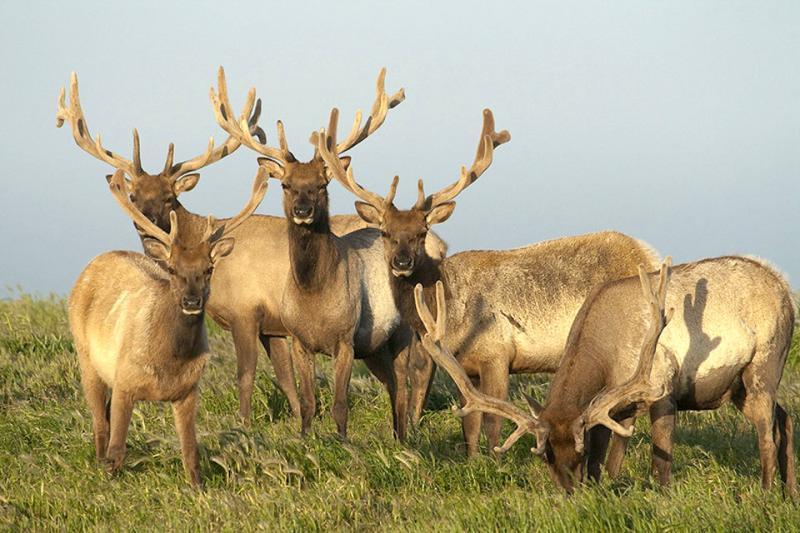
Conservation groups commented on this environmental review document, just as the ranchers did, during allotted comment periods. The Park Service chose its preferred alternative of expanding ranching, lengthening ranch leases from 5 years to 20 years, and authorizing killing and harassment of native tule elk. We submitted comment letters during the review process, and in fact the park received tens of thousands of comment letters from the public supporting tule elk, natural landscapes, and phasing out cattle grazing once and for all.
Records of Decision (RODs) commonly depart from the Final EIS by the agency writing the environmental review. Public comments are analyzed, and publically-available input from ranchers, conservation nonprofits, mountain bike groups, wildlife photographers, park enthusiasts, and all other commenters are responded to. This is how federal law is designed to work.
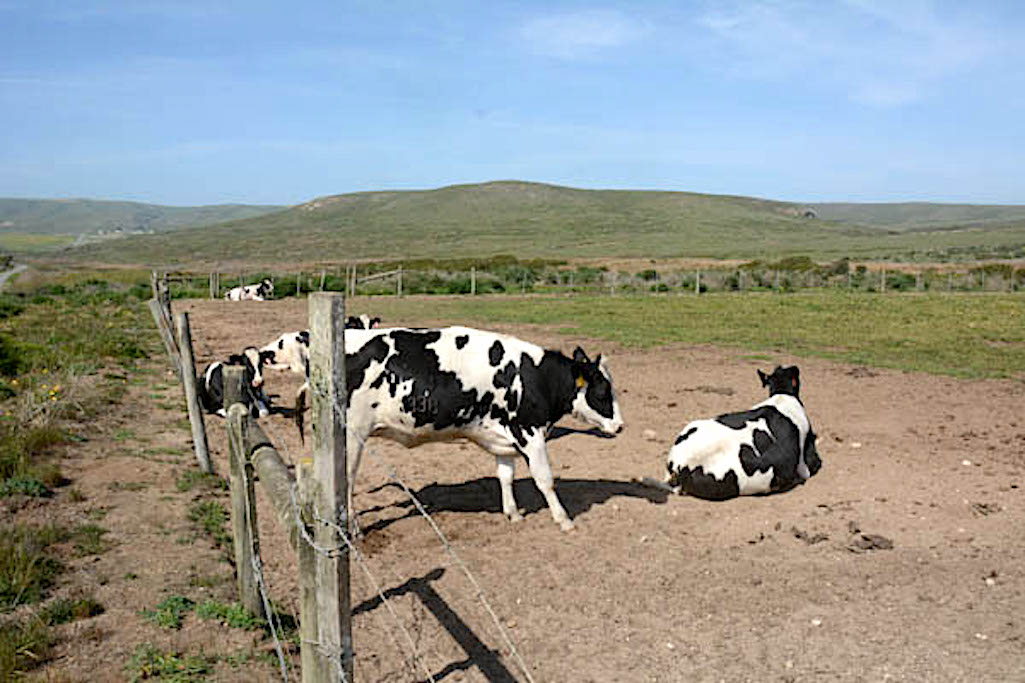
As a wildlife biologist and ecologist for Western Watersheds Project, I actually see the final plan for Point Reyes National Seashore as a win for livestock operators and a loss for native wildlife, healthy ecosystems, and public recreation. This decision continues and greatly expands commercial agriculture on a National Park Service unit, in addition to granting new uses such as farm stays, horse boarding, and on-site processing of agricultural products. This amounts to privatization of park resources, with which the majority of public comments did not agree. The vast majority of public comments asked for a thriving natural environment with native wildlife and more open recreational access--without the current 300 miles of barbed-wired fencing required for cattle pastures.
Rolph must admit that the ranchers used their own lobbyists in abundance, including rancher Kevin Lunny himself, who visited with former President Trump during the planning process.
The thousands of years of Coastal Miwok indigenous land management and Traditional Ecological Knowledge on the Point Reyes peninsula is not acknowledged by Rolph. Tribal cultural fire management kept these coastal prairies open and in a diverse mix of north coastal scrub, meadow, sand dune, and Bishop pine native plant communities in a healthy, resilient and truly sustainable mosaic of habitats to support wildlife for hundreds of generations before European settlement. Cold-water coastal creeks supported numerous runs of coho salmon and steelhead trout. Healthy clean water quality (free of mountains of cow manure) in springs and spring brooks supported rare amphibians such as red-legged frogs. Open beaches free of trampling cattle herds allowed imperiled snowy plovers to nest.
Lastly, Rolph accuses “pressure groups” of creating the impression there is a sudden crisis with tule elk at Point Reyes. There is. One of the most extreme droughts in the last century is happening now, with elk trapped behind an 8-foot-tall fence and unable to get the food and water they need to survive. Governor Gavin Newsom is threatening mandatory cutbacks in water use, and Marin County is going into emergency mode for residential water supplies. Even Point Reyes National Seashore dairies and beef ranches are feeling the impacts of the water crisis, and some are choosing to throw in the towel: Point Reyes National Seashore lessee Bob McClure decided recently to shut down his dairy operation due to drought impacts on water resources in the park.
On the national seashore, normally migratory elk, a free-roaming wildlife species, are confined to an area more like a zoo or wild animal park. Park visitors and wildlife photographers have been stunned to encounter the carcasses of dead elk as they become trapped in mud of drying former stock ponds in an area of meager springs. In fact, more than 100 tule elk have perished in the Tomales Elk Reserve during this drought, unnaturally. This is not “hands-off” elk management, when tule elk are trapped in a fenced area. The National Park Service needs to take down the artificial elk exclusion fence trapping these herds in a resource-poor arid zoo. Trapping the elk between a fence and the deep blue sea is an unnatural problem caused by agency mismanagement.
The lack of top predators in California is also a problem of the last 200 years' of human management, and should be righted. Allow elk predators such as wolves and mountain lions to repopulate the Golden State in wildlands, and access Point Reyes National Seashore. Wild wolves are penetrating deep into their original California ranges and could provide ecosystem benefits if we don’t shoot and trap them first.
Shockingly, hazing and shooting of native tule elk is part of the final decision, and anyone can see this. Ranchers took taxpayer funds decades ago to relocate out of the wondrous national seashore, which is plainly not suitable for industrial-scale commercial livestock operations that need to truck in tons of alfalfa hay and seed and harvest silage hay to feed over 5,000 cows on these public lands.
There are only approximately 5,700 tule elk in existence globally according to the California Department of Fish and Wildlife, down from around 500,000 in the early 1800s. With millions of beef and dairy cattle on private ranches and lands in California, we feel the choice is clear for Point Reyes National Seashore management. Wildlife and natural landscapes should come first, and ranchers who agreed to take buy-outs should leave.
I agree with George Wuerthner when he reasonably observes, “If we can’t maintain a national park unit as a sanctuary for wild nature, where can we?”
Stories about:
Story Categories:
A copy of National Parks Traveler's financial statements may be obtained by sending a stamped, self-addressed envelope to: National Parks Traveler, P.O. Box 980452, Park City, Utah 84098. National Parks Traveler was formed in the state of Utah for the purpose of informing and educating about national parks and protected areas.
Residents of the following states may obtain a copy of our financial and additional information as stated below:
- Florida: A COPY OF THE OFFICIAL REGISTRATION AND FINANCIAL INFORMATION FOR NATIONAL PARKS TRAVELER, (REGISTRATION NO. CH 51659), MAY BE OBTAINED FROM THE DIVISION OF CONSUMER SERVICES BY CALLING 800-435-7352 OR VISITING THEIR WEBSITE. REGISTRATION DOES NOT IMPLY ENDORSEMENT, APPROVAL, OR RECOMMENDATION BY THE STATE.
- Georgia: A full and fair description of the programs and financial statement summary of National Parks Traveler is available upon request at the office and phone number indicated above.
- Maryland: Documents and information submitted under the Maryland Solicitations Act are also available, for the cost of postage and copies, from the Secretary of State, State House, Annapolis, MD 21401 (410-974-5534).
- North Carolina: Financial information about this organization and a copy of its license are available from the State Solicitation Licensing Branch at 888-830-4989 or 919-807-2214. The license is not an endorsement by the State.
- Pennsylvania: The official registration and financial information of National Parks Traveler may be obtained from the Pennsylvania Department of State by calling 800-732-0999. Registration does not imply endorsement.
- Virginia: Financial statements are available from the Virginia Department of Agriculture and Consumer Services, 102 Governor Street, Richmond, Virginia 23219.
- Washington: National Parks Traveler is registered with Washington State’s Charities Program as required by law and additional information is available by calling 800-332-4483 or visiting www.sos.wa.gov/charities, or on file at Charities Division, Office of the Secretary of State, State of Washington, Olympia, WA 98504.


National parks and their natural resources belong to you. The National Parks Traveler works to ensure you know how these essential places are being cared for.
Sign Up For Our Weekly Newsletter
Unsubscribe at any time.
INN Member

The easiest way to explore RV-friendly National Park campgrounds.

Here’s the definitive guide to National Park System campgrounds where RVers can park their rigs.
Our app is packed with RVing- specific details on more than 250 campgrounds in more than 70 national parks.
You’ll also find stories about RVing in the parks, tips helpful if you’ve just recently become an RVer, and useful planning suggestions.


Comments
excellent article, laura. the NPS is bought out by big ag at PRNS and sacrificed the tule elk, other wildlife ., the public, and the magnificent coastal prairie ecosystem and only west coast park. shameful.
The ranching families were paid handsomely for their ranches decades ago. These families were given ample time, including generous extensions, to relocate off publically owned land. Their continued lease operations are damaging to the national seashore, to the coastal prairies, and to the park wildlife. No meaningful excuses exist, short of political influence with CA senators and local Congress members. Enough is enough.
Excellent points, Laura. Fences keeping Tule Elk from forage and water is not 'natural' and amounts to animal cruelty in my book when they are not given food and until recently even water in a drought. Thank you.
An 8 foot fence is essentially a cage and confining animals where they do not have adequate forage and water is animal cruelty. Point Reyes does not belong to the ranchers. The taxpayers paid them millions of dollars for their land and yet they are so ungrateful as to continue to turn their land into a bovine sewage dump while they deprive wildlife of food, water, and safety.
I believe its past time for Rep. Huffman (supposedly an environmentalist?) and Sen. Feinstein to realize that livestock, silage, and CONFINED wildlife do not belong in a NATIONAL PARK, much less a NATIONAL SEASHORE. I have to wonder what impression visitors to this park take home with them when the wildlife has lost its habitat AND its freedom, yet cattle, manure & urine are everywhere. A Park, really? More a bovine sewage dump as a commenter said earlier. Do these businesses really think people want to go to a national seashore to see cows?
Honestly, where is our Native American Secretary of the Interior? Shouldnt she be interested enough to examine this disaster?
Excellent op ed, Laura!
I didn't know that ranchers had visited the White House (and probably Interior and Congress?). Big Ag is now the #1 lobbyist in DC, which is why NPS chose the plan favored by Big Ag. Who corrupts the political system? Not a bunch of local advoctes. Comments were overwhelmingly pro- elk and no cattle, but...
There is no new information here, just the same false narrative I objected to in the first place. Cunningham writes, “The Park Service chose its preferred alternative of expanding ranching, lengthening ranch leases from 5 years to 20 years, and authorizing killing and harassment of native tule elk.” There is no “expansion of ranching.” Ranching families will be able to engage in extremely limited additional agricultural activities to help sustain their extremely modest agricultural incomes. No new acreage is involved and there is no “privatization of public resources” as Cunningham claims. The 20-year leases were promised by the former secretary of the Interior over 7 years ago and the Seashore ranchers have been operating on non-viable year-to-year leases since then. Cunningham writes, “We submitted comment letters during the review process, and in fact the park received tens of thousands of comment letters from the public supporting tule elk, natural landscapes, and phasing out cattle grazing once and for all.” The vast majority of those so-called “letters from the public” received by the NPS were in fact short, snarky emails generated by the inflammatory rhetoric of these anti-ranch pressure groups: the Center for Biological Diversity, Western Watersheds, RRI, and others dedicated to the destruction of West Marin’s agricultural community. These emails perfectly echo the campaigns of these groups, right down to the vocabulary. Even a naïve reader of these comments can see they were clearly orchestrated. They are nothing like the serious and informed letters from members of the local, concerned public, and from the agricultural community, such as the Point Reyes Seashore Ranchers Association, the individual ranchers, the County agriculture commissioner, and the UC Extension specialists who work on a daily basis with this community. Cunningham writes, “Rolph must admit that the ranchers used their own lobbyists in abundance, including rancher Kevin Lunny himself, who visited with former President Trump during the planning process.” The Seashore ranchers have used only one lobbyist in the past 25 years. Kevin Lunny’s brief encounter with Trump in the White House was not a lobbying effort, as Cunningham surely knows. Lunny was at the White House because he was invited to speak at the signing ceremony of two executive orders intended to bring more transparency to the federal NEPA process. Cunningham writes, “Ranchers took taxpayer funds decades ago to relocate out of the wondrous national seashore, which is plainly not suitable for industrial-scale commercial livestock operations.” Cunningham is badly misinformed if she believes this. Ranchers sold their land, many under duress, but there was no requirement, or agreement, that they “relocate.” This is precisely why the ranches remain, and why NPS has, correctly, determined that they should continue to do so. These are family farms, not “industrial-scale” operations. Cunningham objects to my calling out these pressure groups for “creating the impression there is a sudden crisis with tule elk at Point Reyes. There is.” There is nothing sudden about it. If there is a crisis for Tule elk at Point Reyes, it is one the NPS created, as evidenced in its 1998 elk management plan, which it has failed to follow. As noted by the CDFW, the state agency responsible for elk management throughout CA, Point Reyes is simply not large enough for a free ranging herd of elk. Among other reasons: the absence of significant apex predators to control the population within ecological limits leads inevitably to the boom-and-bust population cycles we have seen, and will continue to see, with Point Reyes elk, with or without the ranches, or the drought. Yes, there are mountain lions at Point Reyes, but not enough to keep the elk population at a level the ecosystem can support without episodic mortality events as seen repeatedly in the past few years, which will continue unless culling or other population control measures are implemented. Cunningham’s suggestion that we instead increase the mountain-lion population and unleash wolves in the National Seashore strikes me as highly impractical and potentially dangerous. Elsewhere in California, hunting is successfully used for the necessary job of culling elk. Another viable option is birth control. Contrary to Cunningham’s attempt to vilify the ranchers, the “diverse mix of north coastal scrub, meadow, sand dune, and Bishop pine native plant communities in a healthy, resilient and truly sustainable mosaic of habitats to support wildlife, which existed for hundreds of generations before European settlement” continues to exist at Point Reyes National Seashore. Springs, brooks and yes, ranch stock ponds, continue to support “rare” amphibians such as red-legged frogs, and snowy plovers still nest in the sands at the Seashore. If our cold-water coastal creeks no longer support “numerous runs of coho salmon and steelhead trout” it is for reasons well beyond the presence of small family farms. These pressure groups are not simply “environmental organizations” and they are certainly not grass-roots “citizen groups.” Western Watersheds is a public-policy advocacy firm that spends about a million dollars a year litigating to stop ranching in the West. The Center for Biological Diversity is a multi-million-dollar organization best known for its frivolous lawsuits and shakedowns. Resource Renewal Institute runs a project devoted to ending agriculture in Point Reyes. These groups have worked together for years to promote their agenda using lies and pressure tactics rather than honest argument. I find it disturbing that so many people condone such tactics.
Sara, you should stop repeating falsehoods, such as, “the 20-year leases were promised by the former secretary of the Interior over 7 years ago.” “Promise” is false, and in fact, the Interior Secretary is not in a position, legally or ethically, to make such a promise. What is Salazar promised Bounty Towels they could log Yosemite? It doesn’t mean anything. Furthermore, that Secretary is no longer in office.
And you continue to insult all the concerned citizens who expressed just outrage at this awful plan. Did it ever occur to you that the reason why the tens of thousands of comments echoed the environmental groups released content is because it is correct? No, you prefer to call all these people “gullible,” simply because they will not entertain your irresponsible, anachronistic and racist position.
Regarding “there was no requirement, or agreement, that they "relocate."” As you know, there were Reservations of Use and Occupancy with finite terms, generally “not to exceed 25 years.” That’s plain English – you are lying here.
Regarding “Point Reyes is simply not large enough for a free ranging herd of elk,” What kind of nonsense is this? There are two already and the park service indicates that if the elk fence is removed, the park will not reach carrying capacity for 25 years.
Regarding stock ponds continue to support CA Red Legged Frogs, that’s true. But you don’t need cattle to have ponds. You are disingenuous here, again.
Regarding Snowy Plovers, if you don’t know then shame on you. Ranches attract ravens, and ravens prey on plover nests. This is well known and acknowledged by the park.
Regarding, “ The Center for Biological Diversity is a multi-million-dollar organization best known for its frivolous lawsuits and shakedowns,” that’s your ad hominem opinion. There are 1.7 million members that seem to believe in the organization.
If these organizations are lying, as you claim, perhaps you could point out those lies, factually, rather than providing so many of your own.
I was following that and for the most part I don't recall that ever being promised, although Ken Salazar did recommend that as his parting shot in his memorandum denying the extension of the oyster farm's lease. I distinctly remember that he did everything short of requiring it though.
I thought a lot of people attributed that to his family background in cattle ranching in Colorado.
I've seen some of the discussion on the Marin Independent-Journal. That got a little bit interesting and some of the names I see here, although few of the ranching supporters have taken to NPT.
y_p_w, Sarah is lying about the public comments. There are a large number of short comments, like "don't shoot the elk, please!" etc. But there are many more thoughtful and qualified letters opposing the plan than there are letters in support oif ranching in total. They are posted on the PRNS website so you can read for yourself. There are more letters asking for more bike lanes than there are letters in support of ranching. And Sarah does not like to acknowledge the many letters sent outside the NEPA process to the NPS signed by over a hundred environmental groups, naturilists, guides, photographers, etc., nor does she care to mention the > 100k signatures delivereed to Secretary Haaland asking her to stop this plan, or the letter from the Coast Miwok Council calling the plan a traesty, etc., etc. I find her desparate attempts to dismiss the clear public sentiment as shameful and embarrassing.